Issue 14: Whole Class Teaching Lifts All Learners | Dr Nathaniel Swain
Dr Nathaniel Swain reflects on how and why his preferred method of supporting struggling learners in classrooms has shifted from individual learning intervention and differentiated groups to robust whole class instruction.

Ali* is a 2nd grade student with dyslexia. She has been diagnosed recently, and her learning needs are still being fully understood by her family, psychologist, speech pathologist, and classroom teachers. She is about 18 months behind her peers in reading and spelling. Despite trying her very best, she still has a steep learning curve ahead of her.
As the classroom teacher, I am wondering how do I best teach her English. Should I group her with the handful of classmates who also have below-expectation literacy skills and take her out of the general instruction with typically performing peers?
Five years ago, my instinct would have pushed me towards "yes!"— individualised, and specialist support would be the best way to teach Ali. Today, however, I argue for the exact opposite.
Where my thinking used to be
I began my professional career helping the education system's most challenged learners. Children and adolescents with dyslexia, dysgraphia, language disorder, autism and intellectual disability and every combination of these diverse learning needs—these individuals were my focus. Ten years ago, after I finished my training as a speech-language pathologist, I loved nothing more than intimately understanding the learning profile of every child and designing individualised learning programmes, which needed to be delivered by a specialist with in-depth expertise.
My passion for helping such learners brought me into the Australian youth justice system, where I saw educational disengagement, family disadvantage, and specific learning disabilities all intersecting for some of the most vulnerable youth in the country.
I met many students like Ali in our prisons, just 10 years down the track, and without the family and community support some children are fortunate to possess. I worked tirelessly to give them the support they needed to learn the fundamentals of reading, writing, and spoken language. I collaborated with their teachers to try and close the gaps in their knowledge.
By and large, we were teaching basic concepts and skills—the fundamentals of reading, writing and maths. These essentials had created the greatest barriers in their lives. It was often hard going, but with trust and skilful practitioners, these kids could make good gains. After all, kids with learning differences are not incapable of learning. They have certain strengths and weaknesses in their learning profile that mean they need a higher intensity and/or dosage of support. In general, we provided this intervention one-on-one.
But with all this work at the bottleneck of the system, there was one question that haunted me.
In ten years of education, why didn't these kids learn this in school?
The learning differences challenge
We know that some learners can pick things up through osmosis, where incidental discussion and exposure are all they need to master whole bodies of knowledge and skillsets. There are other kinds of learners who, without the proper instruction and repeated practice, would never independently make these connections and master such knowledge.
The idea of differentiated groups or streaming was intuitively appealing to me back then, given that students arrive with a range of different abilities, and we cannot possibly meet all of them exactly. However, growing research is showing that when grouping and factorising learners, teachers can potentially waste a lot of time and effort trying to plan for and facilitate multiple groups. There is also the possibility that a teacher gets it wrong, and students who are capable of learning more have opportunities closed to them.
What I know now
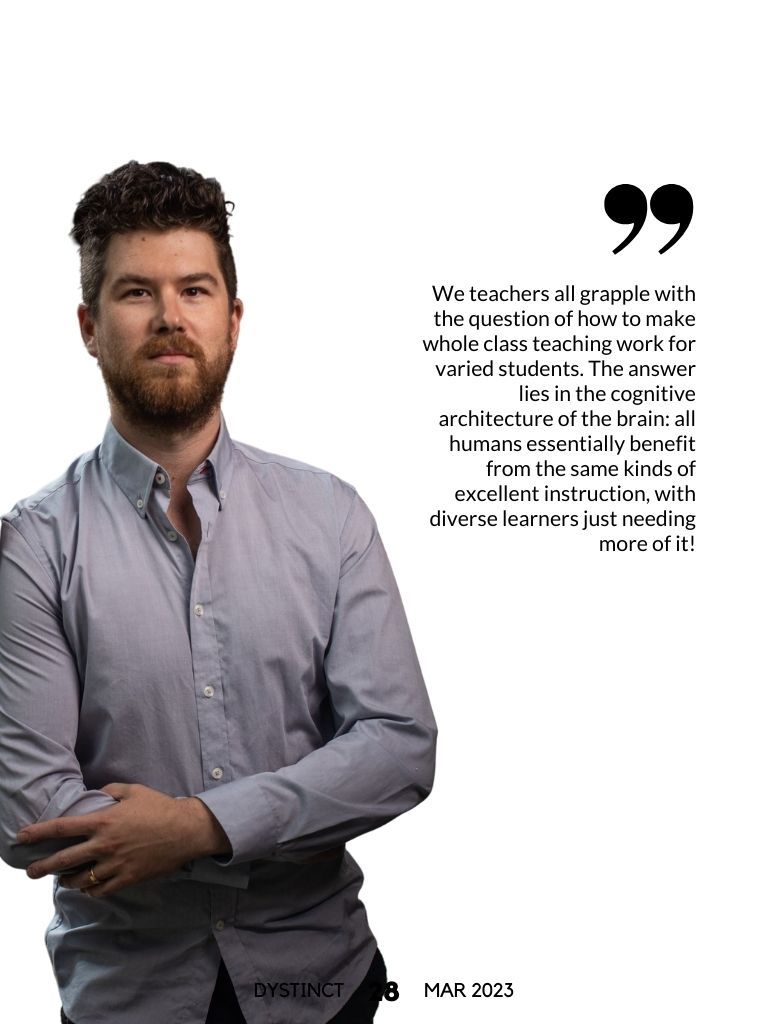
So, if ability grouping was not the answer, I needed to understand how to make whole class teaching work for such varied groups. The answer lay in the cognitive architecture of the brain: all humans essentially benefit from the same kinds of excellent instruction, with struggling learners just needing more of it! Five years ago, I was so captivated by this challenge that I retrained as a classroom teacher so I could try to master it in my own class of 20+ learners.
This year, I had the pleasure of hearing Bagaarrmugu, and Guggu Yalanji leader and Good to Great Schools founder Noel Pearson speak about this very topic at a Canberra Goulburn Catholic Education event. Quoting Emeritus Professor Kevin Wheldall AM, Pearson noted that there is no real argument in the scientific literature about best practice teaching for all students: "Effective instruction is effective instruction is effective instruction." It is the expertise and craft of the teacher that can make learning accessible, robust, and joyful for all students.
But coming back to Ali and her peers with other learning differences, how can these learners benefit from whole class instruction?
Response to Intervention
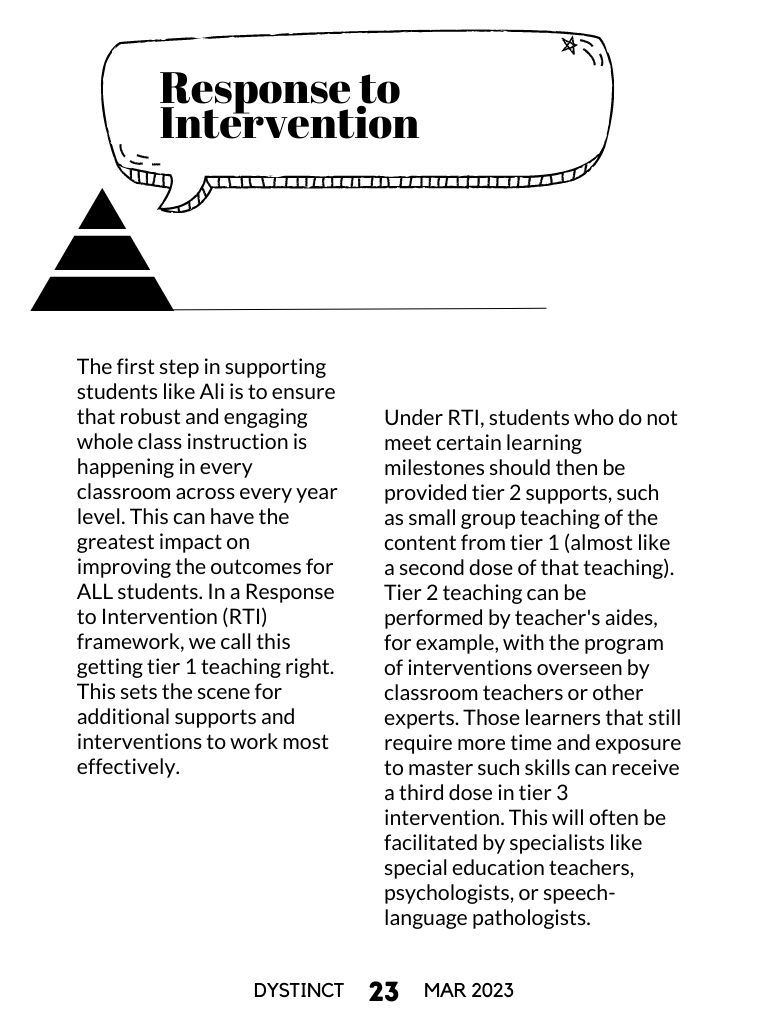
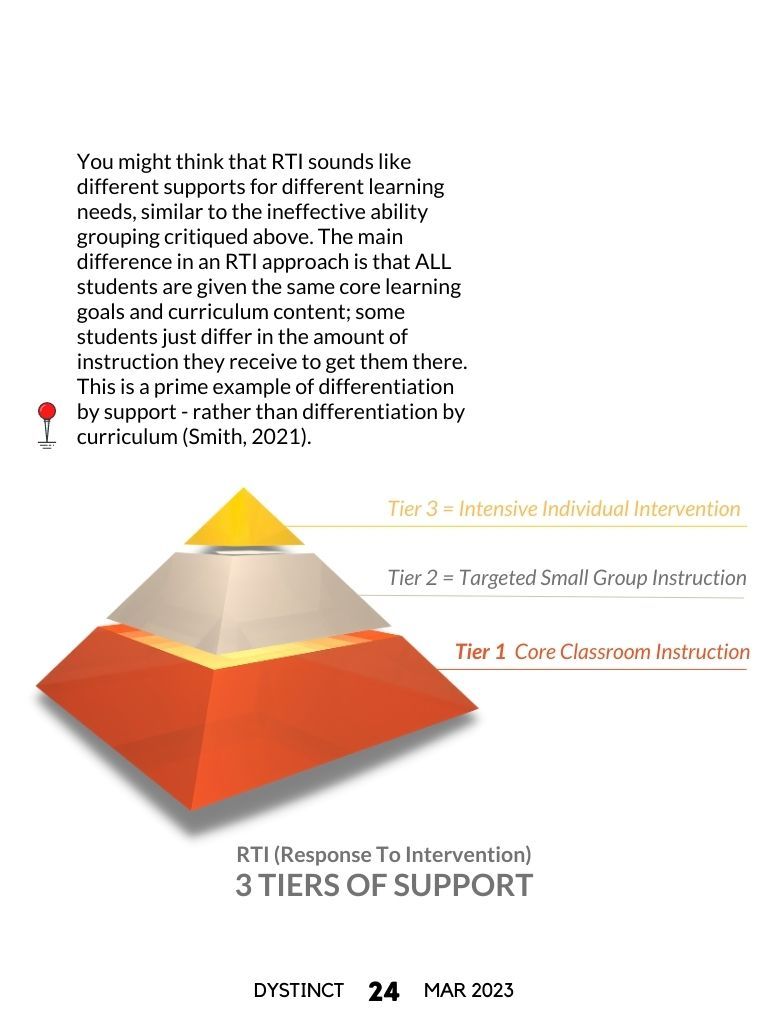
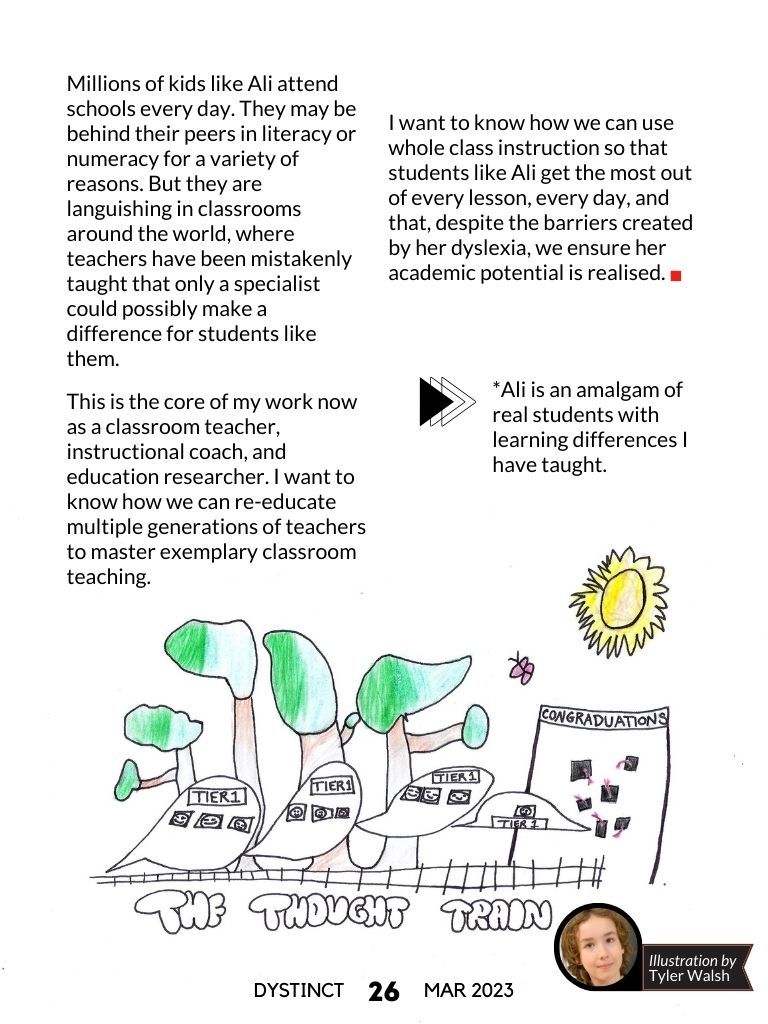
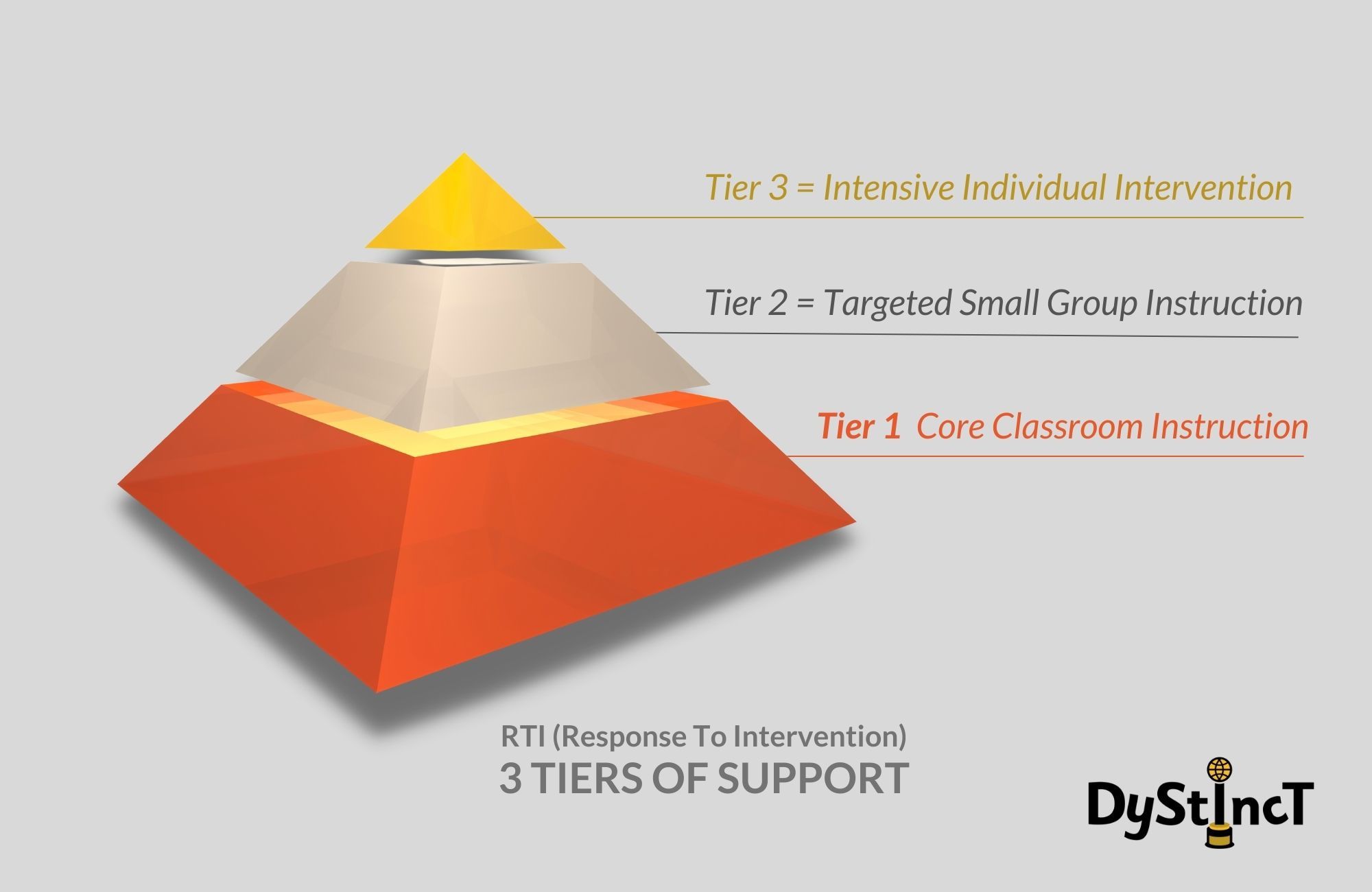
The first step in supporting students like Ali is to ensure that robust and engaging whole class instruction is happening in every classroom across every year level. This can have the greatest impact on improving the outcomes for ALL students. In a Response to Intervention (RTI) framework, we call this getting tier 1 teaching right. This sets the scene for additional supports and interventions to work most effectively.
Under RTI, students who do not meet certain learning milestones should then be provided tier 2 supports, such as small group teaching of the content from tier 1 (almost like a second dose of that teaching). Tier 2 teaching can be performed by teacher's aides, for example, with the program of interventions overseen by classroom teachers or other experts. Those learners that still require more time and exposure to master such skills can receive a third dose in tier 3 intervention. This will often be facilitated by specialists like special education teachers, psychologists, or speech-language pathologists.
You might think that RTI sounds like different supports for different learning needs, similar to the ineffective ability grouping critiqued above. The main difference in an RTI approach is that ALL students are given the same core learning goals and curriculum content; some students just differ in the amount of instruction they receive to get them there. This is a prime example of differentiation by support - rather than differentiation by curriculum (Smith, 2021).
Disrupting the classroom status quo
I'm not arguing that whole class teaching is easy to achieve for all learners. Teachers need to understand intricate details about what they want students to learn, the common misconceptions that come up, and the most efficient and engaging ways to teach. Practices like bulletproof definitions, worked examples, checking for understanding, and responsive teaching needs to be the core of their work. I am sorry to say this kind of high-quality, fully guided instruction is far from the norm, and there exists a chasm between what most teachers know about effective whole-class teaching and the scientific research that underpins it.
There is work to be done.
Millions of kids like Ali attend schools every day. They may be behind their peers in literacy or numeracy for a variety of reasons. But they are languishing in classrooms around the world, where teachers have been mistakenly taught that only a specialist could possibly make a difference for students like them.
This is the core of my work now as a classroom teacher, instructional coach, and education researcher. I want to know how we can re-educate multiple generations of teachers to master exemplary classroom teaching.
I want to know how we can use whole class instruction so that students like Ali get the most out of every lesson, every day, and that, despite the barriers created by her dyslexia, we ensure her academic potential is realised.
Further Reading
- Brown-Chidsey, R., & Steege, M. W. (2010). Response to intervention: Principles and strategies for effective practice. Guilford Press.
- Clark, R. E., Kirschner, P. A., & Sweller, J. (2012). Putting students on the path to learning: The case for fully guided instruction. American Educator, Spring, 6–11.
- Mellard, D. F., & Johnson, E. S. (2007). RTI: A practitioner's guide to implementing response to intervention. Corwin Press.
- Reid, S. (2021). Building a Coherent Curriculum. Think Forward Educators. [thinkforwardeducators.org]
- Sweller, J., van Merriënboer, J. J., & Paas, F. (2019). Cognitive architecture and instructional design: 20 years later. Educational Psychology Review, 31, 261-292.
Dr Nathaniel Swain
Teacher, Instructional Coach, Writer, and Founder of ThinkForwardEducators.org
NathanielSwain.com | Facebook | Twitter
ThinkForwardEducators.org | Facebook | Twitter | Instagram
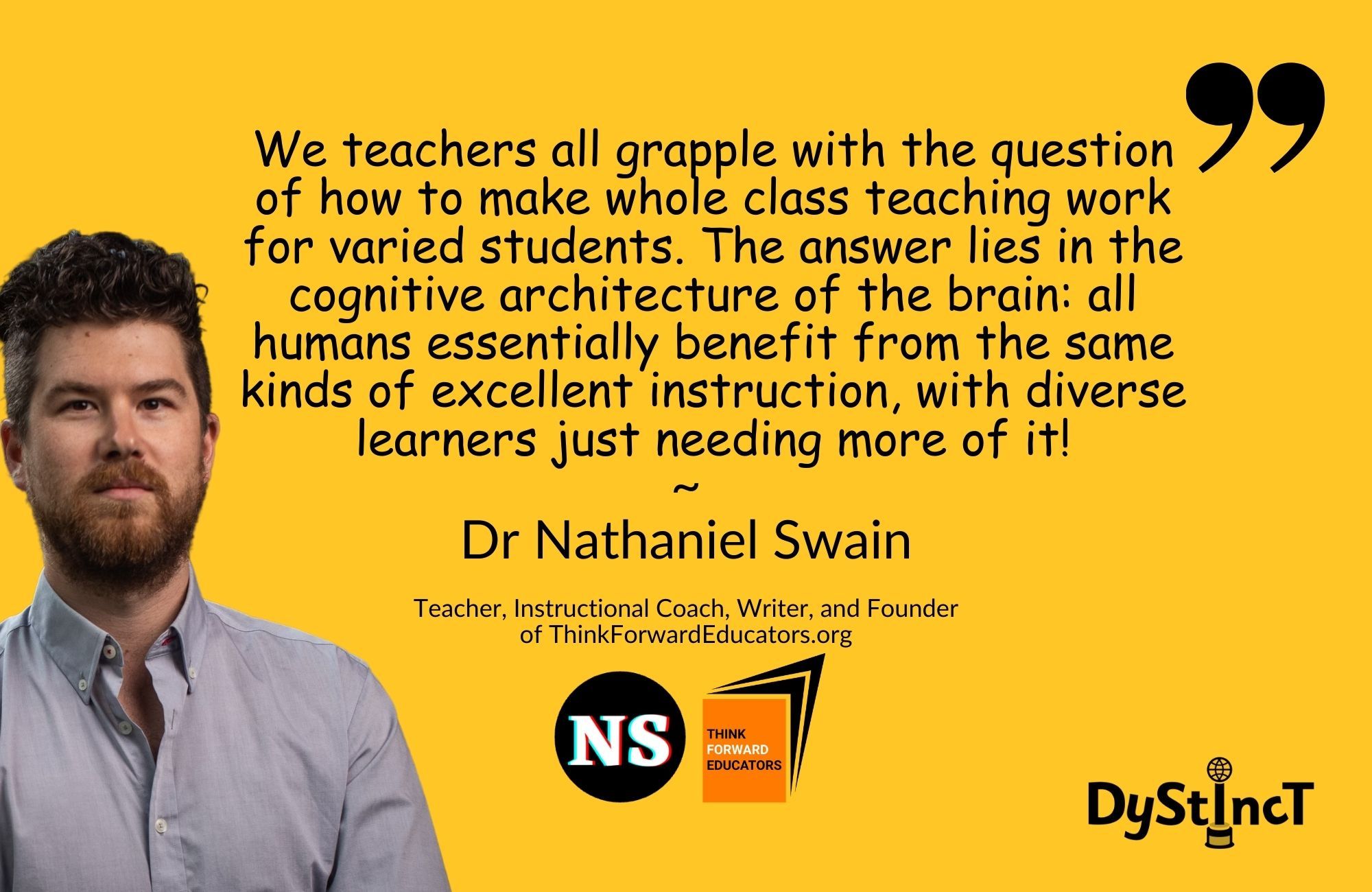
Dr Nathaniel Swain is a Teacher, Instructional Coach, and Writer. He has recently joined La Trobe University School of Education as Senior Lecturer in Learning Sciences. Nathaniel is passionate about language, literacy, learning, and effective teaching for all students. He has taught a range of learners in primary school settings and writes a blog for teachers known as Dr Swain's Cognitorium.
In 2019, Nathaniel founded a community of over 16,000 teachers committed to the Science of Learning: THINK FORWARD EDUCATORS is now a registered charity and proudly sponsored by the Catholic Education, Archdiocese of Canberra Goulburn's Catalyst project.
Extracts from Dystinct Magazine