Issue 26: Choosing a school for students with learning differences | Libby Taylor | School Up
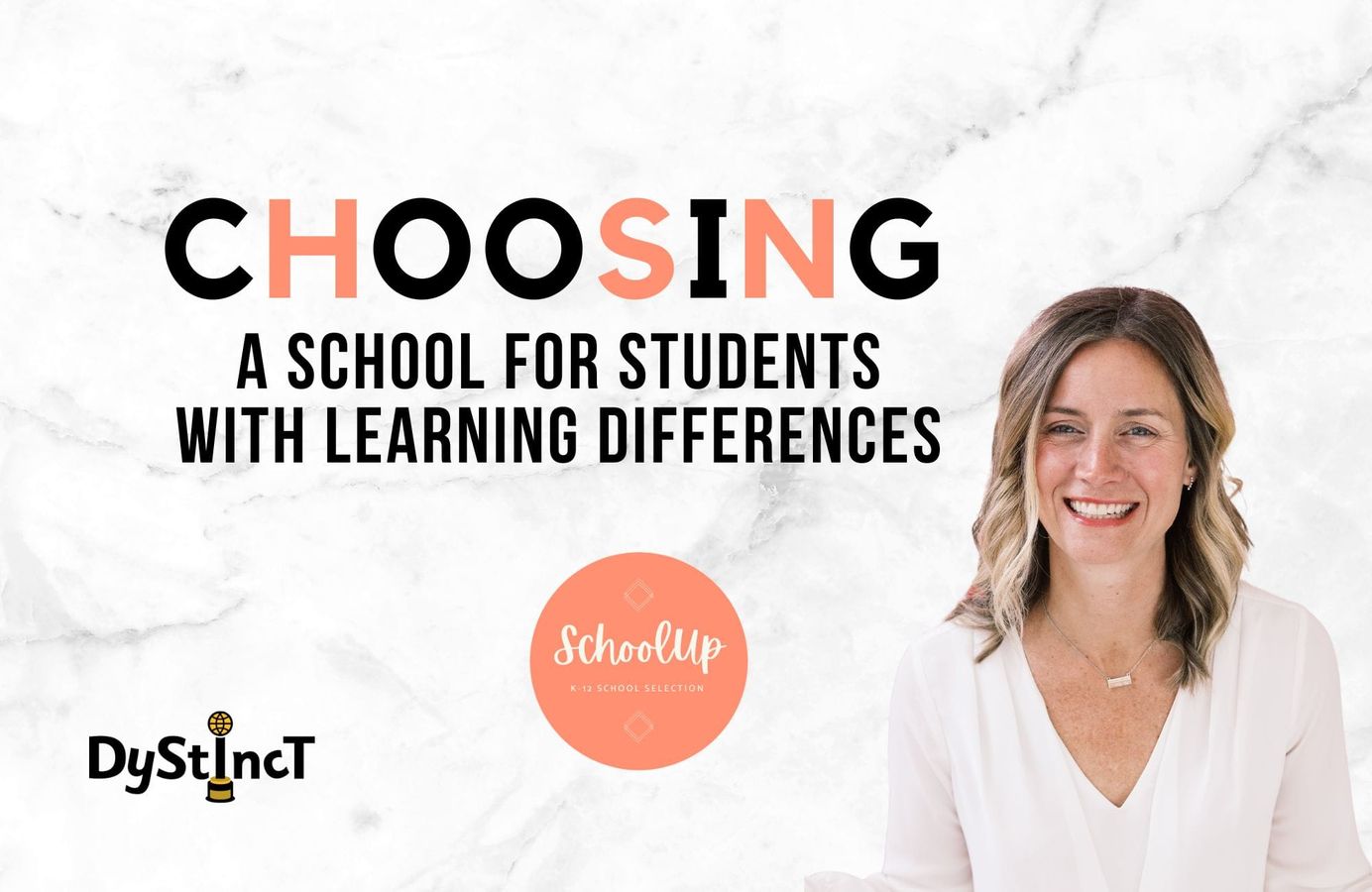
Libby Taylor guides parents through the school selection process, emphasising that the best choice for students, especially those with learning differences, is one that fits their unique needs, learning style, and family values.

Table of Contents
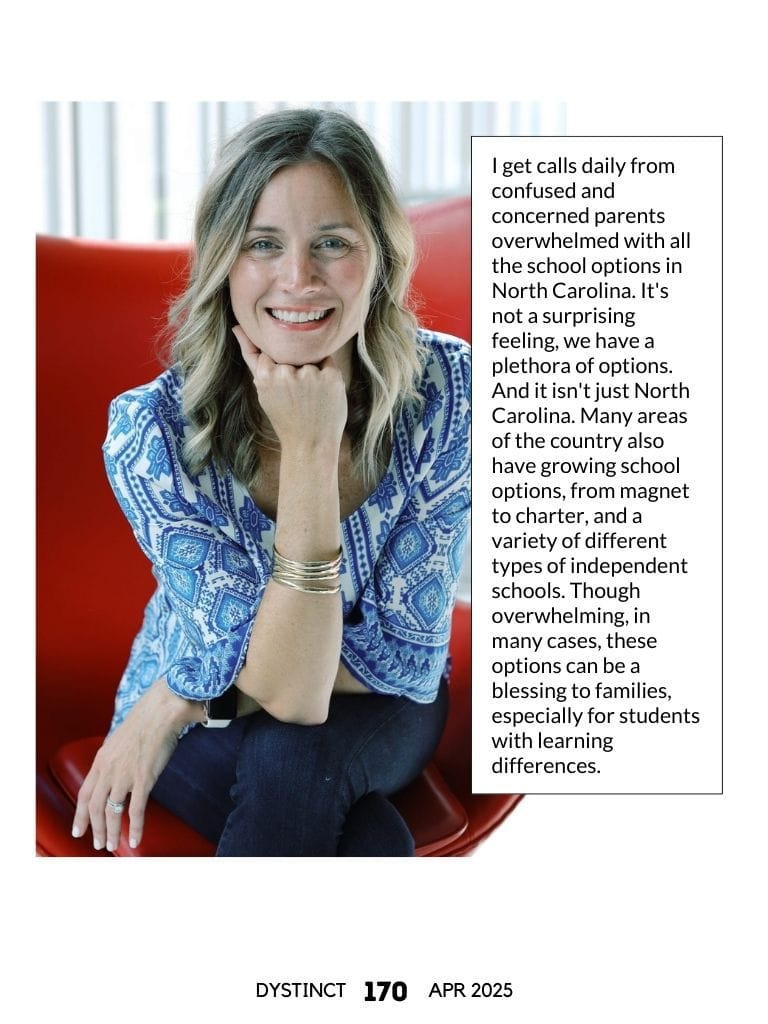
I get calls daily from confused and concerned parents overwhelmed with all the school options in North Carolina. It's not a surprising feeling, we have a plethora of options. And it isn't just North Carolina. Many areas of the country also have growing school options, from magnet to charter, and a variety of different types of independent schools. Though overwhelming, in many cases, these options can be a blessing to families, especially for students with learning differences.
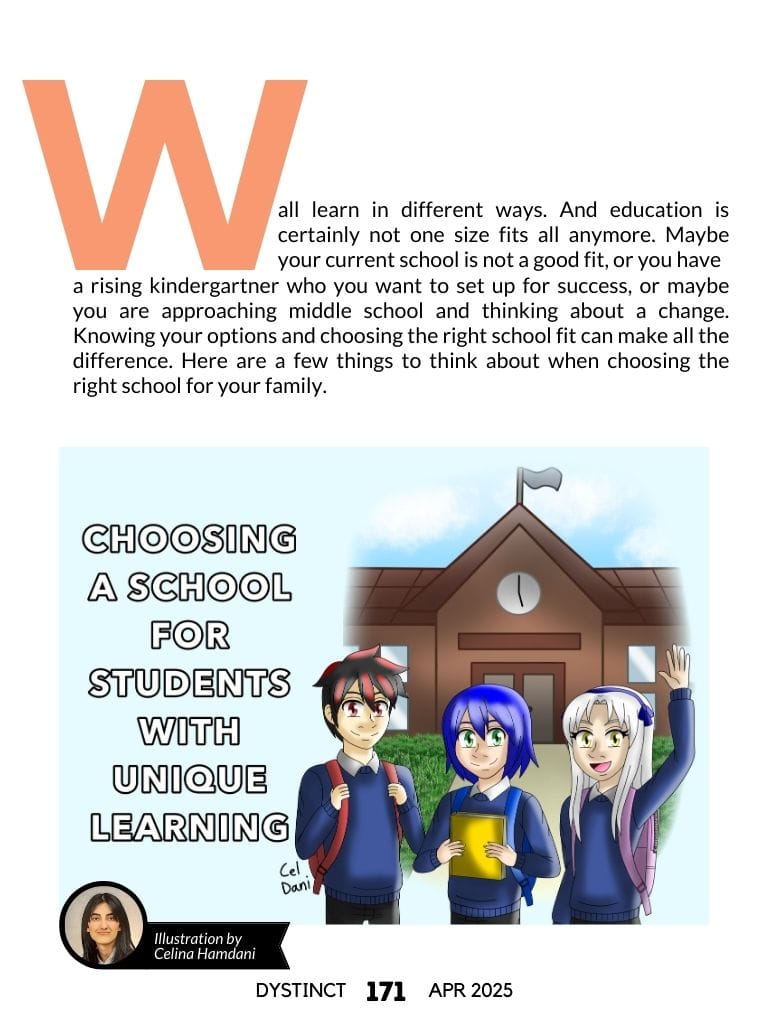
Wall learn in different ways. And education is certainly not one size fits all anymore. Maybe your current school is not a good fit, or you have a rising kindergartner who you want to set up for success, or maybe you are approaching middle school and thinking about a change. Knowing your options and choosing the right school fit can make all the difference. Here are a few things to think about when choosing the right school for your family.
Look for fit over prestige
Look for fit over prestige
Sometimes, it's hard to overlook the gossip and competition that comes with school selection. But remind yourself, going into this process, that you might not be looking for what everyone else is looking for. It's not a popularity contest. Be sure to focus on what schools best fit your family and not just the ones that seem the most popular. For example, with younger students who have learning differences, it's often more important to find a school that fits their interests and plays into their strengths than it is to find a school with challenging academics. Our children must fall in love with learning first and enjoy going to school every day. Look for the right fit and not just the school with the biggest name. I find it helps to write down your goals and values before starting the process so that you can stay grounded and not lose sight of what is most important.
What to ask:
- What are our education goals for our children?
- What is most important to us in a school?
- What are our academic values?
- Does your current teacher have any advice for how your student learns best?
Know your options
Know your options
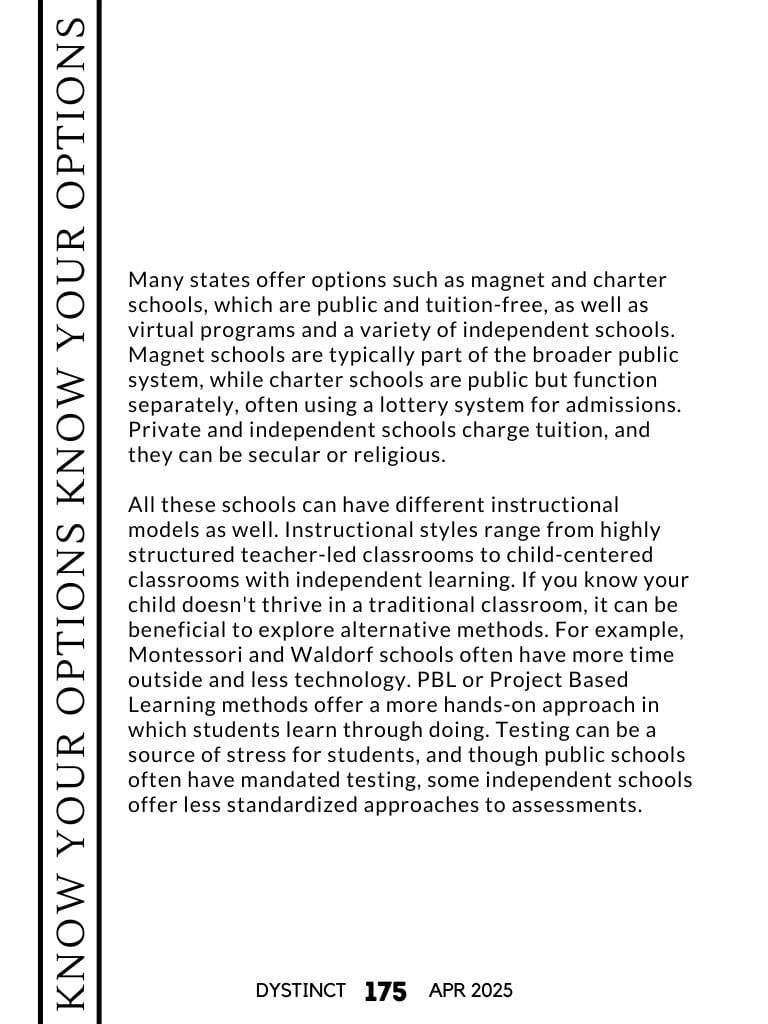
Many states offer options such as magnet and charter schools, which are public and tuition-free, as well as virtual programs and a variety of independent schools. Magnet schools are typically part of the broader public system, while charter schools are public but function separately, often using a lottery system for admissions. Private and independent schools charge tuition, and they can be secular or religious.
All these schools can have different instructional models as well. Instructional styles range from highly structured teacher-led classrooms to child-centered classrooms with independent learning. If you know your child doesn't thrive in a traditional classroom, it can be beneficial to explore alternative methods. For example, Montessori and Waldorf schools often have more time outside and less technology. PBL or Project Based Learning methods offer a more hands-on approach in which students learn through doing. Testing can be a source of stress for students, and though public schools often have mandated testing, some independent schools offer less standardized approaches to assessments.
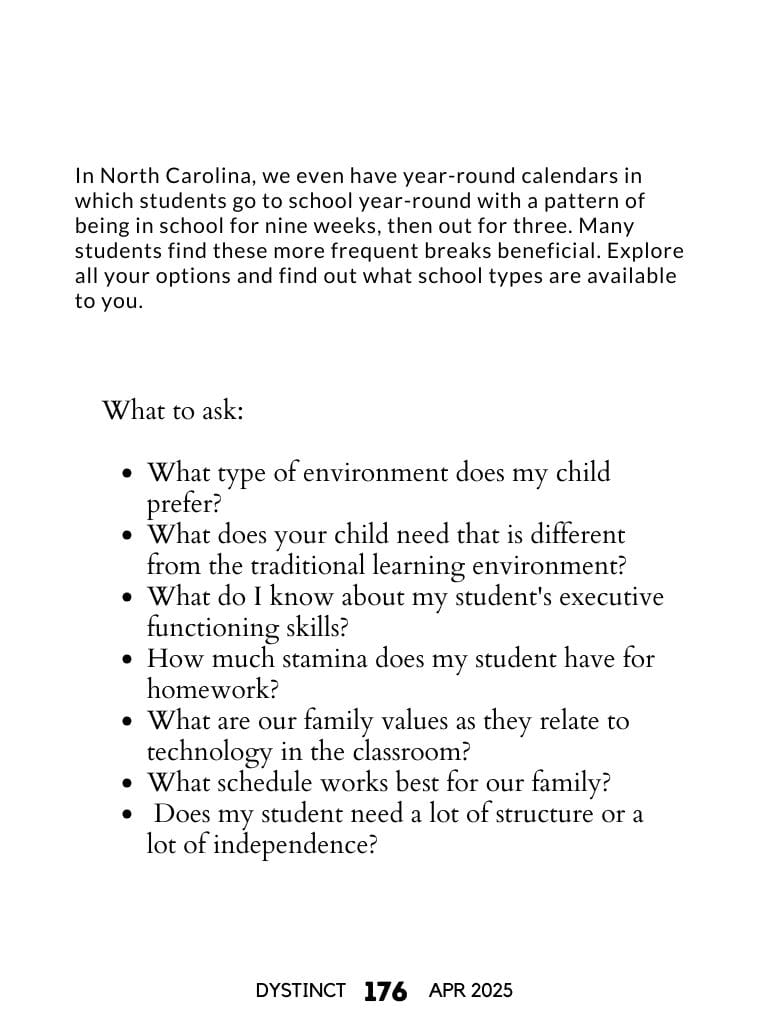
In North Carolina, we even have year-round calendars in which students go to school year-round with a pattern of being in school for nine weeks, then out for three. Many students find these more frequent breaks beneficial. Explore all your options and find out what school types are available to you.
What to ask:
- What type of environment does my child prefer?
- What does your child need that is different from the traditional learning environment?
- What do I know about my student's executive functioning skills?
- How much stamina does my student have for homework?
- What are our family values as they relate to technology in the classroom?
- What schedule works best for our family?
- Does my student need a lot of structure or a lot of independence?
Don't just rely on data
Don't just rely on data
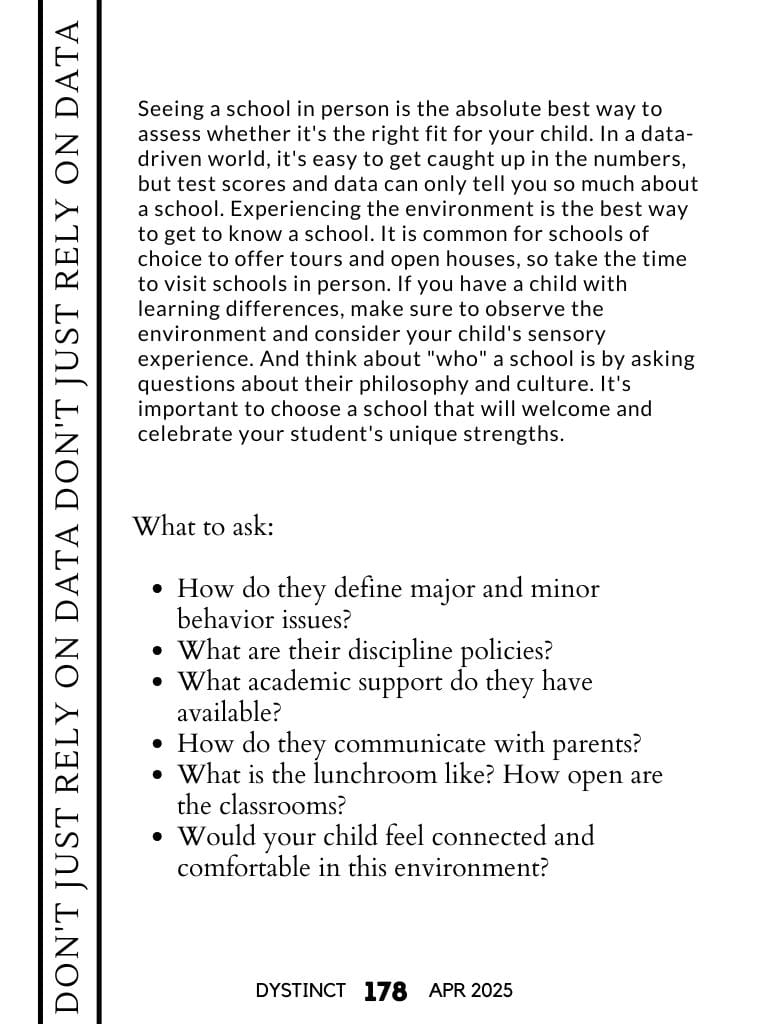
Seeing a school in person is the absolute best way to assess whether it's the right fit for your child. In a data-driven world, it's easy to get caught up in the numbers, but test scores and data can only tell you so much about a school. Experiencing the environment is the best way to get to know a school. It is common for schools of choice to offer tours and open houses, so take the time to visit schools in person. If you have a child with learning differences, make sure to observe the environment and consider your child's sensory experience. And think about "who" a school is by asking questions about their philosophy and culture. It's important to choose a school that will welcome and celebrate your student's unique strengths.
What to ask:
- How do they define major and minor behavior issues?
- What are their discipline policies?
- What academic support do they have available?
- How do they communicate with parents?
- What is the lunchroom like? How open are the classrooms?
- Would your child feel connected and comfortable in this environment?
The logistics are important too
The logistics are important too
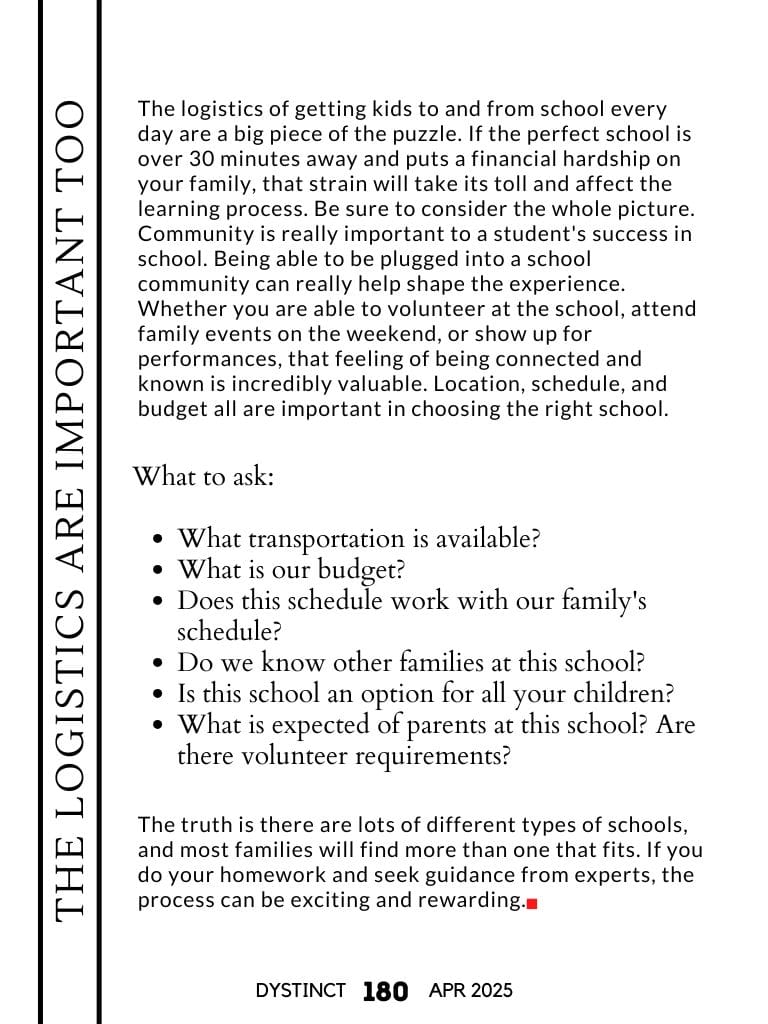
The logistics of getting kids to and from school every day are a big piece of the puzzle. If the perfect school is over 30 minutes away and puts a financial hardship on your family, that strain will take its toll and affect the learning process. Be sure to consider the whole picture. Community is really important to a student's success in school. Being able to be plugged into a school community can really help shape the experience. Whether you are able to volunteer at the school, attend family events on the weekend, or show up for performances, that feeling of being connected and known is incredibly valuable. Location, schedule, and budget all are important in choosing the right school.
What to ask:
- What transportation is available?
- What is our budget?
- Does this schedule work with our family's schedule?
- Do we know other families at this school?
- Is this school an option for all your children?
- What is expected of parents at this school? Are there volunteer requirements?
The truth is there are lots of different types of schools, and most families will find more than one that fits. If you do your homework and seek guidance from experts, the process can be exciting and rewarding.
Libby Taylor
Educator, Author, Speaker & Advocate for Neurodivergent Learners | dyslexiaspell.com | instagram | x | facebook | youtube
Libby Taylor
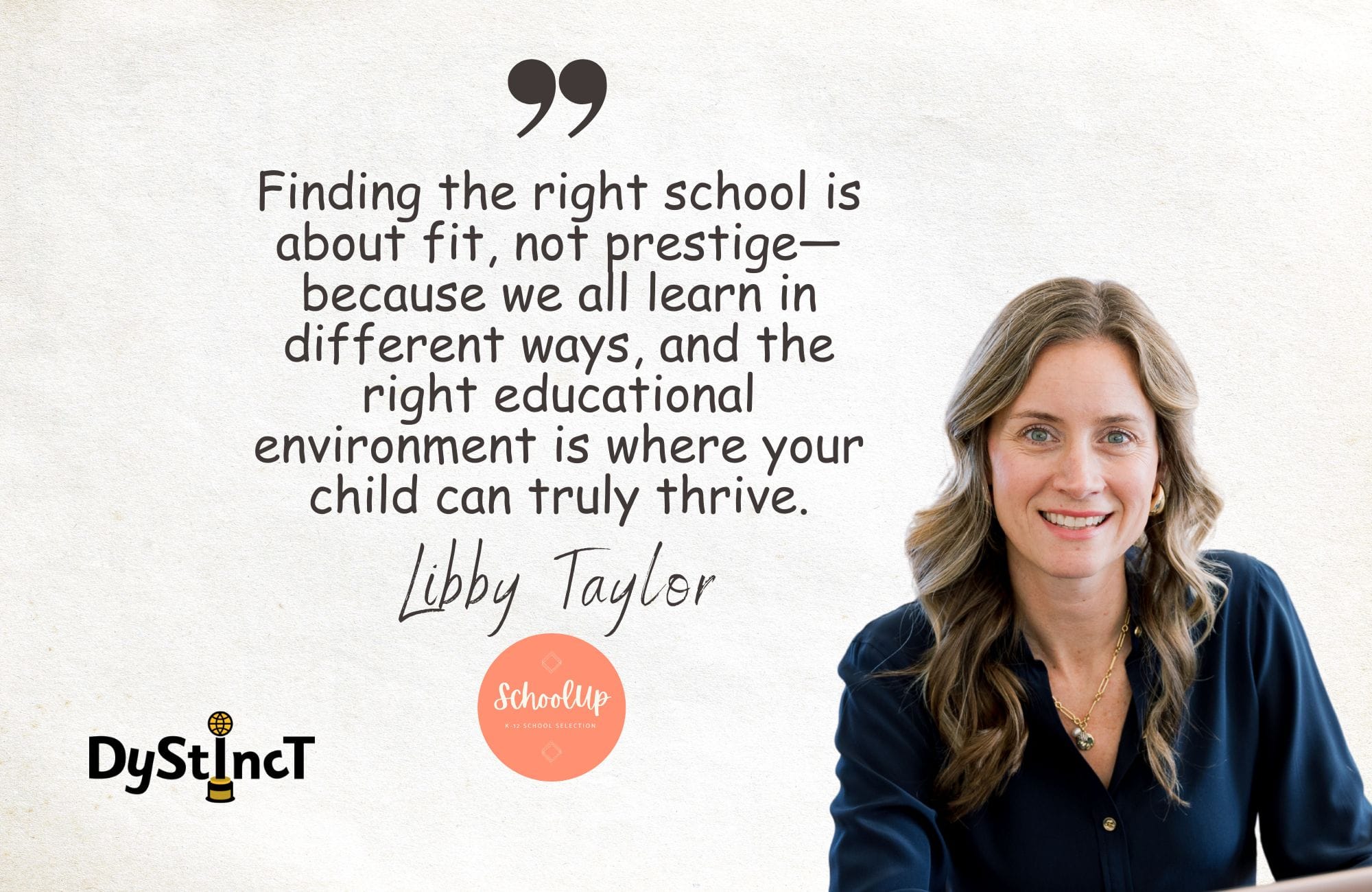
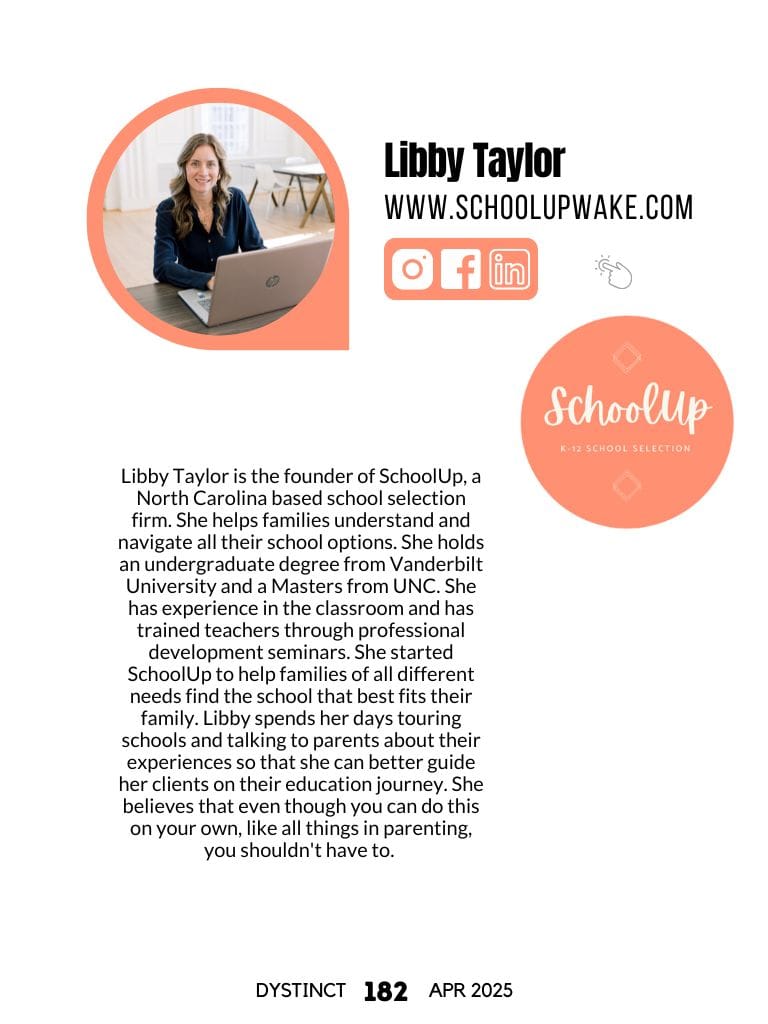
Libby Taylor is the founder of SchoolUp, a North Carolina based school selection firm. She helps families understand and navigate all their school options. She holds an undergraduate degree from Vanderbilt University and a Masters from UNC. She has experience in the classroom and has trained teachers through professional development seminars. She started SchoolUp to help families of all different needs find the school that best fits their family. Libby spends her days touring schools and talking to parents about their experiences so that she can better guide her clients on their education journey. She believes that even though you can do this on your own, like all things in parenting, you shouldn't have to.
Extracts from Dystinct Magazine
Extracts from Dystinct Magazine