Issue 14: Understanding Executive Functions - The Impact of Task Initiation Difficulties | Helen Trethewey
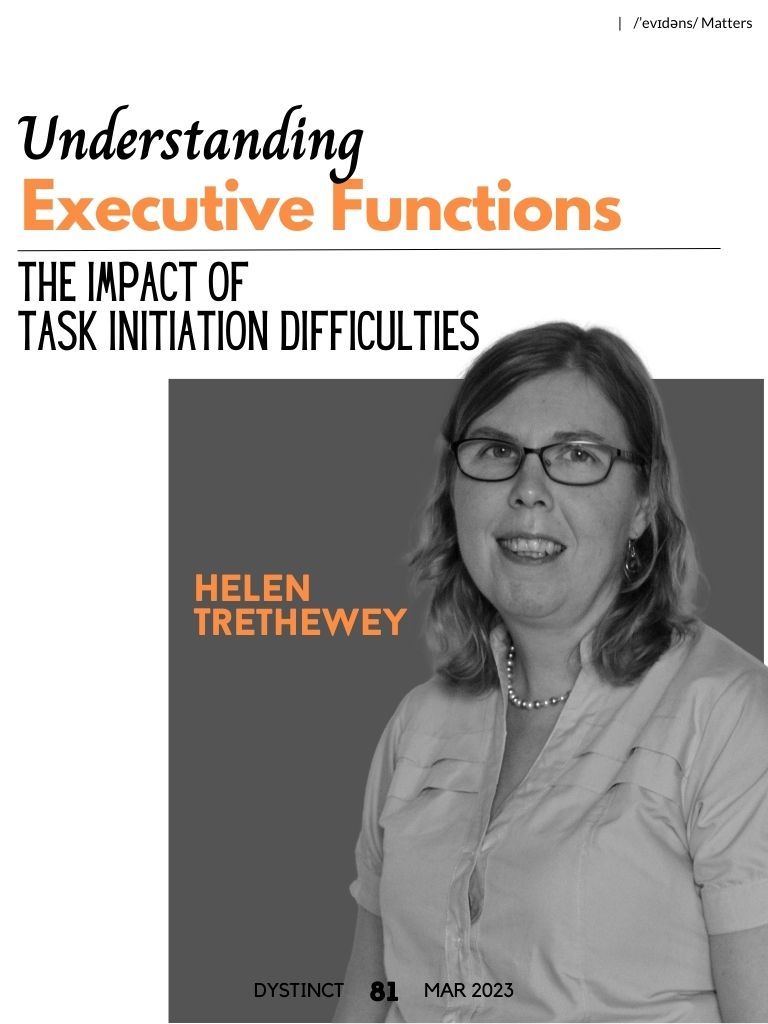
Helen Trethewey explains how task initiation, an executive functioning skill, can be a genuine difficulty for many students and how educators can help students overcome struggles with task initiation in classrooms.

Success in school and in life depends as much on our executive functioning as on our academic ability and knowledge of different subjects and skills.
Good executive functions are vital to both children and adults for navigating our daily lives. Executive functions develop slowly throughout childhood, and research has shown that they may not be fully developed until around the age of 25. However, they do not always develop evenly, and for people with a learning difference, like dyslexia or ADHD, some areas can be underdeveloped. This can be confusing for both parents and teachers when a bright student struggles with organisational skills, emotions, or just remembering where they left their coat!
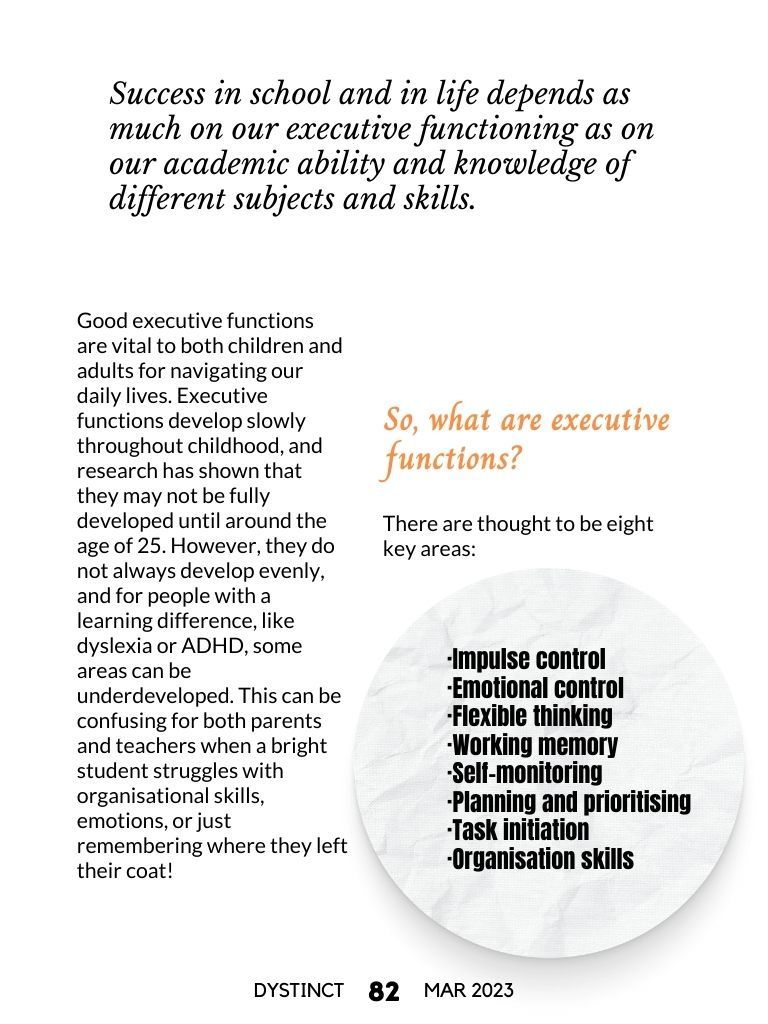
So, what are executive functions?
There are thought to be eight key areas:
- Impulse control
- Emotional control
- Flexible thinking
- Working memory
- Self-monitoring
- Planning and prioritising
- Task initiation
- Organisation skills
The importance of these key skills can often be underestimated and overlooked, but they can make such a huge difference to everyday life and performance at school. All these skills can be taught and developed over time with the right support.
In my experience, task initiation is an area that is rarely talked about. If it is discussed, the comments made show a lack of understanding that it is a genuine difficulty. For many teachers, it seems that some students simply do not try hard enough, and they find it puzzling when a student does not just get on with the assigned work. Parents may also experience this at home when they ask their children to complete a task. But then nothing happens, even though they know their child is capable. Task initiation is when a person knows what to do but simply cannot get started. We believe that if a task is clearly explained and the person has prior knowledge and skills, they should be able to complete it independently. However, some students simply cannot start a task without further assistance from a parent, teacher or peer. This is not due to a lack of understanding or motivation but because their brain does not know the first step to take. There can also be an element of anxiety and difficulties with working memory, planning, and prioritising. Not being able to sequence or track the different aspects of a task, along with not being able to work out which parts are most important, can make a task overwhelming. For those with ADHD, there is the added complication that the chemicals needed to make connections in the brain are not released when a task is "low interest" or not engaging.
Not being able to start the task is not a choice, but rather that your brain is not allowing you to get started.
Many tasks set at school require working through several parts or numerous skills to be used simultaneously. For some students, particularly those with working memory difficulties, the different aspects of the task can seem too much. Add to this the considerable energy that might have already been drained by listening to new information and instructions at the beginning of the lesson. It may feel like climbing Mount Everest to the student. Their perception is that if completion is impossible, why even start? The fear of failure can be very real when past experience tells you that you often find tasks hard and may get the wrong idea or fail to complete the task correctly.
Teachers often underestimate the complexity of the tasks they set. This is partly because there are always a few students in every classroom who complete all assigned tasks with no problem. In addition, at different ages, children are expected to be capable and automatic at performing specific skills. However, for children with dyslexia and other learning differences, this may not be the case. There is also the belief that if the task being presented has been done before but with a different topic, then it should be easier for the students. But for those with dyslexia, each task may feel like something completely different or new. For example, if a child with dyslexia wrote a story yesterday about a spooky forest and today the child is writing about witches, in the child's mind, the two themes aren't related at all. Writing about witches could be another new and overwhelming task.
The child's mind could be overloaded with several possibilities:
How should I start the first sentence?
What's the best word to use to describe the witch?
Then there are practical things to remember, such as:
- Don't forget to leave a space between the title and the first line.
- Remember to start with a capital letter.
- How do I spell "witch"?
While these thoughts race around their heads, fear rises as they see those around them start working on the task without much difficulty.
I still vividly remember a teacher training course on literacy when we were all asked to write a poem about cats. Well, that sounds pretty simple, doesn't it? We all know what a cat is, and we know what a poem is. So, we should be able to think of some ideas, write them down and then share the finished poem. But I still remember staring at the blank page and looking at the people around me, starting to write almost immediately. I could feel the panic inside my brain as I sat, trying to think of where to start. What should I say about a cat? What would be a good word to use at the beginning? Should the poem be short or long? Should I try to make it funny or serious? I was conscious that I was surrounded by other teachers, so I didn't want it to be too simple. By the time I made a decision and actually got started, I could see that people around me had almost finished their poems. This experience was an eye-opener for me, and I began to understand how some students feel when presented with a blank piece of paper and too many choices.
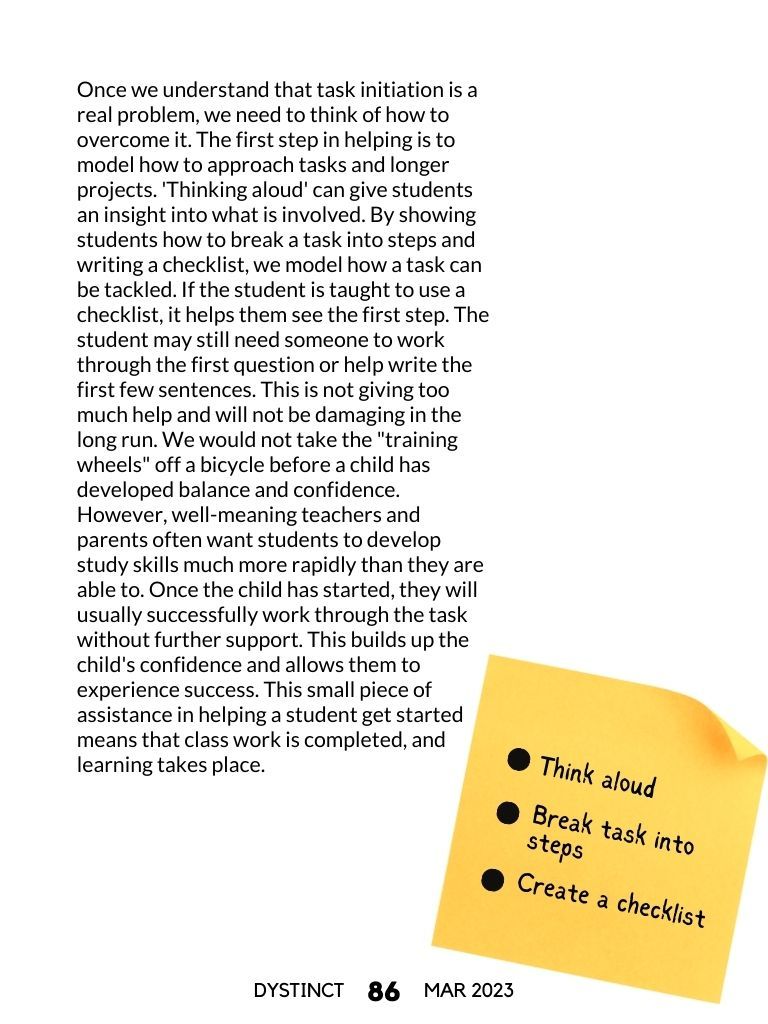
Once we understand that task initiation is a real problem, we need to think of how to overcome it. The first step in helping is to model how to approach tasks and longer projects. 'Thinking aloud' can give students an insight into what is involved. By showing students how to break a task into steps and writing a checklist, we model how a task can be tackled. If the student is taught to use a checklist, it helps them see the first step. The student may still need someone to work through the first question or help write the first few sentences. This is not giving too much help and will not be damaging in the long run. We would not take the "training wheels" off a bicycle before a child has developed balance and confidence. However, well-meaning teachers and parents often want students to develop study skills much more rapidly than they are able to. Once the child has started, they will usually successfully work through the task without further support. This builds up the child's confidence and allows them to experience success. This small piece of assistance in helping a student get started means that class work is completed, and learning takes place.
- Think aloud
- Break task into steps
- Create a checklist
Teachers and parents with good intentions often get too caught up in the idea that students need to do everything for themselves for them to learn anything.
They lose sight of the fact that scaffolding enables learning rather than hinders it. For example: giving sentence starters usually triggers a child's thinking and helps them select relevant ideas which they can turn into coherent sentences. Without a sentence starter, the child can feel overwhelmed by the task and be confused about how to use the facts they know. This then leads to negative feelings and a sense of failure when the child watches their classmates get started, and they simply do not know how to begin. They may also resort to task avoidance, like going to the toilet or clowning around to hide their inability to get started. The teacher may get frustrated and perceive the reluctance to get started as laziness or lack of ability, and so a negative spiral begins. This can often lead to underachievement in students who are capable of learning with the right support.
Independence can be a long-term goal, but careful consideration needs to be given to how long this may actually take and the smaller steps that may be needed to get there. Over time we can teach a student how to work out the first step of a task themselves and use the information given to get started. This could take months or years to develop and will need much practice with support for a skill to become automatic. Part of this involves encouraging students to be honest about their struggles and adults to offer support without judgment. Probably the hardest thing about having difficulties with executive function is that they are almost invisible. Many people seem to find it hard to accept that some people's brains work differently, and what seems easy for some is almost impossible for others. The way forward is for parents and educators to have a better understanding of how executive functions develop and their genuine impact on daily life.
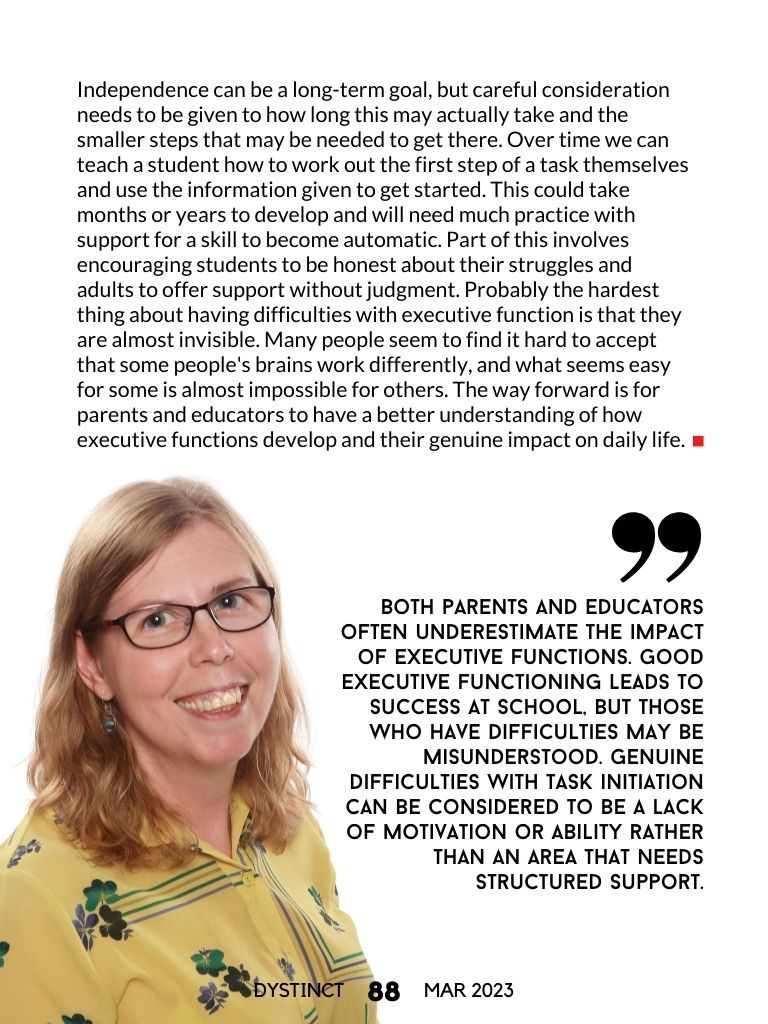
Helen Trethewey
TwiceExceptionalLearners.com | Facebook | Twitter | LinedIn
I am an international educator with extensive experience in the area of inclusion. I have enjoyed working around the world for the last 20 years in Brussels, Hong Kong, Vietnam and now Sweden.
I am passionate about education and want all students to be understood and experience success in their own way. I have worked with students of all ages and get involved in learning both inside and outside the classroom. I love sharing my expertise with others through writing articles and giving presentations. I focus on how we all learn differently and effective approaches which ensure everyone achieves their best.
As someone who is dyslexic, I live with the challenges that this causes. I find many people do not appreciate how many aspects of life it can affect. Over the last few years, I have presented a series of webinars on the hidden difficulties of dyslexia to try to highlight the true impact on daily life.
Extracts from Dystinct Magazine