Issue 14: Shared Book Reading: An Activity for Children of All Ages | Dr Tessa Weadman
Dr Tessa Weadman highlights the benefits of shared book reading for children's oral language and early literacy development and provides strategies for parents to engage in interactive reading with their children.

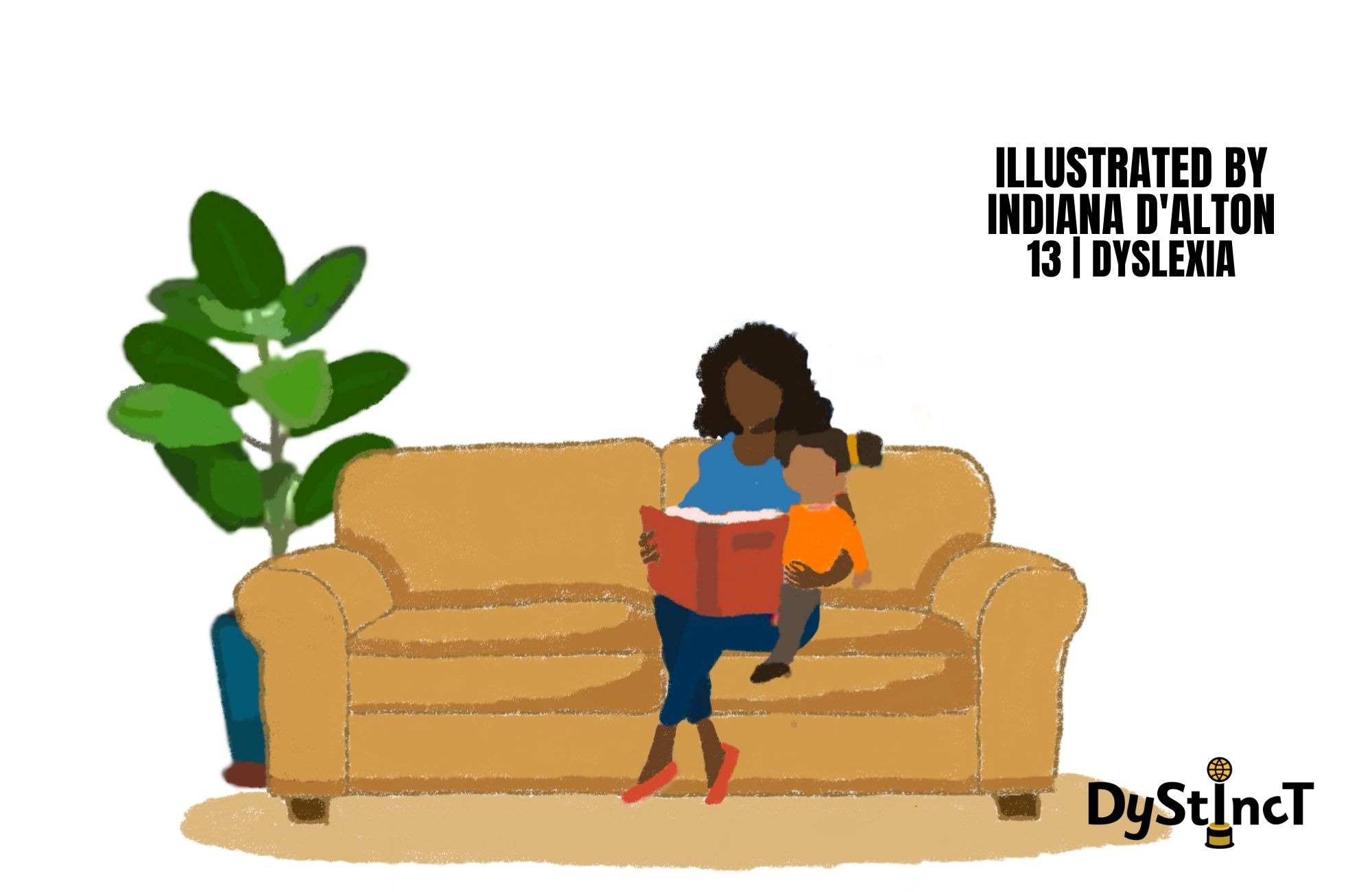
It is common for parents of preschool children to read to their children regularly. Many parents recall cherished moments of picking nighttime stories and reading to their children before bed. There is often a shift in these reading practices once children start school. The child begins bringing books home to read to their parent rather than the adult reading a book for their child. Reading to children will not teach them how to read, but it plays an important role in building children’s oral language and early literacy skills. Shared book reading experiences continue to benefit all children once they begin school but can be particularly beneficial for children with learning difficulties.
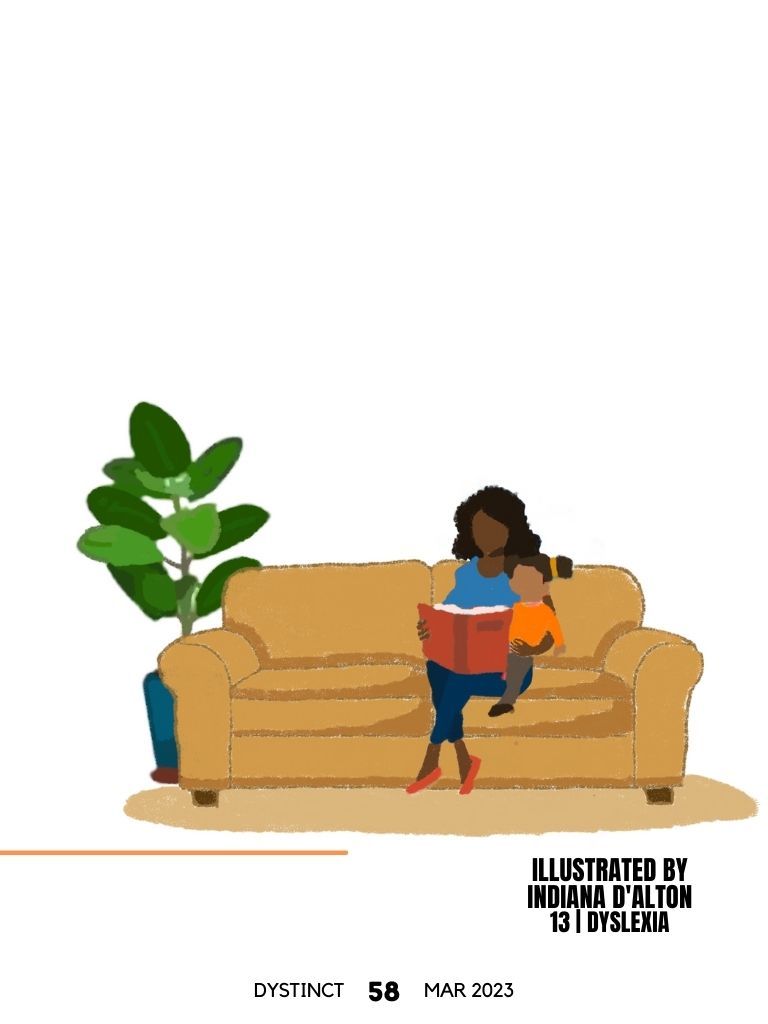
Shared book reading is an interactive reading process whereby the adult shares a book with a child or a group of children. Shared book reading promotes discussion and talking about the story, which encourages children to take on a much more active role during the reading session.
There are several benefits of shared reading, including:
- Increased exposure to new words and increased vocabulary
- Improved syntax skills
- Increased story comprehension, including story grammar elements
- Increased background knowledge and knowledge of new concepts
- Improved print knowledge skills (print concepts and alphabet knowledge)
- Encourages social-emotional bonding
- Increased cognitively challenging talk
Children can access novel vocabulary and advanced syntax while reading compared to everyday conversation. These opportunities may be reduced for struggling readers. This is commonly known as the Matthew effect, whereby the “rich get richer, and the poor get poorer”. For young readers, this relates to good readers spending more time reading, while struggling readers may spend less time reading. This results in a widening gap between good readers and struggling readers, and in turn, these children have less exposure to new vocabulary and concepts introduced in more advanced books. Therefore, there are many advantages of continued shared book reading for children once they start school.
Children benefit from explicit literacy teaching when they are learning to read once formal school has commenced. Literacy teaching should target systematic, synthetic phonics, phonemic awareness, vocabulary, fluency, and comprehension. Further, beginning readers are encouraged to read decodable books that are designed for early and struggling readers. Decodable books are sequenced and contain the grapheme-phoneme (letter-sound) relationships children are learning at school. Continued shared reading experiences with other books during this period support children to continue developing their vocabulary, story comprehension and early literacy skills while they are placing much of their own cognitive effort while reading on early sound identification, blending, and segmenting. We know that reading achievement positively impacts children’s motivation to read. Why would we be motivated to keep doing something that we find really difficult? Shared book reading can play an important role in continuing to develop important language skills for children with learning difficulties who require additional time with their own reading skills.
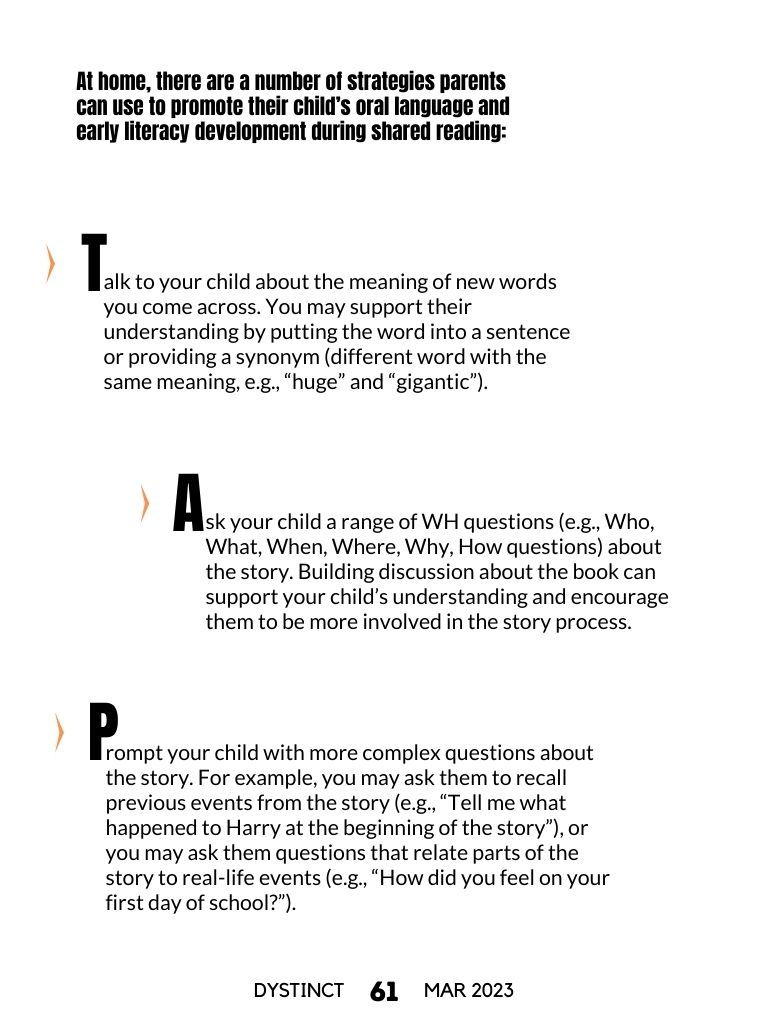
At home, there are a number of strategies parents can use to promote their child’s oral language and early literacy development during shared reading:
- Talk to your child about the meaning of new words you come across. You may support their understanding by putting the word into a sentence or providing a synonym (different word with the same meaning, e.g., “huge” and “gigantic”).
- Ask your child a range of WH questions (e.g., Who, What, When, Where, Why, How questions) about the story. Building discussion about the book can support your child’s understanding and encourage them to be more involved in the story process.
- Prompt your child with more complex questions about the story. For example, you may ask them to recall previous events from the story (e.g., “Tell me what happened to Harry at the beginning of the story”), or you may ask them questions that relate parts of the story to real-life events (e.g., “How did you feel on your first day of school?”).
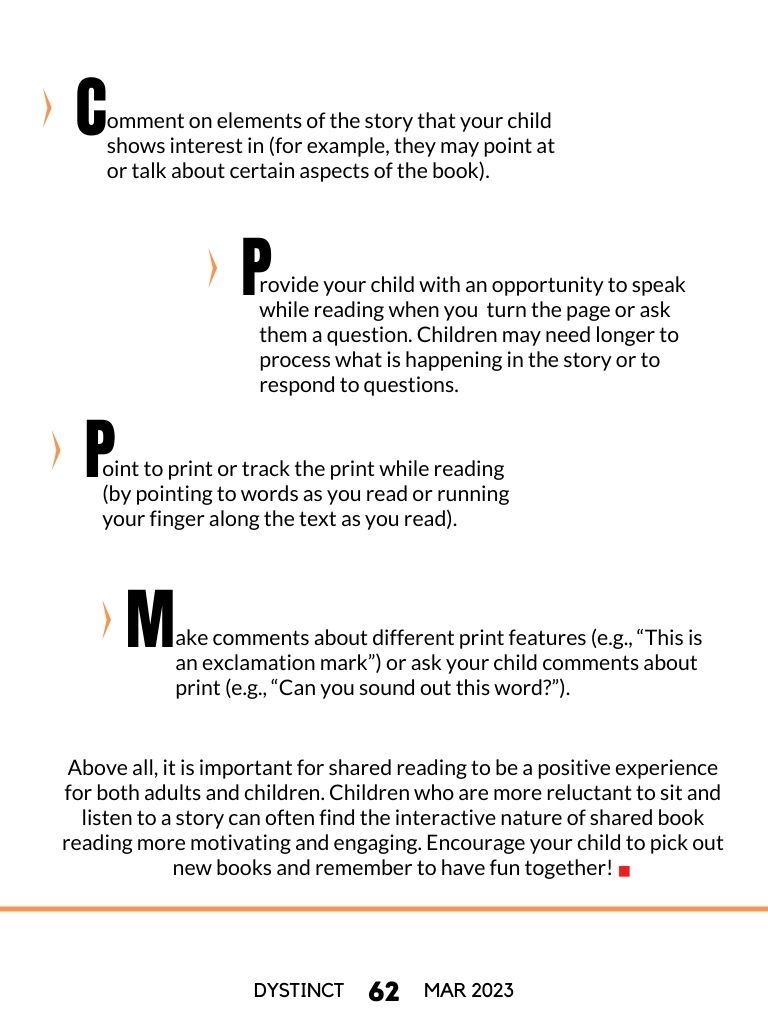
- Comment on elements of the story that your child shows interest in (for example, they may point at or talk about certain aspects of the book).
- Provide your child with an opportunity to speak while reading when youturn the page or ask them a question. Children may need longer to process what is happening in the story or to respond to questions.
- Point to print or track the print while reading (by pointing to words as you read or running your finger along the text as you read).
- Make comments about different print features (e.g., “This is an exclamation mark”) or ask your child comments about print (e.g., “Can you sound out this word?”).
Above all, it is important for shared reading to be a positive experience for both adults and children. Children who are more reluctant to sit and listen to a story can often find the interactive nature of shared book reading more motivating and engaging. Encourage your child to pick out new books and remember to have fun together!
Dr Tessa Weadman
Speech Pathologist, Lecturer, and Researcher at Latrobe University, School of Education
Latrobe.edu.au | LinkedIn | Twitter
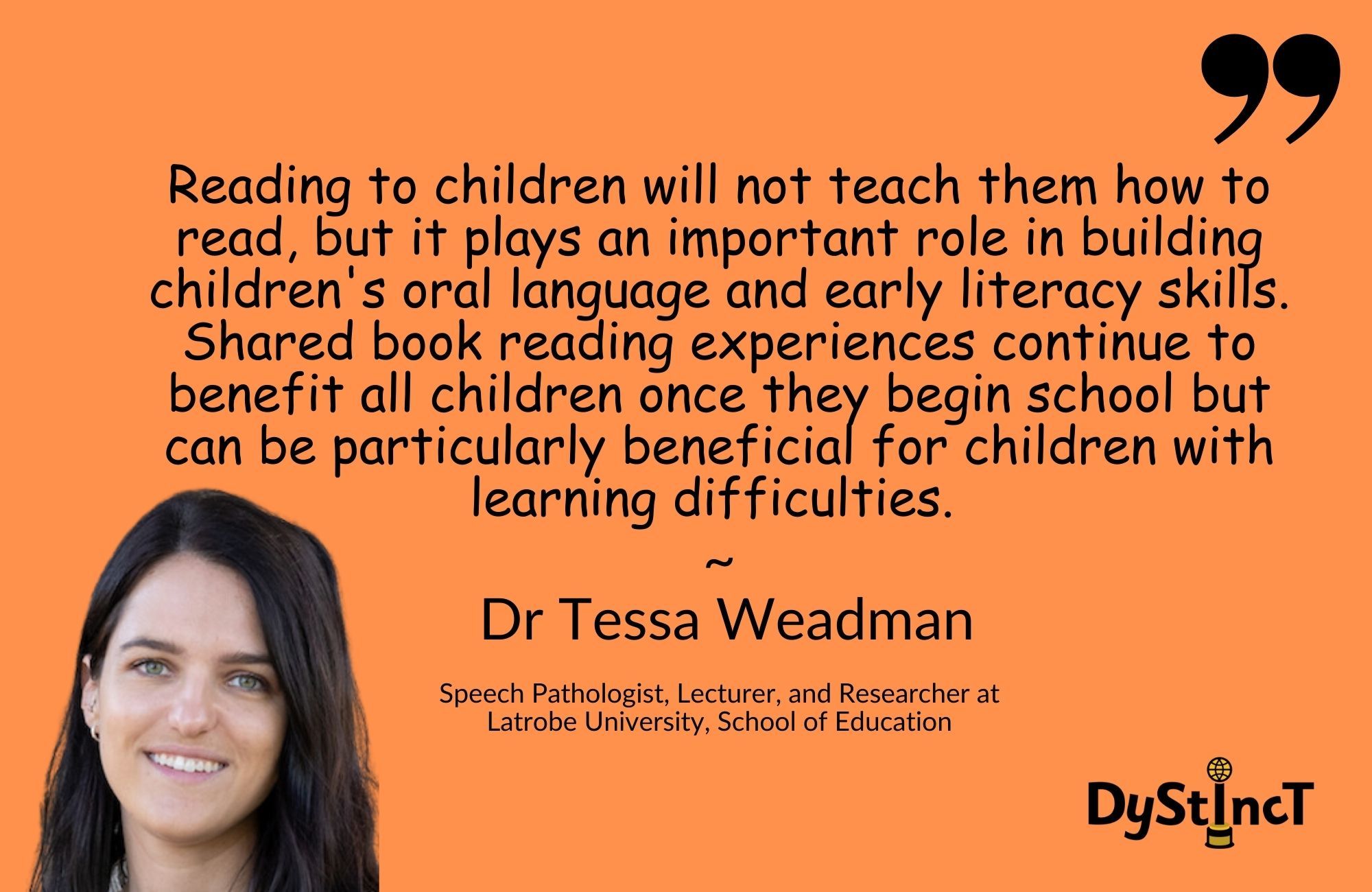
Dr Tessa Weadman works as a lecturer and researcher at La Trobe University in the School of Education. She teaches pre-service teachers and early childhood teachers in the area of literacy. She is a member of La Trobe University's Science of Language and Reading (SOLAR) lab. Her research interests span across preschool and school-age language and literacy development. She also works part-time as a speech-language pathologist. She is the owner of a private practice, The Little Bookworm, in Melbourne, Australia.
Extracts from Dystinct Magazine