Issue 18: Reading Between the Lines: Dyslexia's Emotional Toll in Home and School Life | Melanie Brethour
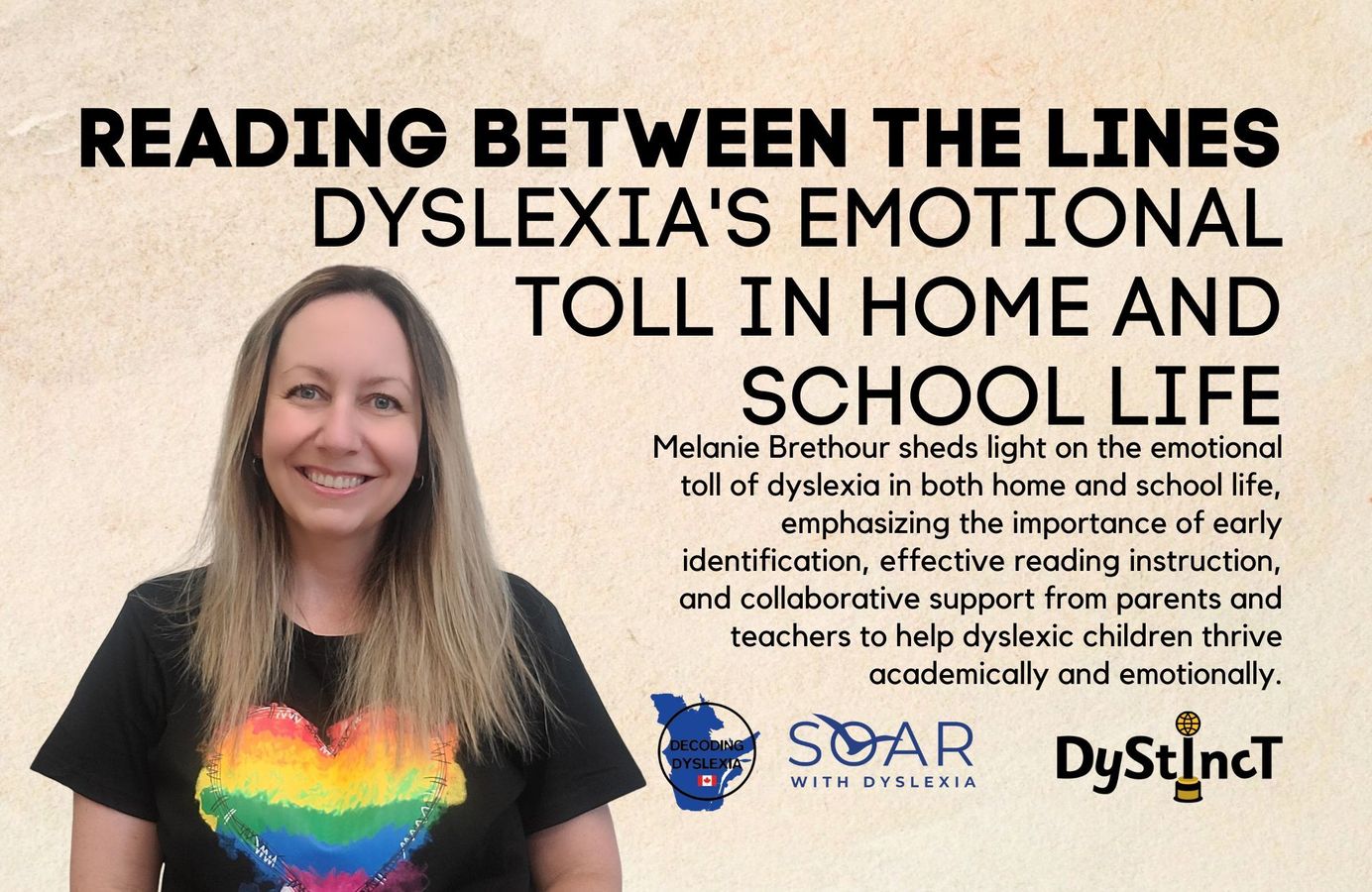
Melanie Brethour sheds light on the emotional toll of dyslexia in both home and school life, emphasizing the importance of early identification, effective reading instruction, and collaborative support from parents and teachers to help dyslexic children thrive academically and emotionally.

Table of Contents
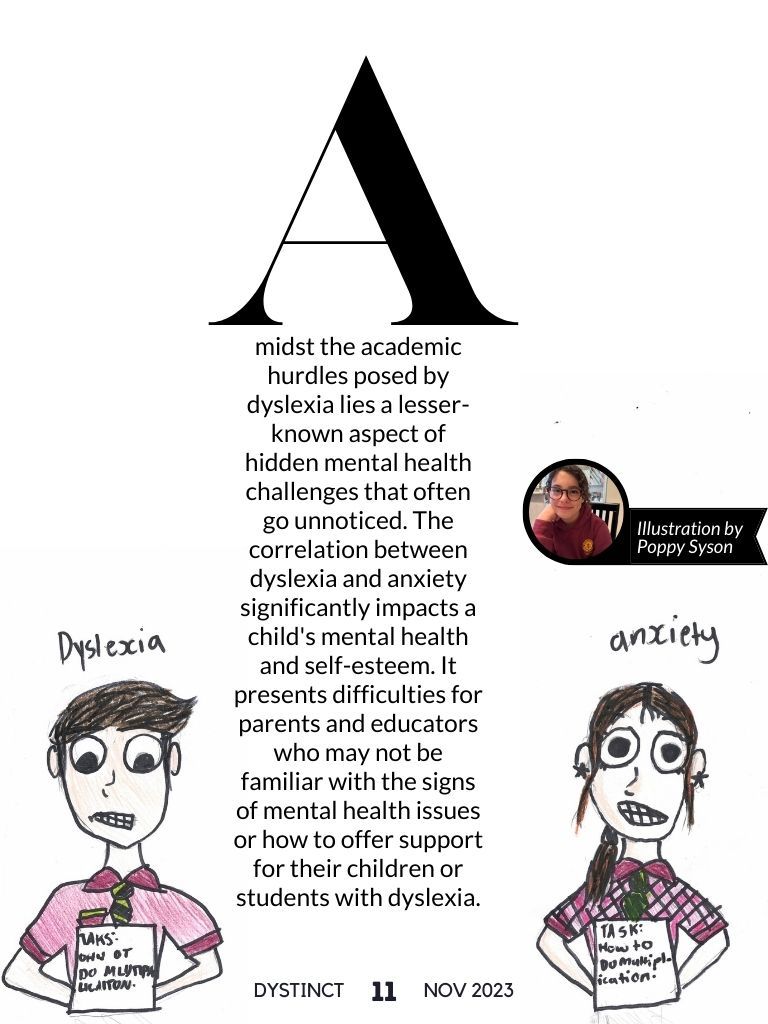
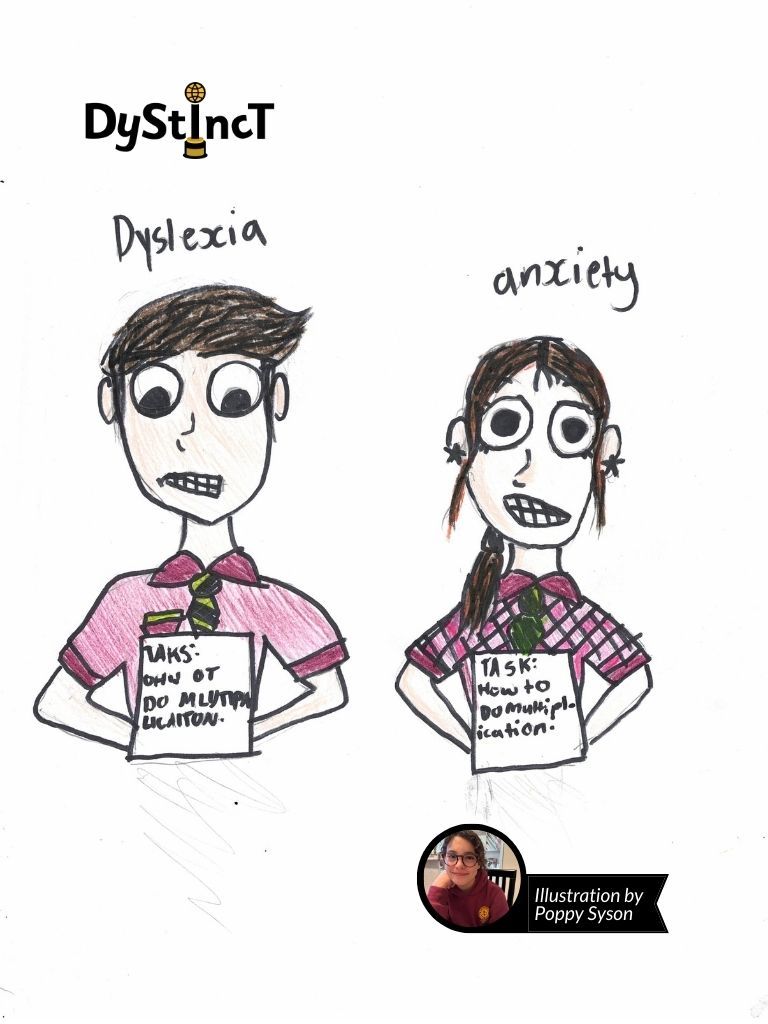
Amidst the academic hurdles posed by dyslexia lies a lesser-known aspect of hidden mental health challenges that often go unnoticed. The correlation between dyslexia and anxiety significantly impacts a child's mental health and self-esteem. It presents difficulties for parents and educators who may not be familiar with the signs of mental health issues or how to offer support for their children or students with dyslexia.
Personal Experience and Awareness
Personal Experience and Awareness
In my role as an elementary resource teacher supporting struggling readers and as a parent to a child with dyslexia, I have firsthand experience of the significant impact dyslexia has on mental health. Watching my son, who grapples with reading and writing difficulties, I am filled with empathy and sadness. I often find myself with feelings of guilt for not fully grasping his challenges and not knowing how to help him earlier on. Witnessing his daily struggles has motivated me to advocate for dyslexia awareness, the science of reading and the mental health implications.
Understanding the critical role of reading proficiency, we must equip our children and students with the necessary tools to succeed in reading and alleviate their anxiety. My awareness grew as I saw my son coping with these challenges. Thus, it is essential to identify signs of anxiety, stress, and other mental health issues both in the classroom and at home. Recognizing these challenges early on can make a significant difference in the lives of dyslexic individuals, allowing for timely intervention and support.
The Importance of Reading Proficiency
The Importance of Reading Proficiency
In a world heavily reliant on digital technology and communication, the inability to read proficiently becomes apparent in everyday situations. Simple activities that many of us take for granted, like playing board games as a family or watching a movie at the theatre, become significant challenges for those with dyslexia. I have witnessed the innocent requests my son makes for me to read questions for board games or subtitles in movies, which highlights the impact of being unable to read proficiently. Beyond academics, dyslexia's emotional and social toll is immeasurable. These early adverse experiences and the lack of proper support and understanding from home and school contribute to heightened anxiety and negative perceptions of self, leading to stress and worry.
Effective intervention and Instruction
Effective intervention and Instruction
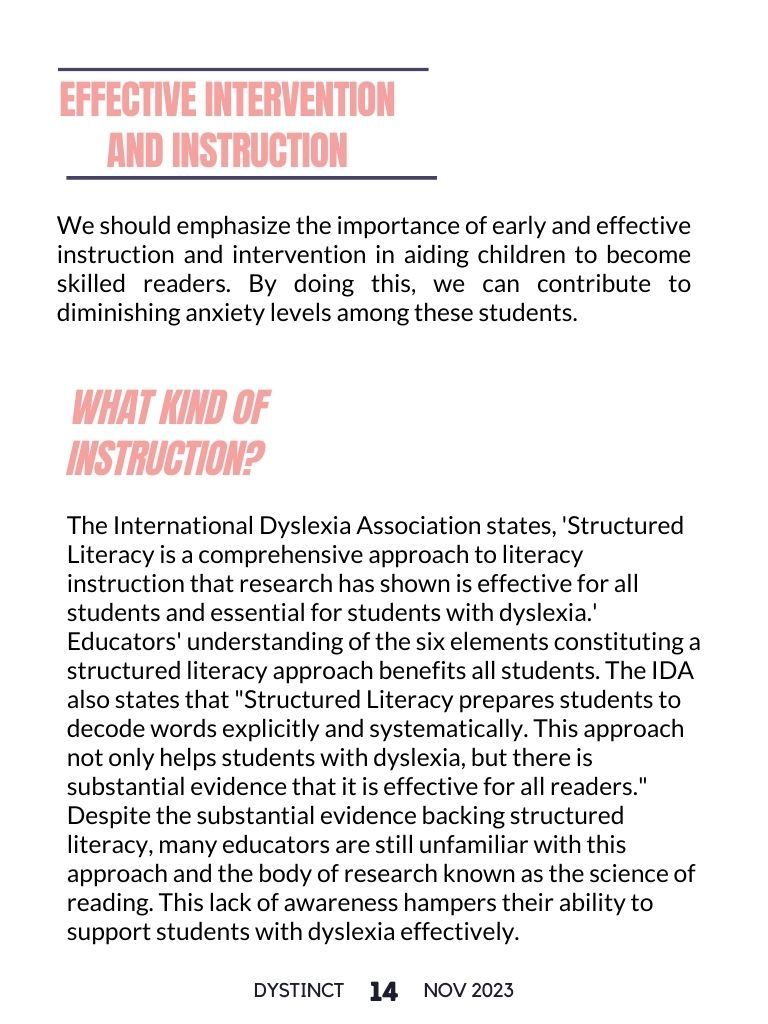
We should emphasize the importance of early and effective instruction and intervention in aiding children to become skilled readers. By doing this, we can contribute to diminishing anxiety levels among these students.
What kind of instruction?
The International Dyslexia Association states, 'Structured Literacy is a comprehensive approach to literacy instruction that research has shown is effective for all students and essential for students with dyslexia.' Educators' understanding of the six elements constituting a structured literacy approach benefits all students. The IDA also states that "Structured Literacy prepares students to decode words explicitly and systematically. This approach not only helps students with dyslexia, but there is substantial evidence that it is effective for all readers."
Despite the substantial evidence backing structured literacy, many educators are still unfamiliar with this approach and the body of research known as the science of reading. This lack of awareness hampers their ability to support students with dyslexia effectively.
The Impact on Mental Health
The Impact on Mental Health
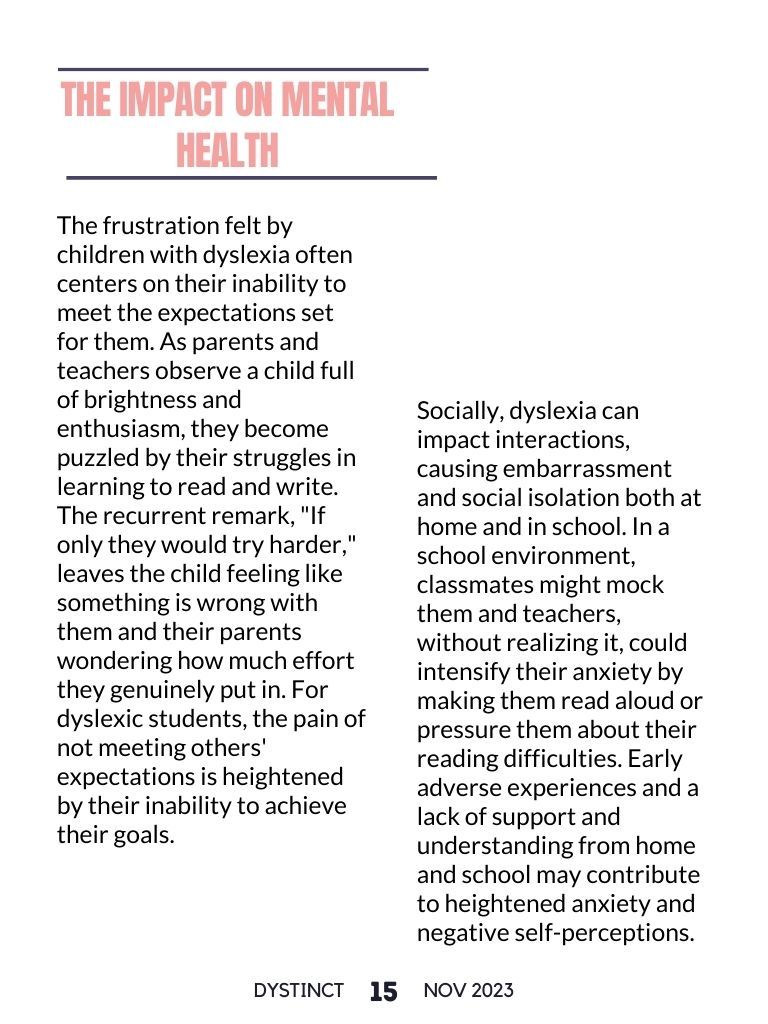
The frustration felt by children with dyslexia often centers on their inability to meet the expectations set for them. As parents and teachers observe a child full of brightness and enthusiasm, they become puzzled by their struggles in learning to read and write. The recurrent remark, "If only they would try harder," leaves the child feeling like something is wrong with them and their parents wondering how much effort they genuinely put in. For dyslexic students, the pain of not meeting others' expectations is heightened by their inability to achieve their goals.
Socially, dyslexia can impact interactions, causing embarrassment and social isolation both at home and in school. In a school environment, classmates might mock them and teachers, without realizing it, could intensify their anxiety by making them read aloud or pressure them about their reading difficulties. Early adverse experiences and a lack of support and understanding from home and school may contribute to heightened anxiety and negative self-perceptions.
The Role of Both Parents and Teachers
The Role of Both Parents and Teachers
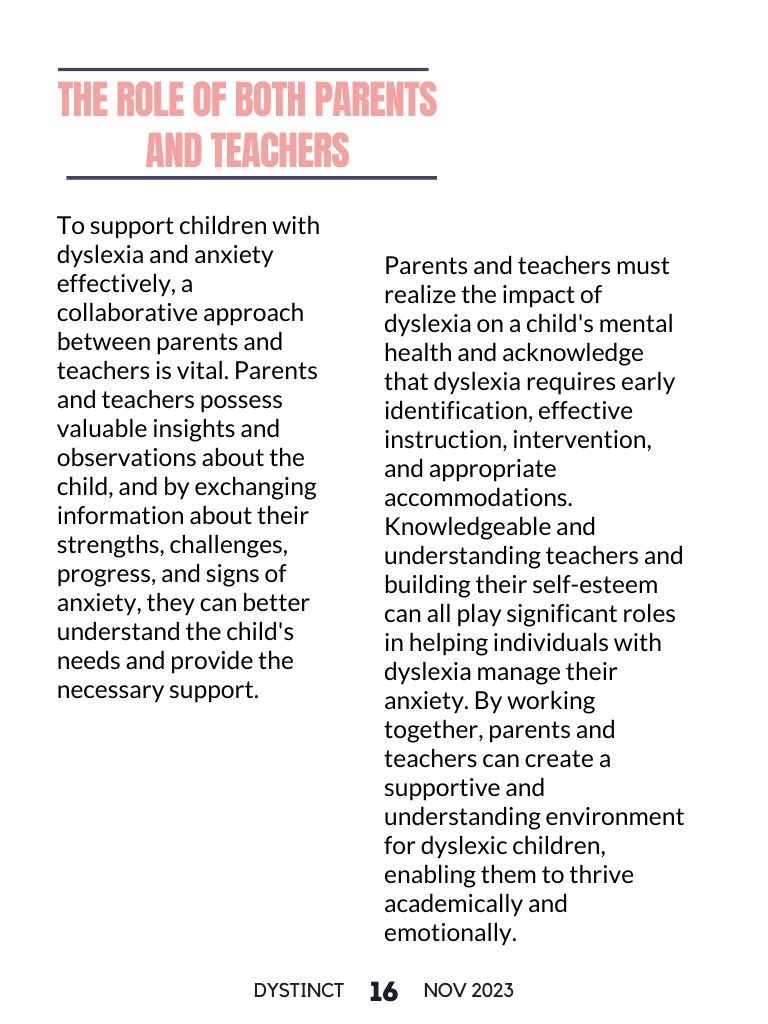
To support children with dyslexia and anxiety effectively, a collaborative approach between parents and teachers is vital. Parents and teachers possess valuable insights and observations about the child, and by exchanging information about their strengths, challenges, progress, and signs of anxiety, they can better understand the child's needs and provide the necessary support.
Parents and teachers must realize the impact of dyslexia on a child's mental health and acknowledge that dyslexia requires early identification, effective instruction, intervention, and appropriate accommodations. Knowledgeable and understanding teachers and building their self-esteem can all play significant roles in helping individuals with dyslexia manage their anxiety. By working together, parents and teachers can create a supportive and understanding environment for dyslexic children, enabling them to thrive academically and emotionally.
Strategies for Parents
Strategies for Parents
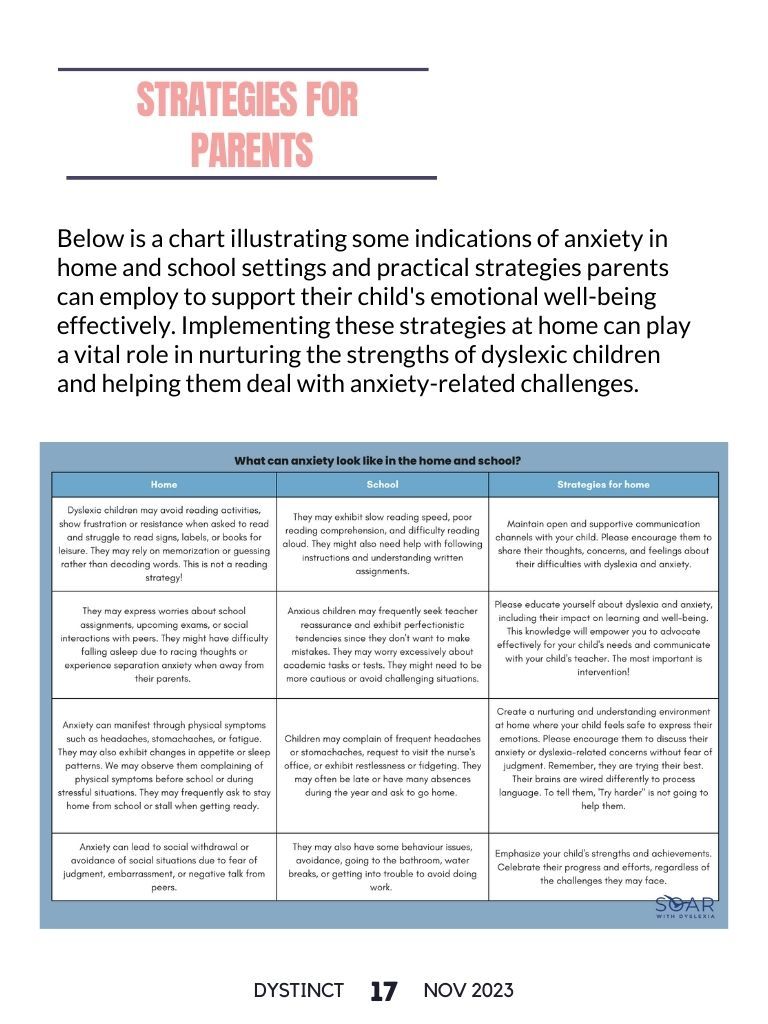
Below is a chart illustrating some indications of anxiety in home and school settings and practical strategies parents can employ to support their child's emotional well-being effectively. Implementing these strategies at home can play a vital role in nurturing the strengths of dyslexic children and helping them deal with anxiety-related challenges.
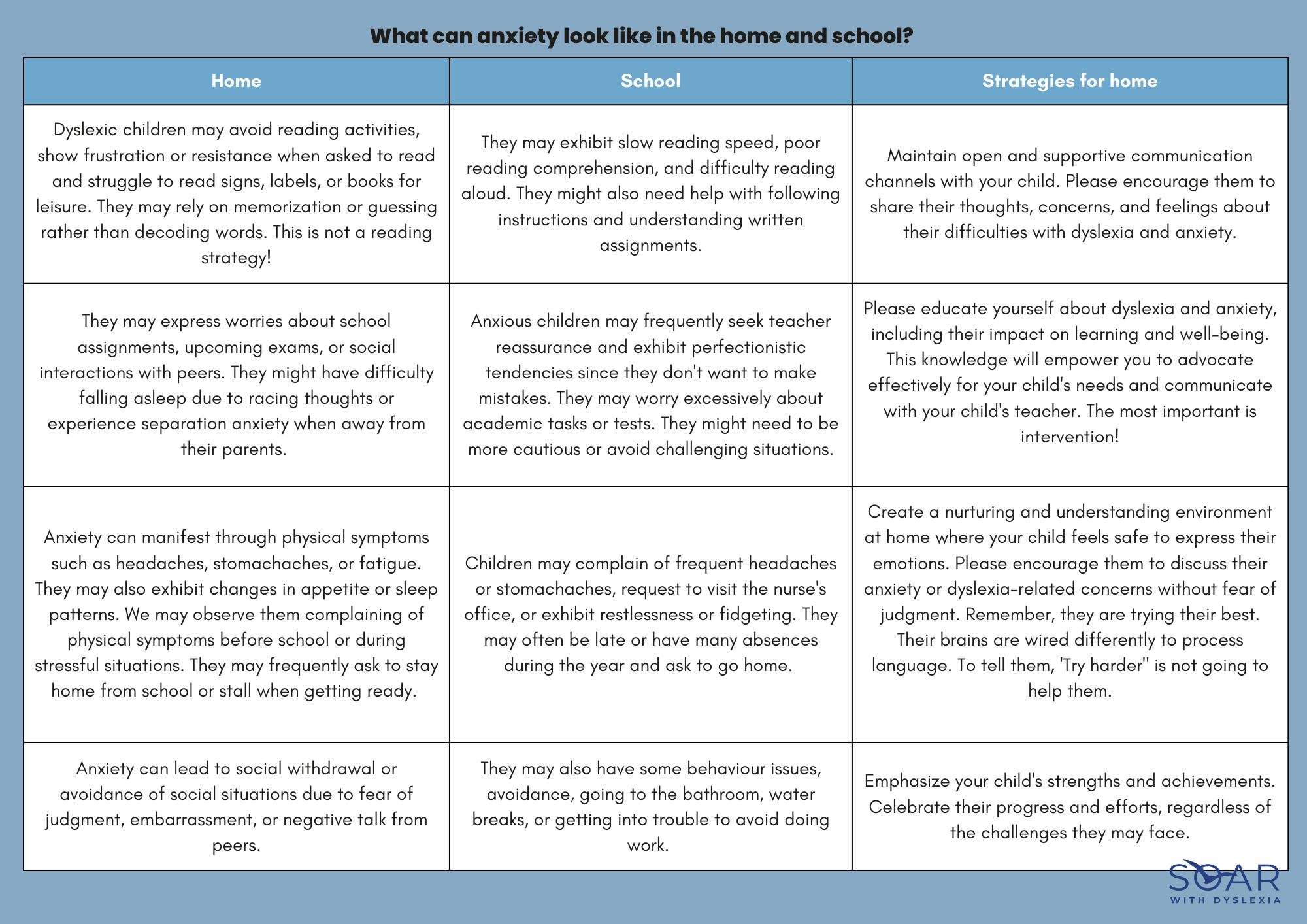
Recognizing Individuality
Recognizing Individuality
Each child's dyslexia and anxiety experiences may vary significantly. Dyslexia and anxiety may manifest differently in all individuals, and recognizing this uniqueness is paramount. When a child's difficulties and stress start to impact their daily life and well-being, seeking professional help becomes essential. Understanding dyslexia's impact on anxiety and providing the necessary support is vital to nurturing children's strengths and helping them overcome hurdles. We can confidently empower our children and students to conquer academic and social challenges by giving them the gift of reading and the right to read. By creating a supportive and understanding environment, we can unlock their full potential and empower them to succeed in all aspects of life.
References
References
- Lyon, G. R. (1998). The NICHD research program in reading development, reading disorders, and reading instruction. In A. McGill-Franzen (Ed.), What research has to say about reading instruction (pp. 7-55). International Reading Association.
- National Reading Panel (2000). Teaching children to read: An evidence-based assessment of the scientific research literature on reading and its implications for reading instruction (NIH Publication No. 00-4769). National Institute of Child Health and Human Development.
- International Dyslexia Association (2015). The dyslexia-stress-anxiety connection. [dyslexiaida.org]
- Hempenstall, K. (2016). Please read about it: Scientific evidence for effective teaching of reading. CIS Research Report 11. Sydney: The Centre for Independent Studies.
- Shaywitz, S. E. (2003). Overcoming dyslexia. Knopf.
- Young, N. (2017). The Ladder of Reading. [nancyyoung.ca]
- National Institute of Mental Health. (n.d.). Anxiety disorders. [nimh.nih.gov]
- KidsHealth. (n.d.). Anxiety factsheet. [kidshealth.org]
- Reading Rockets. (n.d.). Structured Literacy Instruction Basics. [readingrockets.org]
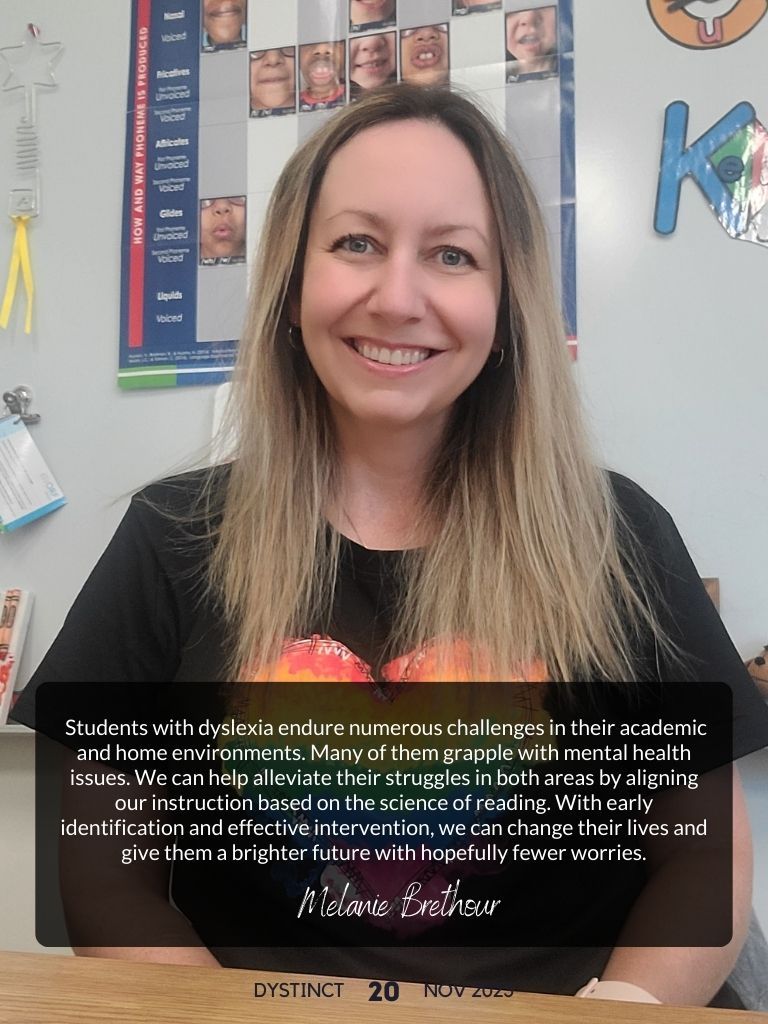
Melanie Brethour
Educational Consultant & Founder
Decoding Dyslexia Quebec | Linktree | LinkedIn | X | Instagram | TikTok
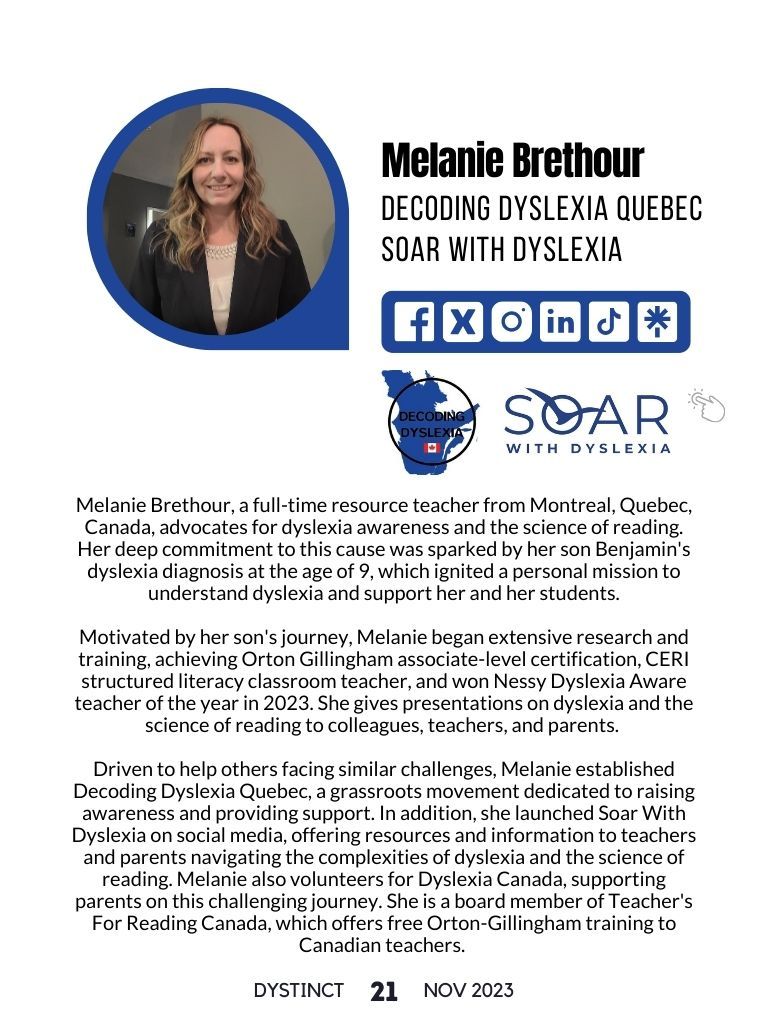
Melanie Brethour
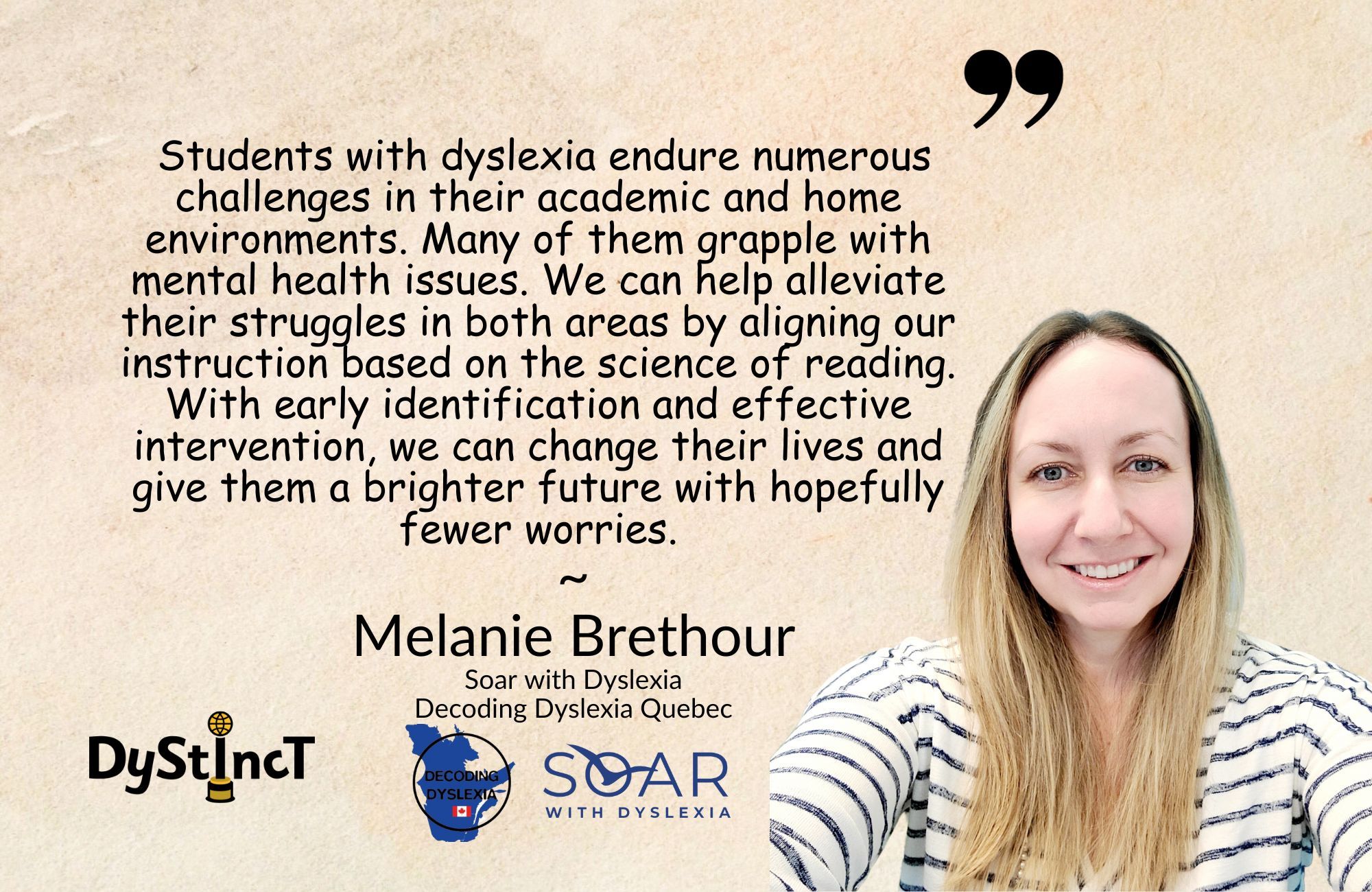
Melanie Brethour, a full-time resource teacher from Montreal, Quebec, Canada, advocates for dyslexia awareness and the science of reading. Her deep commitment to this cause was sparked by her son Benjamin's dyslexia diagnosis at the age of 9, which ignited a personal mission to understand dyslexia and support her and her students.
Motivated by her son's journey, Melanie began extensive research and training, achieving Orton Gillingham associate-level certification, CERI structured literacy classroom teacher, and won Nessy Dyslexia Aware teacher of the year in 2023. She gives presentations on dyslexia and the science of reading to colleagues, teachers, and parents.
Driven to help others facing similar challenges, Melanie established Decoding Dyslexia Quebec, a grassroots movement dedicated to raising awareness and providing support. In addition, she launched Soar With Dyslexia on social media, offering resources and information to teachers and parents navigating the complexities of dyslexia and the science of reading. Melanie also volunteers for Dyslexia Canada, supporting parents on this challenging journey. She is a board member of Teacher's For Reading Canada, which offers free Orton-Gillingham training to Canadian teachers.
Extracts from Dystinct Magazine
Extracts from Dystinct Magazine