Issue 30: Evidence-Based Screening is the Future for Effective Early Intervention | Georgie Cooney
Georgie Cooney examines the UK’s new SEND White Paper, reflecting on her experience as a SENCO to highlight how early, evidence-based screening and practical support systems could transform identification, intervention, and outcomes for children with additional needs.

Table of Contents

The U.K SEN (Special Educational Needs) system is buzzing at the moment - I wonder what the vibe is in the rest of the world? The heavily anticipated White Paper finally came out last month. ‘SEND Reform: Putting Children and Young People First - Government Consultation’. This shines a light on the necessity for early evidence-based screeners for additional needs in schools.
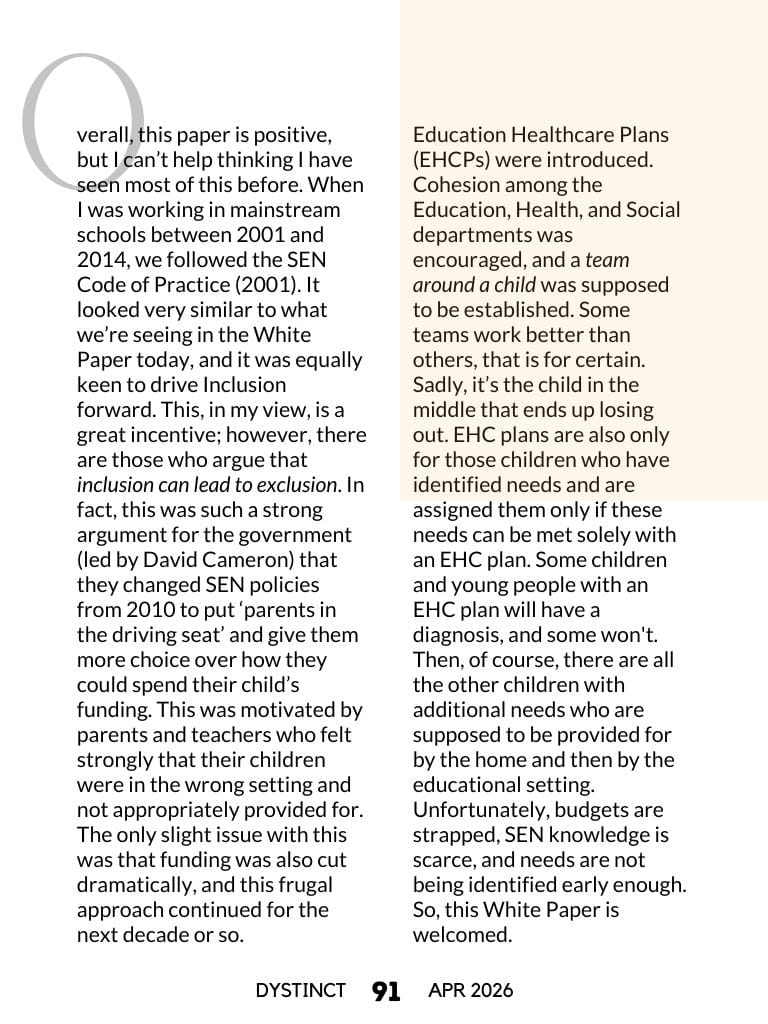
Overall, this paper is positive, but I can’t help thinking I have seen most of this before. When I was working in mainstream schools between 2001 and 2014, we followed the SEN Code of Practice (2001). It looked very similar to what we’re seeing in the White Paper today, and it was equally keen to drive Inclusion forward. This, in my view, is a great incentive; however, there are those who argue that inclusion can lead to exclusion. In fact, this was such a strong argument for the government (led by David Cameron) that they changed SEN policies from 2010 to put ‘parents in the driving seat’ and give them more choice over how they could spend their child’s funding. This was motivated by parents and teachers who felt strongly that their children were in the wrong setting and not appropriately provided for. The only slight issue with this was that funding was also cut dramatically, and this frugal approach continued for the next decade or so.
Education Healthcare Plans (EHCPs) were introduced. Cohesion among the Education, Health, and Social departments was encouraged, and a team around a child was supposed to be established. Some teams work better than others, that is for certain. Sadly, it’s the child in the middle that ends up losing out. EHC plans are also only for those children who have identified needs and are assigned them only if these needs can be met solely with an EHC plan. Some children and young people with an EHC plan will have a diagnosis, and some won't. Then, of course, there are all the other children with additional needs who are supposed to be provided for by the home and then by the educational setting. Unfortunately, budgets are strapped, SEN knowledge is scarce, and needs are not being identified early enough. So, this White Paper is welcomed.
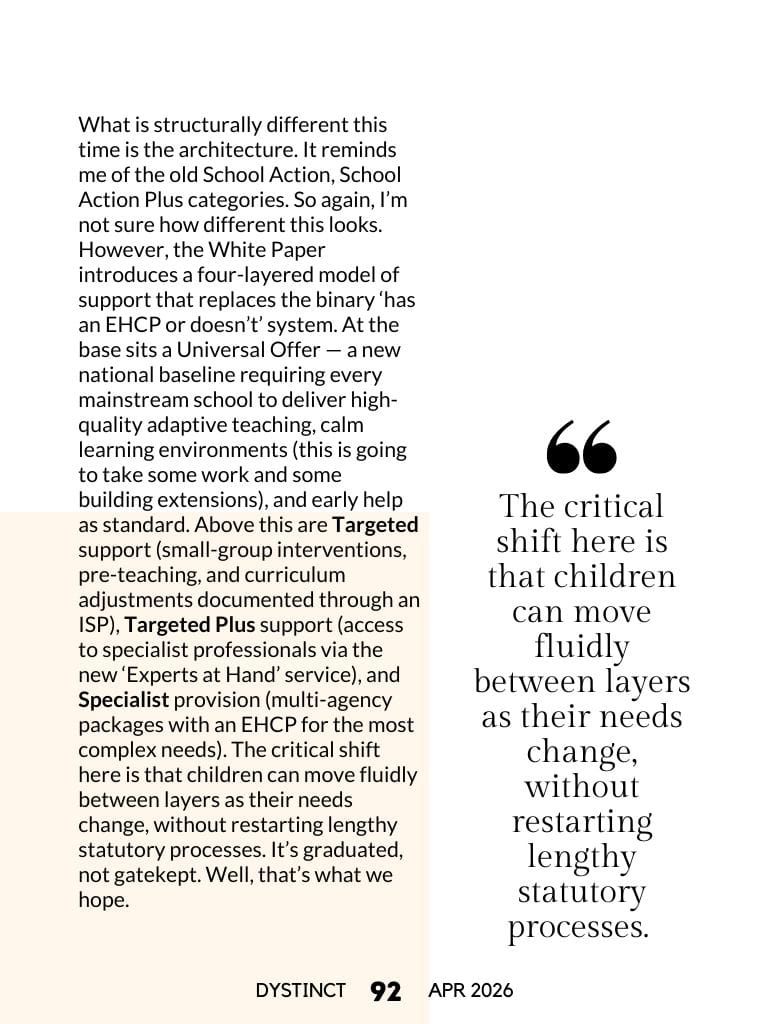
What is structurally different this time is the architecture. It reminds me of the old School Action, School Action Plus categories. So again, I’m not sure how different this looks. However, the White Paper introduces a four-layered model of support that replaces the binary ‘has an EHCP or doesn’t’ system. At the base sits a Universal Offer - a new national baseline requiring every mainstream school to deliver high-quality adaptive teaching, calm learning environments (this is going to take some work and some building extensions), and early help as standard. Above this are Targeted support (small-group interventions, pre-teaching, and curriculum adjustments documented through an ISP), Targeted Plus support (access to specialist professionals via the new ‘Experts at Hand’ service), and Specialist provision (multi-agency packages with an EHCP for the most complex needs). The critical shift here is that children can move fluidly between layers as their needs change, without restarting lengthy statutory processes. It’s graduated, not gatekept. Well, that’s what we hope.
The critical shift here is that children can move fluidly between layers as their needs change, without restarting lengthy statutory processes.
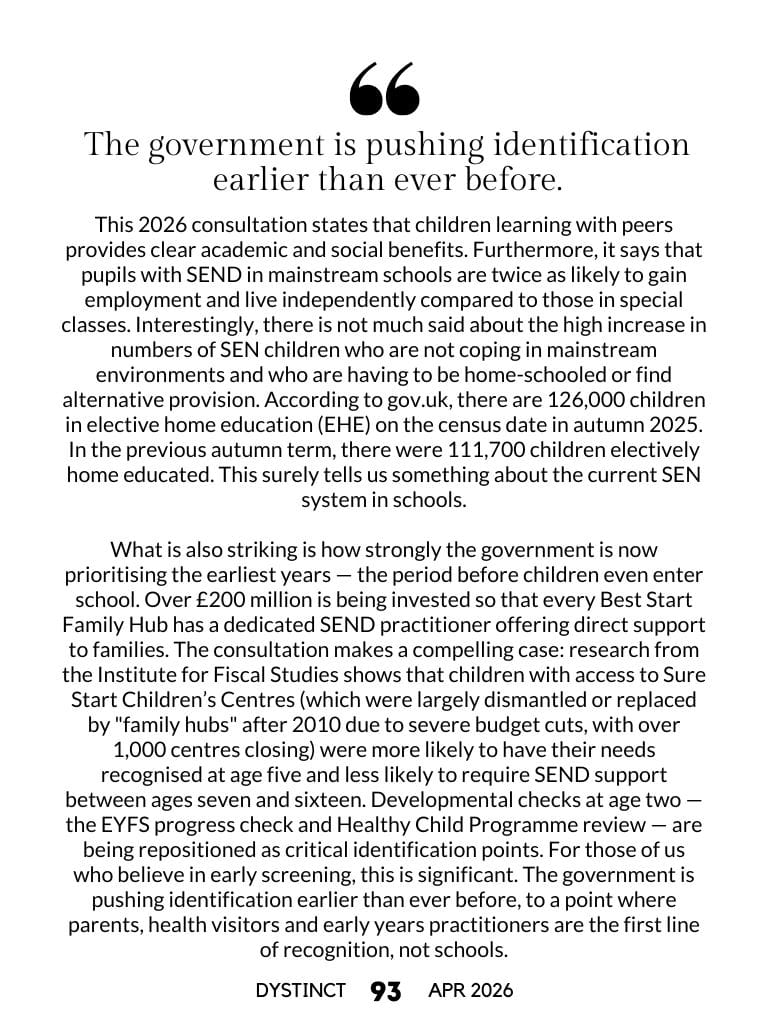
The government is pushing identification earlier than ever before.
This 2026 consultation states that children learning with peers provides clear academic and social benefits. Furthermore, it says that pupils with SEND in mainstream schools are twice as likely to gain employment and live independently compared to those in special classes. Interestingly, there is not much said about the high increase in numbers of SEN children who are not coping in mainstream environments and who are having to be home-schooled or find alternative provision. According to gov.uk, there are 126,000 children in elective home education (EHE) on the census date in autumn 2025. In the previous autumn term, there were 111,700 children electively home educated. This surely tells us something about the current SEN system in schools.
What is also striking is how strongly the government is now prioritising the earliest years - the period before children even enter school. Over £200 million is being invested so that every Best Start Family Hub has a dedicated SEND practitioner offering direct support to families. The consultation makes a compelling case: research from the Institute for Fiscal Studies shows that children with access to Sure Start Children’s Centres (which were largely dismantled or replaced by "family hubs" after 2010 due to severe budget cuts, with over 1,000 centres closing) were more likely to have their needs recognised at age five and less likely to require SEND support between ages seven and sixteen. Developmental checks at age two - the EYFS progress check and Healthy Child Programme review - are being repositioned as critical identification points. For those of us who believe in early screening, this is significant. The government is pushing identification earlier than ever before, to a point where parents, health visitors and early years practitioners are the first line of recognition, not schools.
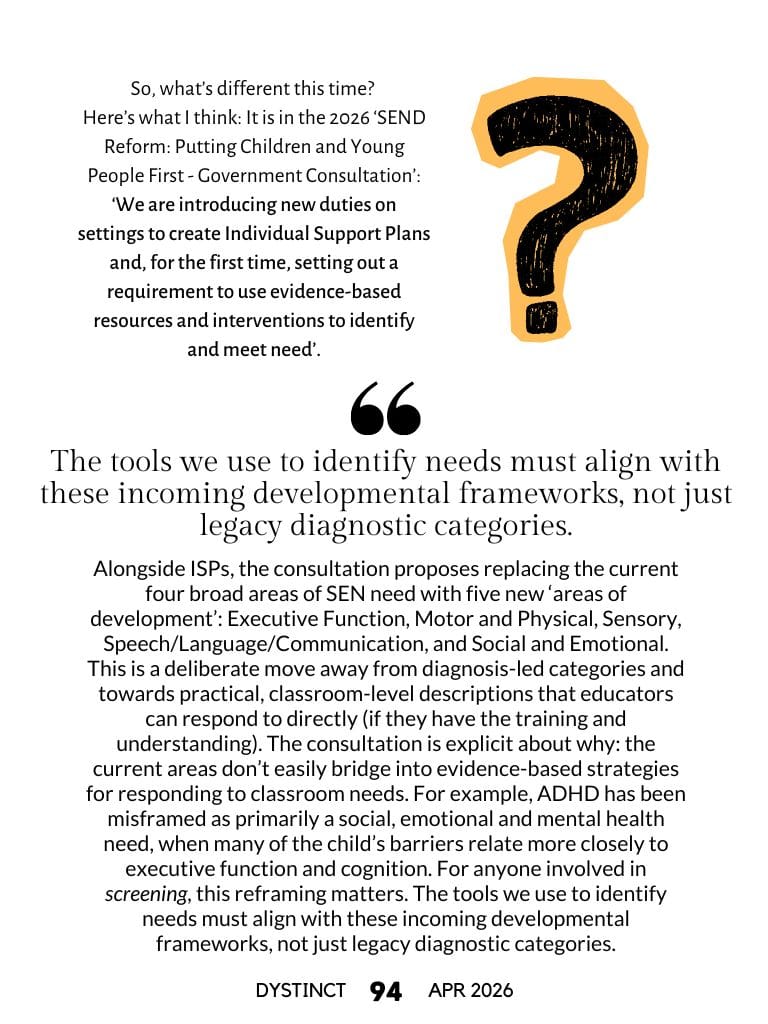
So, what’s different this time?
Here’s what I think: It is in the 2026 ‘SEND Reform: Putting Children and Young People First - Government Consultation’: ‘We are introducing new duties on settings to create Individual Support Plans and, for the first time, setting out a requirement to use evidence-based resources and interventions to identify and meet need’.
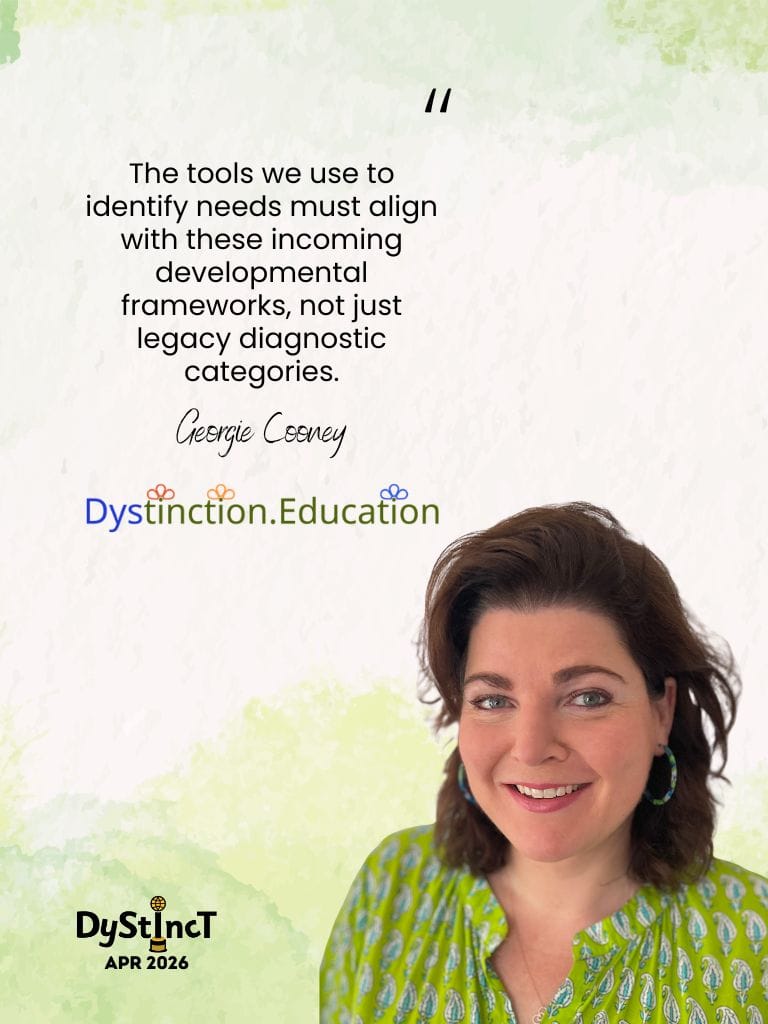
The tools we use to identify needs must align with these incoming developmental frameworks, not just legacy diagnostic categories.
Alongside ISPs, the consultation proposes replacing the current four broad areas of SEN need with five new ‘areas of development’: Executive Function, Motor and Physical, Sensory, Speech/Language/Communication, and Social and Emotional. This is a deliberate move away from diagnosis-led categories and towards practical, classroom-level descriptions that educators can respond to directly (if they have the training and understanding). The consultation is explicit about why: the current areas don’t easily bridge into evidence-based strategies for responding to classroom needs. For example, ADHD has been misframed as primarily a social, emotional and mental health need, when many of the child’s barriers relate more closely to executive function and cognition. For anyone involved in screening, this reframing matters. The tools we use to identify needs must align with these incoming developmental frameworks, not just legacy diagnostic categories.
It is worth noting that the consultation directly addresses the screening landscape. It states that the government is ‘aware of a proliferation of tools marketed to schools that claim to support the identification of needs or to screen for certain conditions’ and is clear that ‘where teachers and educators use additional tools, these must be robustly evaluated, evidence-based and lead to proven interventions.’ This is an important and necessary caution. Not all screeners are created equal. Good screeners should not be claiming to diagnose anything. They should identify strengths and needs so that support can follow. This distinction - between a tool that labels and one that illuminates - is exactly what the government is driving at, and it is a distinction that should guide every school’s purchasing decision.
Not all screeners are created equal.
Yes, evidence-based resources were not much around when I was leading SEN departments. Interventions were often home-made (which I encourage) and took ages to make, or they were bought (lots of plastic involved). However, the purchased resources were often underused because people weren’t trained to use them or didn’t have time to set them up.
Critically, very few of us knew where to start. I remember having to do lengthy spelling and reading tests with each child who had been flagged by teachers. I then had to chase down both teachers and parents, trying to get time from them to provide more background information. It was a laborious and long-winded system that simply wasn’t practical for the needs. My headteacher felt so sorry for me that she allowed me time to go and find parents on the local estates and interview them in their kitchens or on their doorsteps.
The vision is for a SENCO who leads an inclusion strategy, not one who drowns in evidence-gathering.
Reading the consultation now, I recognise my own experience reflected back at me. The government acknowledges what those of us in the role have known for years: fewer than 40% of SENCOs consider the role manageable for one person, and 78% of secondary school SENCOs also hold teaching responsibilities. The consultation explicitly states that the SENCO role will become ‘more strategic and less administrative’ — that digital processes and clearer system-wide expectations will reduce the routine paperwork that consumed so much of my time. The vision is for a SENCO who leads an inclusion strategy, not one who drowns in evidence-gathering. Had the role been designed that way when I was doing it, I would have spent far more time in classrooms supporting children and far less time on estates chasing signatures.
It was only after this that I might have collected enough evidence to try to get additional support or refer a child for an assessment by an Educational Psychologist, Occupational Therapist, Speech and Language Therapist, or another specialist. Then it was the waiting game, the bottomless waiting lists for additional services. Not conducive to appropriately educating a child. Trying to do this with about a third of the school is just ineffective. So much time wasted, and think how much that could have been done to support the children’s needs in all this squandered time?
Now, we can screen children to identify additional needs and do so before it is too late. We can follow up on recommendations and intervene early! Individual Support Plans can be put in place as suggested by the White Paper, and these are to be tracked, reviewed and monitored. The earlier the better.
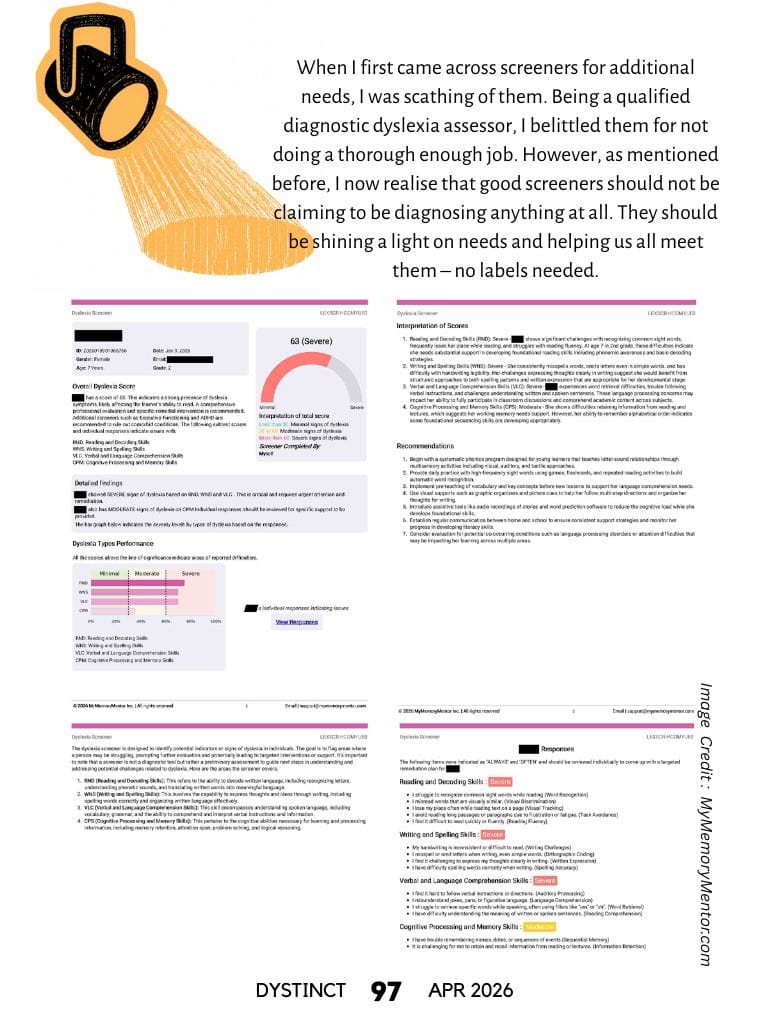
When I first came across screeners for additional needs, I was scathing of them. Being a qualified diagnostic dyslexia assessor, I belittled them for not doing a thorough enough job. However, as mentioned before, I now realise that good screeners should not be claiming to be diagnosing anything at all. They should be shining a light on needs and helping us all meet them – no labels needed.
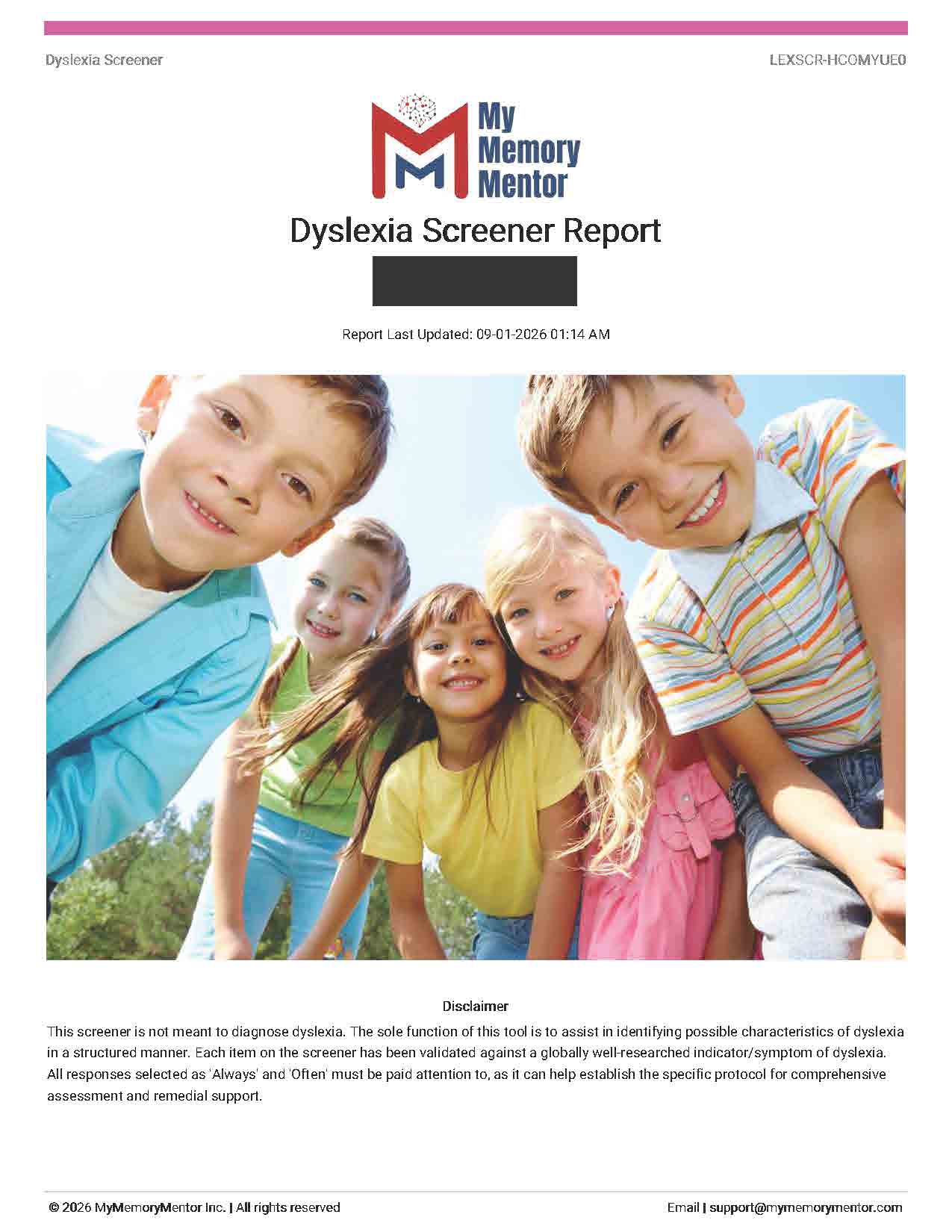
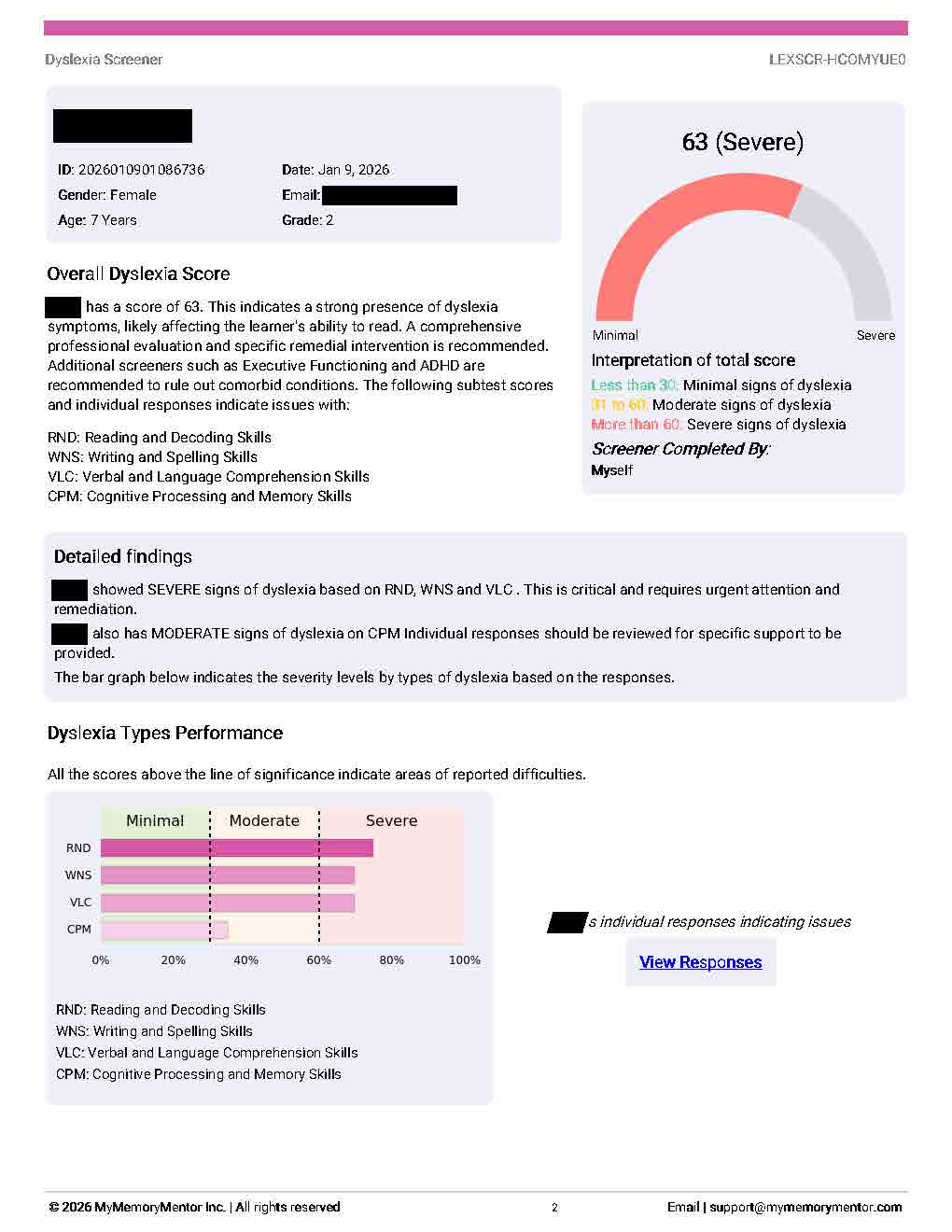
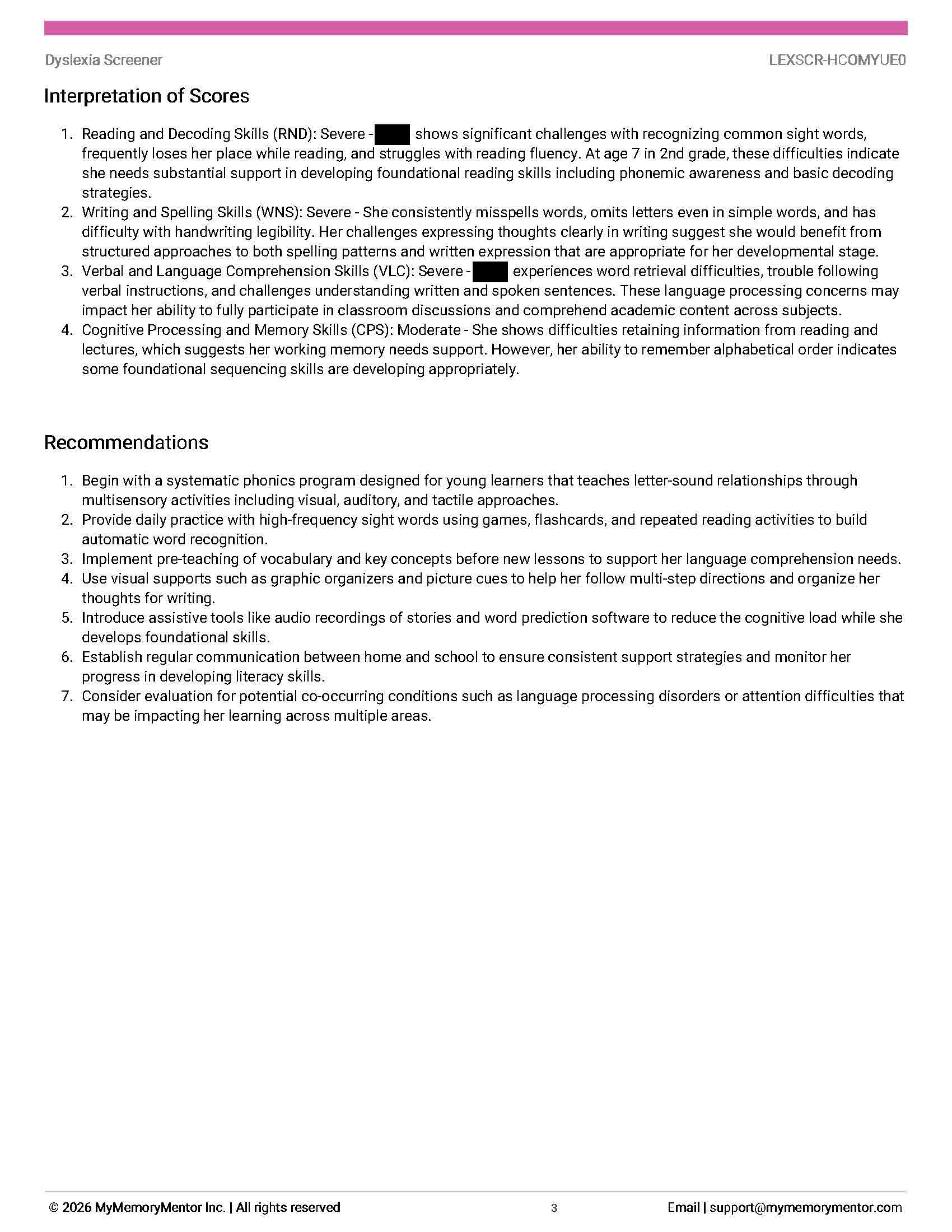
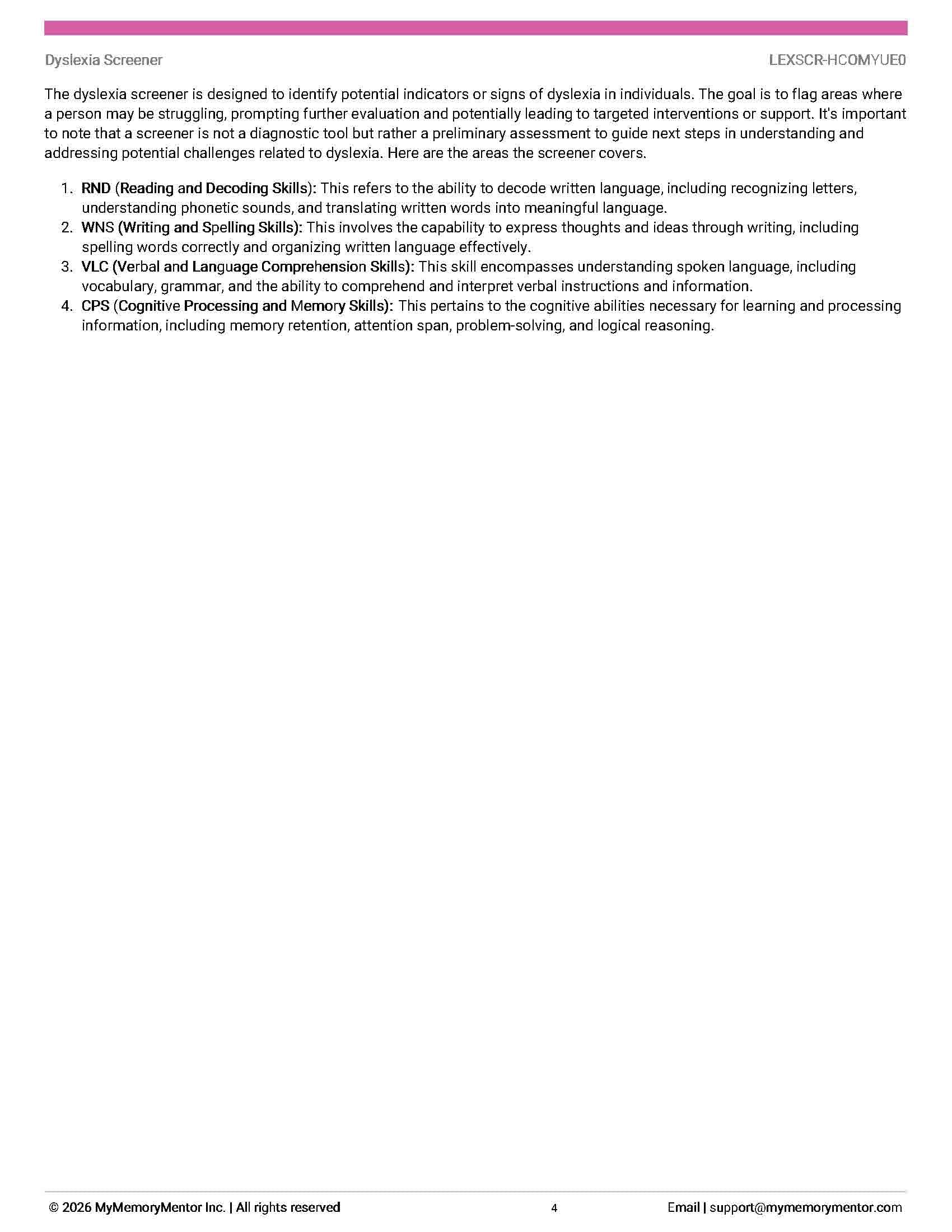
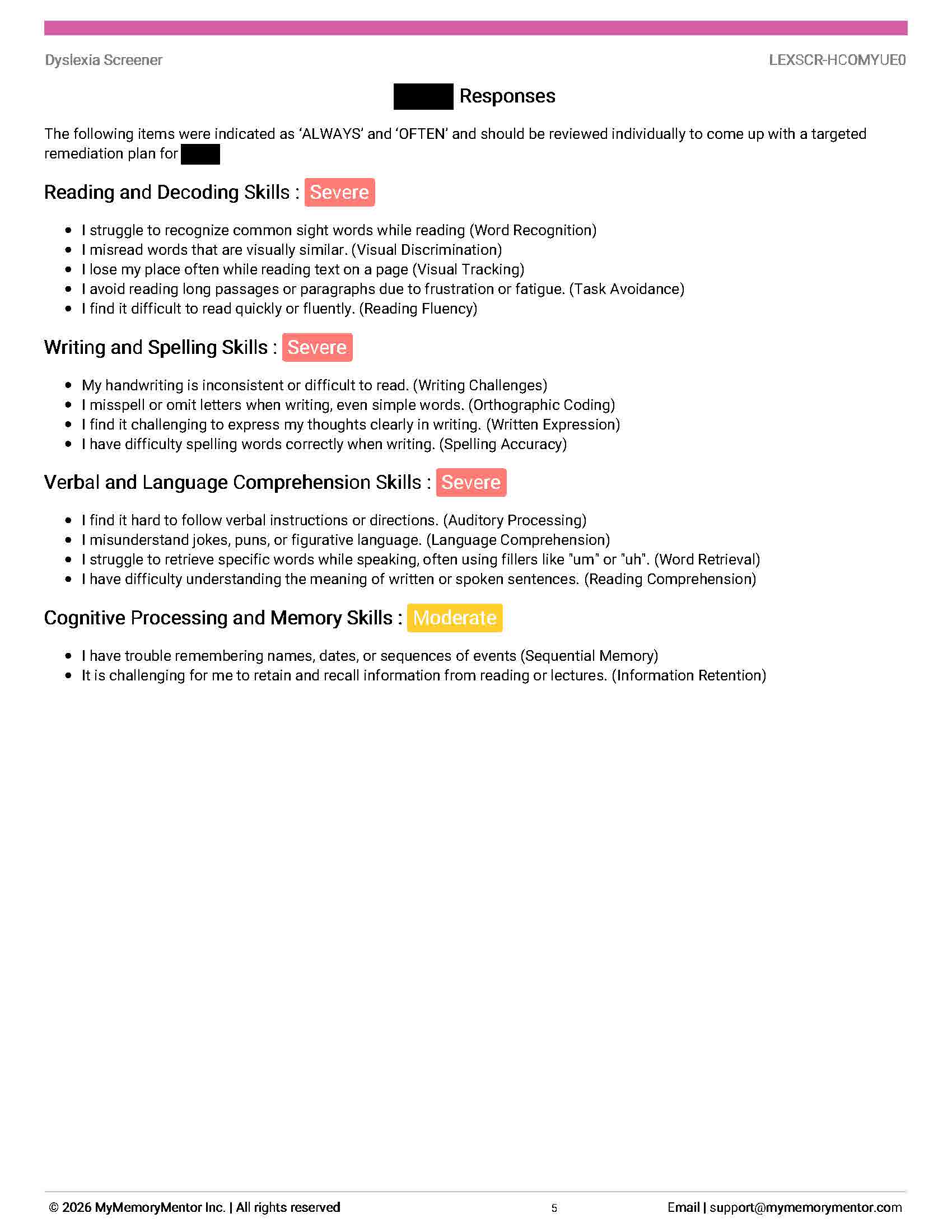
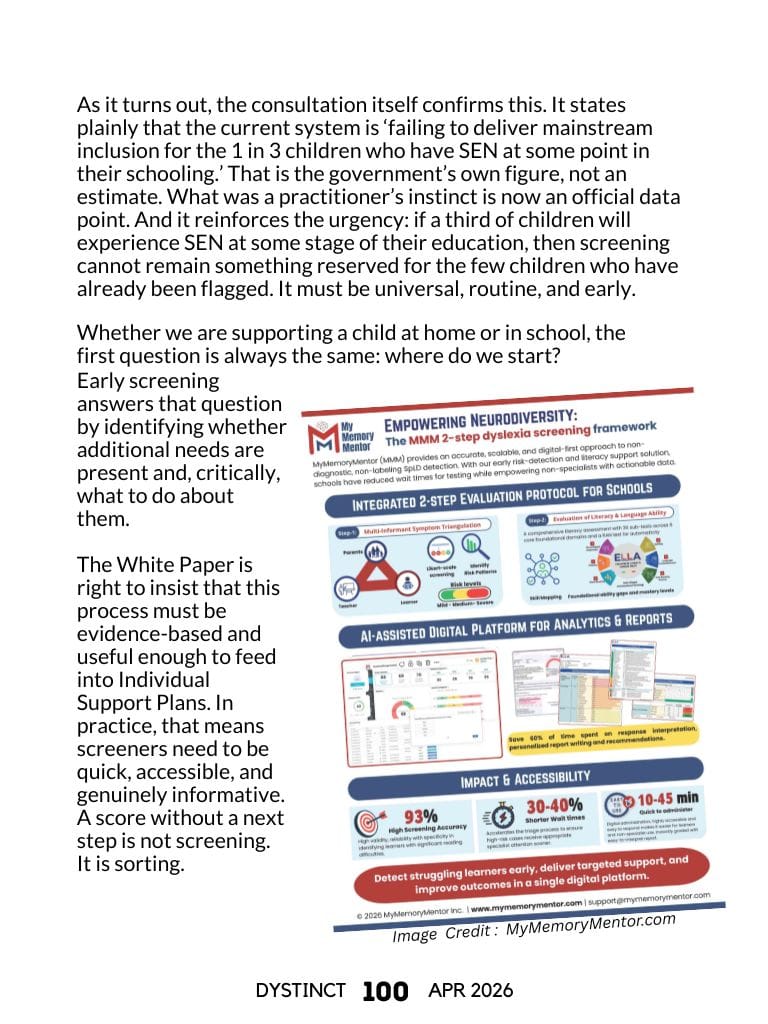
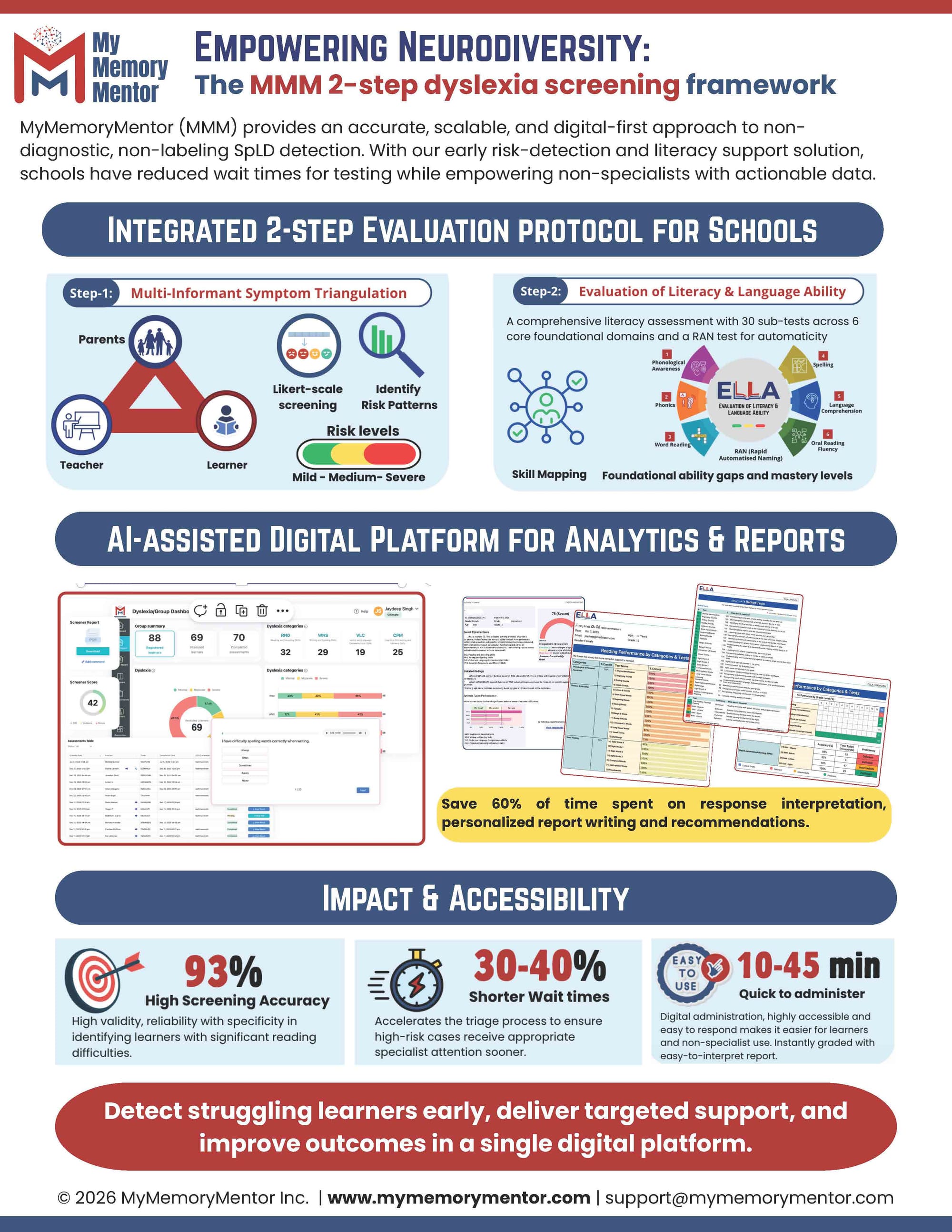
Image Credit : MyMemoryMentor.com
I have recently started working with MyMemoryMentor.com, a global digital platform designed for parents, carers, and teachers (or any adult). Its approach centres on early detection and targeted intervention, aiming to address learning challenges before they escalate. The platform specialises in identifying co-occurring learning and mental health needs, enabling more tailored, timely support for individuals.
It is worth noting that the government itself is building this kind of infrastructure into the system. By 2028, up to £15 million will be invested in National Inclusion Standards, including a digital library of high-quality identification tools and provision across the entire 0–25 system. A £4 million research project led by UK Research and Innovation is already underway to improve identification of special educational needs, with a specific emphasis on early intervention and strengths-and-needs assessments. This is the government essentially building its own evidence-based screening ecosystem. Any screening tool that schools invest in now should be positioned to complement and align with this incoming national framework - not work against it.
No more ‘missing folders of highly crucial information.’
If only I had had their screeners twenty years ago. I could have helped so many more children and worked efficiently with both teachers and parents, advising them along the way. These could be used with an entire school, a classroom, or simply with children who have been identified by teachers as learning differently or standing out. Additionally, the collated information can be sent to new teachers, schools, or local authorities, no more ‘missing folders of highly crucial information’.
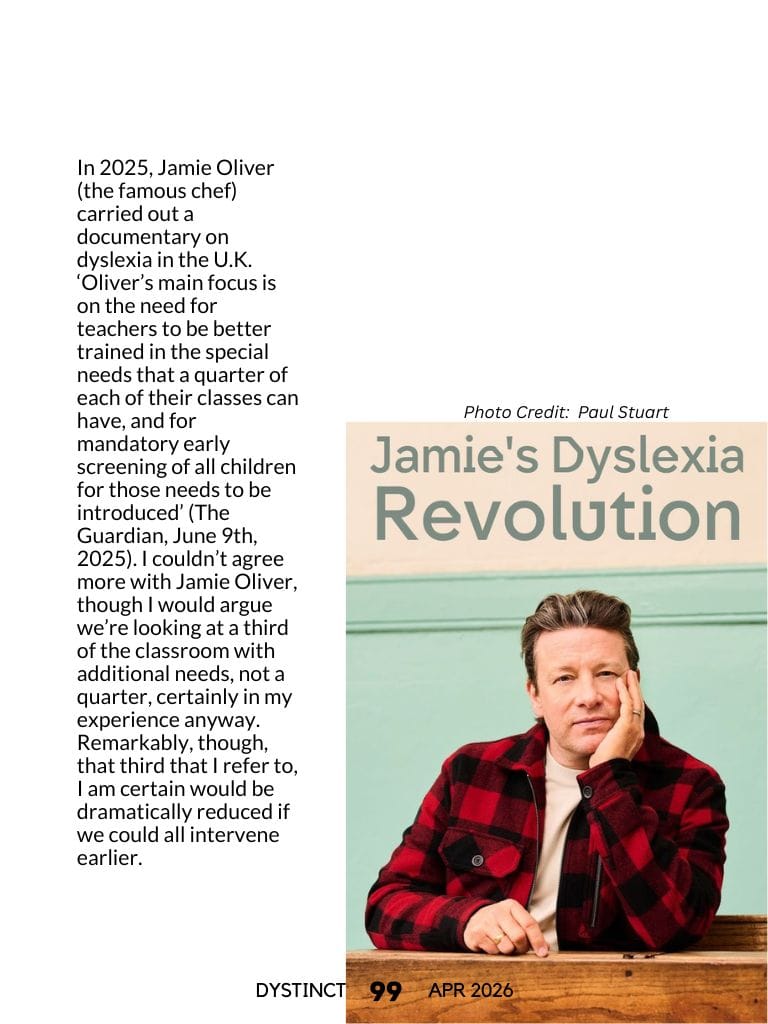
In 2025, Jamie Oliver (the famous chef) carried out a documentary on dyslexia in the U.K. ‘Oliver’s main focus is on the need for teachers to be better trained in the special needs that a quarter of each of their classes can have, and for mandatory early screening of all children for those needs to be introduced’ (The Guardian, June 9th, 2025). I couldn’t agree more with Jamie Oliver, though I would argue we’re looking at a third of the classroom with additional needs, not a quarter, certainly in my experience anyway. Remarkably, though, that third that I refer to, I am certain would be dramatically reduced if we could all intervene earlier.

As it turns out, the consultation itself confirms this. It states plainly that the current system is ‘failing to deliver mainstream inclusion for the 1 in 3 children who have SEN at some point in their schooling.’ That is the government’s own figure, not an estimate. What was a practitioner’s instinct is now an official data point. And it reinforces the urgency: if a third of children will experience SEN at some stage of their education, then screening cannot remain something reserved for the few children who have already been flagged. It must be universal, routine, and early.
Whether we are supporting a child at home or in school, the first question is always the same: where do we start?
Early screening answers that question by identifying whether additional needs are present and, critically, what to do about them.
The White Paper is right to insist that this process must be evidence-based and useful enough to feed into Individual Support Plans. In practice, that means screeners need to be quick, accessible, and genuinely informative. A score without a next step is not screening. It is sorting.
Evidence-based screening is not merely helpful - it is the foundation upon which the entire new system depends.
Having used a range of tools in my own practice, I look for three things: clarity in what is being measured, breadth across domains, and reports that a teacher or parent can act on immediately. Platforms like MyMemoryMentor.com, with their structured digital reporting and multi-domain coverage, demonstrate what effective screening looks like when it is designed around the child rather than the system.
It would be remiss not to acknowledge the tension sitting beneath these reforms. Under the proposed system, EHCPs will be gradually reserved for only the most complex needs - the consultation expects numbers to return to around today’s levels by 2035, with many more children having their needs met through ISPs in mainstream. And here is the critical point for parents: decisions about ISPs cannot be appealed to the SEND Tribunal. Only decisions about whether a child meets the threshold for a Specialist Provision Package and EHCP can go to the tribunal. The consultation states that parents can raise concerns through improved school complaints processes, but this is a fundamentally different avenue from the legal weight of a tribunal. This means that the quality of early screening becomes not just educationally important, but legally significant. If a screener accurately identifies a child’s needs and this feeds into a robust, evidence-based ISP, the child is protected within the system. If the screening is superficial or poorly actioned, parents have fewer formal routes to challenge what is in place. This is why evidence-based screening is not merely helpful - it is the foundation upon which the entire new system depends.
Alongside this, there is a need for growth in teachers' and parents' knowledge, so I am very pleased to see that the government is pledging money specifically for SEN teacher training. I just wonder who will do the training and when the teachers will be expected to do it? Let’s hope it’s seen as a positive, progressive step in continuous professional development rather than an ominous obligation. At least, good screeners are non-time-consuming, user-friendly, and, if they’re like those provided by MyMemoryMentor.com, they are clear, comprehensive, and extremely effective.
I am very pleased to see that the government is pledging money specifically for SEN teacher training.
These reforms are backed by substantial investment - £4 billion in total, including £1.6 billion for the Inclusive Mainstream Fund paid directly to schools, £1.8 billion for the Experts at Hand service (let’s hope there are enough hands), and over £200 million for what the government describes as the largest SEND teacher training programme in English education history. The government has also committed to writing off 90% of councils’ historic high-needs deficits. But this is still a consultation. It closes on 18 May 2026, and no changes to existing SEND support will begin before September 2030, with the full transition running to 2035. The consultation itself states this is a ‘decade-long reform programme.’ The scale of ambition is real, but so is the implementation challenge.
Georgie Cooney
Teacher, Dyslexia Specialist & Founder | dystinction.education | Instagram | Facebook | LinkedIn
Georgie Cooney
Georgie Cooney is an author and a fully qualified teacher who is passionate about creating a positive learning experience for all children. As a teacher and a dyslexia specialist, she has taught in a variety of schools both at home and abroad. Georgie has also spent many years training teachers to teach and understand neurodivergent learners.
She has recently become the founder of Dystinction.Education, which works with neurodivergent learners, offers screeners, assessments and training. Before that, Georgie was tutoring and coordinating the Cork Workshop for Dyslexia Ireland. She also co-hosted the podcasts TheLongWayBack and Therapodpodcast, where she discussed all things Neurodiversity. Furthermore, she has also recently been a course tutor for ICEP (Institute of Child Education and Psychology).
Georgie’s main job (that she loves) is working with a range of learners with learning differences in County Cork, Ireland, and in and around Dorset, Somerset, and Wiltshire, U.K.
She is rarely seen without one of her many dogs and continues to love being with her family and friends whilst walking, talking and learning. Georgie is currently studying a Master's in Autism and Neurodiversity with the NSPC and perseveres with her love of learning.
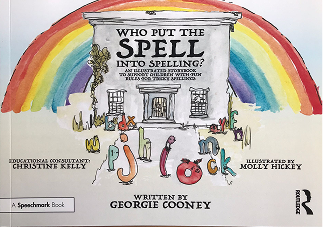
Who Put the Spell into Spelling? & Supporting Children with Fun Rules for Tricky Spellings:
An exciting and colourful storybook and workbook set to help make spelling fun.

From Tragic to Magic
A Phonological fairytale and guide to prepare children for literacy.
Extracts from Dystinct Magazine
Extracts from Dystinct Magazine