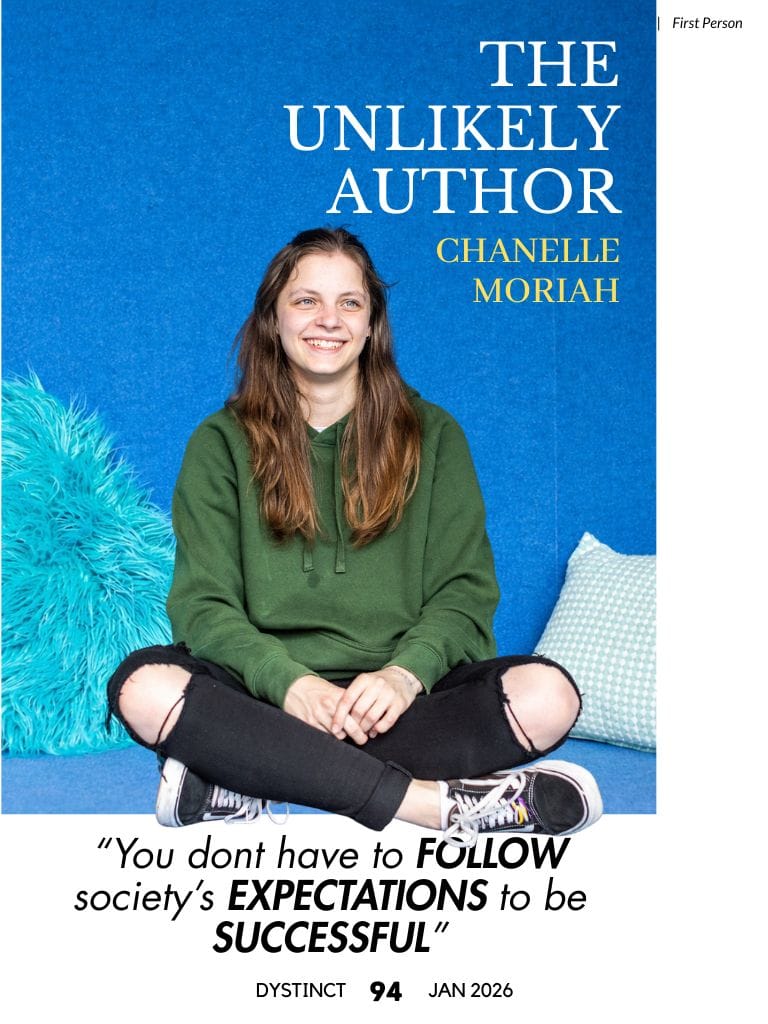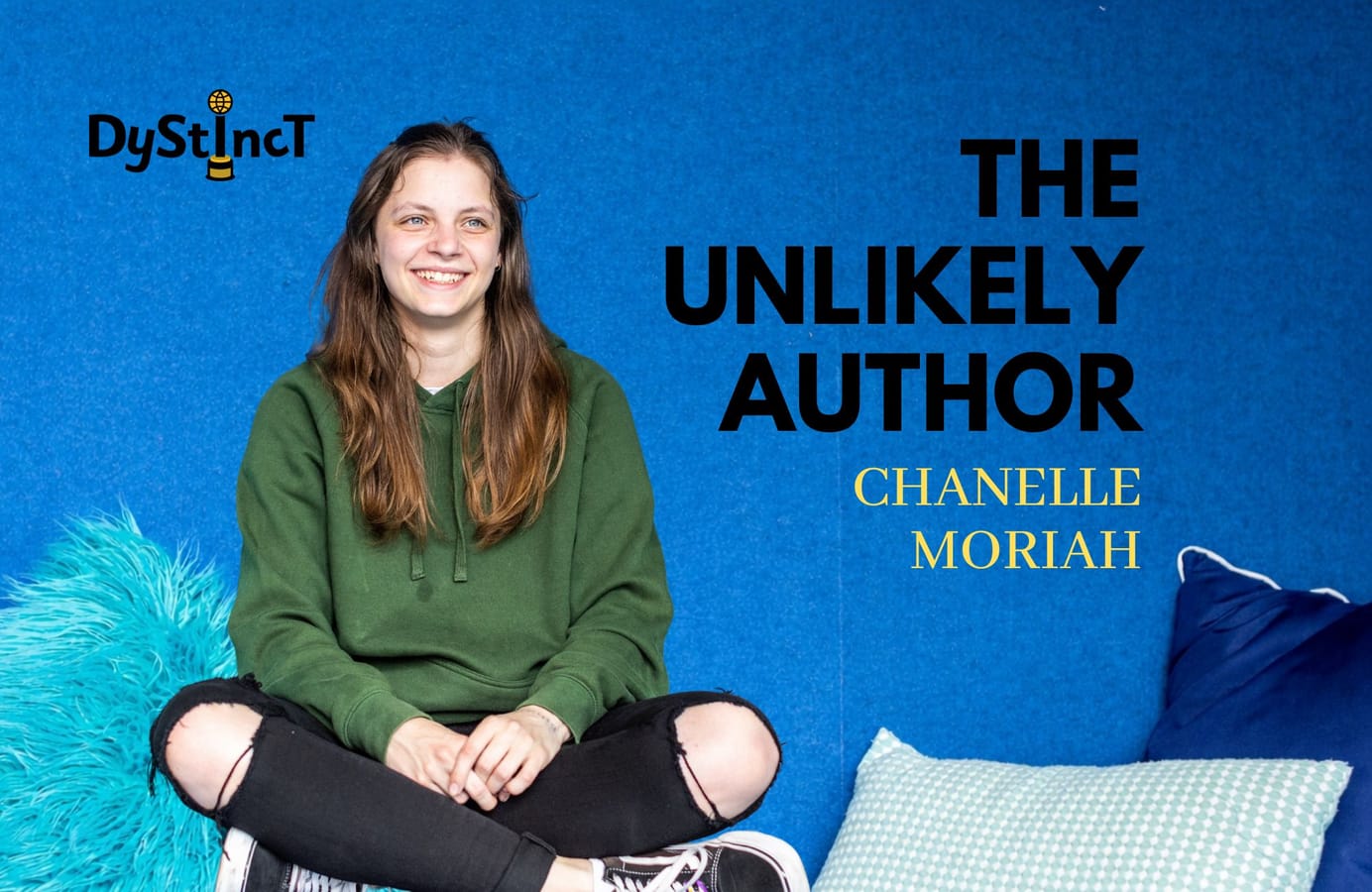
Issue 29: The Unlikely Author | Chanelle Moriah
Chanelle Moriah reflects on becoming an unexpected best-selling author despite lifelong struggles with reading and learning, sharing how their lived experience of autism, ADHD, and dyslexia shaped a series of affirming, community-informed books that challenge deficit-based narratives.
Table of Contents
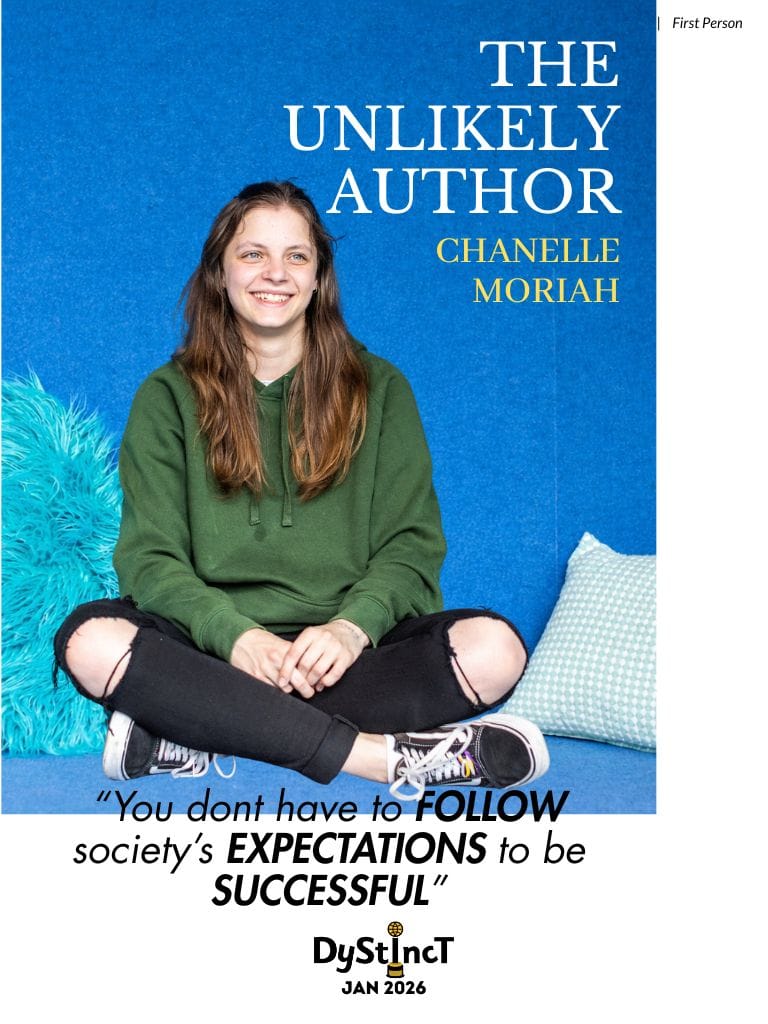
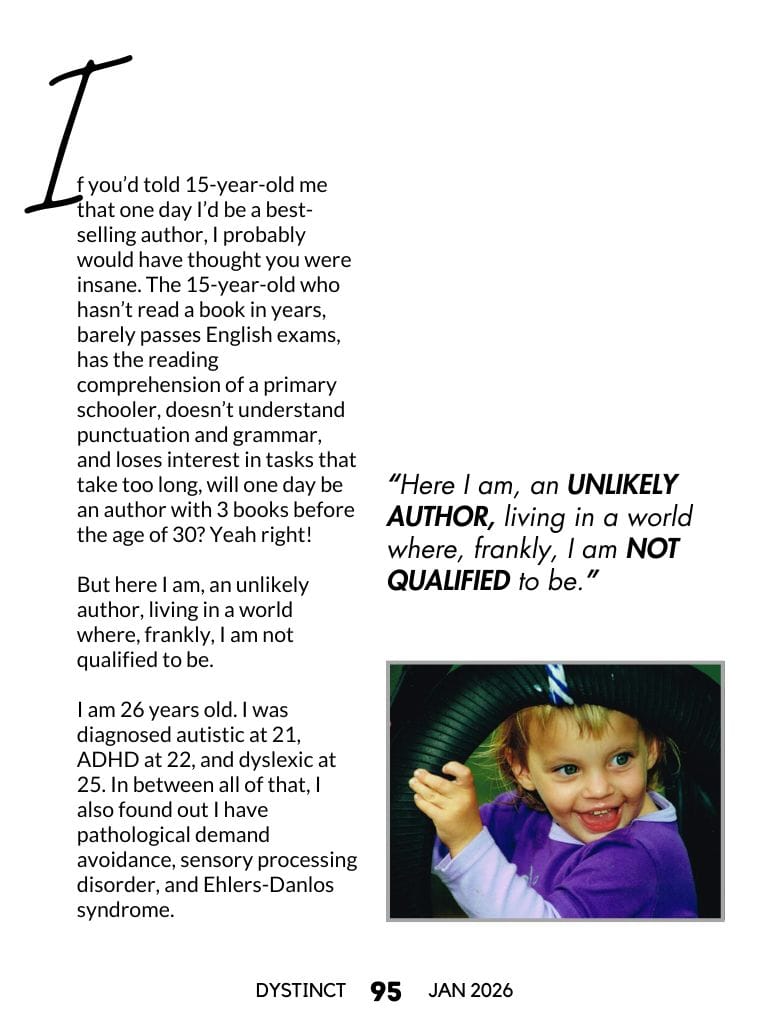
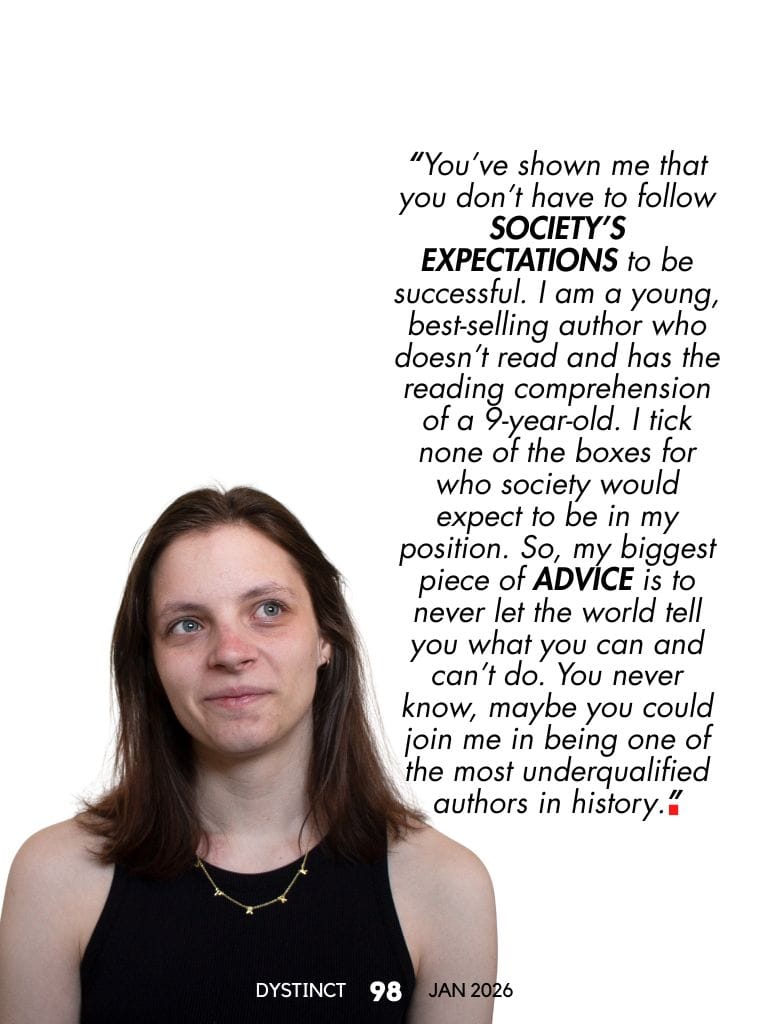
If you’d told 15-year-old me that one day I’d be a best-selling author, I probably would have thought you were insane. The 15-year-old who hasn’t read a book in years, barely passes English exams, has the reading comprehension of a primary schooler, doesn’t understand punctuation and grammar, and loses interest in tasks that take too long, will one day be an author with 3 books before the age of 30? Yeah right!
But here I am, an unlikely author, living in a world where, frankly, I am not qualified to be.
I am 26 years old. I was diagnosed autistic at 21, ADHD at 22, and dyslexic at 25. In between all of that, I also found out I have pathological demand avoidance, sensory processing disorder, and Ehlers-Danlos syndrome.
Here I am, an UNLIKELY AUTHOR, living in a world where, frankly, I am NOT QUALIFIED to be.
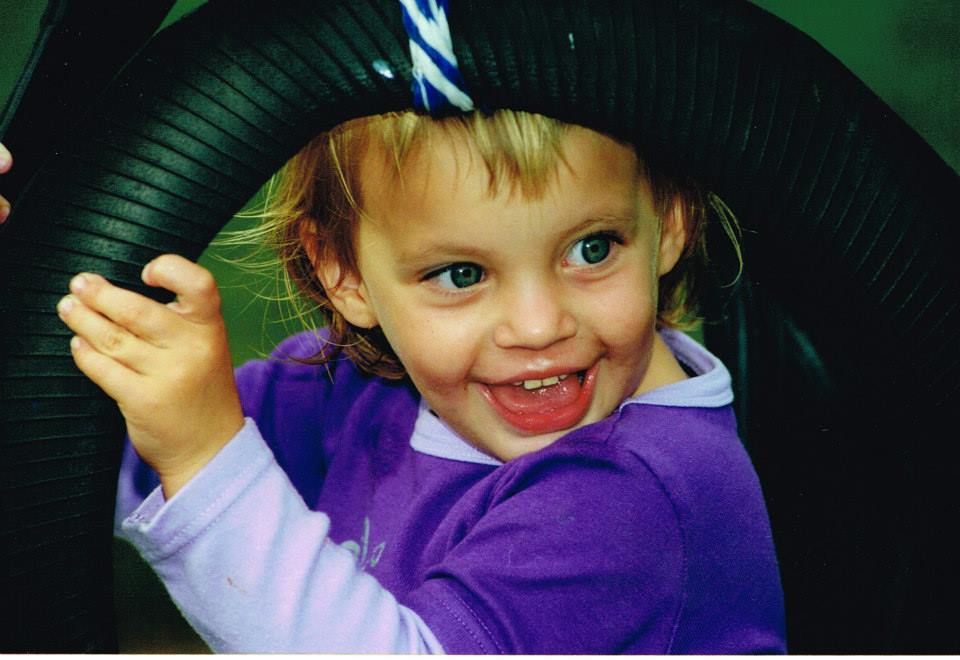
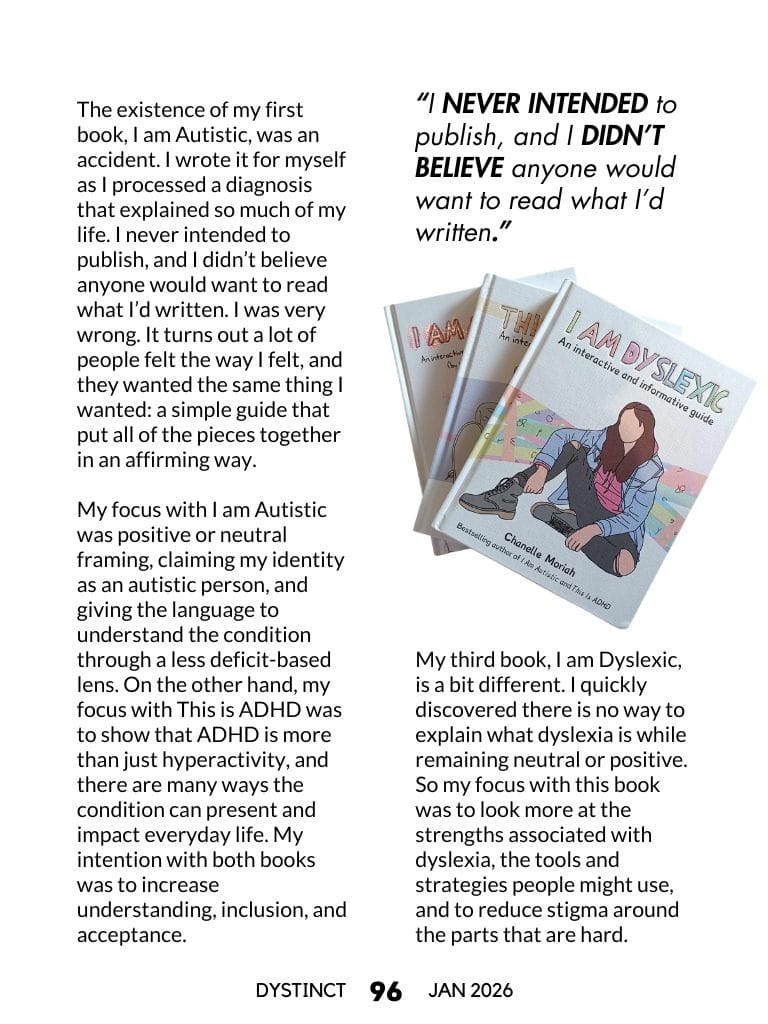
The existence of my first book, I am Autistic, was an accident. I wrote it for myself as I processed a diagnosis that explained so much of my life. I never intended to publish, and I didn’t believe anyone would want to read what I’d written. I was very wrong. It turns out a lot of people felt the way I felt, and they wanted the same thing I wanted: a simple guide that put all of the pieces together in an affirming way.
My focus with I am Autistic was positive or neutral framing, claiming my identity as an autistic person, and giving the language to understand the condition through a less deficit-based lens. On the other hand, my focus with This is ADHD was to show that ADHD is more than just hyperactivity, and there are many ways the condition can present and impact everyday life. My intention with both books was to increase understanding, inclusion, and acceptance.
I NEVER INTENDED to publish, and I DIDN’T BELIEVE anyone would want to read what I’d written.
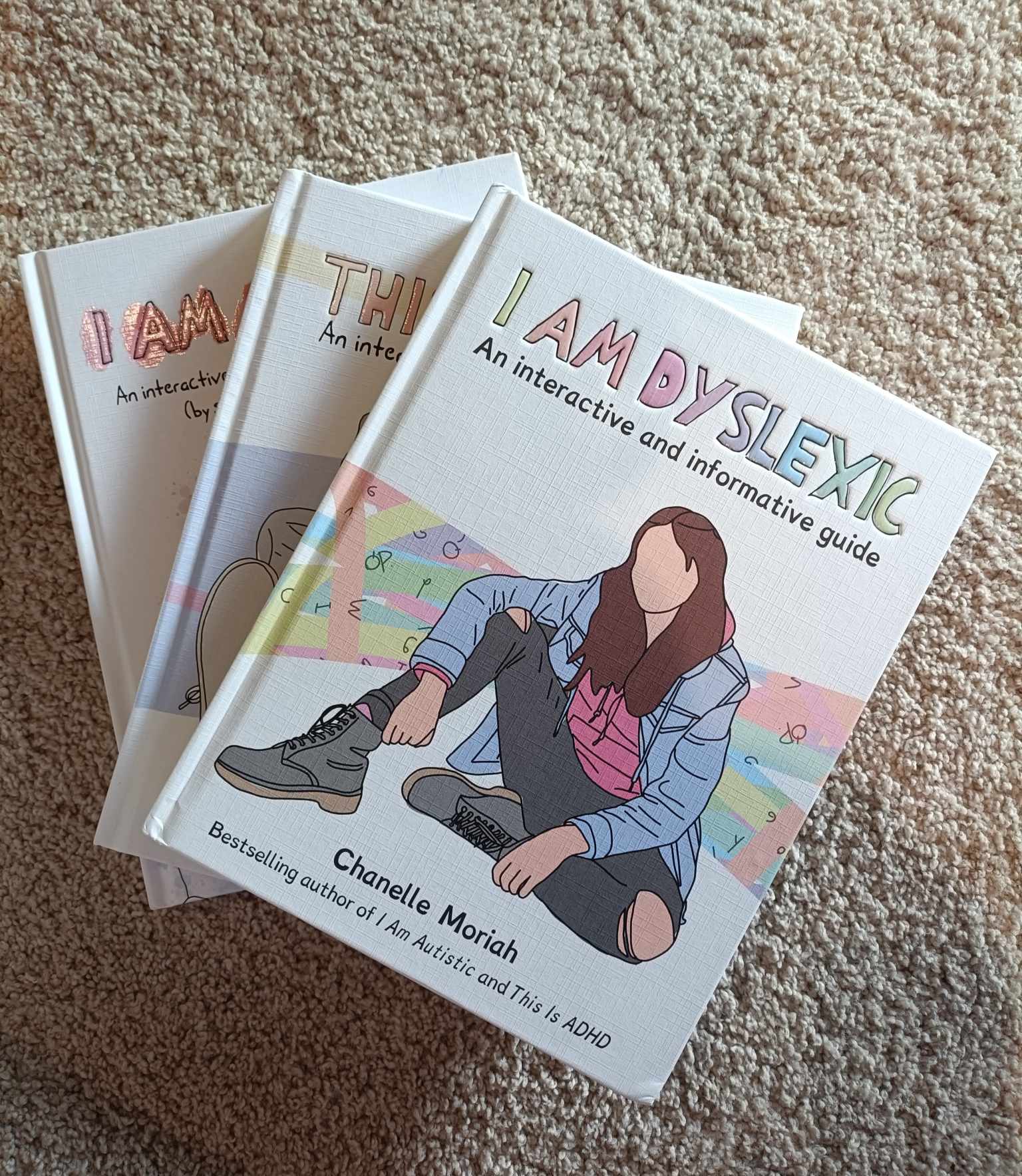
My third book, I am Dyslexic, is a bit different. I quickly discovered there is no way to explain what dyslexia is while remaining neutral or positive. So my focus with this book was to look more at the strengths associated with dyslexia, the tools and strategies people might use, and to reduce stigma around the parts that are hard.
All three of my books are designed to be tailored to the reader, with spaces to write, draw, or tick boxes for the traits they relate to. I recognise that no two people will experience any of these conditions in exactly the same way, and it is simply not possible for me to write a one-size-fits-all explanation of what it means to be diagnosed as autistic, ADHD, or dyslexic. Because of this, it was also very important to me to seek feedback from others in my community. I did not want to write something based solely on my own perspective, and I am so grateful for everyone who has helped with each of my books. This included people with lived experience, professionals, and parents.
Of course, none of the books would be what they are if it weren’t for my publisher, editors, proofreaders, designer, and publicist. There were so many people involved in the process of creating these resources. I could not have done it alone.
MY BOOKS and THE PEOPLE who read them have HELPED ME more than I’ve helped them.
Having said all of that, I would argue that my books and the people who read them have helped me more than I’ve helped them. I’ve always felt very alone, invisible, and unheard. I felt worthless, like I was failing at life. I couldn’t keep up with everyone else, I was too burnt out to ever be successful, and everything just felt so hard. I didn’t know what I was doing wrong. The success of my first book showed me just how many people there are who have felt the same. You’ve given me a voice, a purpose, confidence, and hope.
Chanelle Moriah
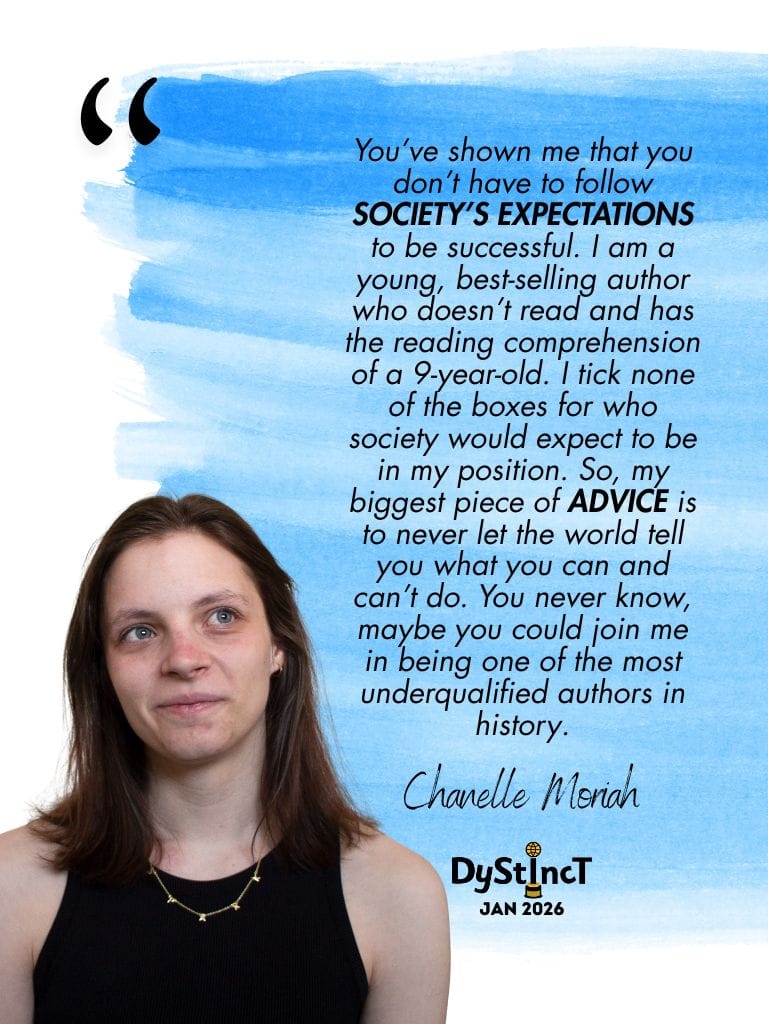
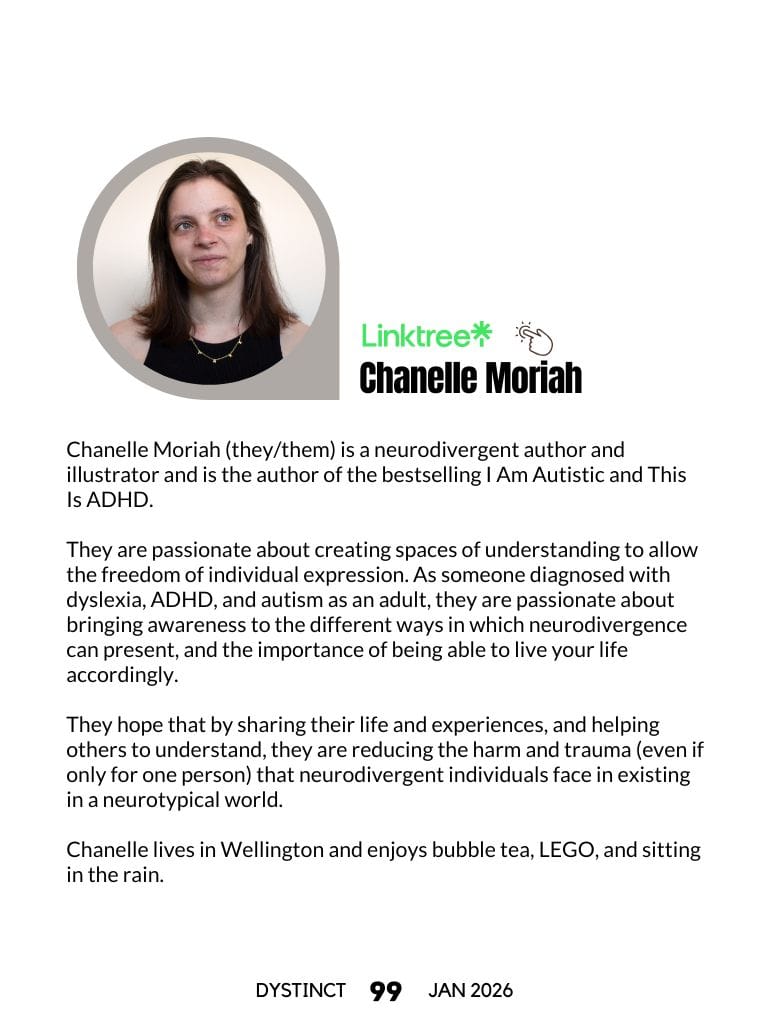
Chanelle Moriah (they/them) is a neurodivergent author and illustrator and is the author of the bestselling I Am Autistic and This Is ADHD.
They are passionate about creating spaces of understanding to allow the freedom of individual expression. As someone diagnosed with dyslexia, ADHD, and autism as an adult, they are passionate about bringing awareness to the different ways in which neurodivergence can present, and the importance of being able to live your life accordingly.
They hope that by sharing their life and experiences, and helping others to understand, they are reducing the harm and trauma (even if only for one person) that neurodivergent individuals face in existing in a neurotypical world.
Chanelle lives in Wellington and enjoys bubble tea, LEGO, and sitting in the rain.
Extracts from Dystinct Magazine
Extracts from Dystinct Magazine