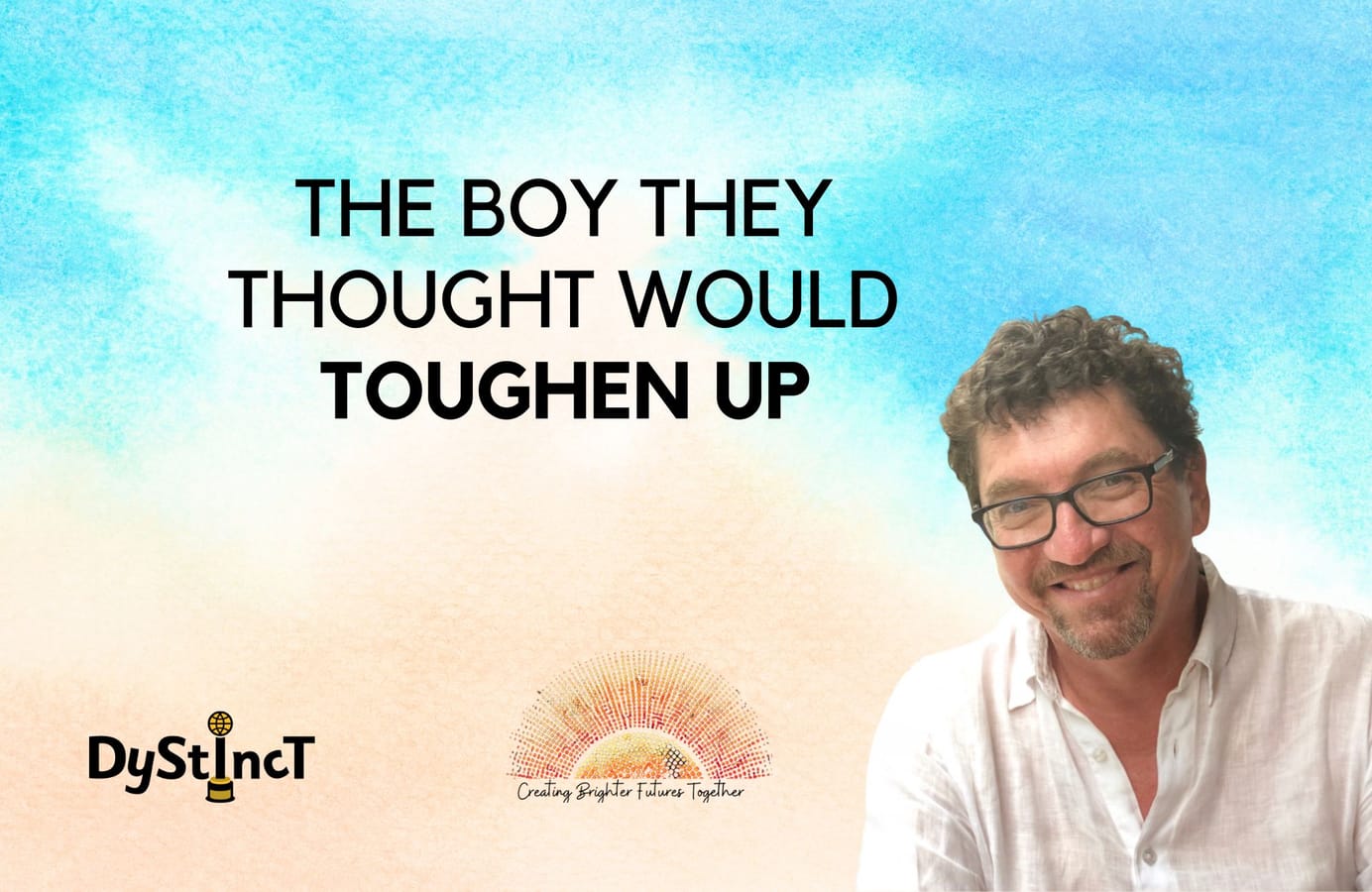
Issue 29: The Boy They Thought Would Toughen Up | Simon da Roza
Simon shares how growing up with undiagnosed ADHD and dyslexia in a punitive school system left lasting shame, and how understanding, neuroscience, and lived empathy led him to become the educator he once needed, determined to protect children from being labelled broken for their differences.

Table of Contents
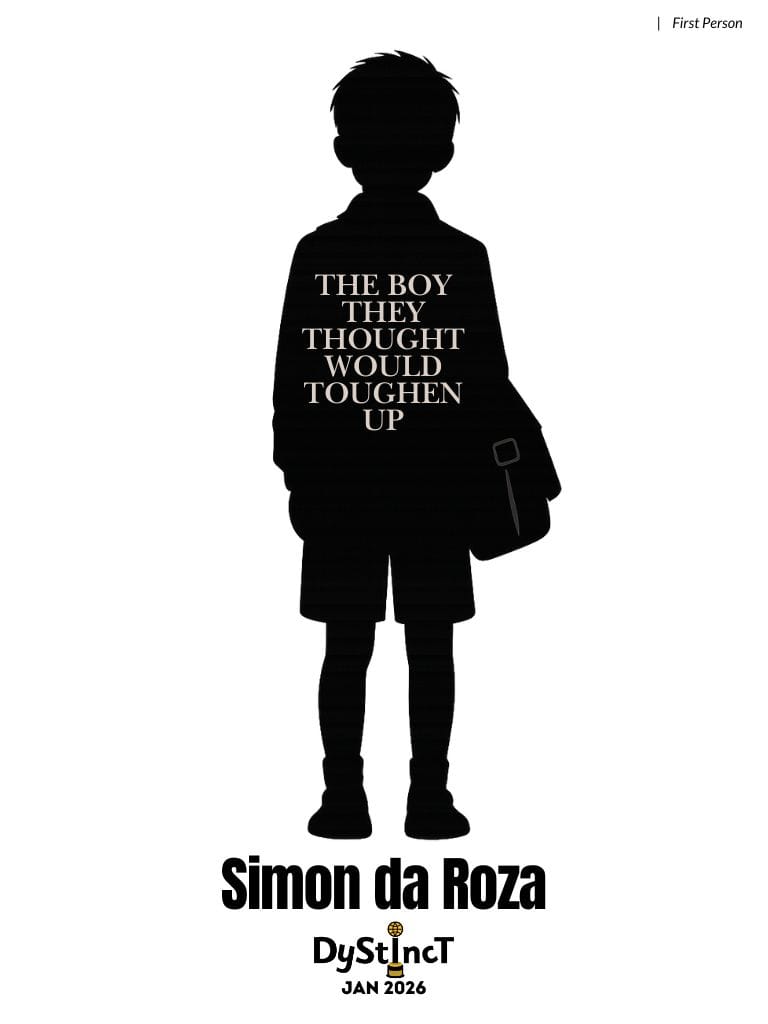
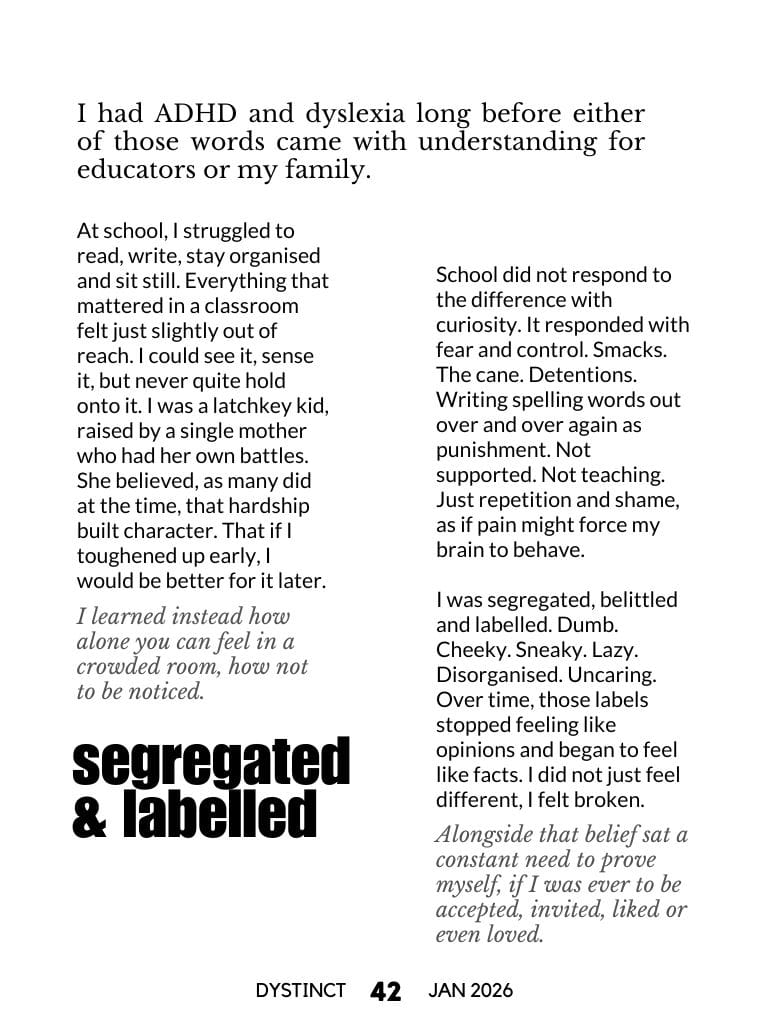
I had ADHD and dyslexia long before either of those words came with understanding for educators or my family.
At school, I struggled to read, write, stay organised and sit still. Everything that mattered in a classroom felt just slightly out of reach. I could see it, sense it, but never quite hold onto it. I was a latchkey kid, raised by a single mother who had her own battles. She believed, as many did at the time, that hardship built character. That if I toughened up early, I would be better for it later.
I learned instead how alone you can feel in a crowded room, how not to be noticed.
segregated & labelled
School did not respond to the difference with curiosity. It responded with fear and control. Smacks. The cane. Detentions. Writing spelling words out over and over again as punishment. Not supported. Not teaching. Just repetition and shame, as if pain might force my brain to behave.
I was segregated, belittled and labelled. Dumb. Cheeky. Sneaky. Lazy. Disorganised. Uncaring. Over time, those labels stopped feeling like opinions and began to feel like facts. I did not just feel different, I felt broken.
Alongside that belief sat a constant need to prove myself, if I was ever to be accepted, invited, liked or even loved.
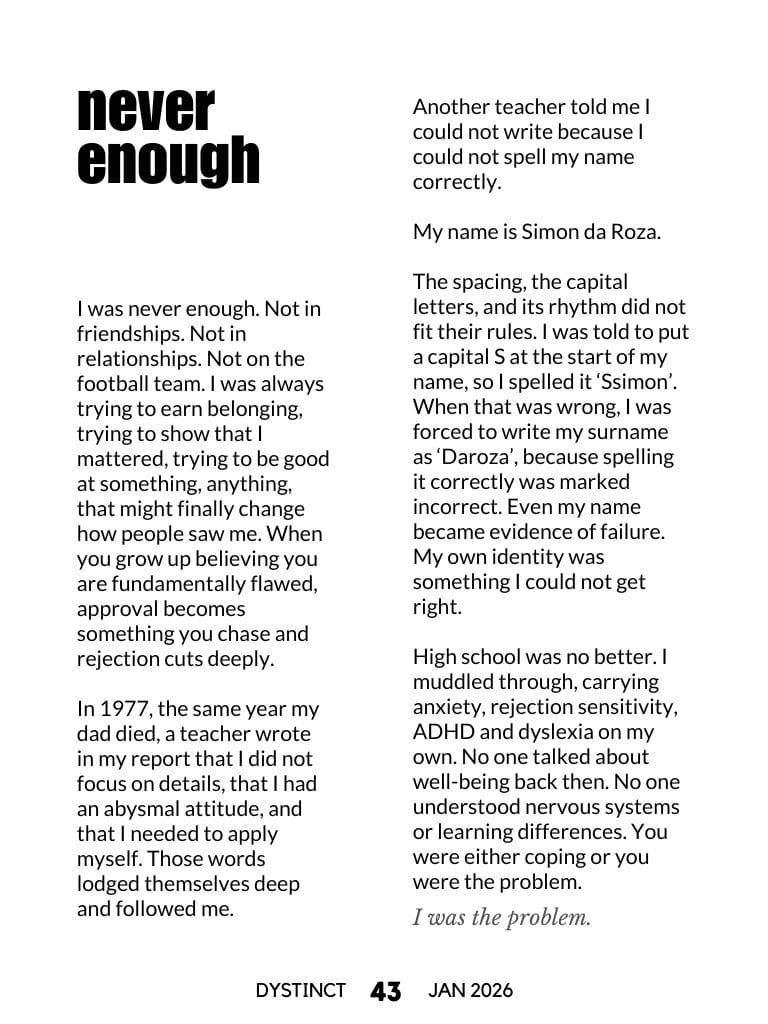
never enough
I was never enough. Not in friendships. Not in relationships. Not on the football team. I was always trying to earn belonging, trying to show that I mattered, trying to be good at something, anything, that might finally change how people saw me. When you grow up believing you are fundamentally flawed, approval becomes something you chase and rejection cuts deeply.
In 1977, the same year my dad died, a teacher wrote in my report that I did not focus on details, that I had an abysmal attitude, and that I needed to apply myself. Those words lodged themselves deep and followed me.
Another teacher told me I could not write because I could not spell my name correctly.
My name is Simon da Roza.
The spacing, the capital letters, and its rhythm did not fit their rules. I was told to put a capital S at the start of my name, so I spelled it ‘Ssimon’. When that was wrong, I was forced to write my surname as ‘Daroza’, because spelling it correctly was marked incorrect. Even my name became evidence of failure. My own identity was something I could not get right.
High school was no better. I muddled through, carrying anxiety, rejection sensitivity, ADHD and dyslexia on my own. No one talked about well-being back then. No one understood nervous systems or learning differences. You were either coping or you were the problem.
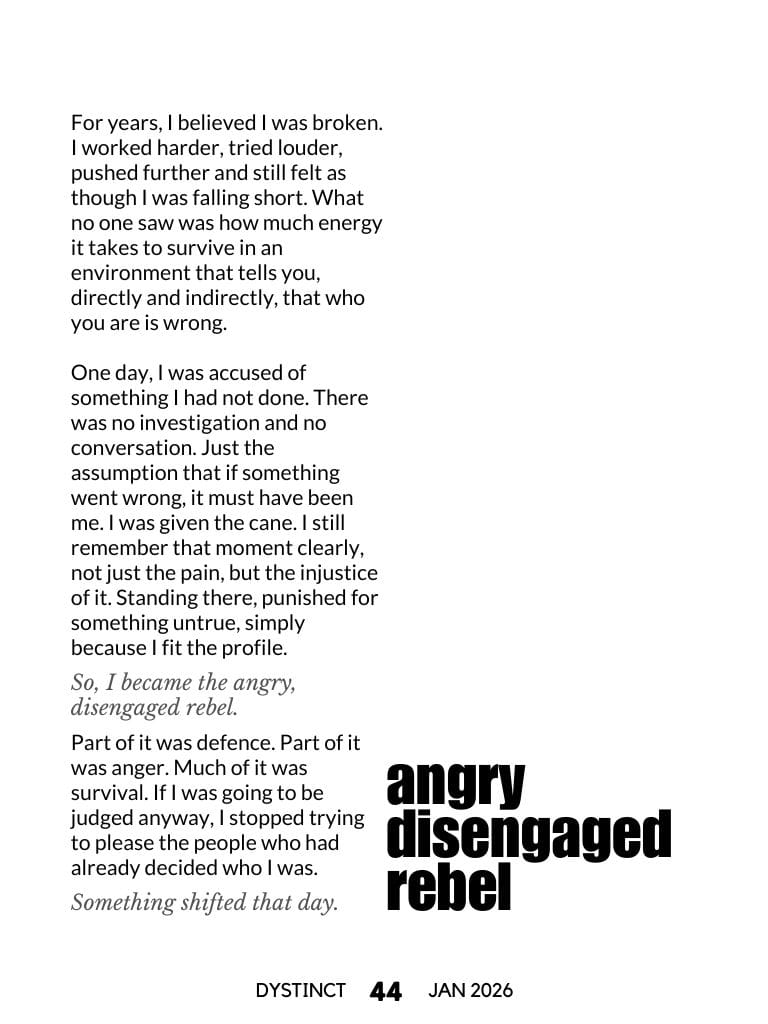
For years, I believed I was broken. I worked harder, tried louder, pushed further and still felt as though I was falling short. What no one saw was how much energy it takes to survive in an environment that tells you, directly and indirectly, that who you are is wrong.
One day, I was accused of something I had not done. There was no investigation and no conversation. Just the assumption that if something went wrong, it must have been me. I was given the cane. I still remember that moment clearly, not just the pain, but the injustice of it. Standing there, punished for something untrue, simply because I fit the profile.
So, I became the angry, disengaged rebel.
Part of it was defence. Part of it was anger. Much of it was survival. If I was going to be judged anyway, I stopped trying to please the people who had already decided who I was.
Something shifted that day.
angry disengaged rebel
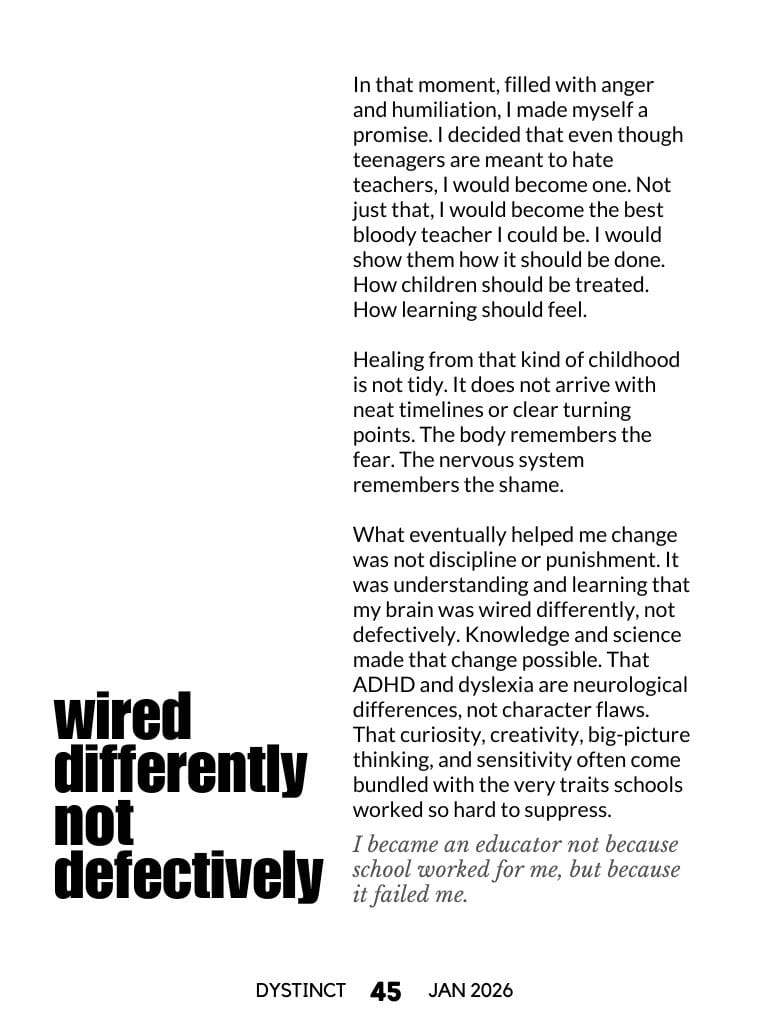
In that moment, filled with anger and humiliation, I made myself a promise. I decided that even though teenagers are meant to hate teachers, I would become one. Not just that, I would become the best bloody teacher I could be. I would show them how it should be done. How children should be treated. How learning should feel.
Healing from that kind of childhood is not tidy. It does not arrive with neat timelines or clear turning points. The body remembers the fear. The nervous system remembers the shame.
What eventually helped me change was not discipline or punishment. It was understanding and learning that my brain was wired differently, not defectively. Knowledge and science made that change possible. That ADHD and dyslexia are neurological differences, not character flaws. That curiosity, creativity, big-picture thinking, and sensitivity often come bundled with the very traits schools worked so hard to suppress.
I became an educator not because school worked for me, but because it failed me.
wired differently not defectively
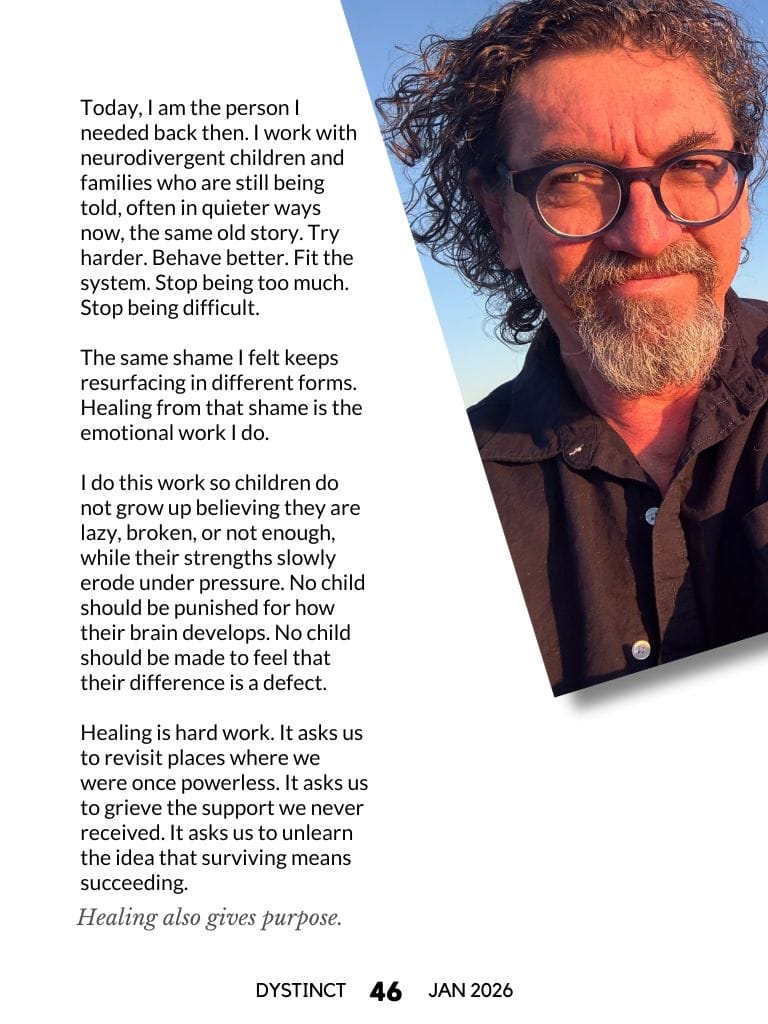
Today, I am the person I needed back then. I work with neurodivergent children and families who are still being told, often in quieter ways now, the same old story. Try harder. Behave better. Fit the system. Stop being too much. Stop being difficult.
The same shame I felt keeps resurfacing in different forms. Healing from that shame is the emotional work I do.
I do this work so children do not grow up believing they are lazy, broken, or not enough, while their strengths slowly erode under pressure. No child should be punished for how their brain develops. No child should be made to feel that their difference is a defect.
Healing is hard work. It asks us to revisit places where we were once powerless. It asks us to grieve the support we never received. It asks us to unlearn the idea that surviving means succeeding.
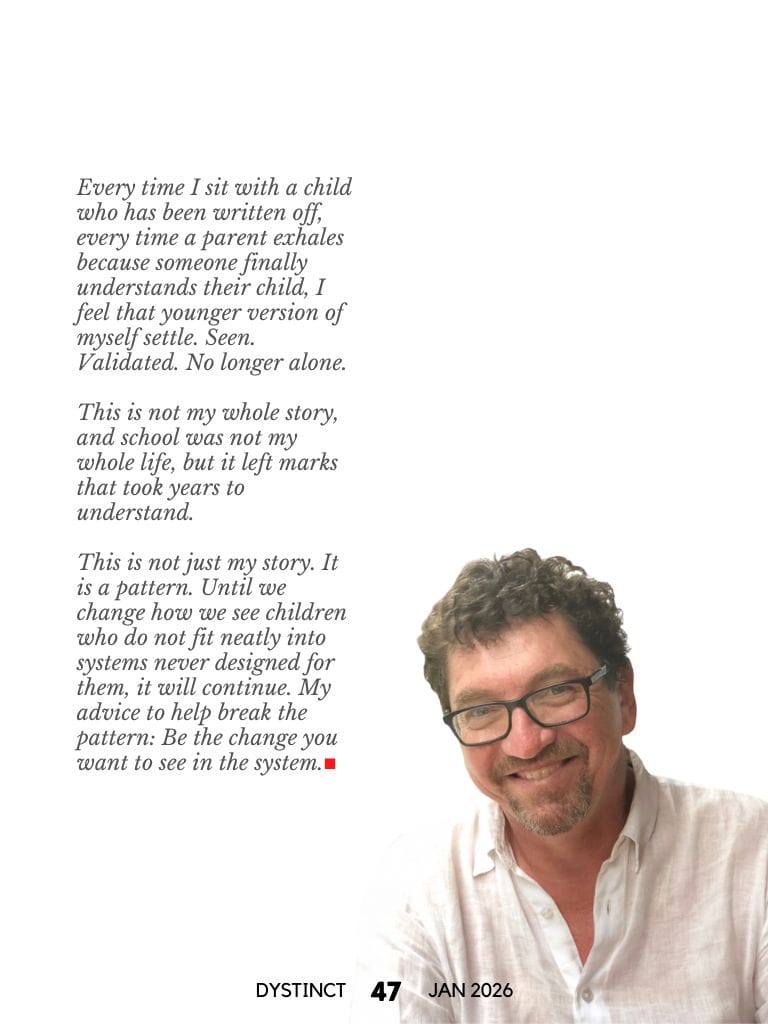
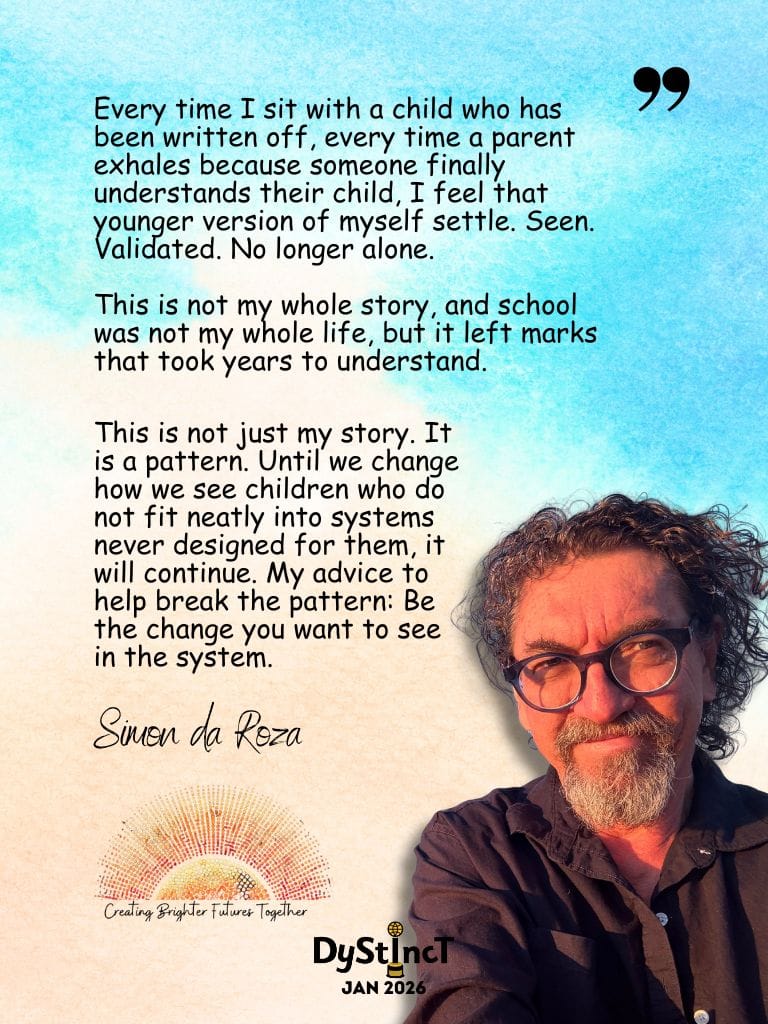
Every time I sit with a child who has been written off, every time a parent exhales because someone finally understands their child, I feel that younger version of myself settle. Seen. Validated. No longer alone.
This is not my whole story, and school was not my whole life, but it left marks that took years to understand.
This is not just my story. It is a pattern. Until we change how we see children who do not fit neatly into systems never designed for them, it will continue. My advice to help break the pattern: Be the change you want to see in the system.
Simon da Roza
Neurodivergent Coach, Counsellor & Founder | Xceptionallearners.com | Facebook | Instagram | YouTube | LinkedIn | Pinterest
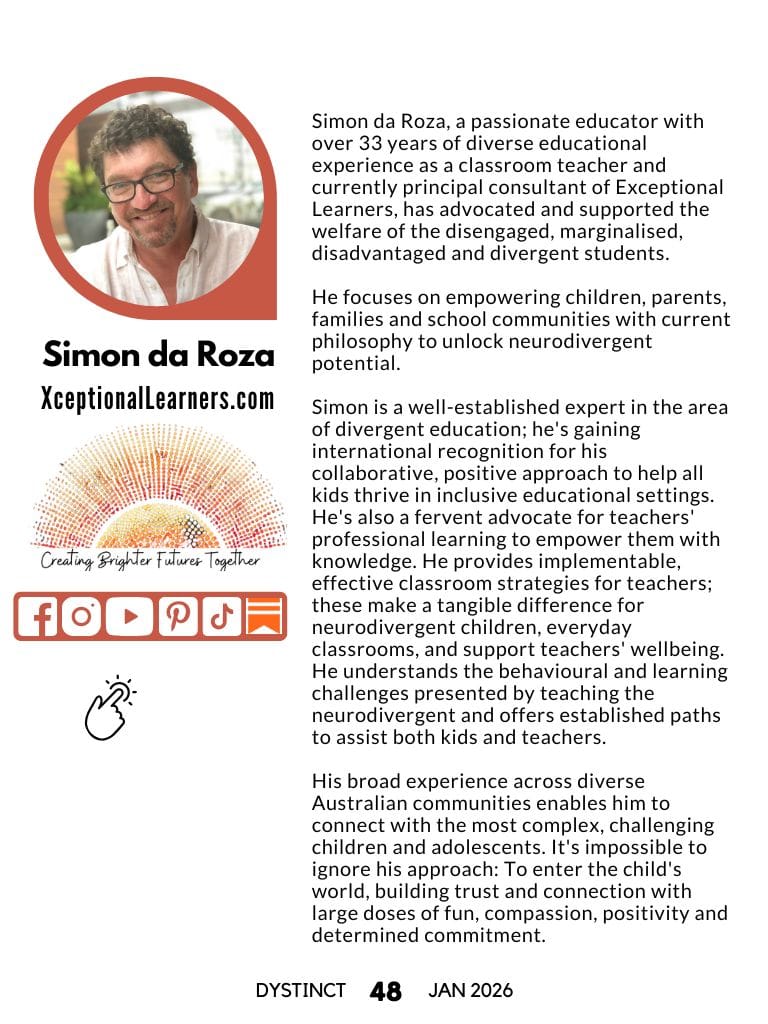
Simon da Roza
Simon da Roza, a passionate educator with over 33 years of diverse educational experience as a classroom teacher and currently principal consultant of Exceptional Learners, has advocated and supported the welfare of the disengaged, marginalised, disadvantaged and divergent students.
He focuses on empowering children, parents, families and school communities with current philosophy to unlock neurodivergent potential.
Simon is a well-established expert in the area of divergent education; he's gaining international recognition for his collaborative, positive approach to help all kids thrive in inclusive educational settings. He's also a fervent advocate for teachers' professional learning to empower them with knowledge. He provides implementable, effective classroom strategies for teachers; these make a tangible difference for neurodivergent children, everyday classrooms, and support teachers' wellbeing. He understands the behavioural and learning challenges presented by teaching the neurodivergent and offers established paths to assist both kids and teachers.
His broad experience across diverse Australian communities enables him to connect with the most complex, challenging children and adolescents. It's impossible to ignore his approach: To enter the child's world, building trust and connection with large doses of fun, compassion, positivity and determined commitment.
BUY eBook

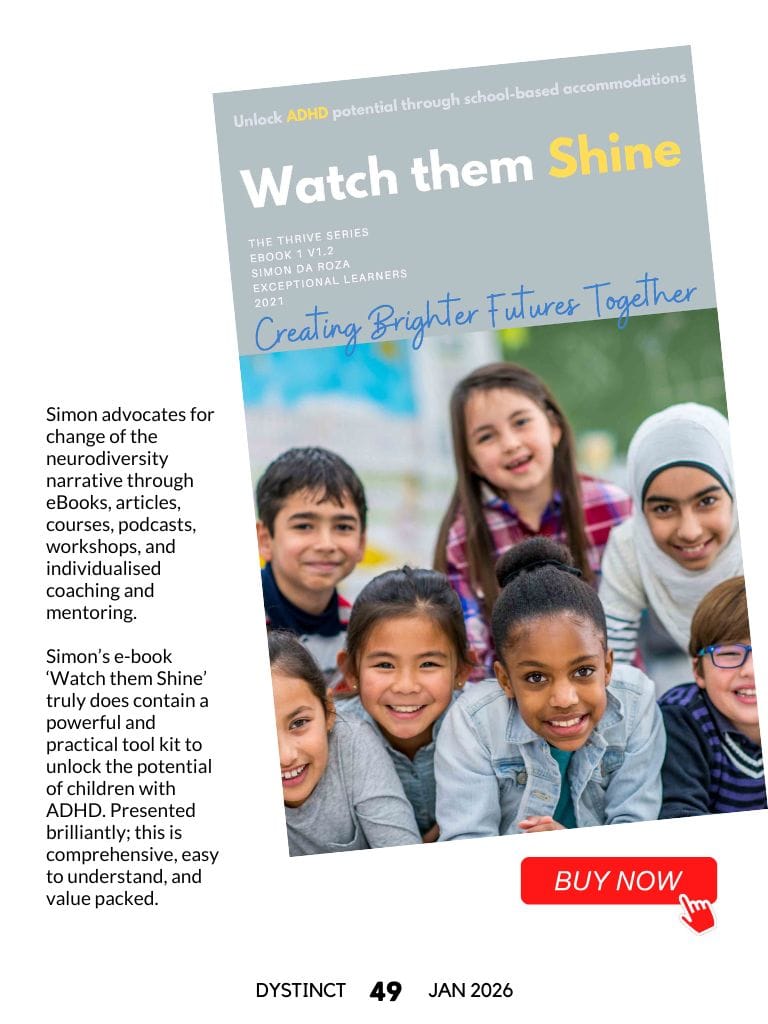
Watch Them Shine Ebook
'Watch them Shine!' An introduction for educators and parents to improve the educational outcomes and guidance of children with Attention Deficit Hyperactivity Disorder (ADHD) by applying knowledge of executive functioning delays in creating effective, reasonable adjustments in the classroom.
Let Them Shine is a resource to support your teachers in supporting divergent learners. The adjustments are free and can be implemented today. These adjustments will have an immediate positive effect on students and your teachers' wellbeing. Start from a strengths-based perspective, add empathy, guidance and watch them thrive.
When you have a deep understanding of the neurology of ADHD, you will understand the effects upon the classroom and learning. Academic research of neurology and ADHD has turned our appreciation of this disability on its head. What we once thought ADHD to be is wrong. Combine this new knowledge with the realisation that each presentation is unique and therefore each solution must also be unique. However, you are the expert in your classroom and of the children in your care, add the creative solutions you and your students collaboratively implement in light of this knowledge and you will create effective reasonable adjustments.
Extracts from Dystinct Magazine
Extracts from Dystinct Magazine