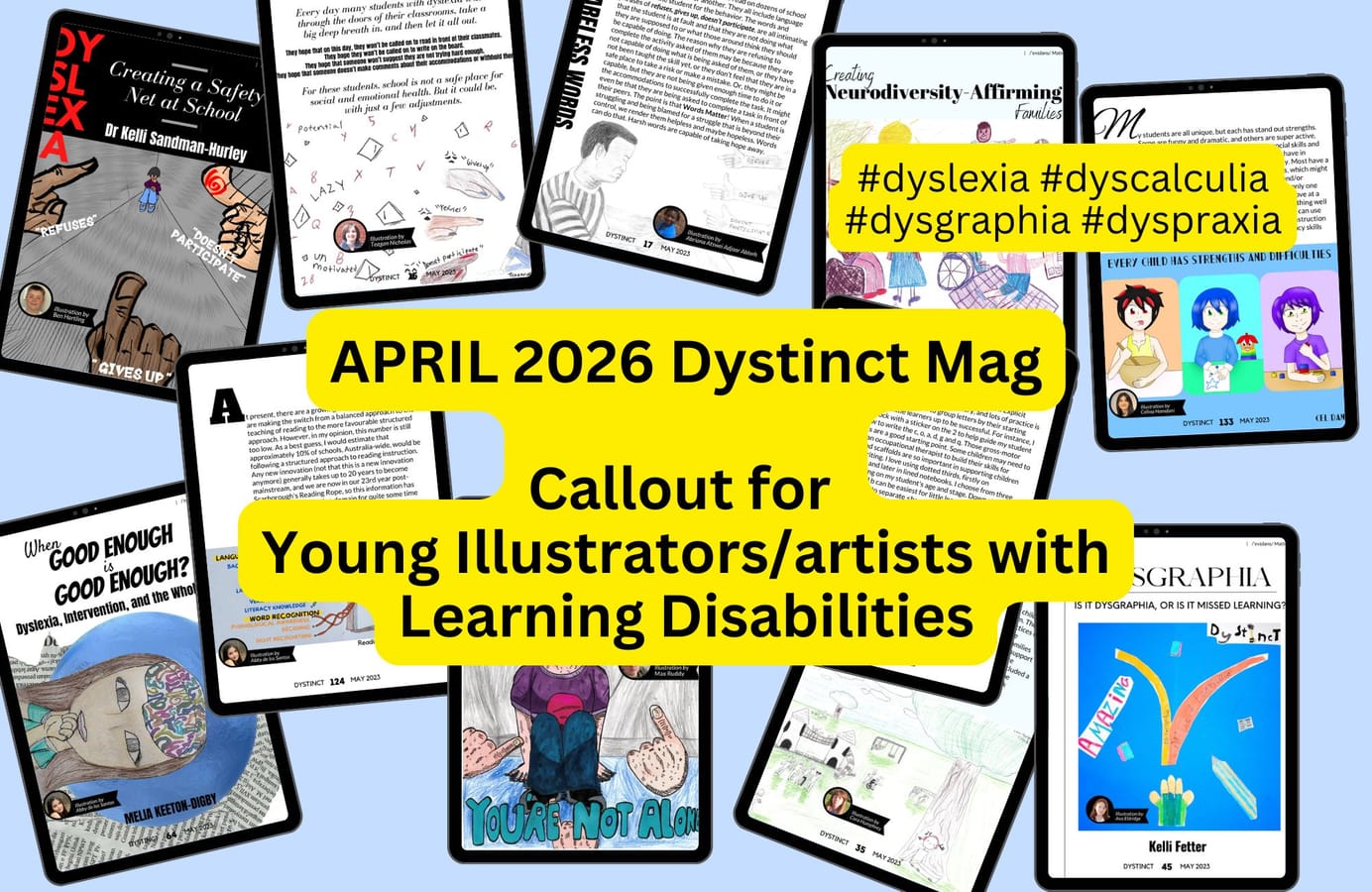
Issue 30: Illustration Callout for April 2026 Dystinct Magazine
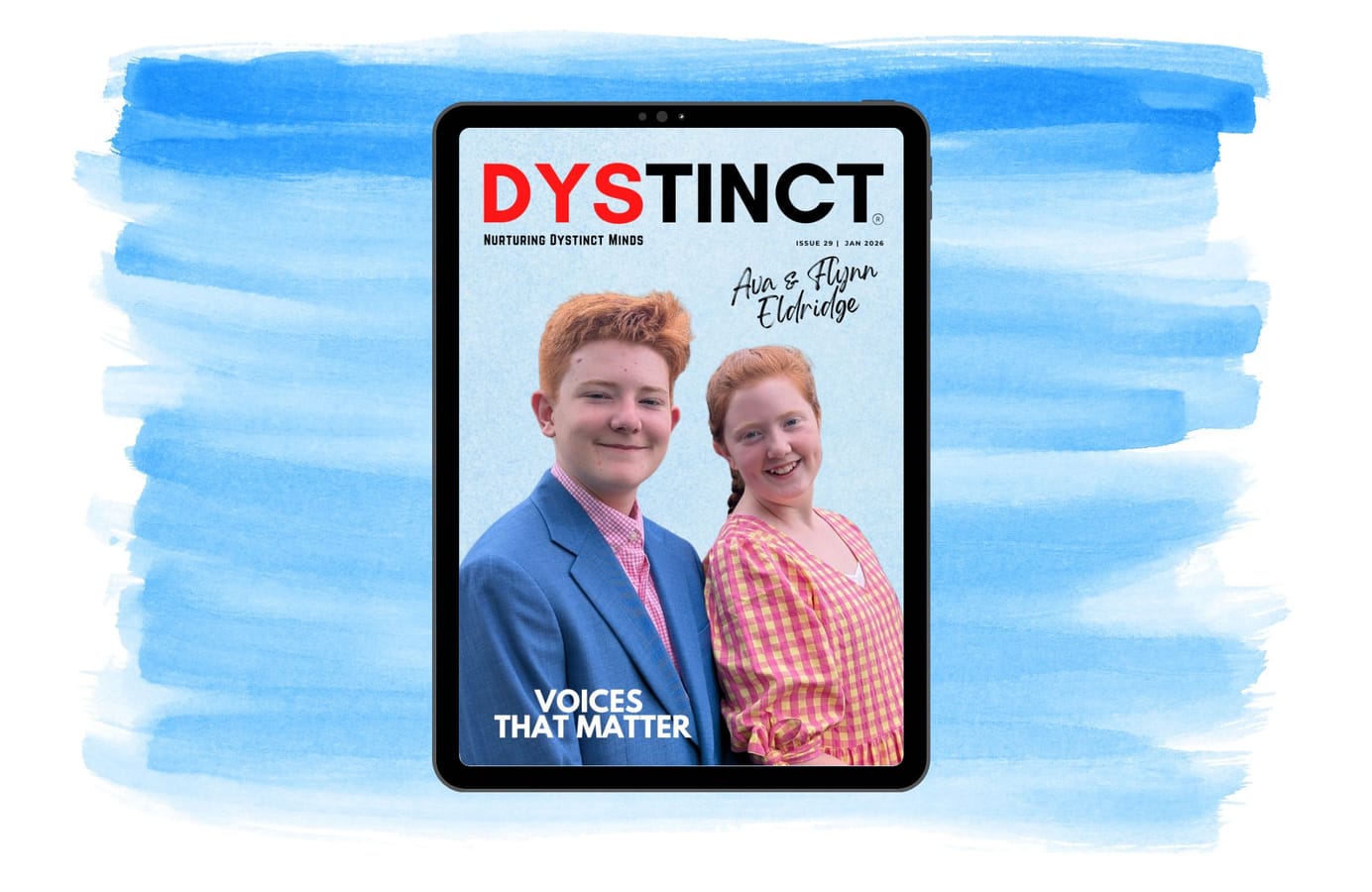
Opportunity for children to get their illustrations published in the Dystinct Magazine. In every magazine issue, articles written by specialists are accompanied by illustrations created by children. Submit your child's illustrations for a chance to be featured in the Dystinct Magazine.

Table of Contents
Callouts for illustrations to be featured in the upcoming April 2026 issue of the Dystinct Magazine
Instructions to submit the illustrations are at the bottom. If you have any questions, please get in touch with me at hello@dystinct.org.
Theme: Neurodivergent traits can be strengths, not deficits.
- Article Topic: The Bridge Across the Cliff: Turning Neurodivergent "Symptoms" into Career Superpowers
- Article Context: This article explores how neurodivergent traits often labelled as deficits in school can become powerful career advantages when reframed through a strength-based “talent scout” mindset.
Illustration Guideline:
Children are free to create an illustration based on their creativity. If you require a guideline, children can draw one of the following illustrations.
- Talent Scout Lens: Draw a teacher or parent looking at a student through a magnifying glass. In the magnified view, clearly show the student’s strengths, such as building, creating, solving problems, or thinking. Outside the lens, the student looks ordinary, but inside the lens, their strengths are highlighted and easy to see.
- Fixing vs Fitting: Draw a split scene of the same person. On one side, show the person being squished into a small box that does not fit them. On the other side, show the person fitting comfortably and naturally into a shape that matches them perfectly, showing ease and confidence.
Theme: Handwriting difficulties
- Article Topic: Why It’s Not Just About Legibility: The Hidden Costs of Handwriting Difficulties in Secondary School
- Article Context: The author explains how handwriting difficulties in secondary school are not just about legibility but create a hidden cognitive bottleneck that impacts learning, highlighting the need for a balanced approach combining skill-building and targeted accommodations to support student success.
Illustration Guideline:
Children are free to create an illustration based on their creativity. If you require a guideline, children can draw one of the following illustrations.
- Writing Bottleneck: Draw a student writing in a notebook at a desk. Inside their head, show lots of ideas (words, symbols, lightbulbs) trying to flow down toward their hand. Between the brain and the hand, show a narrow “bottleneck” where the ideas are getting stuck and blocked, so only a small amount reaches the page.
- Big Ideas, Small Output: Draw a student writing only a few short lines in a notebook and looking frustrated or annoyed. Above their head, show a large cloud filled with rich ideas (sentences, pictures, lightbulbs), clearly much bigger than what is written on the page.
Theme: Improving behaviour and wellbeing
- Article Topic: Behavioural and Interpersonal Techniques for Improving Children’s and Teens’ Behaviour and Well-Being
- Article Context: This article outlines how combining behavioural and interpersonal strategies supports children’s and teens’ development, emphasising the role of positive reinforcement, executive function support, and strong relationships in improving behaviour and emotional well-being.
Illustration Guideline:
Children are free to create an illustration based on their creativity. If you require a guideline, children can draw one of the following illustrations.
- Positive Reinforcement in Action: Draw a child completing a task (like homework or putting shoes away) while a parent or teacher gives praise or a small reward, showing encouragement.
- Behaviour Contract: Draw a parent and child together looking at or signing a simple agreement chart with rules and rewards.
- Calm Conversations: Draw a parent and child sitting calmly and talking, using “I feel” statements, showing respectful communication.
Theme: Evidence-based Screening and Early intervention
- Article Topic: Evidence-Based Screening is the Future for Effective Early Intervention
- Article Context: This article explores how early, evidence-based screening improves outcomes for children with additional needs by enabling timely support through practical, strengths-focused interventions.
Illustration Guideline:
Children are free to create an illustration based on their creativity. If you require a guideline, children can draw one of the following illustrations.
- Early Screening = Better support: Draw a young child at the start of a path being gently guided with support (tools, helping hands), compared to another path with a struggling child where support comes much later and the path looks harder.
- From Confusion to Clarity: Draw a child surrounded by confusion (question marks), then next to it show the same child with a clear plan (steps, supports, visuals) and looking confident.
- Working together as a team: Draw a happy child in the centre with a team around them (teacher, parent, specialist), all working together to support them.
INSTRUCTIONS
Instructions for creating illustrations:
- If your child can create digital drawings, that would be preferred. If not, illustrations on paper will suffice. (If your child can create a digital illustration, please let me know about the software/platform they will use to create the file).
- Please create/draw/colour on an A4 sheet of WHITE paper.
- Scan the image and send us a clear image of the illustration without shadows. Please do not take a photograph using flash on your mobile device.
Instructions for submitting your illustrations:
Please email me your submissions to hello@dystinct.org with the following info:
- Short bio- 25-50 words
- Name of Child
- Age
- Location (City/Country)
- Diagnosis/suspected diagnosis
- 1-2 high-resolution headshots/ photos of the child
Illustrations featured in previous issues of Dystinct Magazine
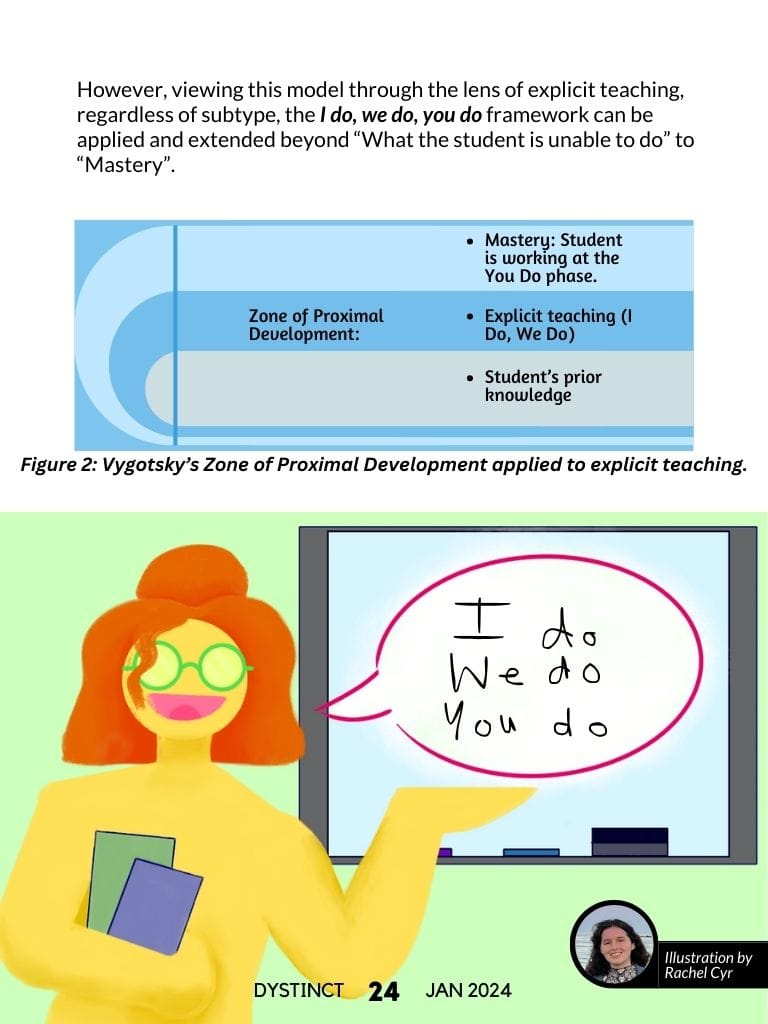
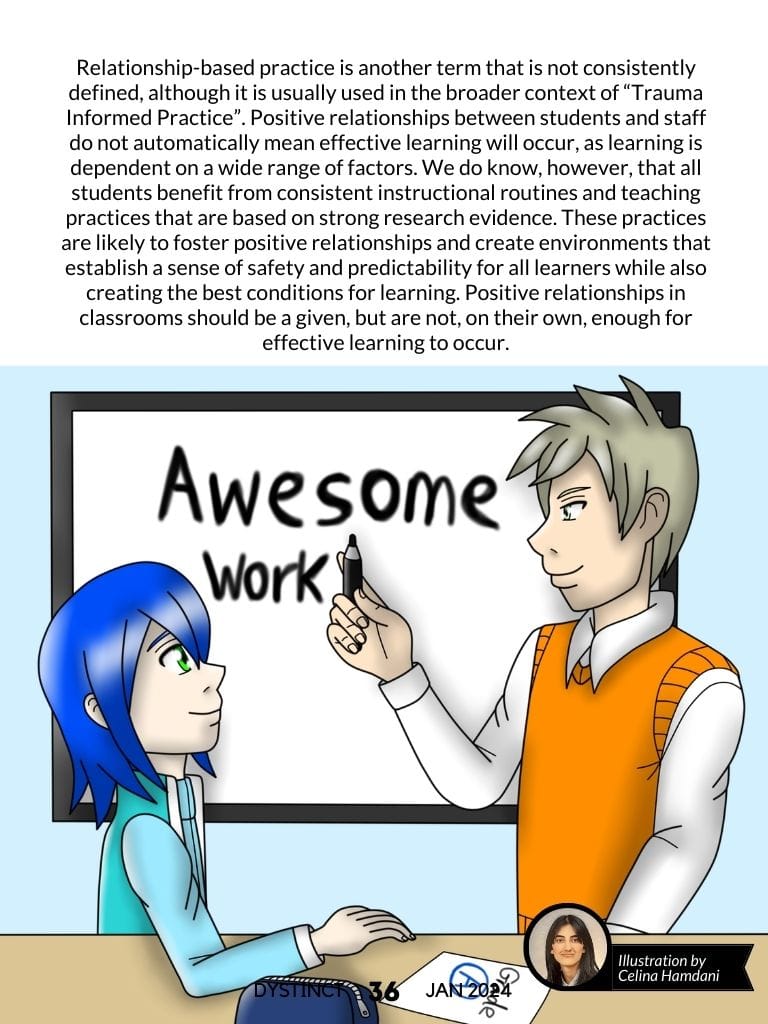
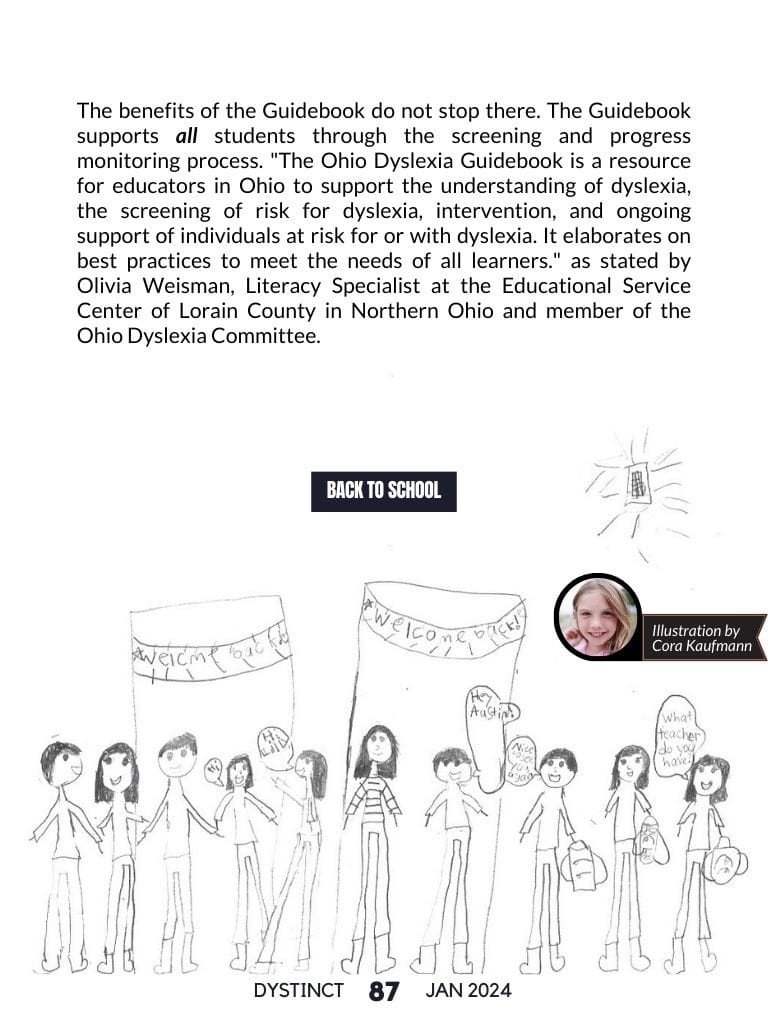
The below illustrations were featured in previous issues.