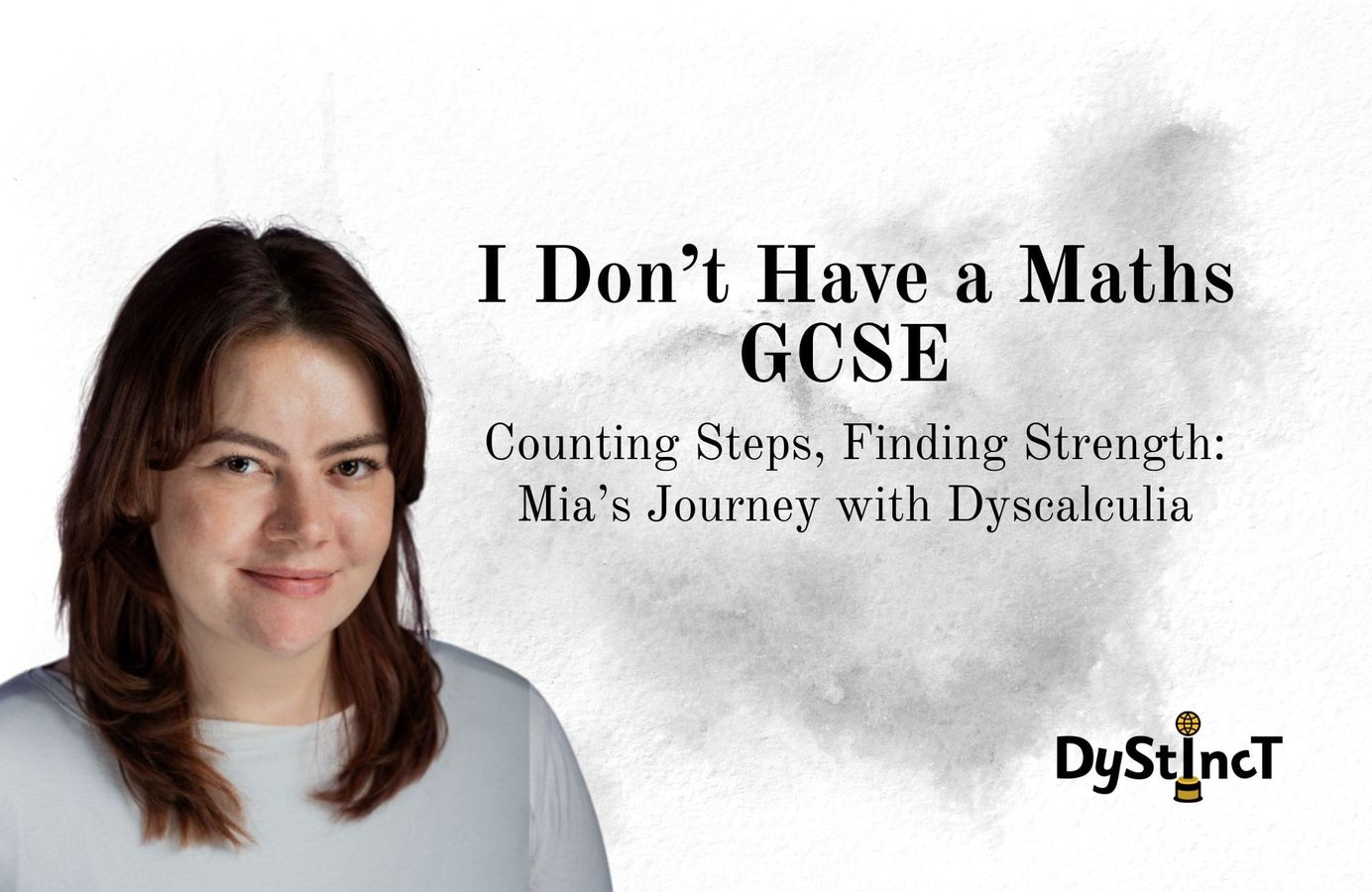
Issue 30: I Don’t Have a Maths GCSE | Mia Borthwick
Mia Borthwick shares her journey growing up with dyscalculia, highlighting the challenges, misunderstandings, and stigma she faced, and how discovering her strengths in the performing arts helped her build confidence, find her voice, and transform her experiences into creative advocacy.

Table of Contents
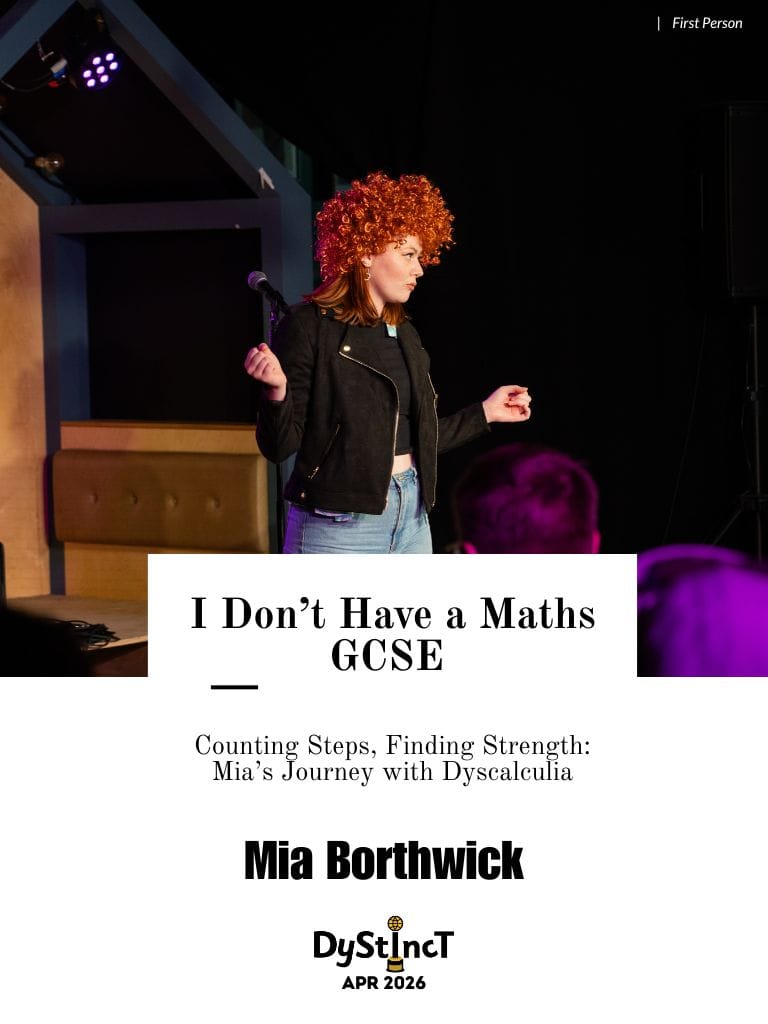
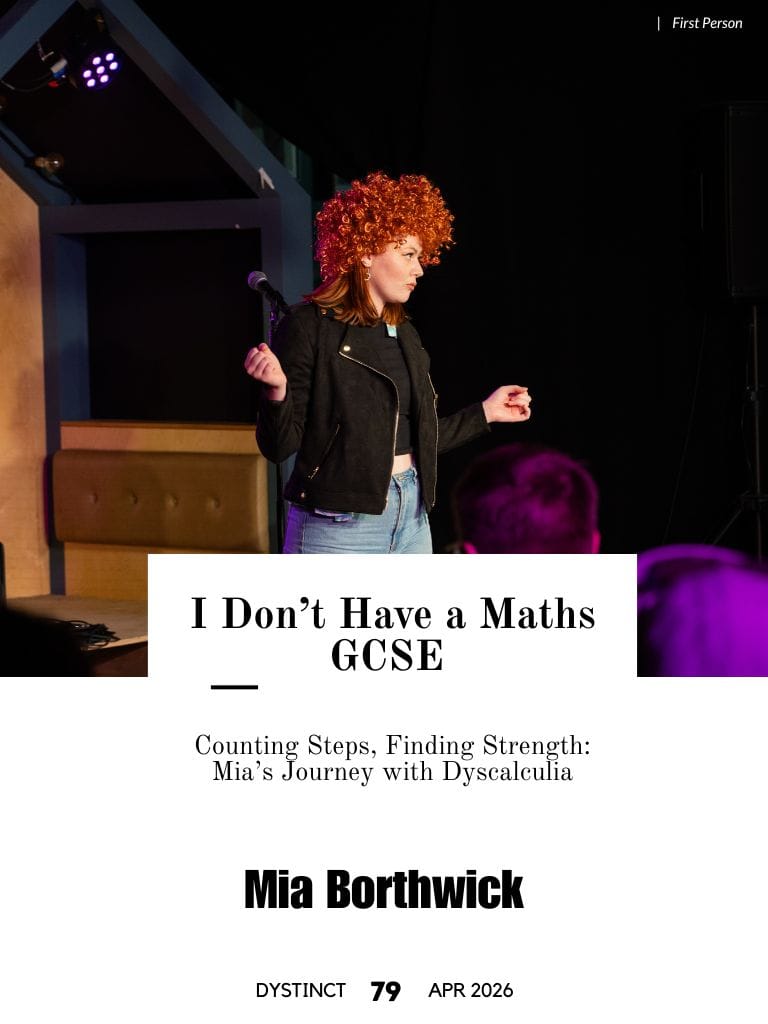
My name is Mia Borthwick, I’m 28 years old, and I live in Weston-super-Mare in Somerset. I am an actor, theatre maker and musician.
When I was in Year 2, I was lucky to have a really good teacher who recognised I was struggling to learn maths. She called my Mum in and told her that I wasn’t grasping basic maths concepts and would become visibly stressed in maths lessons. She believed that I possibly had a rare condition called dyscalculia, but that I was too young to be tested for it.
When we got home, Mum started researching dyscalculia, but there wasn’t much information out there. However, my teacher was really good and helped me to do maths ‘physically’, like counting as I walked. When I got into the next class, I was given extra support, which made a huge difference. For the first time, I was learning maths in a way that I could understand. I was given counters and blocks to help me learn how to count and add up, and I began to feel like I was making progress.
Then one day, I arrived at school to find the classroom layout had changed to individual tables rather than the usual grouped ones. We were doing the KS2 SATs, but no one had told Mum or me. My teacher told me I wasn't allowed any support because it wouldn’t be fair to the rest of the class. That meant no support worker and no counters or blocks. I remember feeling a surge of panic. This moment always stays with me, because it was the first time I truly felt ashamed of having dyscalculia. Up until then, my struggles with maths had mostly felt confusing and frustrating, but on that day, it became humiliating. I was the only child in the class who needed extra help. It made me feel different, and that feeling followed me for years.
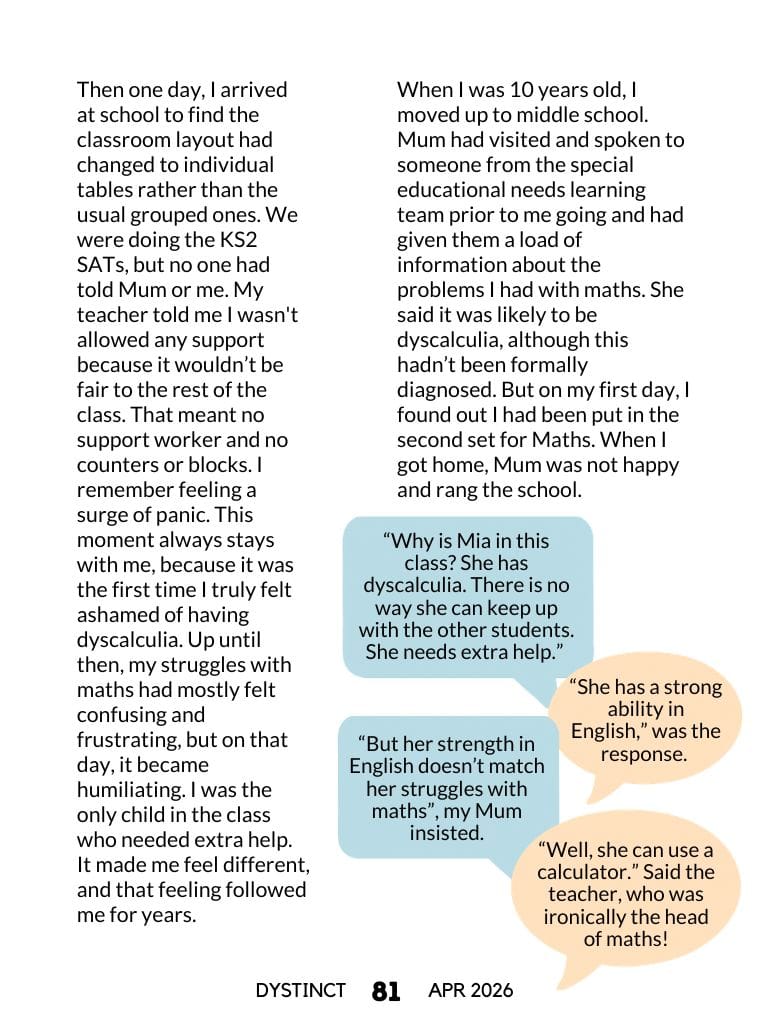
When I was 10 years old, I moved up to middle school. Mum had visited and spoken to someone from the special educational needs learning team prior to me going and had given them a load of information about the problems I had with maths. She said it was likely to be dyscalculia, although this hadn’t been formally diagnosed. But on my first day, I found out I had been put in the second set for Maths. When I got home, Mum was not happy and rang the school.
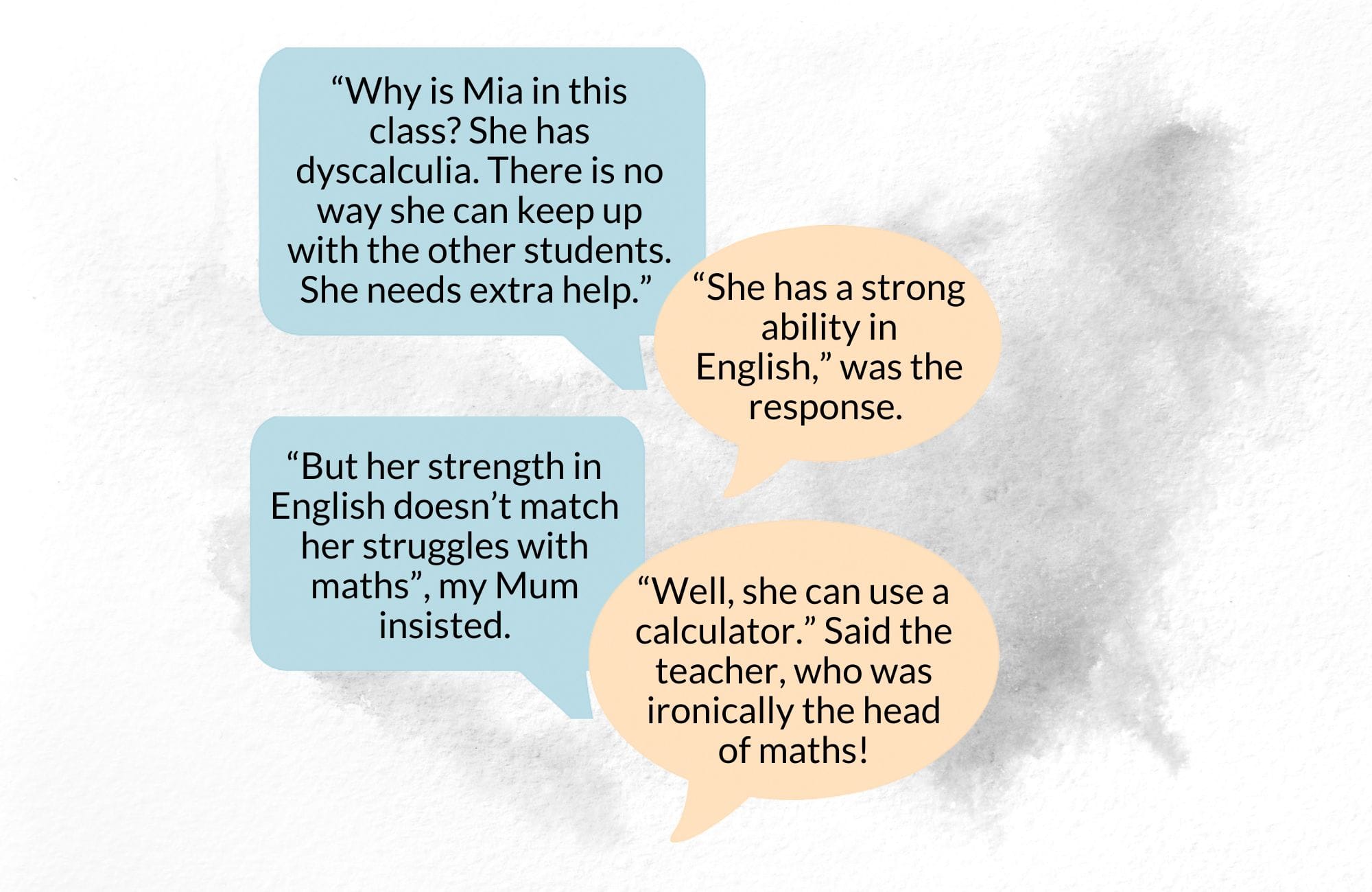
I lasted until half-term in the second set. Mum helped me at first with my homework by virtually doing it for me, but then they gave me long multiplication sums to do, which I just didn’t understand, and Mum decided enough was enough. She had to let me fail, or nothing would change, so she made me do the sums myself. After two weeks of totally failing, she put a note in my homework book saying she wanted to see someone.
After a meeting with the SENCO, they decided to test me for dyslexia, which it was obvious I didn’t have, so eventually they called in a specialist, and I was finally, formally diagnosed with dyscalculia. It was such a relief to know I genuinely had a problem and could now get help.
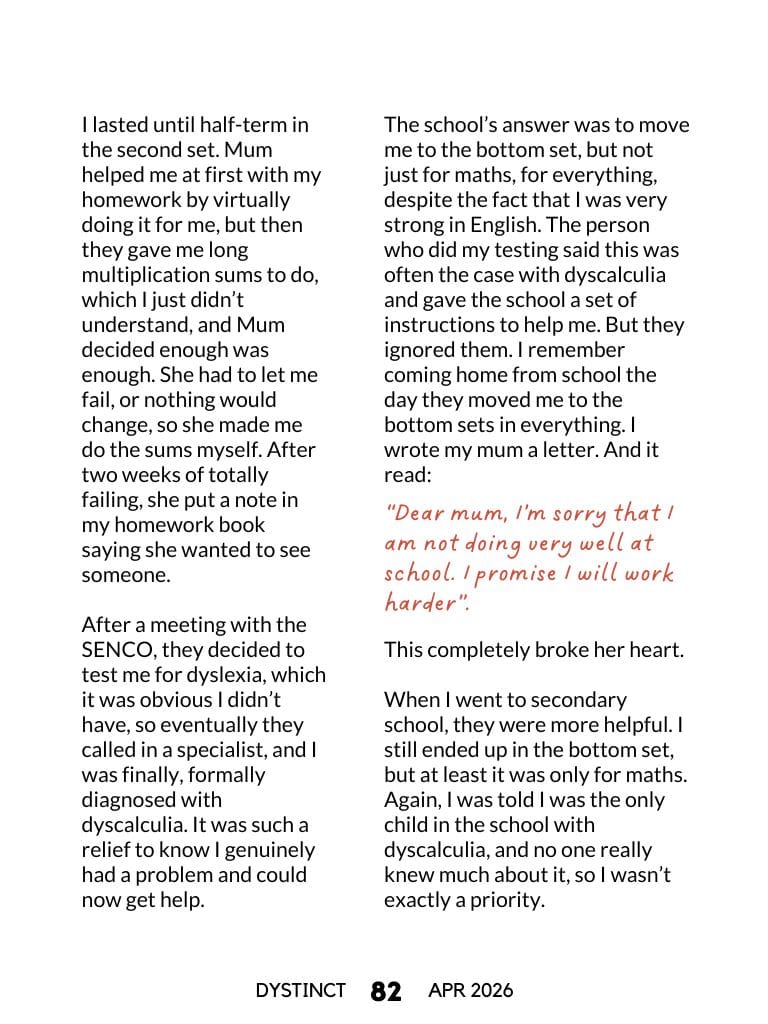
The school’s answer was to move me to the bottom set, but not just for maths, for everything, despite the fact that I was very strong in English. The person who did my testing said this was often the case with dyscalculia and gave the school a set of instructions to help me. But they ignored them. I remember coming home from school the day they moved me to the bottom sets in everything. I wrote my mum a letter. And it read:
“Dear mum, I’m sorry that I am not doing very well at school. I promise I will work harder”.
This completely broke her heart.
When I went to secondary school, they were more helpful. I still ended up in the bottom set, but at least it was only for maths. Again, I was told I was the only child in the school with dyscalculia, and no one really knew much about it, so I wasn’t exactly a priority.
When I got to my GCSEs, I discovered I wasn’t allowed to have extra time in exams. Mum was not impressed, but apparently, the exam rules said I could not have extra time or a separate room. If I had had dyslexia, I would have been entitled to both.
Throughout school, I never made a fuss. I didn’t talk back, I just kept my head down and quietly got on with lessons, even though I was really struggling. Mum suggested, only half joking, that perhaps I should kick up a fuss and smash up a classroom because I might get the help I needed then. But that wasn’t something I could ever have done.
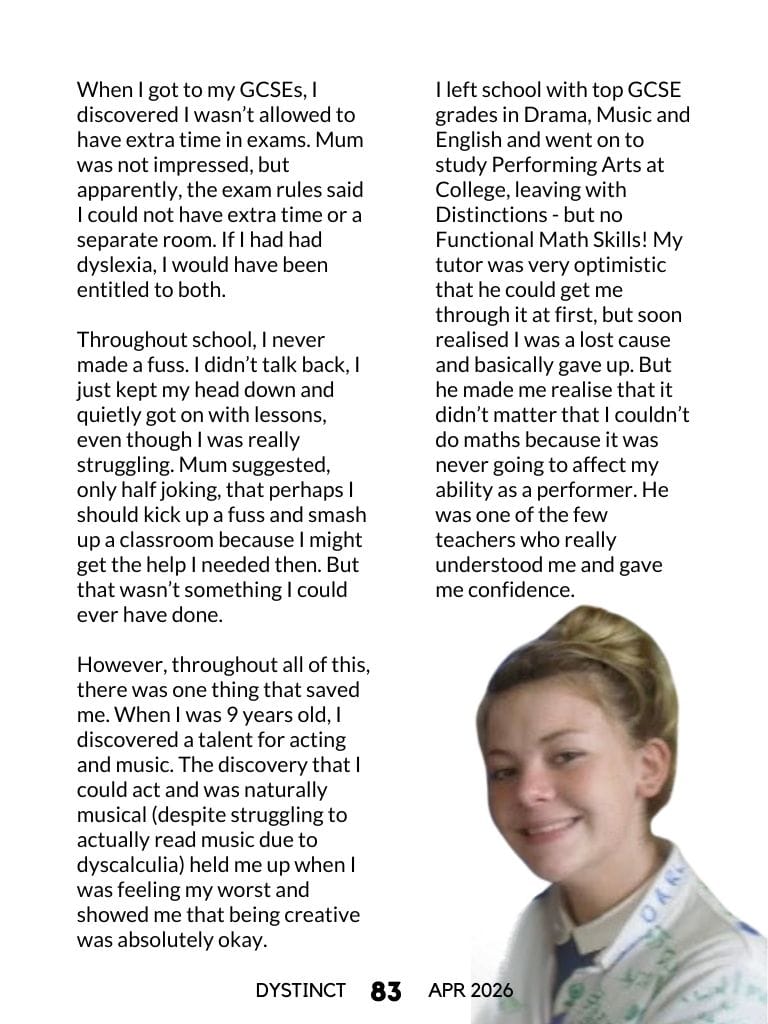
However, throughout all of this, there was one thing that saved me. When I was 9 years old, I discovered a talent for acting and music. The discovery that I could act and was naturally musical (despite struggling to actually read music due to dyscalculia) held me up when I was feeling my worst and showed me that being creative was absolutely okay.
I left school with top GCSE grades in Drama, Music and English and went on to study Performing Arts at College, leaving with Distinctions - but no Functional Math Skills! My tutor was very optimistic that he could get me through it at first, but soon realised I was a lost cause and basically gave up. But he made me realise that it didn’t matter that I couldn’t do maths because it was never going to affect my ability as a performer. He was one of the few teachers who really understood me and gave me confidence.
After college, I went on to study Performing Arts at university and ended up with a First-Class Honours Degree. Funnily enough, I never missed having a maths GCSE through it all. Unfortunately, all the constant battles and humiliation I felt at not being able to do maths have stayed with me. I never spoke about having dyscalculia to anyone, not my friends or my university lecturers, and I never mentioned it to employers. I was fearful of telling people because I thought they would never believe me. I thought they could see right into me and sense that I was just not very clever.
Employment was challenging. Having dyscalculia means I struggled in retail with pricing, giving change, discounting and counting up tills. Mum used to tell me to tell people I had dyscalculia, but on the rare occasions I did, people would usually say: “Oh, I’m not very good at maths either.” I’ve never been able to fully explain what dyscalculia is, so I never bother arguing when they say things like that.
I’ve never been able to fully explain what dyscalculia is.
For the first time, I didn’t feel so alone.
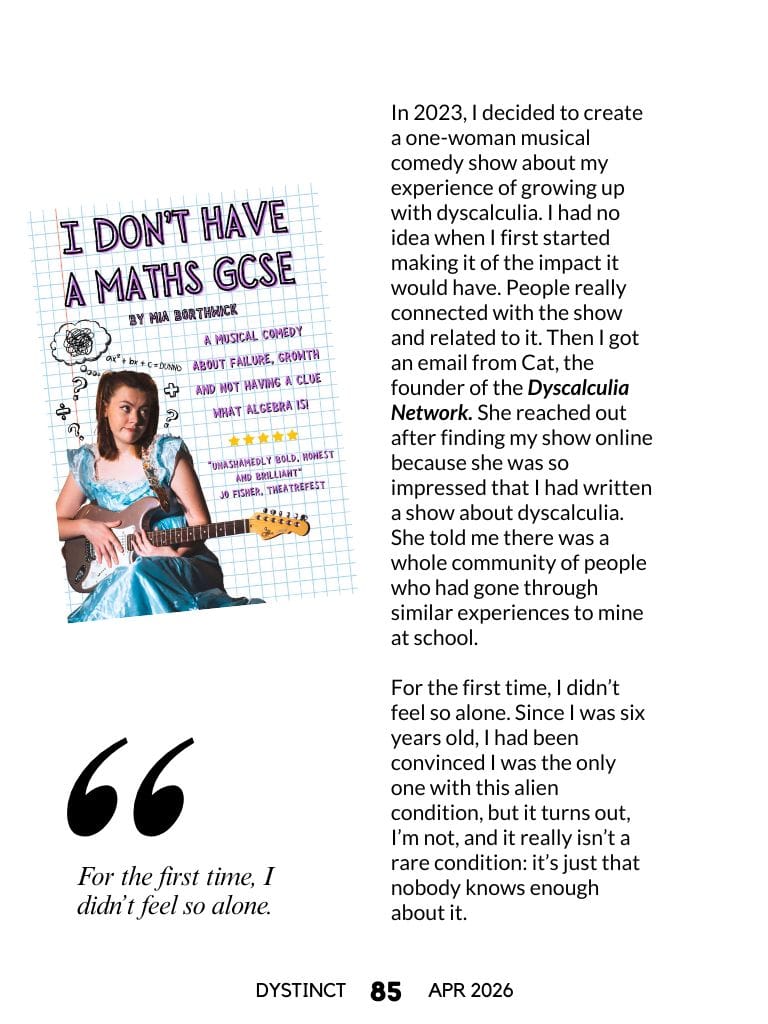
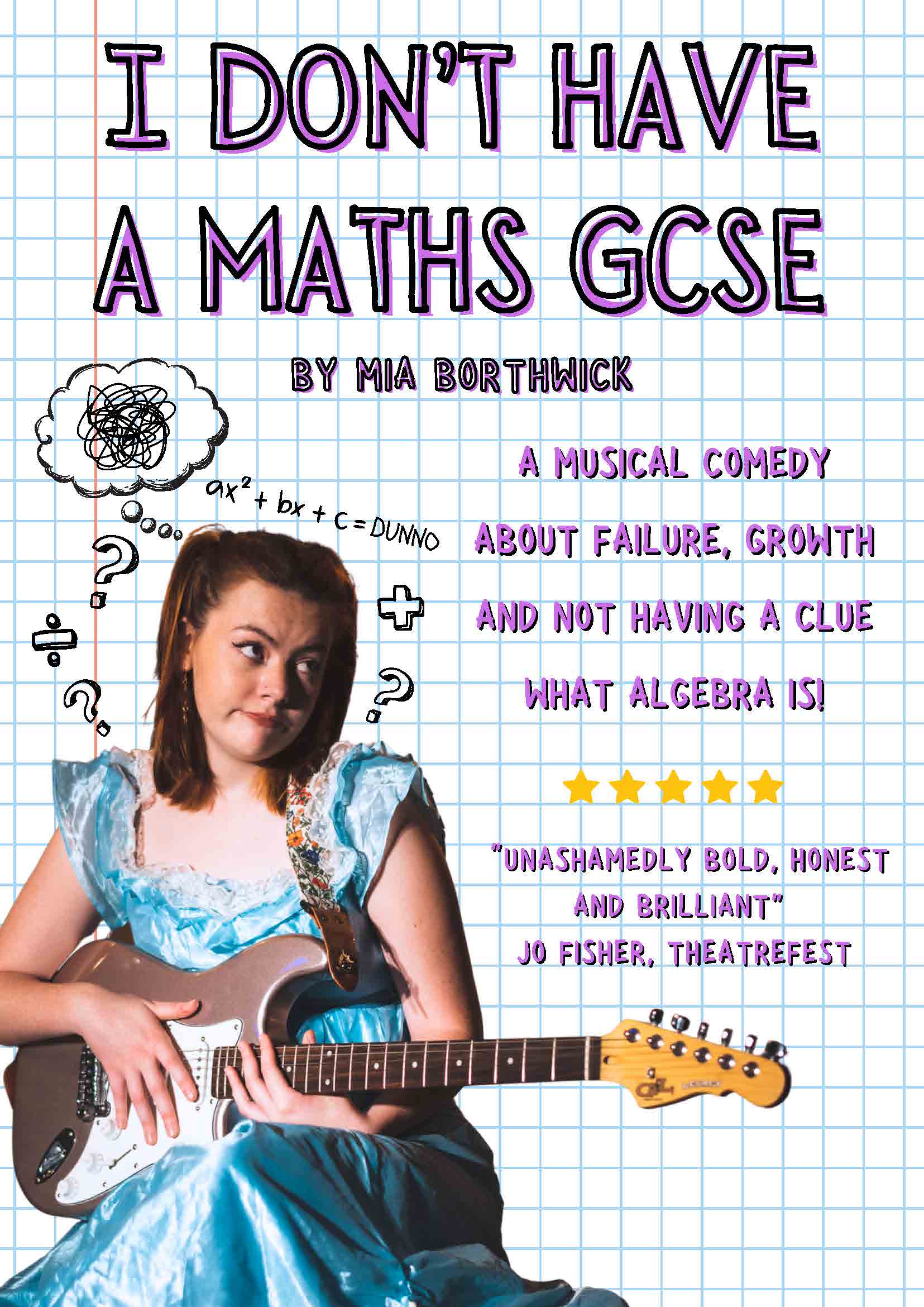
In 2023, I decided to create a one-woman musical comedy show about my experience of growing up with dyscalculia. I had no idea when I first started making it of the impact it would have. People really connected with the show and related to it. Then I got an email from Cat, the founder of the Dyscalculia Network. She reached out after finding my show online because she was so impressed that I had written a show about dyscalculia. She told me there was a whole community of people who had gone through similar experiences to mine at school.
For the first time, I didn’t feel so alone. Since I was six years old, I had been convinced I was the only one with this alien condition, but it turns out, I’m not, and it really isn’t a rare condition: it’s just that nobody knows enough about it.
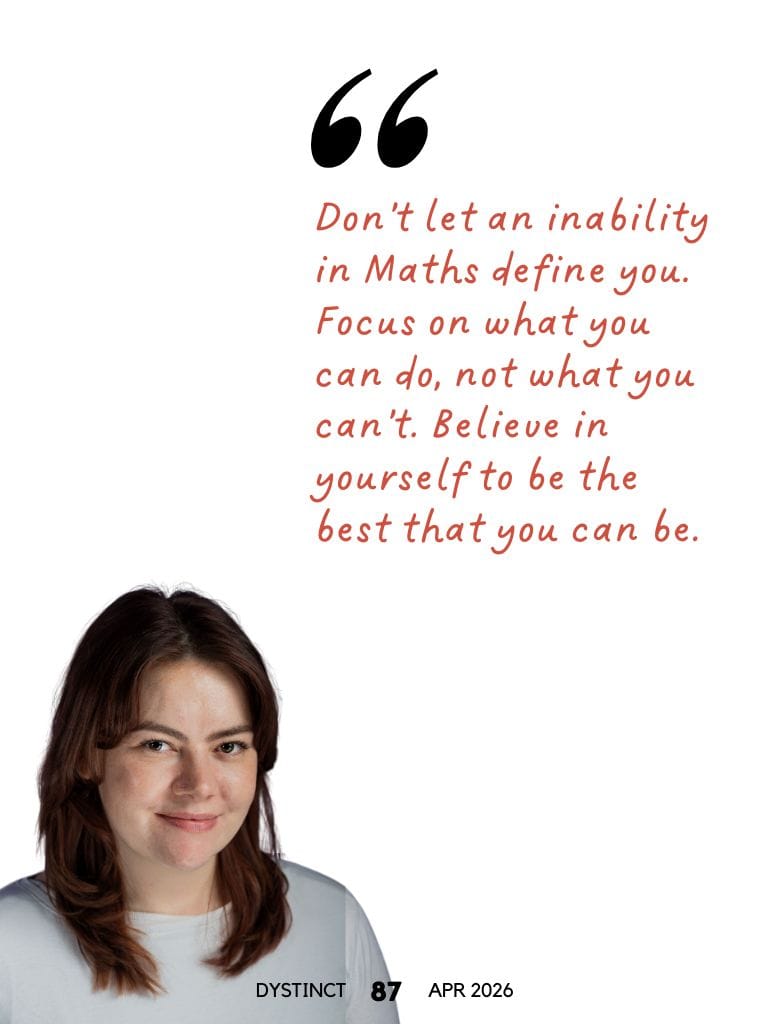
What I lack in my ability to do maths, I have gained in my ability to be creative.
Now, I’m so glad I opened up about dyscalculia. I am no longer ashamed of having it, although my experiences of it will never leave me, and I can still be triggered by them today. Yet in some ways, I’m pleased I have dyscalculia because I don’t think I would be the person I am without it. What I lack in my ability to do maths, I have gained in my ability to be creative.
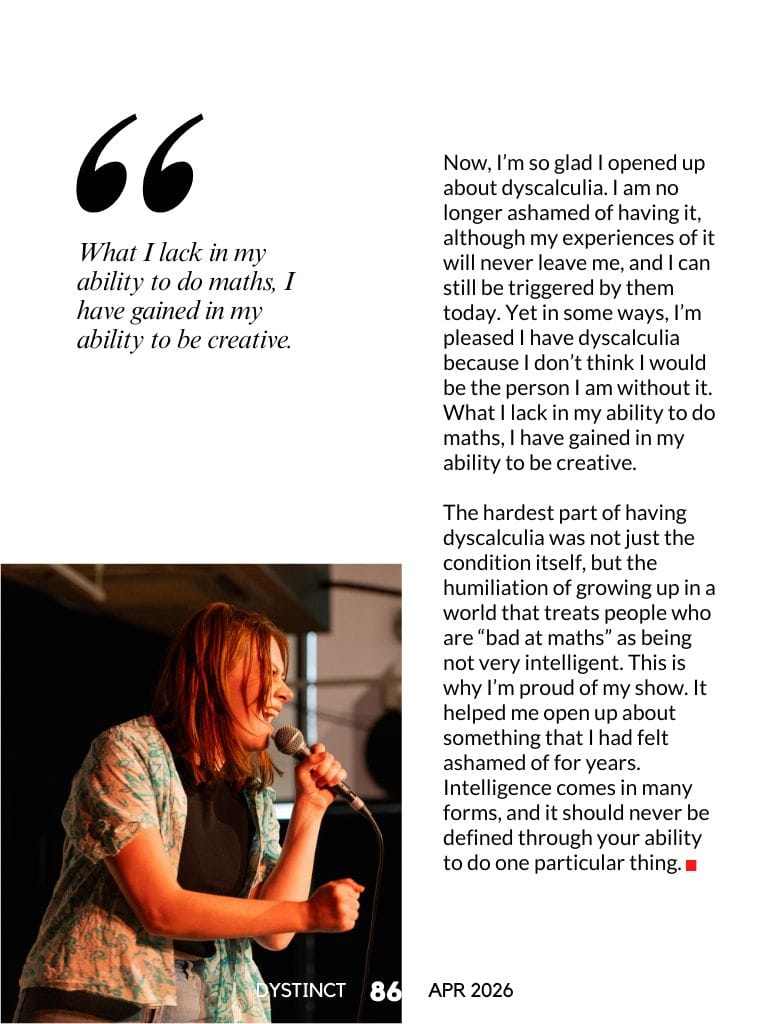
The hardest part of having dyscalculia was not just the condition itself, but the humiliation of growing up in a world that treats people who are “bad at maths” as being not very intelligent. This is why I’m proud of my show. It helped me open up about something that I had felt ashamed of for years. Intelligence comes in many forms, and it should never be defined through your ability to do one particular thing.
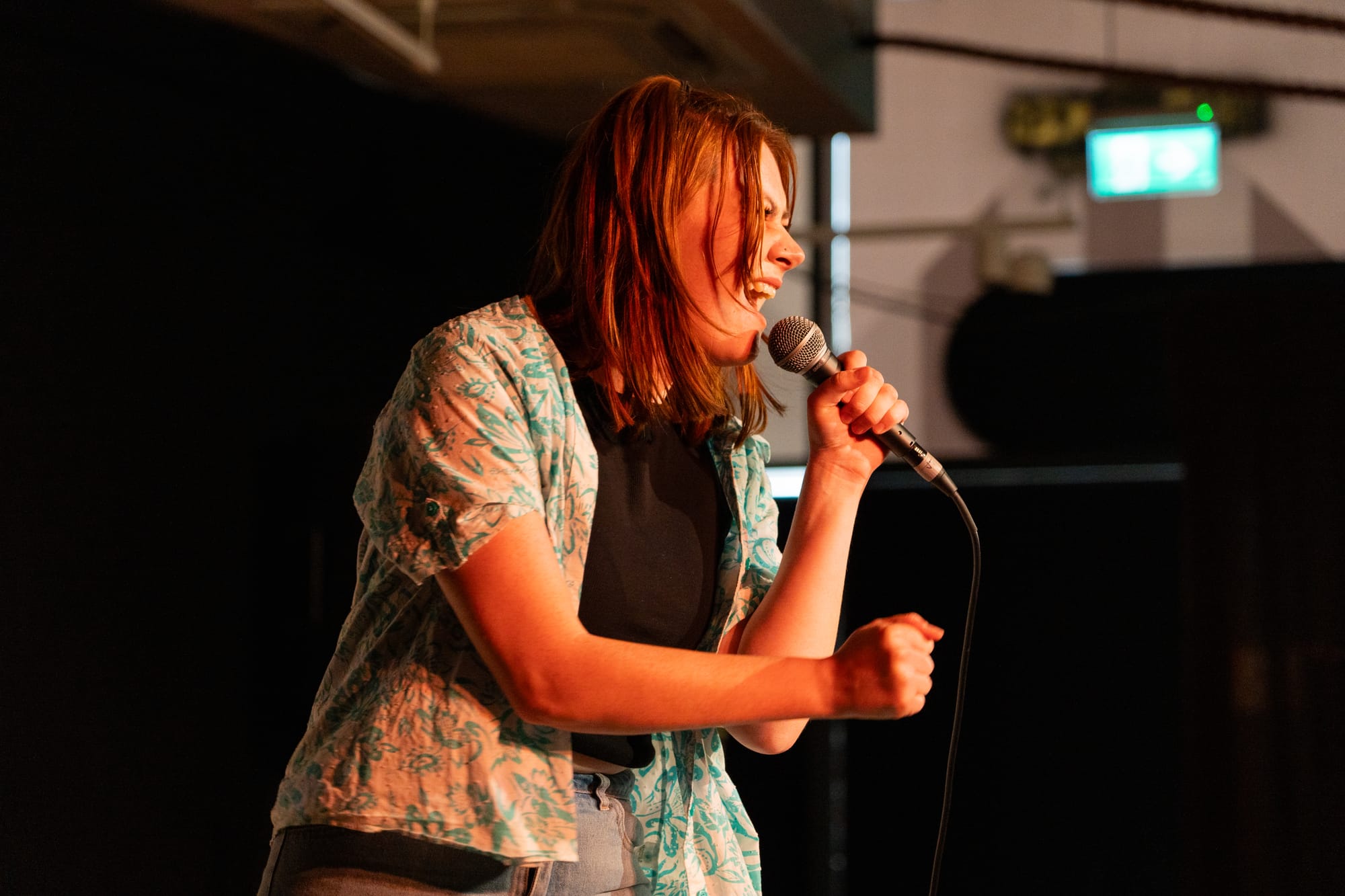
Mia Borthwick
Actor, Theatre Maker & Musician | SoundCloud | YouTube | Facebook | Instagram | X
Mia Borthwick
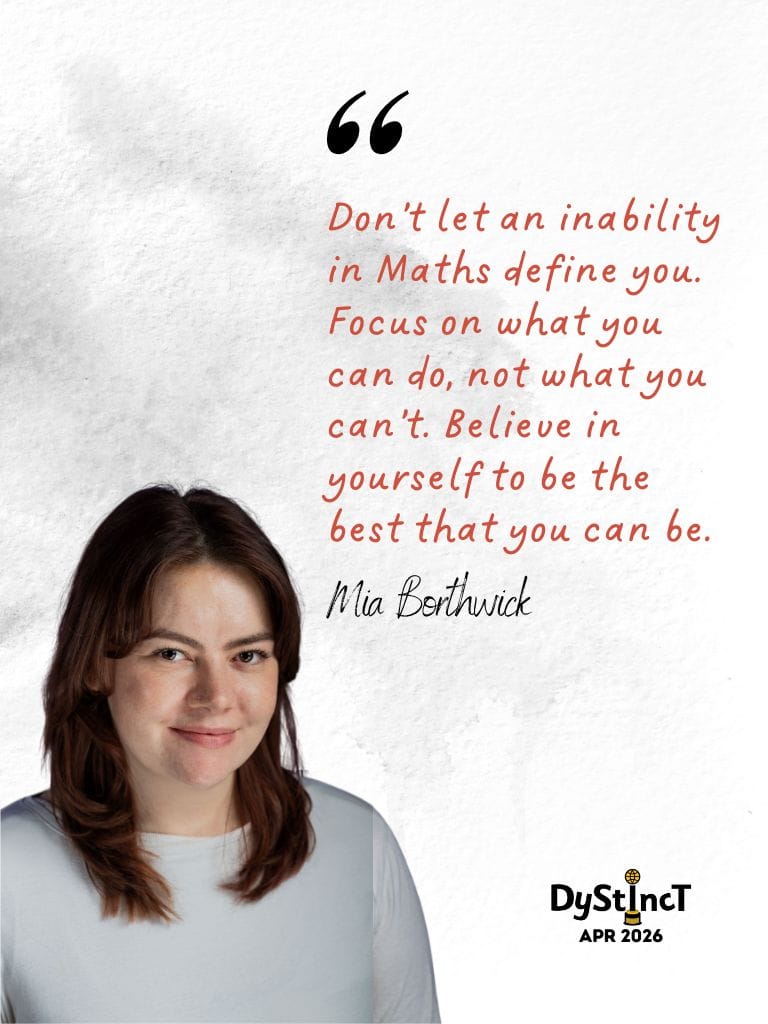
Extracts from Dystinct Magazine
Extracts from Dystinct Magazine