Issue 15: Achieving Educational Excellence Through The Science Of Reading | Greg Clement
Greg Clement stresses the importance of educators being knowledgeable about current best practices for teaching students with dyslexia, and he advises parents on how to choose a school that is best suited to meet the specific needs of their dyslexic children.

Table of Contents
I wanted to begin this article with an observation and something that I tell teachers and school leaders at every professional development session.
We, as educators, need to know the current best practice in teaching students with dyslexia. A systematic, synthetic phonics approach to the teaching of reading, which incorporates phonemic awareness, phonics, fluency, vocabulary, oral language and comprehension (The Big 6), in addition to encoding alongside decoding, and a smattering of morphology, is what is going to get the best results for all students. I do my best to get this message across right from the start because, as I tell the staff,
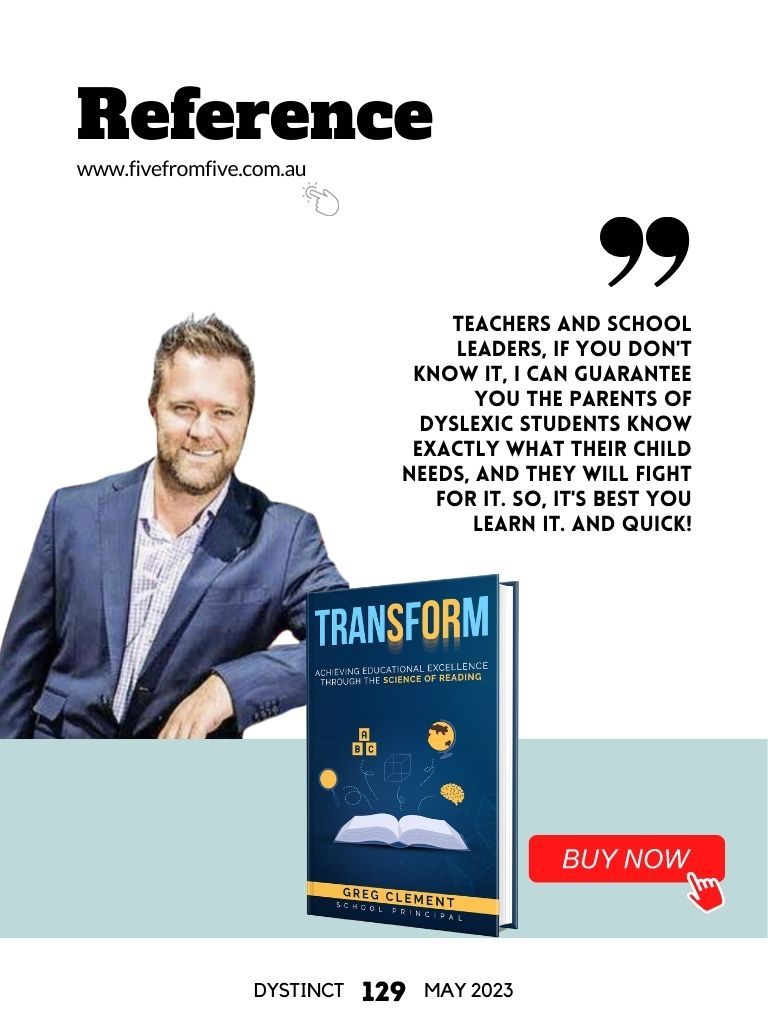
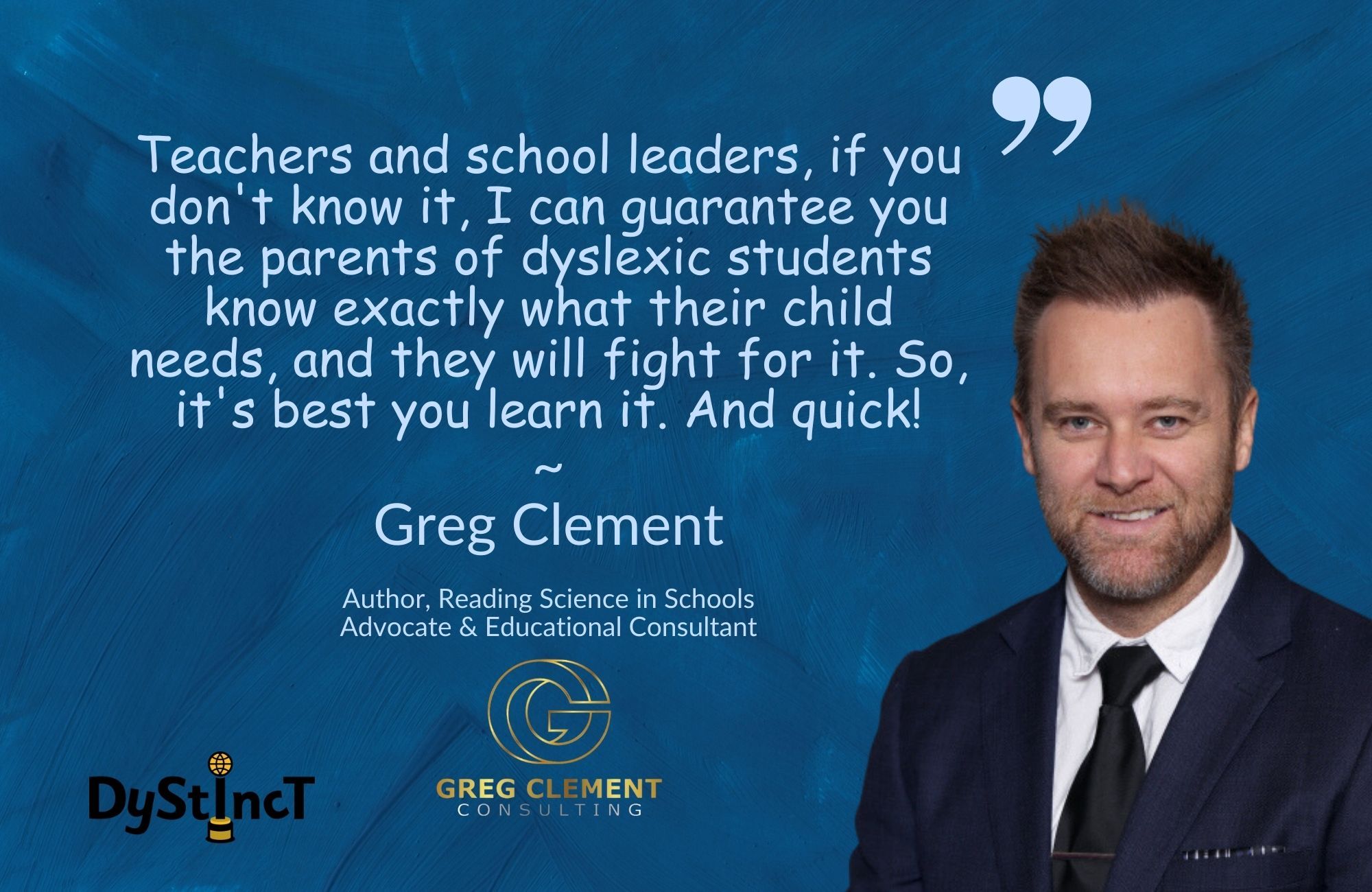
If you don't know it, I can guarantee you the parents of dyslexic students know exactly what their child needs, and they will fight for it. So, it's best you learn it. And quick.
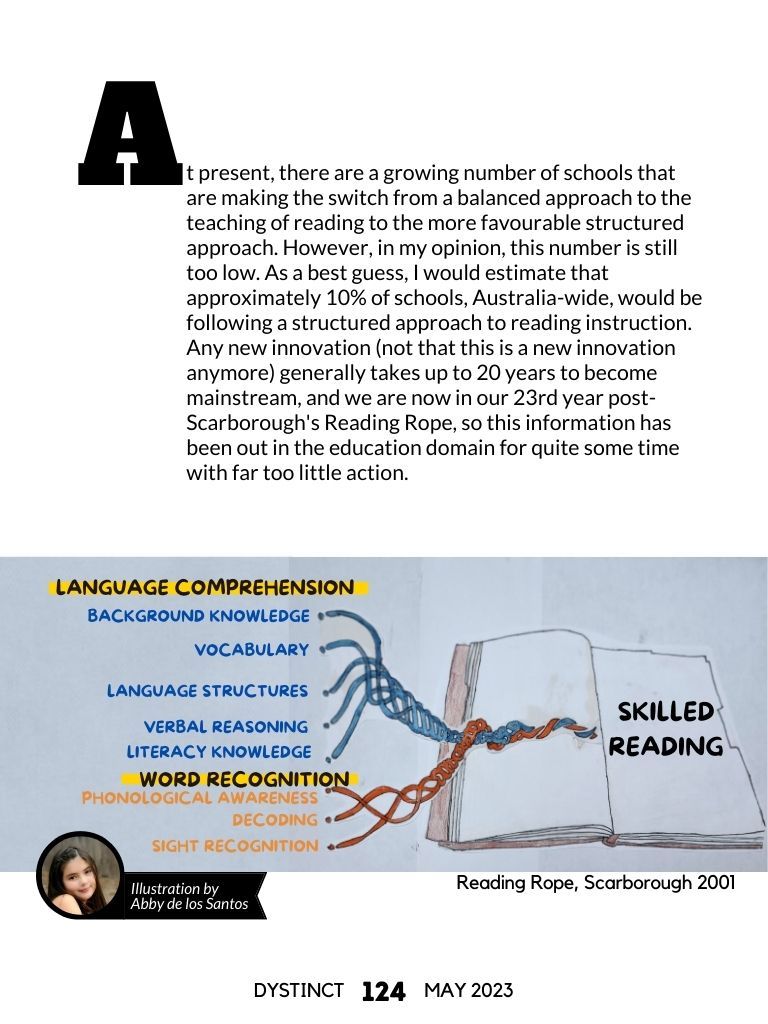
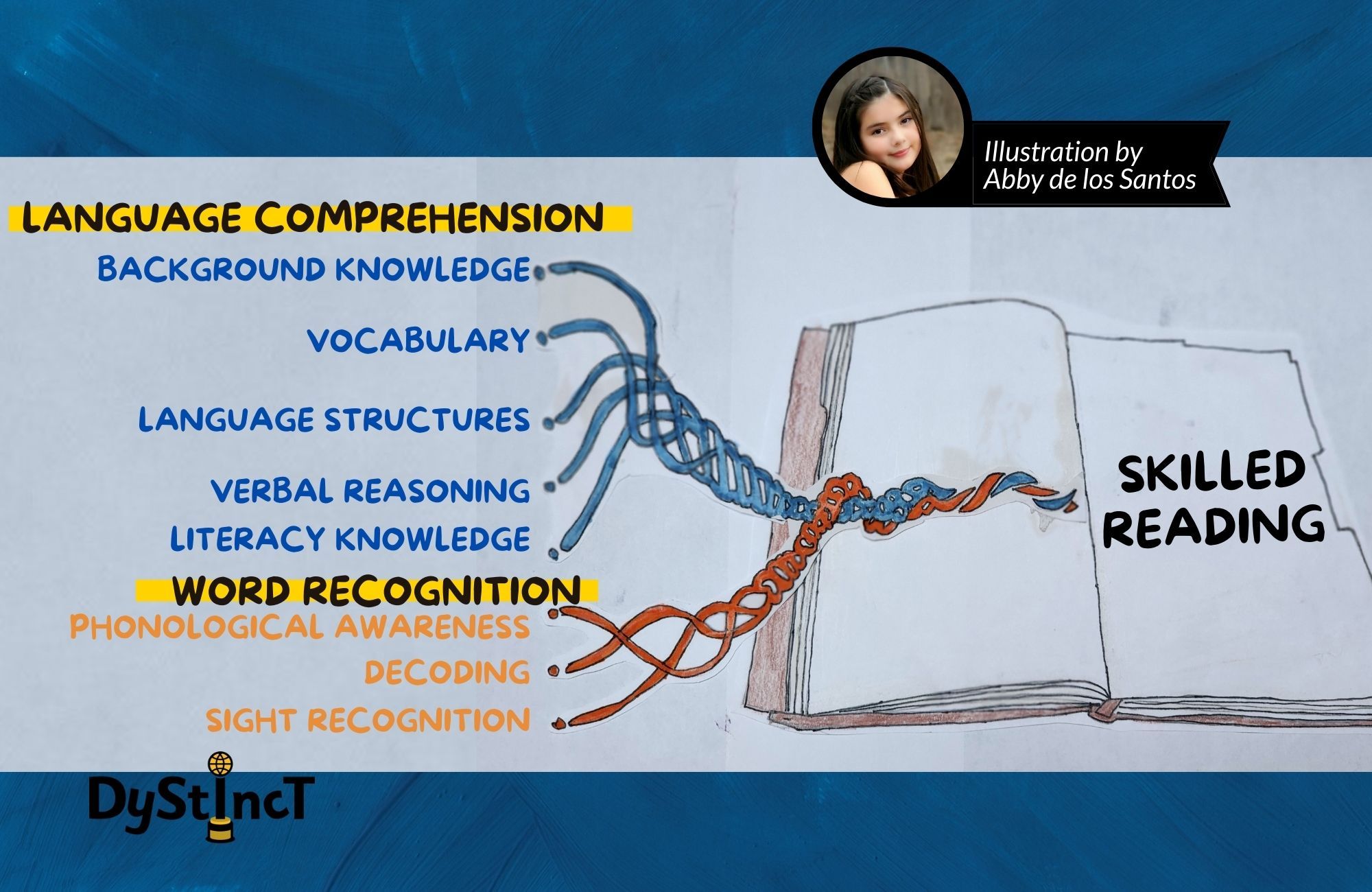
At present, there are a growing number of schools that are making the switch from a balanced approach to the teaching of reading to the more favourable structured approach. However, in my opinion, this number is still too low. As a best guess, I would estimate that approximately 10% of schools, Australia-wide, would be following a structured approach to reading instruction. Any new innovation (not that this is a new innovation anymore) generally takes up to 20 years to become mainstream, and we are now in our 23rd year post-Scarborough's Reading Rope, so this information has been out in the education domain for quite some time with far too little action.
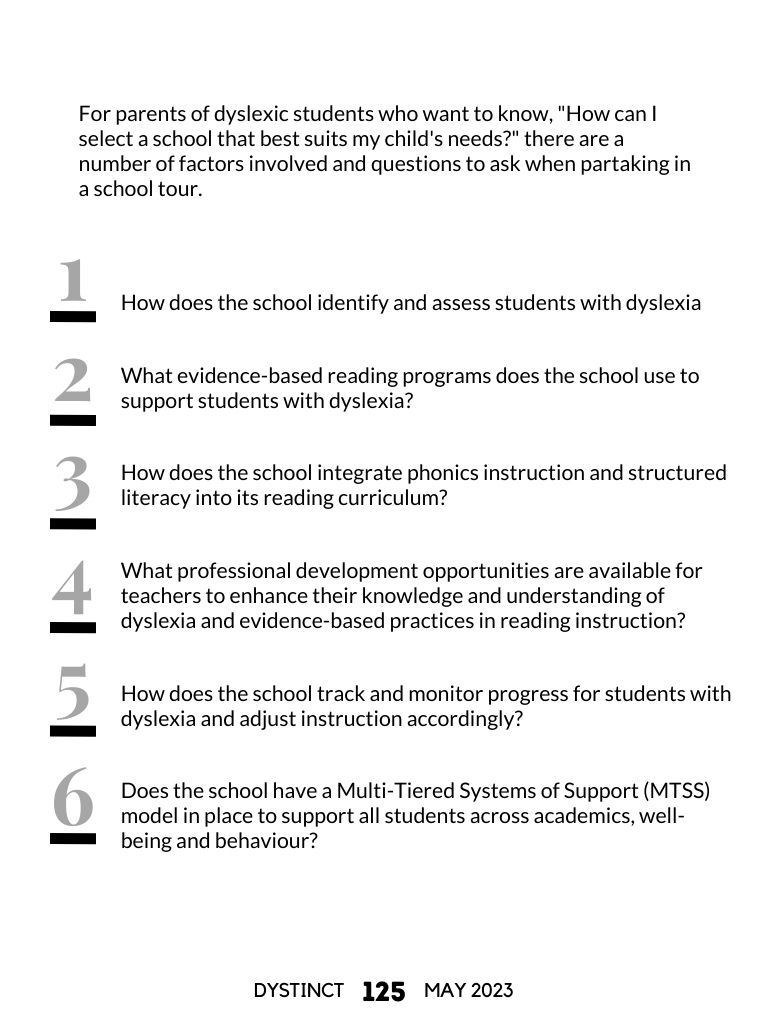
For parents of dyslexic students who want to know, "How can I select a school that best suits my child's needs?" there are a number of factors involved and questions to ask when partaking in a school tour.
- How does the school identify and assess students with dyslexia
- What evidence-based reading programs does the school use to support students with dyslexia?
- How does the school integrate phonics instruction and structured literacy into its reading curriculum?
- What professional development opportunities are available for teachers to enhance their knowledge and understanding of dyslexia and evidence-based practices in reading instruction?
- How does the school track and monitor progress for students with dyslexia and adjust instruction accordingly?
- Does the school have a Multi-Tiered Systems of Support (MTSS) model in place to support all students across academics, well-being and behaviour?
Of course, this doesn't just have to apply to students with dyslexia. These are questions I would want to know for both of my children, too. Is the school using a screener, such as DIBELS, for early identification of reading difficulties? Are staff provided with Professional Learning around the Science of Reading? Does the school use decodable books for their beginner readers? Does the school follow a phonics scope and sequence? These questions could go on and on as they should, which brings me back to my original observation - Parents will be asking these questions, and more, to teachers and school leaders. Do you feel that you have the knowledge to answer them? And if not, you need to make plans to attain this knowledge.
There are many education consultants who can provide either one-off or continuous professional learning to Australian schools and leadership teams, and there are courses, such as Orton-Gillingham training or Dr Pamela Snow and Dr Tanya Serry's SOLAR Lab courses, that staff can attend and build upon this essential knowledge in a timely manner. Whichever you choose, it is vitally important to begin this as soon as possible with staff.
Professional learning should always be mindful of the fact that many educators just simply haven't been shown the research and are unaware.
As the great saying by Maya Angelou goes, "Do the best you can until you know better. Then when you know better, do better." Providing examples of current data is always a quick-fire way to get the conversation started about current practices in your school. Back that up with a solution to the data problem that is already readily available (structured literacy), and away you go!
At Clayton South Primary School, I chose to assign a different element of The Big 6 to pairs of teachers to research themselves. Staff were asked to come to our next meeting armed with what the research is telling us, achievement standards for each year level (e.g. expected reading rate for Year 1 by the end of the year is 60 words correct per minute), and practical activities staff could use in their classrooms. This gave staff ownership of their element and provided them with the chance to lead an area of reading instruction over the year. We had great success implementing this across the school, with one element at a time added to our repertoire. By mastering each element as a school before moving on, we found that it did not overwhelm the teachers, and we could assess the impact of our teaching each term.
Another important factor that influences the practices in a classroom is leadership, and in particular, their knowledge or lack of knowledge of best practices in reading. At some schools, the leadership teams are all over this and provide everything required by their staff to implement a structured approach to literacy. However, at others, leadership teams are not up to date with current practices and continue to toil away with practices we know have passed their use-by date.
For teachers going it alone, there are many affordable options available for you to purchase for your classroom so that your students are getting the teaching they need without breaking the bank. Phonemic awareness, for example, is an oral activity that, when linked with your phonics teaching, provides a great opportunity for students to develop an awareness of the 44 speech sounds and ways to manipulate them. Building fluency can be as simple as providing an age-appropriate text for the students to read and re-read throughout the week to develop more fluent reading. These texts can come from decodable books, websites, or text passages you have floating around the classroom.
For us at Clayton South Primary School, putting the consistent message out to our community that all students that attend our school will be reading proficiently before they leave for secondary college was very important for us. I signed the Primary Reading Pledge when we began this journey, and very quickly, our motto became, "All students are coming along for the ride," as we intended to have all students reading proficiently by the time their 7 years were over with us. That is something we are still passionate about today.
References
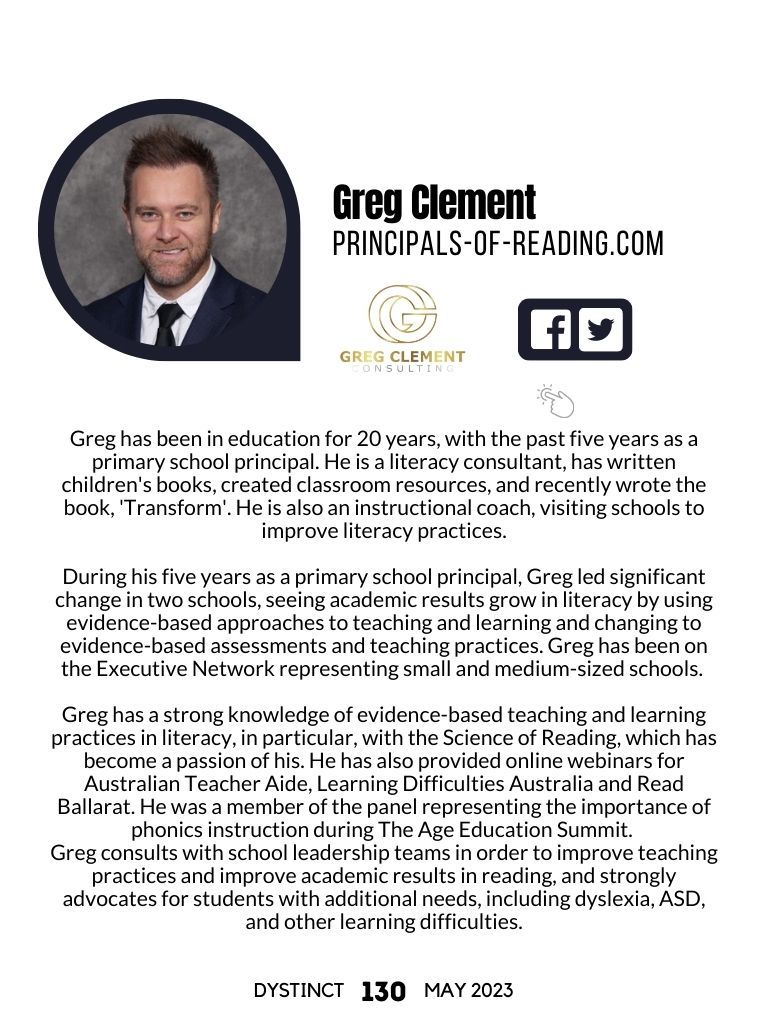
Greg Clement
Author, Reading Science in Schools Advocate & Educational Consultant
principals-of-reading.com | Facebook | Twitter
Greg has been in education for 20 years, with the past five years as a primary school principal. He is a literacy consultant, has written children's books, created classroom resources, and recently wrote the book, 'Transform'. He is also an instructional coach, visiting schools to improve literacy practices.
During his five years as a primary school principal, Greg led significant change in two schools, seeing academic results grow in literacy by using evidence-based approaches to teaching and learning and changing to evidence-based assessments and teaching practices. Greg has been on the Executive Network representing small and medium-sized schools.
Greg has a strong knowledge of evidence-based teaching and learning practices in literacy, in particular, with the Science of Reading, which has become a passion of his. He has also provided online webinars for Australian Teacher Aide, Learning Difficulties Australia and Read Ballarat. He was a member of the panel representing the importance of phonics instruction during The Age Education Summit.
Greg consults with school leadership teams in order to improve teaching practices and improve academic results in reading, and strongly advocates for students with additional needs, including dyslexia, ASD, and other learning difficulties.
BUY BOOK
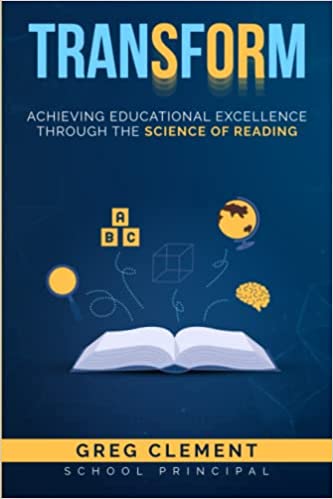
Transform: Achieving Educational Excellence Through the Science of Reading Paperback
Transform outlines what the research has been telling us for decades about teaching children to read, and then breaks it down into the clear, actionable steps that Greg took to transform two schools in five years. This book is aimed at classroom teachers, school leadership teams, parents, and principals. Learn about The Big 6, morphology, teaching high frequency words, Explicit Direct Instruction, and much, much more.
Don't have the support of your leadership team? Going it alone? Greg also outlines how you can implement these changes on a budget in your classroom. With a foreword written by dyslexia advocate, Georgia Ryan, this book is a must-have for any professionals looking to make positive changes and set about achieving educational equity. Practical activities that you can begin implementing immediately can be found throughout this book, as well as a comprehensive, easy to understand summary of everything SoR. Greg has provided you with the blueprint for success in your school.
Extracts from Dystinct Magazine