Issue 28: Validating the Feelings of a Child | Steve Hoersting
Dr Steve Hoersting highlights the importance of validating a child's feelings, its significant psychological benefits, and offers practical strategies to build emotional awareness, resilience, and healthy relationships.

Table of Contents

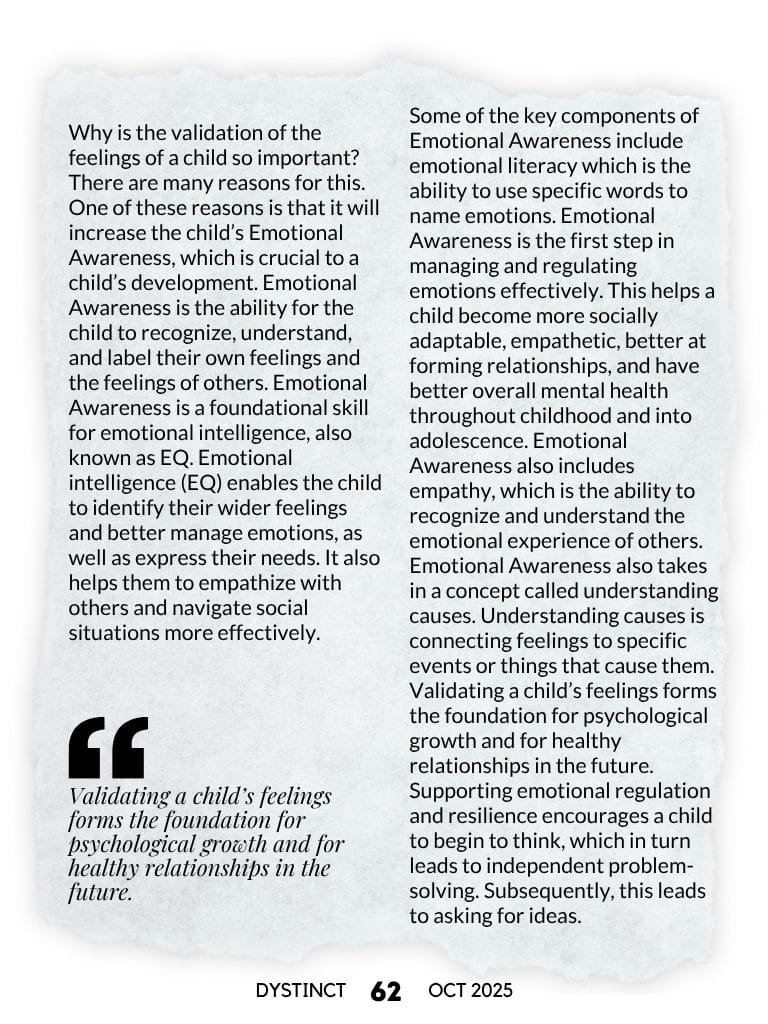
Why is the validation of the feelings of a child so important? There are many reasons for this. One of these reasons is that it will increase the child’s Emotional Awareness, which is crucial to a child’s development. Emotional Awareness is the ability for the child to recognize, understand, and label their own feelings and the feelings of others. Emotional Awareness is a foundational skill for emotional intelligence, also known as EQ. Emotional intelligence (EQ) enables the child to identify their wider feelings and better manage emotions, as well as express their needs. It also helps them to empathize with others and navigate social situations more effectively.
Validating a child’s feelings forms the foundation for psychological growth and for healthy relationships in the future.
Some of the key components of Emotional Awareness include emotional literacy which is the ability to use specific words to name emotions. Emotional Awareness is the first step in managing and regulating emotions effectively. This helps a child become more socially adaptable, empathetic, better at forming relationships, and have better overall mental health throughout childhood and into adolescence. Emotional Awareness also includes empathy, which is the ability to recognize and understand the emotional experience of others. Emotional Awareness also takes in a concept called understanding causes. Understanding causes is connecting feelings to specific events or things that cause them.
Validating a child’s feelings forms the foundation for psychological growth and for healthy relationships in the future. Supporting emotional regulation and resilience encourages a child to begin to think, which in turn leads to independent problem-solving. Subsequently, this leads to asking for ideas.
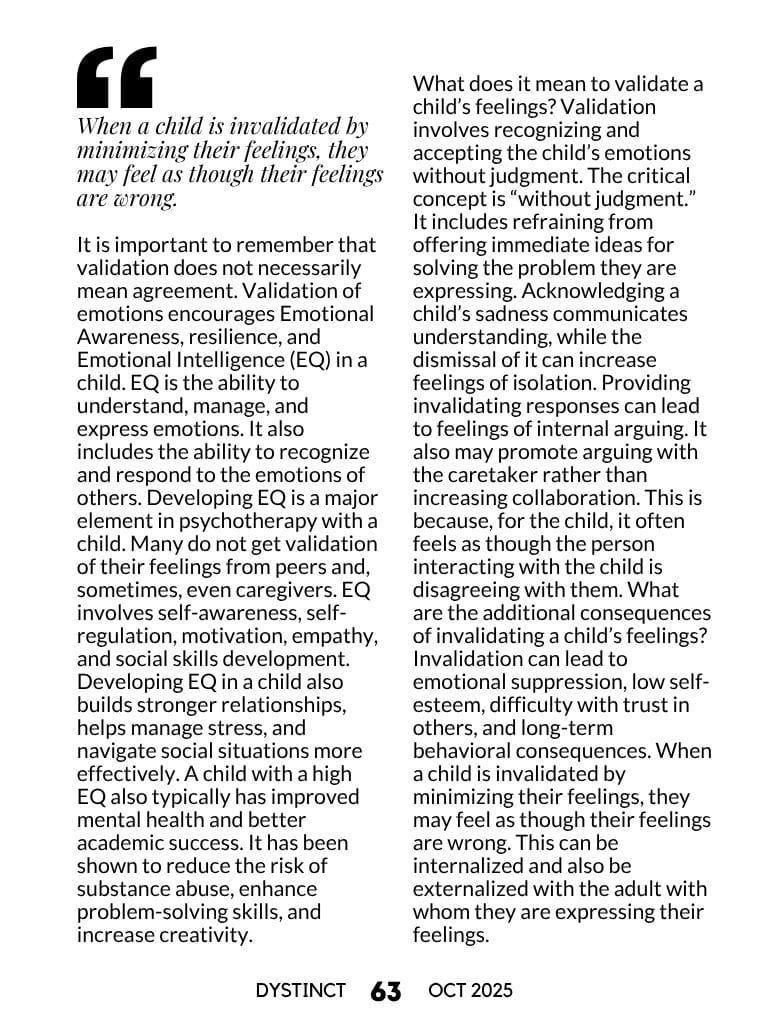
When a child is invalidated by minimizing their feelings, they may feel as though their feelings are wrong.
It is important to remember that validation does not necessarily mean agreement. Validation of emotions encourages Emotional Awareness, resilience, and Emotional Intelligence (EQ) in a child. EQ is the ability to understand, manage, and express emotions. It also includes the ability to recognize and respond to the emotions of others. Developing EQ is a major element in psychotherapy with a child. Many do not get validation of their feelings from peers and, sometimes, even caregivers. EQ involves self-awareness, self-regulation, motivation, empathy, and social skills development. Developing EQ in a child also builds stronger relationships, helps manage stress, and navigate social situations more effectively. A child with a high EQ also typically has improved mental health and better academic success. It has been shown to reduce the risk of substance abuse, enhance problem-solving skills, and increase creativity.
What does it mean to validate a child’s feelings? Validation involves recognizing and accepting the child’s emotions without judgment. The critical concept is “without judgment.” It includes refraining from offering immediate ideas for solving the problem they are expressing. Acknowledging a child’s sadness communicates understanding, while the dismissal of it can increase feelings of isolation. Providing invalidating responses can lead to feelings of internal arguing. It also may promote arguing with the caretaker rather than increasing collaboration. This is because, for the child, it often feels as though the person interacting with the child is disagreeing with them. What are the additional consequences of invalidating a child’s feelings? Invalidation can lead to emotional suppression, low self-esteem, difficulty with trust in others, and long-term behavioral consequences. When a child is invalidated by minimizing their feelings, they may feel as though their feelings are wrong. This can be internalized and also be externalized with the adult with whom they are expressing their feelings.
Benefits of Validation
Benefits of Validation
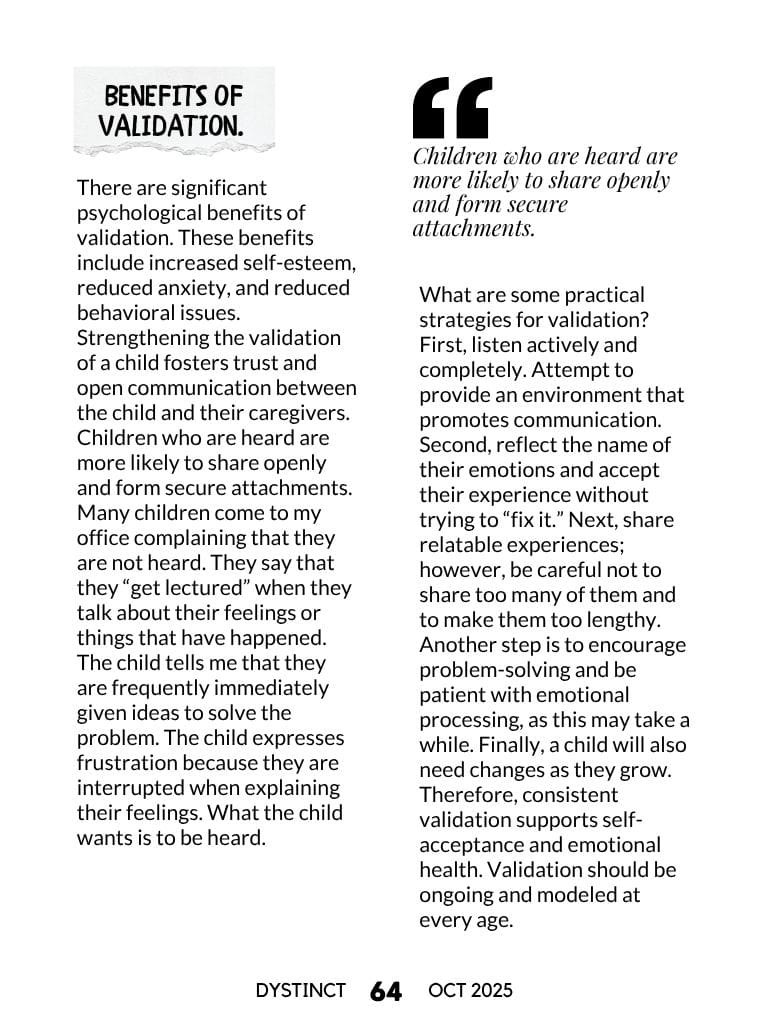
There are significant psychological benefits of validation. These benefits include increased self-esteem, reduced anxiety, and reduced behavioral issues. Strengthening the validation of a child fosters trust and open communication between the child and their caregivers. Children who are heard are more likely to share openly and form secure attachments. Many children come to my office complaining that they are not heard. They say that they “get lectured” when they talk about their feelings or things that have happened. The child tells me that they are frequently immediately given ideas to solve the problem. The child expresses frustration because they are interrupted when explaining their feelings. What the child wants is to be heard.
Children who are heard are more likely to share openly and form secure attachments.
What are some practical strategies for validation? First, listen actively and completely. Attempt to provide an environment that promotes communication. Second, reflect the name of their emotions and accept their experience without trying to “fix it.” Next, share relatable experiences; however, be careful not to share too many of them and to make them too lengthy. Another step is to encourage problem-solving and be patient with emotional processing, as this may take a while. Finally, a child will also need changes as they grow. Therefore, consistent validation supports self-acceptance and emotional health. Validation should be ongoing and modeled at every age.
Examples of Invalidating statements
Examples of Invalidating statements
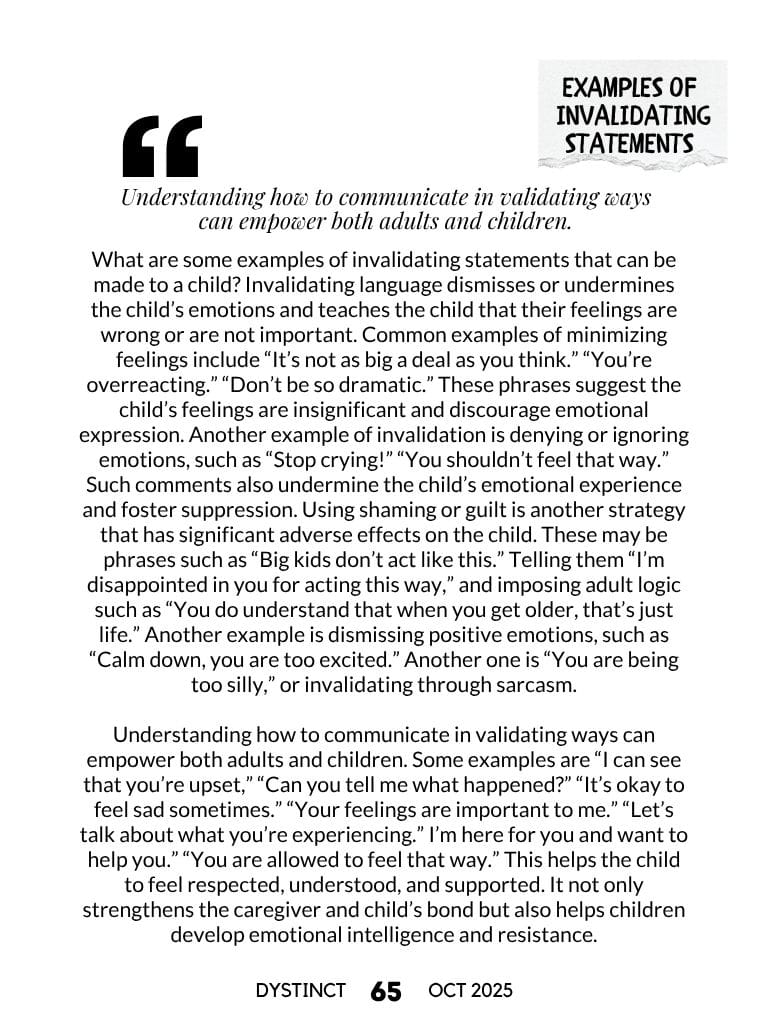
Understanding how to communicate in validating ways can empower both adults and children.
What are some examples of invalidating statements that can be made to a child? Invalidating language dismisses or undermines the child’s emotions and teaches the child that their feelings are wrong or are not important. Common examples of minimizing feelings include “It’s not as big a deal as you think.” “You’re overreacting.” “Don’t be so dramatic.” These phrases suggest the child’s feelings are insignificant and discourage emotional expression. Another example of invalidation is denying or ignoring emotions, such as “Stop crying!” “You shouldn’t feel that way.” Such comments also undermine the child’s emotional experience and foster suppression. Using shaming or guilt is another strategy that has significant adverse effects on the child. These may be phrases such as “Big kids don’t act like this.” Telling them “I’m disappointed in you for acting this way,” and imposing adult logic such as “You do understand that when you get older, that’s just life.” Another example is dismissing positive emotions, such as “Calm down, you are too excited.” Another one is “You are being too silly,” or invalidating through sarcasm.
Understanding how to communicate in validating ways can empower both adults and children. Some examples are “I can see that you’re upset,” “Can you tell me what happened?” “It’s okay to feel sad sometimes.” “Your feelings are important to me.” “Let’s talk about what you’re experiencing.” I’m here for you and want to help you.” “You are allowed to feel that way.” This helps the child to feel respected, understood, and supported. It not only strengthens the caregiver and child’s bond but also helps children develop emotional intelligence and resistance.
Other Keys to Validation
Other Keys to Validation
What are some other keys to validation? When validating a child, it is important to give your full attention, make eye contact, avoid interrupting, and reflect feelings. It is also important to acknowledge the child by naming the emotion. For example, “It sounds like you’re feeling frustrated.” Ask open-ended questions and show the child you care more about their experience by asking questions like “What made you feel that way?” Also, comfort them by letting them know you are there for them, even if you don’t completely understand their feelings. The process of validating, recognizing, and affirming the legitimacy of the child’s emotional state is essential to promoting emotional intelligence, resilience, and trust. Therefore, validation serves as the foundation for constructive emotional development.
When the child perceives that they are heard and understood, they are much more inclined to place trust in caregivers, develop self-awareness, and acquire effective techniques for managing their emotions. This is in contrast to the lack of validation that may lead to suppressed feelings, maladaptive behaviors, and potentially result in anxiety, behavioral challenges, and poor relationships. Emotional safety is validating and fosters an environment where children feel secure in expressing themselves authentically. Validation is an extremely important part of the communication between a child and caregivers. As described previously, it has a significant impact not only on relationships but also, overall, the child’s resilience, emotional quotient, trust, self-awareness, and ability to think, have empathy, and establish social relationships more easily.
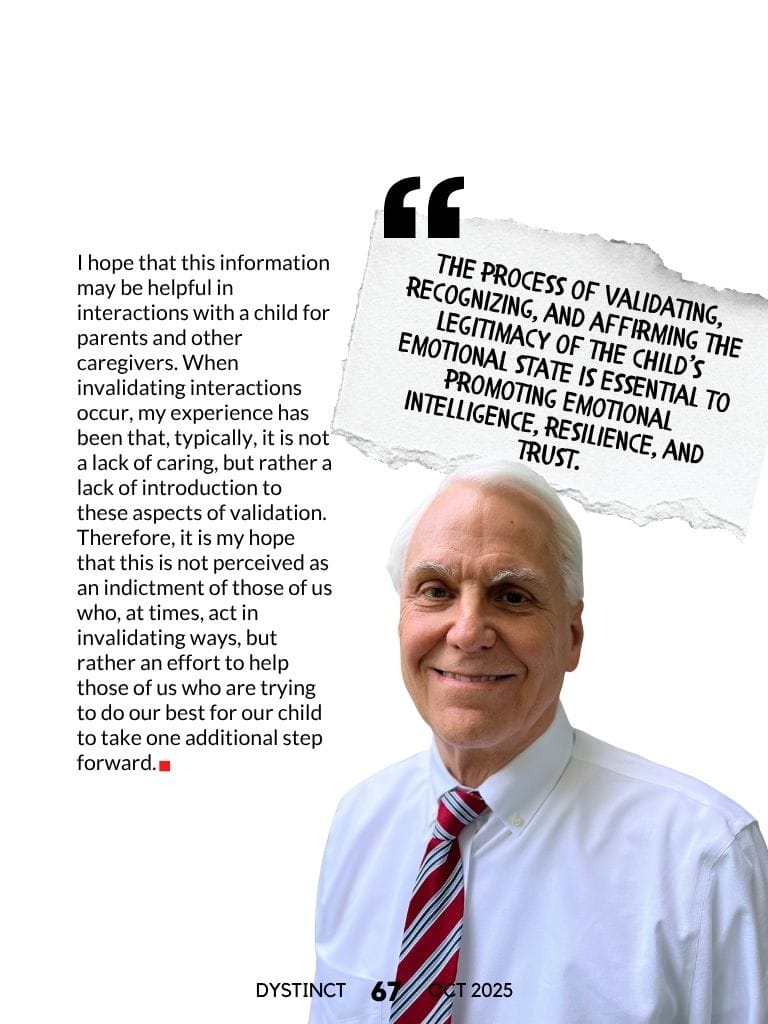
I hope that this information may be helpful in interactions with a child for parents and other caregivers. When invalidating interactions occur, my experience has been that, typically, it is not a lack of caring, but rather a lack of introduction to these aspects of validation. Therefore, it is my hope that this is not perceived as an indictment of those of us who, at times, act in invalidating ways, but rather an effort to help those of us who are trying to do our best for our child to take one additional step forward.
Steve Hoersting
Licensed Psychological Practitioner, ADHD/Autism Specialist, & Founder | stevehoerstingpsychologicalservices.com
Steve Hoersting
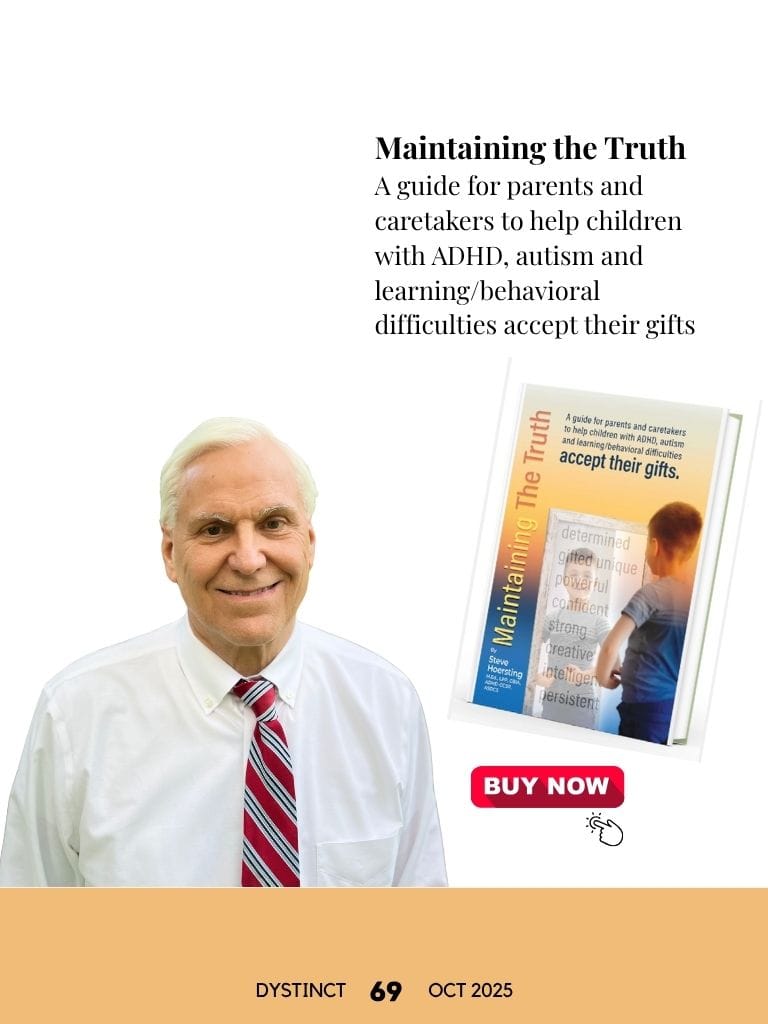
Steve Hoersting, MED, LPP, CBIA, CACSP, CASCS, CMIS, CCATP, CDBTP is a Licensed Psychological Practitioner specializing in clinical child and adolescent psychology. He is the founder of Steve Hoersting Psychological Services, PLLC, in Florence, Kentucky, and holds certifications in ADHD, autism spectrum disorders, and mindfulness-informed therapy. With over 40 years of experience, Hoersting provides therapy and evaluations for individuals with various neurodevelopmental and mood disorders. He is also the author of Maintaining the Truth, a guide for parents and caregivers of neurodivergent children.
BUY BOOK
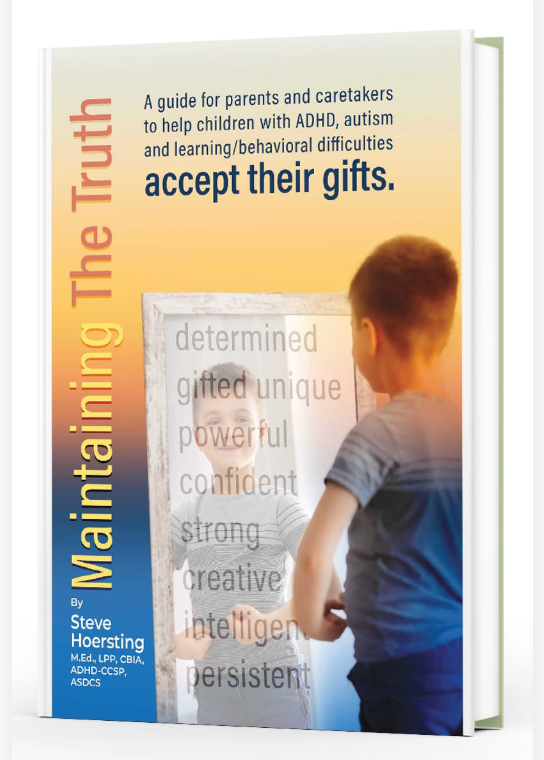
Maintaining the Truth
A guide for parents and caretakers to help children with ADHD, autism and learning/behavioral difficulties accept their gifts.
Extracts from Dystinct Magazine
Extracts from Dystinct Magazine