Issue 27: Using Story Grammar to Foster Comprehension | Jennifer Cerra
Jennifer Cerra shares how teaching story grammar, a structured approach to understanding narrative elements, can help struggling readers, especially those with dyslexia, build comprehension, reduce cognitive load, and connect more deeply with stories.

Table of Contents
For many struggling readers, particularly those with dyslexia, reading narrative text can feel like navigating a maze without a map. Students expend so much cognitive energy on decoding words that comprehension often takes a backseat. In addition, about 50% of students with dyslexia also have developmental language disorder, underscoring the high rate of comorbidity between these two conditions (Pennington & Bishop, 2009). This raises an important question: how can we support both language development and comprehension while simultaneously strengthening decoding skills?
One evidence-based approach to fostering comprehension is teaching story grammar, a structured method for understanding the framework of narrative texts. When explicitly taught and used intentionally, story grammar helps readers organize their thoughts, anticipate key story elements, and make meaningful connections to the text.
In my work with struggling readers, I incorporate story grammar when reading narrative text. In this article, we will explore the components of story grammar and how educators and caregivers can leverage it to build comprehension while supporting oral language and decoding.
Why is Comprehension so Challenging?
Why is Comprehension so Challenging?
Struggling readers often find it difficult to retain and interpret the events of a story. This is particularly true for those with dyslexia, whose cognitive energy is heavily taxed by decoding alone. By the time a child has sounded out a sentence, their working memory may already be overwhelmed, leaving little mental bandwidth to process what they've just read.
Working memory is the cognitive system responsible for temporarily holding and manipulating information. In reading, it helps us retain key pieces of information while we process new words and make sense of the broader meaning of the text. However, many struggling readers have limited working memory capacity. This often leads to cognitive overload, resulting in difficulty remembering key elements from the story. Students may struggle to summarize, understand character motivations, or keep track of the plot.
This cognitive strain can make reading not only difficult but also discouraging. Students may feel overwhelmed by the amount of information, leading to gaps in their understanding. Such gaps make it nearly impossible for students to engage in any sort of meaningful discussion. However, narrative texts are an essential part of academic and emotional development, helping children to build empathy, foster imagination, and understand the world.
Traditional comprehension strategies, such as questioning or summarizing, can help, but they often assume a baseline level of comprehension. By providing a framework, story grammar offers a crucial scaffold that reduces the cognitive load and fosters comprehension.
What is Story Grammar?
What is Story Grammar?
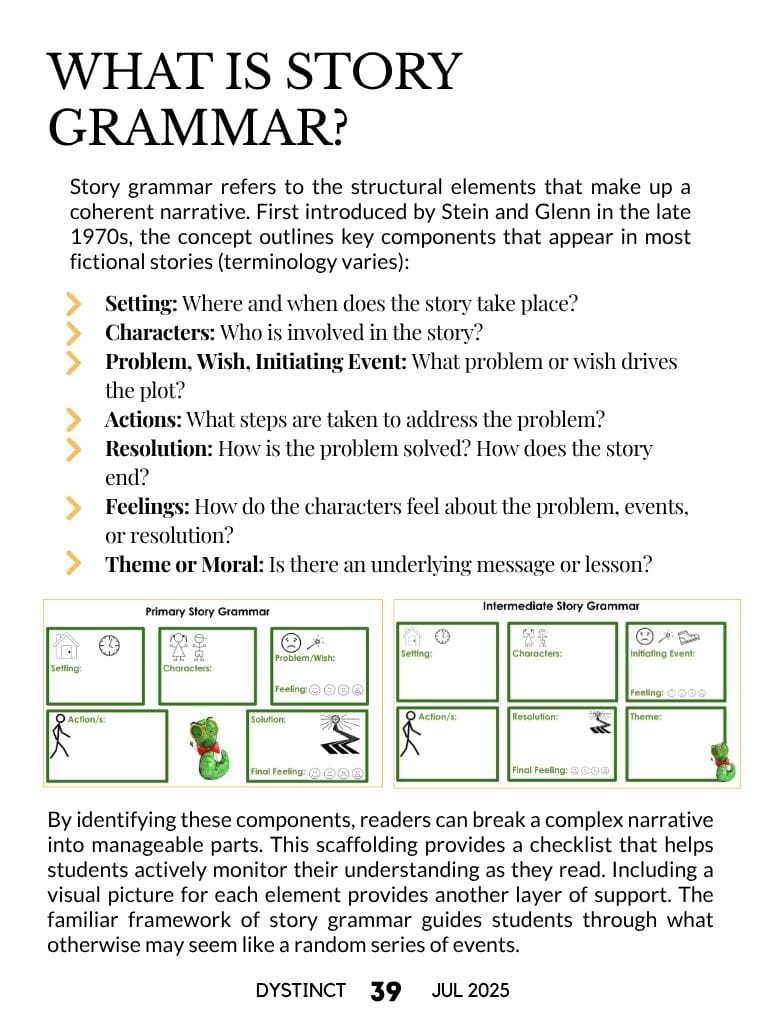
Story grammar refers to the structural elements that make up a coherent narrative. First introduced by Stein and Glenn in the late 1970s, the concept outlines key components that appear in most fictional stories (terminology varies):
- Setting: Where and when does the story take place?
- Characters: Who is involved in the story?
- Problem, Wish, Initiating Event: What problem or wish drives the plot?
- Actions: What steps are taken to address the problem?
- Resolution: How is the problem solved? How does the story end?
- Feelings: How do the characters feel about the problem, events, or resolution?
- Theme or Moral: Is there an underlying message or lesson?
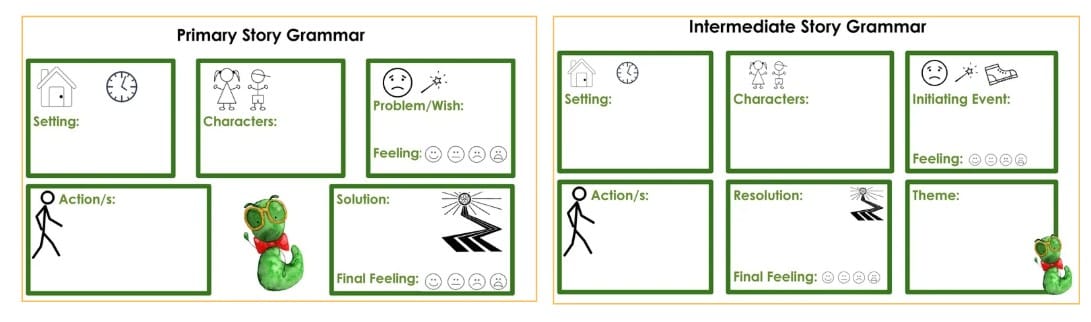
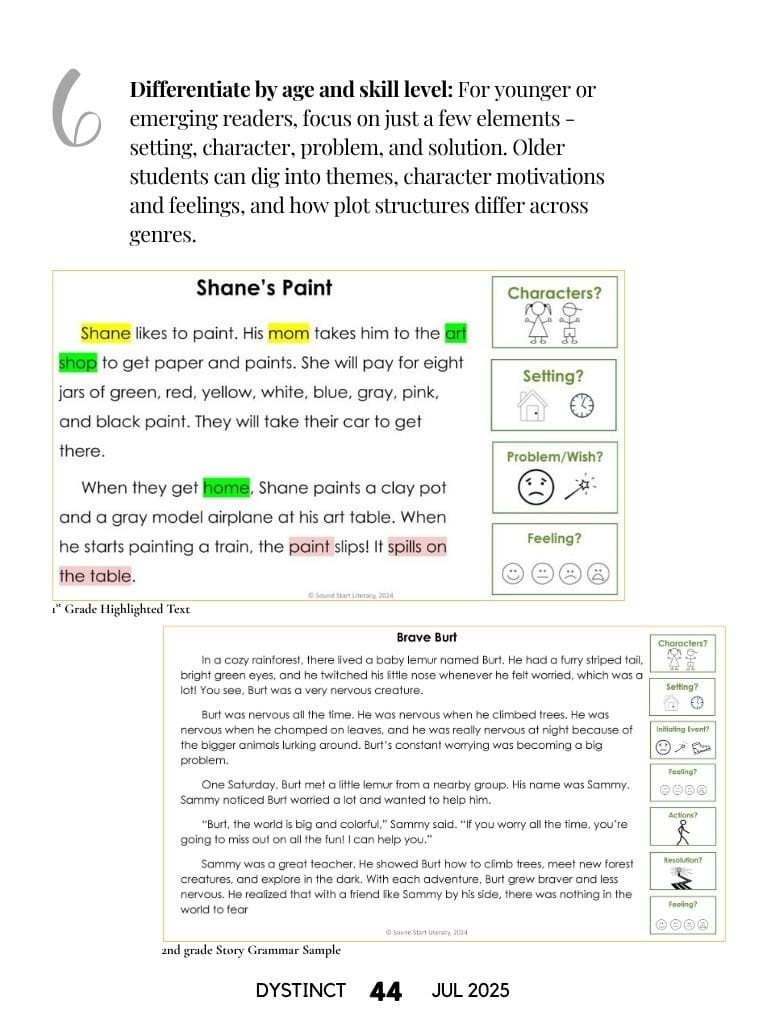
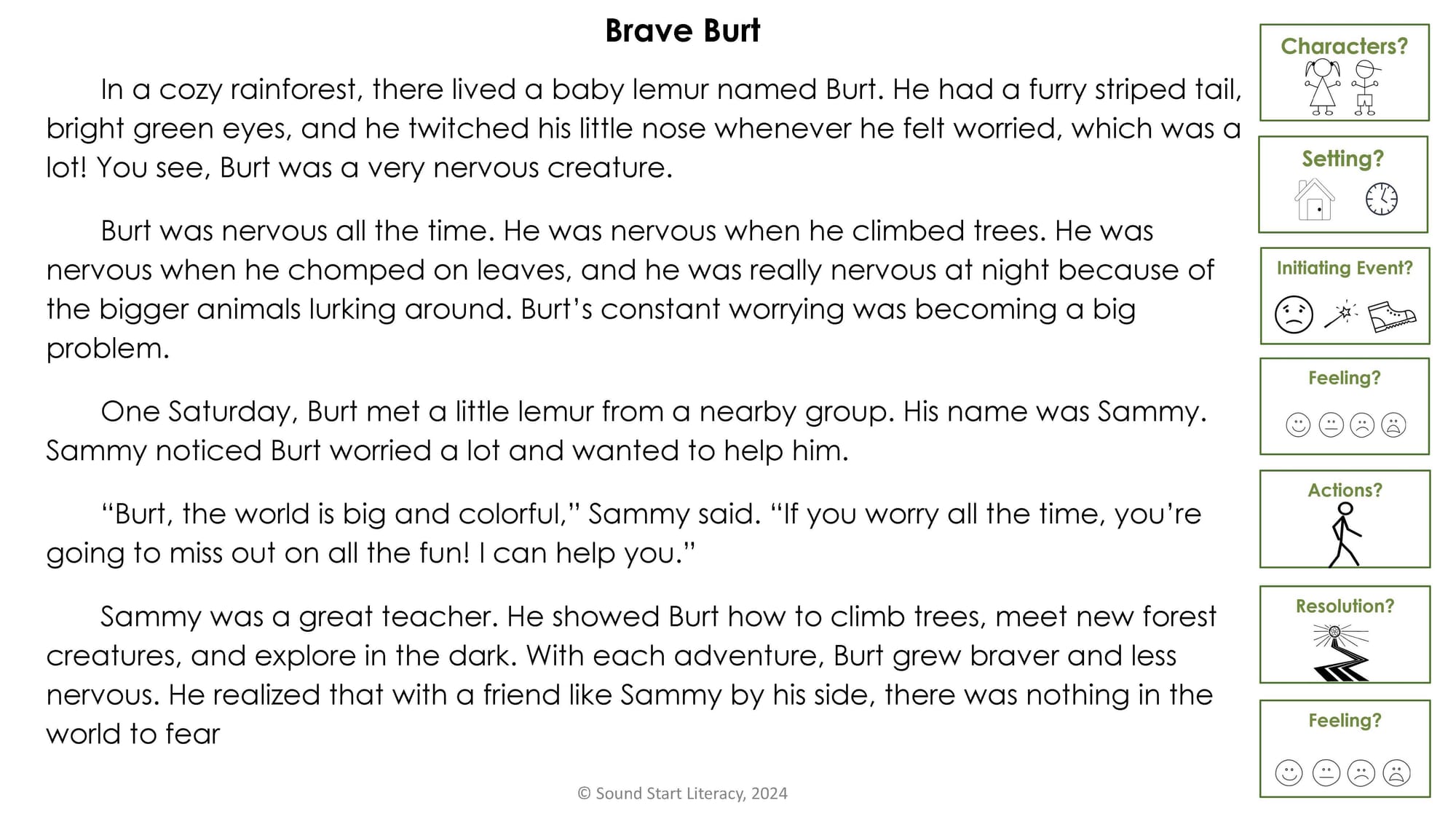
By identifying these components, readers can break a complex narrative into manageable parts. This scaffolding provides a checklist that helps students actively monitor their understanding as they read. Including a visual picture for each element provides another layer of support. The familiar framework of story grammar guides students through what otherwise may seem like a random series of events.
How Does Story Grammar Help Struggling Readers?
How Does Story Grammar Help Struggling Readers?
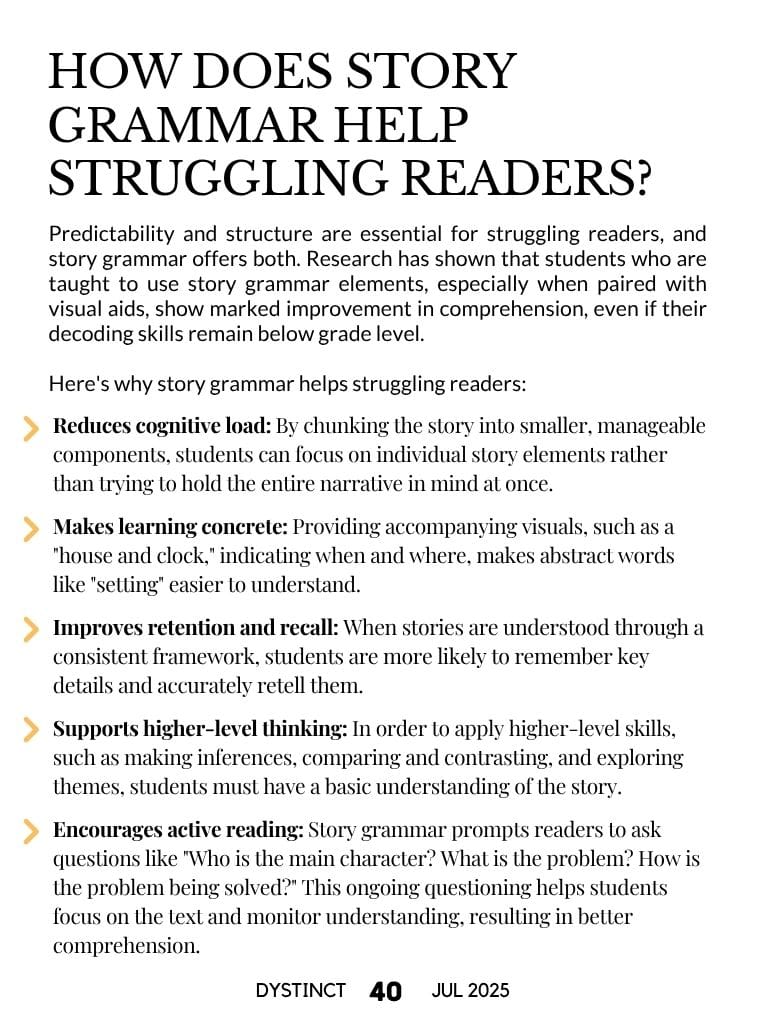
Predictability and structure are essential for struggling readers, and story grammar offers both. Research has shown that students who are taught to use story grammar elements, especially when paired with visual aids, show marked improvement in comprehension, even if their decoding skills remain below grade level.
Here's why story grammar helps struggling readers:
- Reduces cognitive load: By chunking the story into smaller, manageable components, students can focus on individual story elements rather than trying to hold the entire narrative in mind at once.
- Makes learning concrete: Providing accompanying visuals, such as a "house and clock," indicating when and where, makes abstract words like "setting" easier to understand.
- Improves retention and recall: When stories are understood through a consistent framework, students are more likely to remember key details and accurately retell them.
- Supports higher-level thinking: In order to apply higher-level skills, such as making inferences, comparing and contrasting, and exploring themes, students must have a basic understanding of the story.
- Encourages active reading: Story grammar prompts readers to ask questions like "Who is the main character? What is the problem? How is the problem being solved?" This ongoing questioning helps students focus on the text and monitor understanding, resulting in better comprehension.
How can Educators and Parents use Story Grammar?
How can Educators and Parents use Story Grammar?
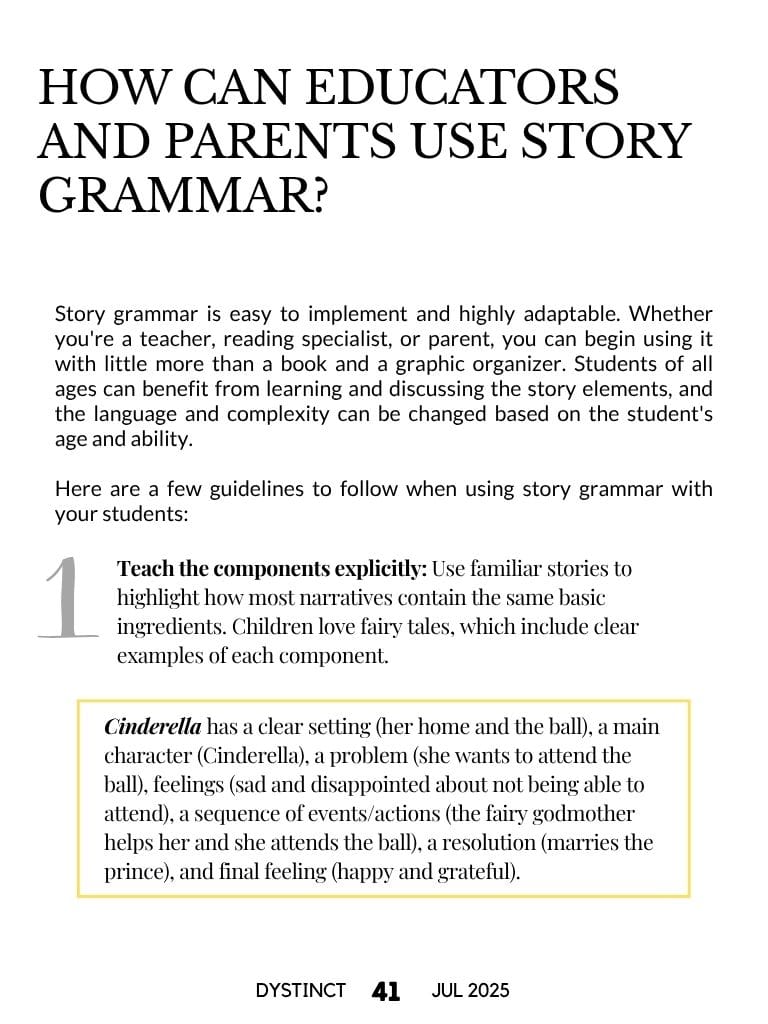
Story grammar is easy to implement and highly adaptable. Whether you're a teacher, reading specialist, or parent, you can begin using it with little more than a book and a graphic organizer. Students of all ages can benefit from learning and discussing the story elements, and the language and complexity can be changed based on the student's age and ability.
Here are a few guidelines to follow when using story grammar with your students:
- Teach the components explicitly: Use familiar stories to highlight how most narratives contain the same basic ingredients. Children love fairy tales, which include clear examples of each component.
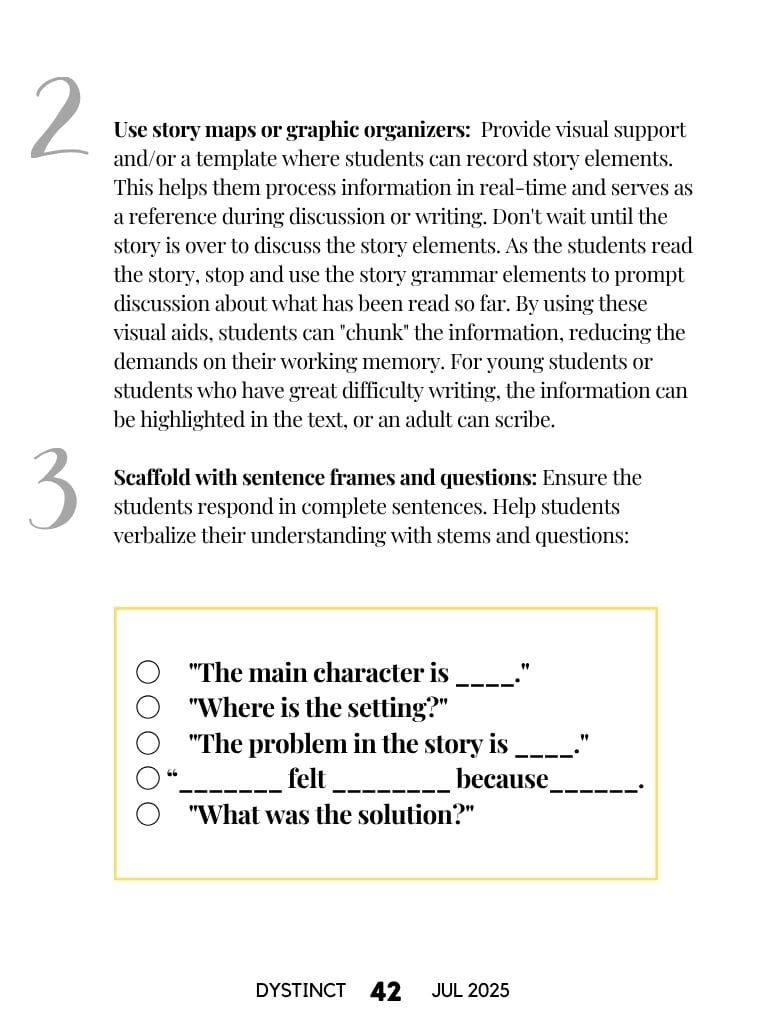
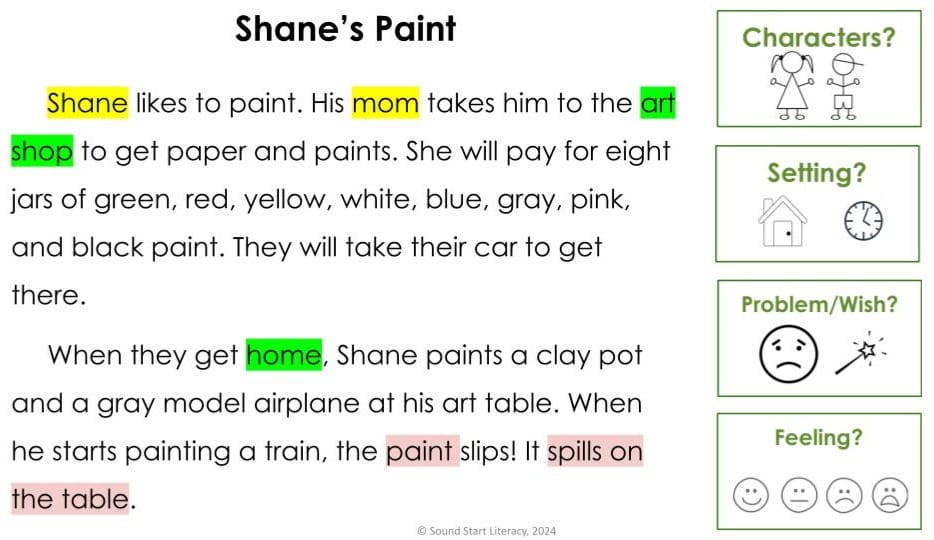
- Use story maps or graphic organizers: Provide visual support and/or a template where students can record story elements. This helps them process information in real-time and serves as a reference during discussion or writing. Don't wait until the story is over to discuss the story elements. As the students read the story, stop and use the story grammar elements to prompt discussion about what has been read so far. By using these visual aids, students can "chunk" the information, reducing the demands on their working memory. For young students or students who have great difficulty writing, the information can be highlighted in the text, or an adult can scribe.
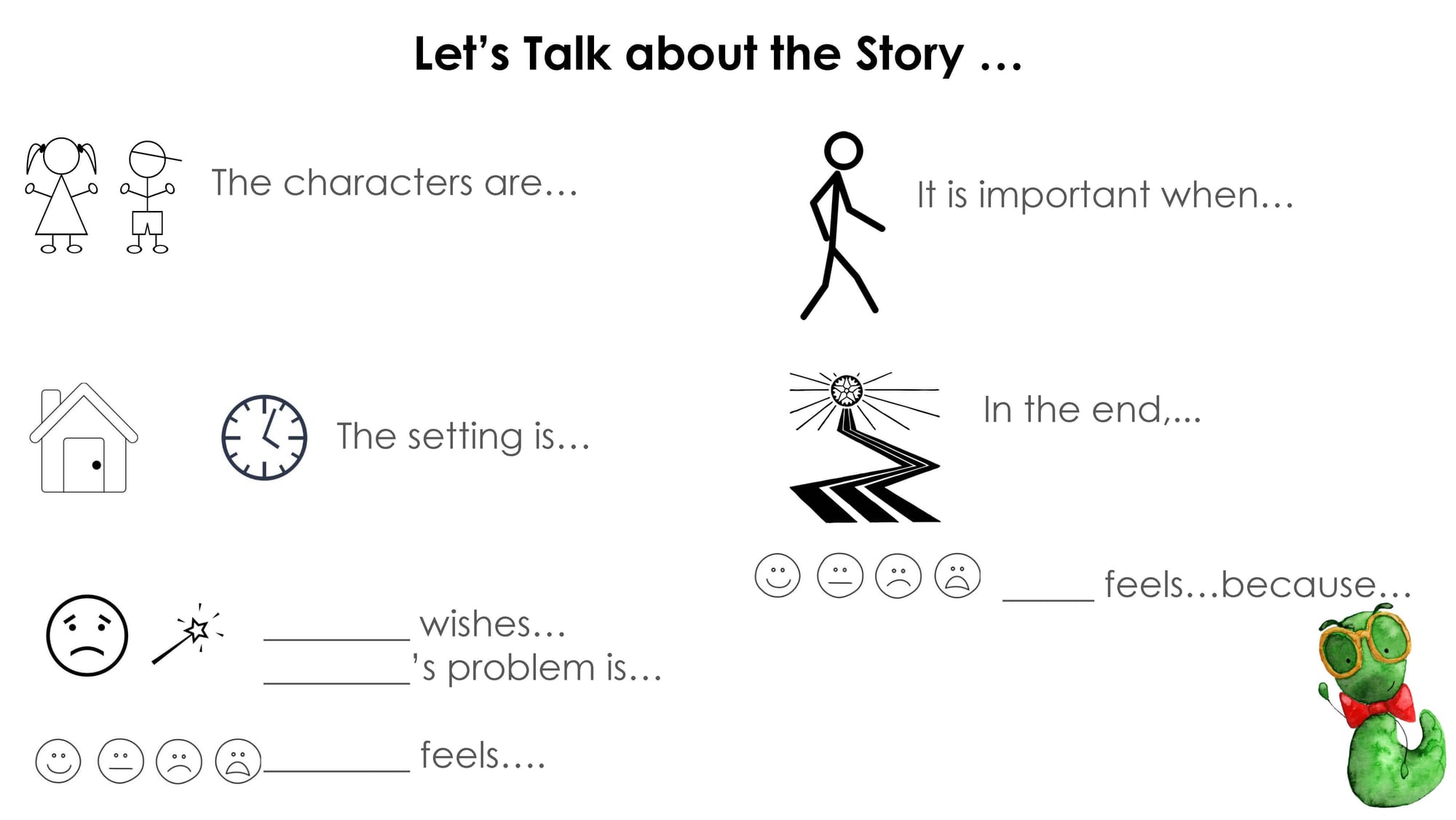
- Scaffold with sentence frames and questions: Ensure the students respond in complete sentences. Help students verbalize their understanding with stems and questions:
"Where is the setting?"
"The problem in the story is ____"
"_______ felt ______ because ______."
"What was the solution?"
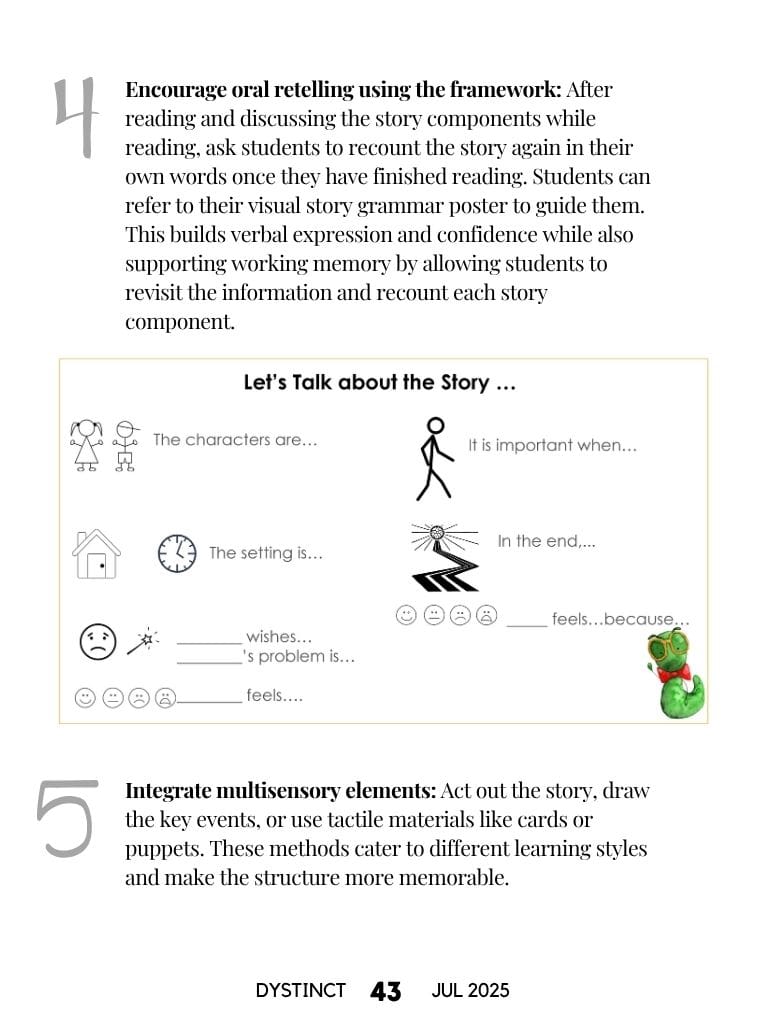
- Encourage oral retelling using the framework: After reading and discussing the story components while reading, ask students to recount the story again in their own words once they have finished reading. Students can refer to their visual story grammar poster to guide them. This builds verbal expression and confidence while also supporting working memory by allowing students to revisit the information and recount each story component.
- Integrate multisensory elements: Act out the story, draw the key events, or use tactile materials like cards or puppets. These methods cater to different learning styles and make the structure more memorable.
- Differentiate by age and skill level: For younger or emerging readers, focus on just a few elements - setting, character, problem, and solution. Older students can dig into themes, character motivations and feelings, and how plot structures differ across genres.
What are the Limitations and Misconceptions?
What are the Limitations and Misconceptions?
Story grammar is not a magic wand. Like any instructional tool, its effectiveness depends on thoughtful and consistent implementation. Some students may also have limited vocabulary and struggle with understanding language at the sentence level. Such students will need additional instruction in syntax, which can be integrated through writing. While story grammar won't solve all language problems, it will support students' oral language development.
Some educators may worry that story grammar oversimplifies stories or stifles creativity. But in practice, the opposite is true. Understanding the structure of stories provides a foundation that allows students to gain confidence to explore more complex texts and ideas. They're also better equipped to create their own stories, having internalized the rhythm and components of narrative form.
Story grammar promotes oral language development, so the emphasis should be placed on verbal discussion and not on completing a rote worksheet task. To avoid this, treat the story elements as a springboard for discussion, connection, and expression, not just boxes to be checked.
The Power of Story Grammar
The Power of Story Grammar
Reading narrative text should be an invitation into other worlds. For struggling readers, story grammar can be a bridge between decoding and understanding, between words on a page and the meaning and feelings behind them.
By teaching students to recognize and use the building blocks of narrative, we give them the tools to navigate stories with confidence and curiosity. It's a reminder that reading is not just about decoding but about making sense of and sharing human experiences.
In the end, story grammar does more than improve reading. It helps children see that every story, including their own, has structure, purpose, and the potential for resolution.
References
References
- Idol, L., & Croll, V. J. (1987). Story-mapping training as a means of improving reading comprehension. Learning Disability Quarterly, 10(3), 214–229.
- Swanson, H. L., & O'Connor, R. E. (2009). The role of working memory in learning to read. Handbook of Reading Research, Volume IV, 123-146.
- Bishop, D. V. M., & Snowling, M. J. (2004). Developmental dyslexia and specific language impairment: Same or different? Psychological Bulletin, 130(6), 858–886.
- Pennington, B. F., & Bishop, D. V. M. (2009). Relationships among speech, language, and reading disorders. Annual Review of Psychology, 60, 283–306.
Studies Involving Story Grammar
Studies Involving Story Grammar
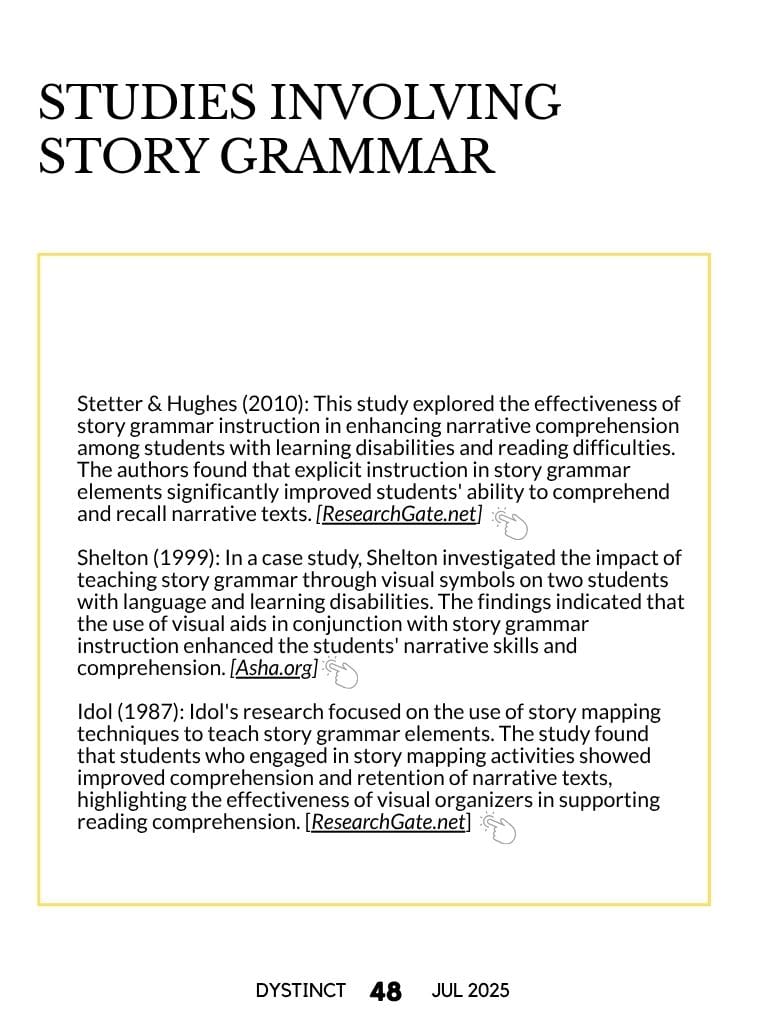
- Stetter & Hughes (2010): This study explored the effectiveness of story grammar instruction in enhancing narrative comprehension among students with learning disabilities and reading difficulties. The authors found that explicit instruction in story grammar elements significantly improved students' ability to comprehend and recall narrative texts. [ResearchGate.net]
- Shelton (1999): In a case study, Shelton investigated the impact of teaching story grammar through visual symbols on two students with language and learning disabilities. The findings indicated that the use of visual aids in conjunction with story grammar instruction enhanced the students' narrative skills and comprehension. [asha.org]
- Idol (1987): Idol's research focused on the use of story mapping techniques to teach story grammar elements. The study found that students who engaged in story mapping activities showed improved comprehension and retention of narrative texts, highlighting the effectiveness of visual organizers in supporting reading comprehension. [ResearchGate.net]
Jennifer Cerra
Reading Specialist, Literacy Trainer, & Founder of R.E.A.D. Intervention & Sound Start Literacy | soundstartliteracy.com | learn.readintervention.com | Facebook | YouTube
Jennifer Cerra
Jennifer Cerra received her B.A. in English Literature from Boston University and her M.Ed. in Elementary Education from Lesley University in 1998. She is a certified reading specialist, structured literacy practitioner and trainer and currently serves as an adjunct professor for Fairleigh Dickinson University's Center for Dyslexia Studies. Jennifer has also authored four teaching resource books for Scholastic on using reading strategies with students in grades 2-6.
After working in the public school sector for over 20 years, Jennifer founded R.E.A.D. Intervention, a New Jersey based reading center for students with word-level reading challenges. She also provides professional development for school districts and offers online training and resources to support the delivery and implementation of effective literacy instruction. In 2024, Jennifer launched Sound Start Literacy, a linguistic phonics program for students in grades K-3.
Extracts from Dystinct Magazine
Extracts from Dystinct Magazine