Issue 27: The Potential Impact of 15 Minutes | Dr Jennifer Throndsen
Dr Jennifer introduces dyad reading, a simple and evidence-based strategy where a stronger reader and a developing reader read aloud together, showing how just 15 minutes a day with appropriately challenging text can significantly boost fluency, comprehension, and confidence in struggling readers.

Table of Contents

What if just 15 minutes a day could transform your child's reading ability, boosting progress by two to three years in a single year? It's possible with a simple technique called dyad reading.
Dyad reading is a reading intervention parents and educators can use with students in grade 2 and up to grow their reading skills. It is derived from the Neurological Impress Method (Heckelman, 1969), in which an adult tutor and a developing reader chorally read a challenging text, yielding an average increase of two grade levels after only seven and a half hours of intervention. It was then adapted by Eldredge and Quinn (1988) to use student pairings instead of adult tutors, allowing the practice to be used in the whole-group classroom setting. Since then, additional evidence of impact has shown that using more challenging text with the scaffolding of a more capable reader can accelerate reading progress, including word recognition, comprehension, and reading fluency (Morgan, Wilcox, & Lloyd, 2000; Burns, 2007; Sindelar, Monda, & O'Shea, 1990; Turpie & Paratore, 1995).
Beyond the strong results you can expect from doing dyad reading, the best part is that it is relatively simple to implement and is a great way to turn reading into an enjoyable, shared experience. The basic underlying principle is that a stronger reader (e.g., the parent or a more capable peer) provides the scaffolding the child needs to access more challenging text through choral reading, reading aloud together in unison, with a more fluent reader.
Let us get into the steps to implementing dyad reading with your child:
Finding the right level of challenge
Finding the right level of challenge
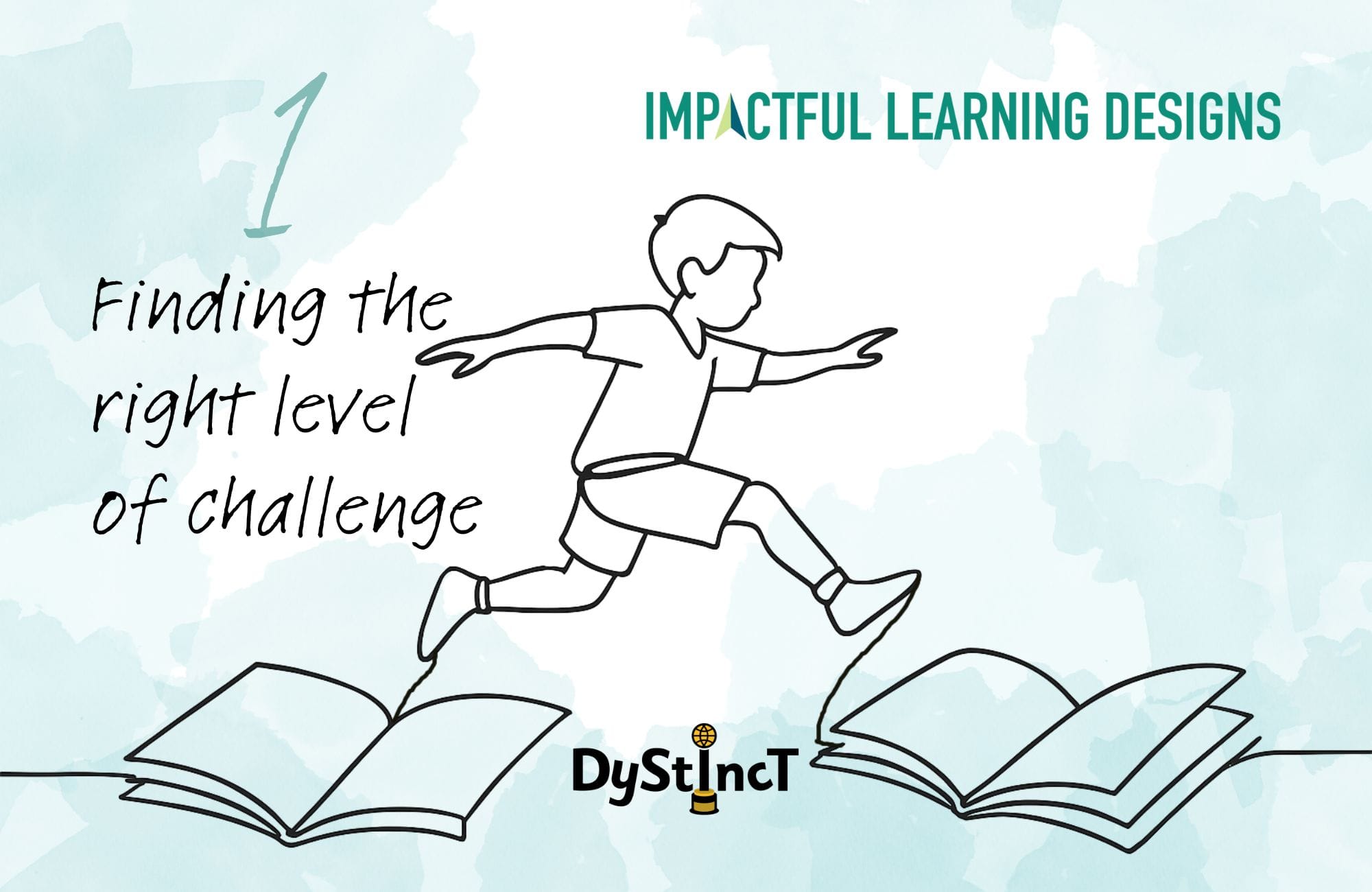
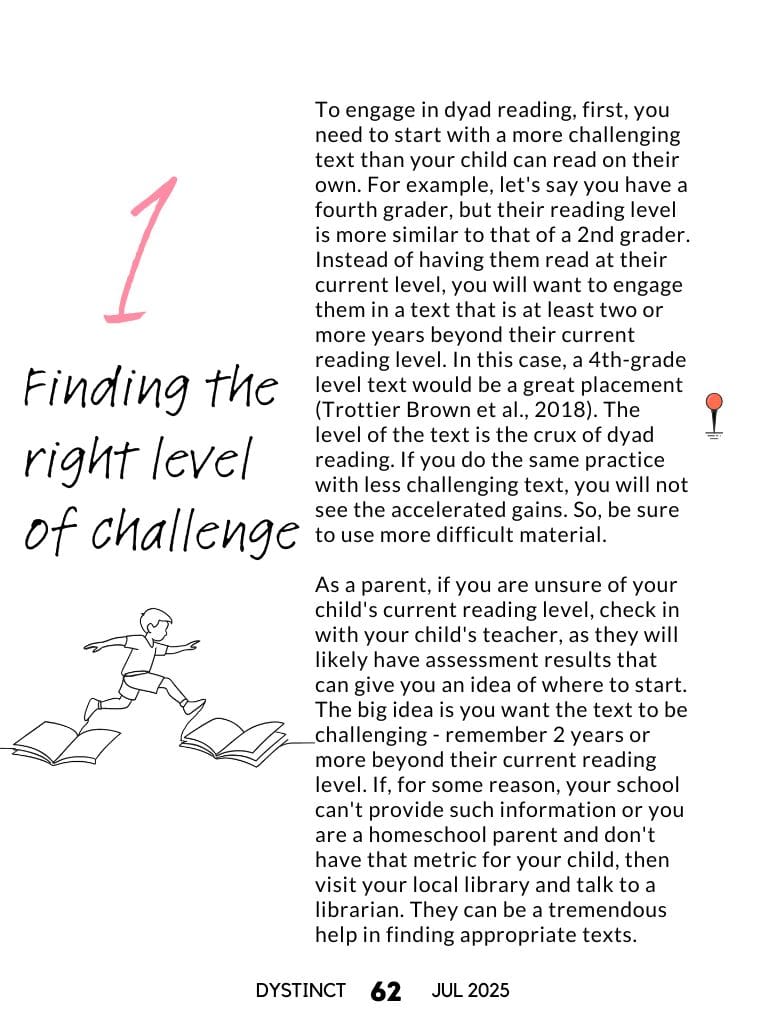
To engage in dyad reading, first, you need to start with a more challenging text than your child can read on their own. For example, let's say you have a fourth grader, but their reading level is more similar to that of a 2nd grader. Instead of having them read at their current level, you will want to engage them in a text that is at least two or more years beyond their current reading level. In this case, a 4th-grade level text would be a great placement (Trottier Brown et al., 2018). The level of the text is the crux of dyad reading. If you do the same practice with less challenging text, you will not see the accelerated gains. So, be sure to use more difficult material.
As a parent, if you are unsure of your child's current reading level, check in with your child's teacher, as they will likely have assessment results that can give you an idea of where to start. The big idea is you want the text to be challenging - remember 2 years or more beyond their current reading level. If, for some reason, your school can't provide such information or you are a homeschool parent and don't have that metric for your child, then visit your local library and talk to a librarian. They can be a tremendous help in finding appropriate texts.
Choosing books of interest
Choosing books of interest
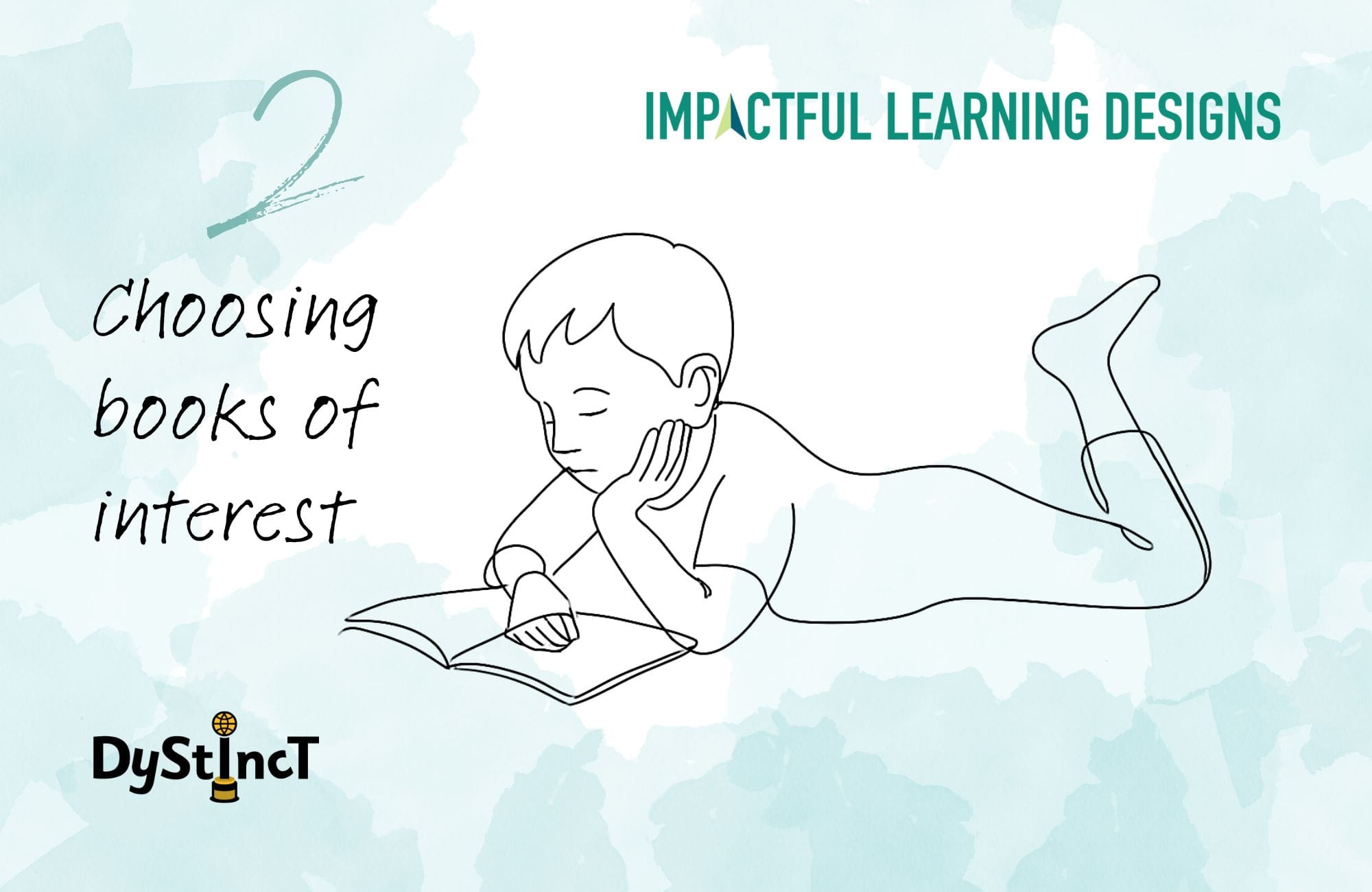
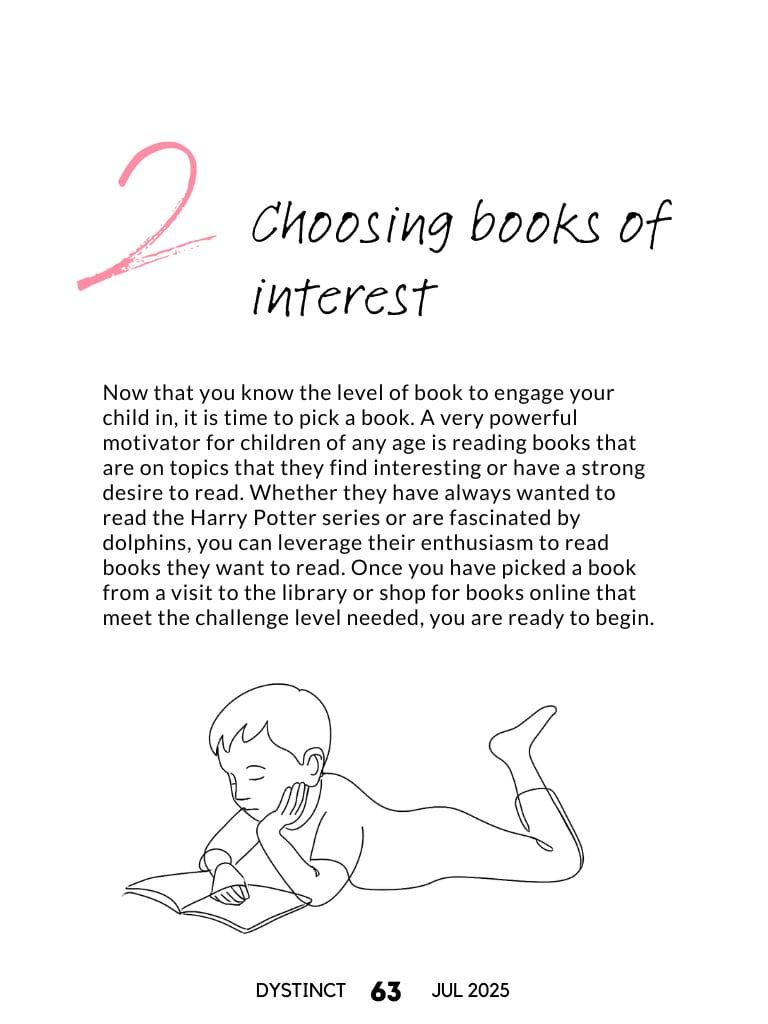
Now that you know the level of book to engage your child in, it is time to pick a book. A very powerful motivator for children of any age is reading books that are on topics that they find interesting or have a strong desire to read. Whether they have always wanted to read the Harry Potter series or are fascinated by dolphins, you can leverage their enthusiasm to read books they want to read. Once you have picked a book from a visit to the library or shop for books online that meet the challenge level needed, you are ready to begin.
Engaging in the dyad reading
Engaging in the dyad reading
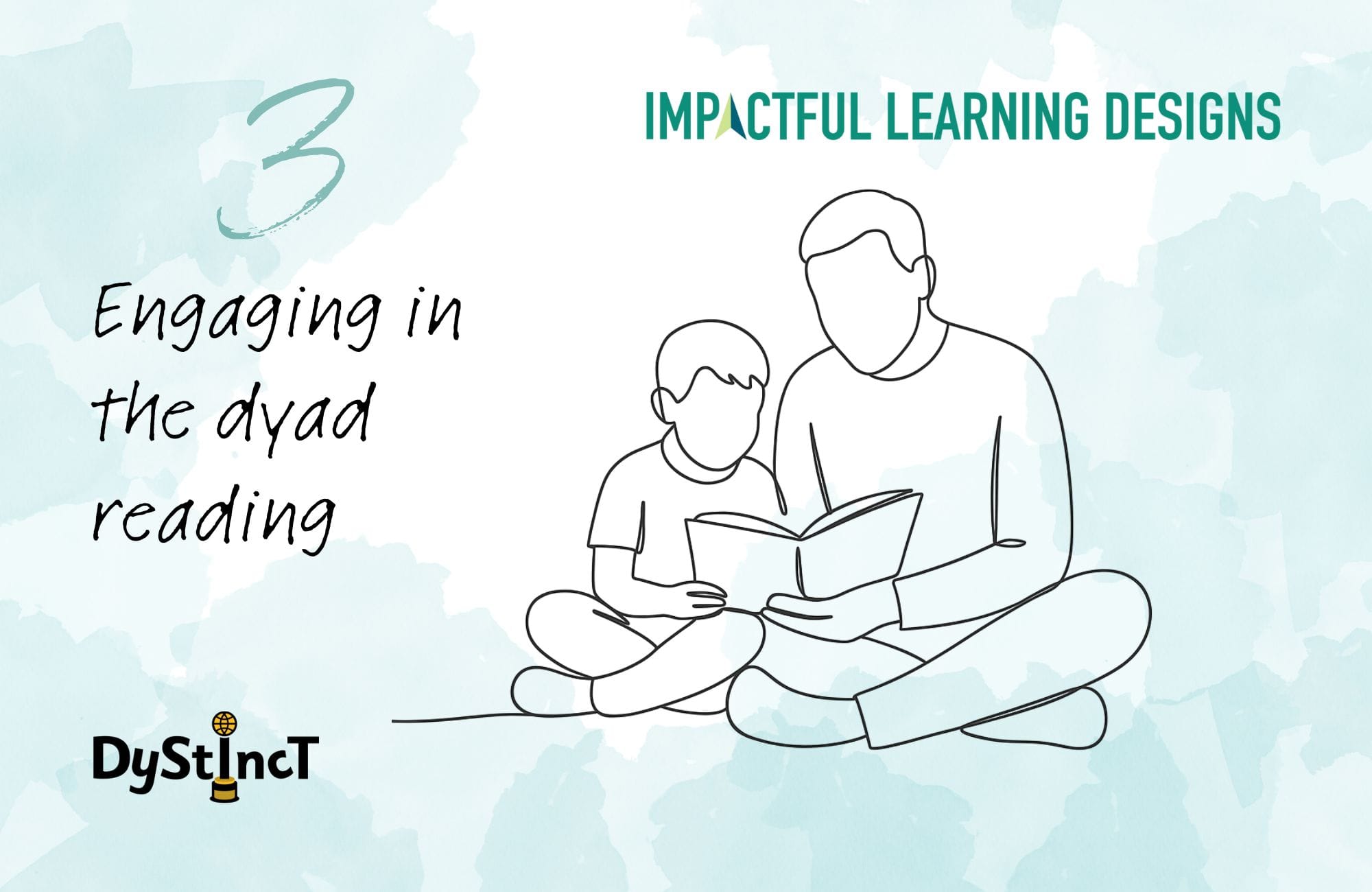
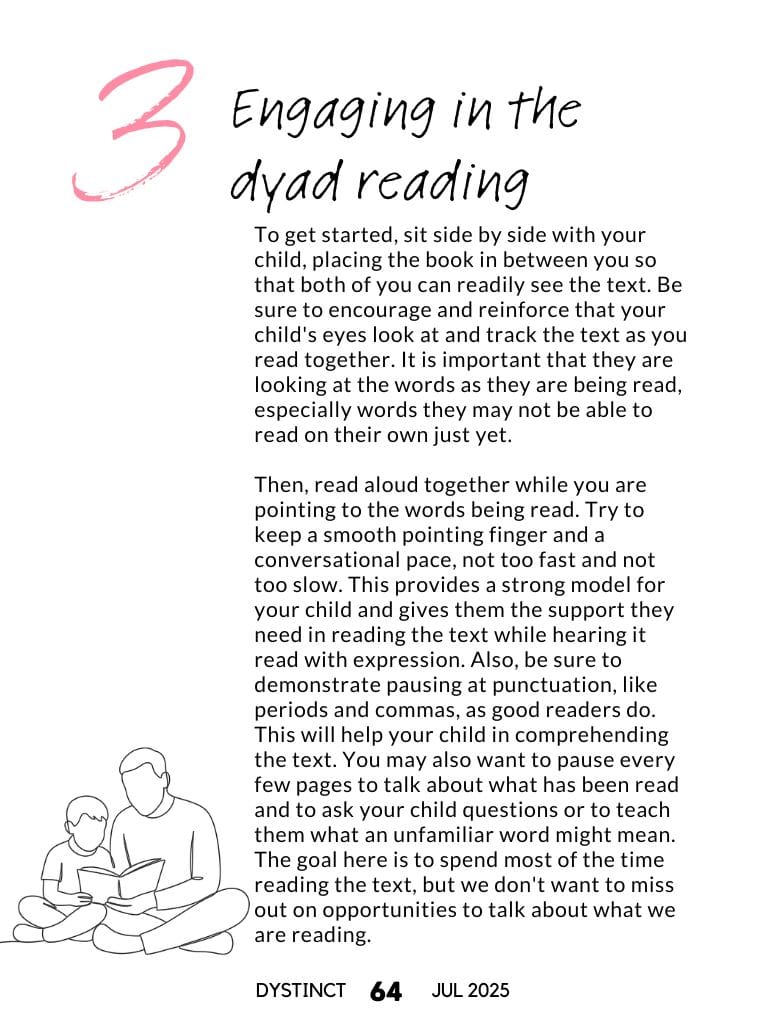
To get started, sit side by side with your child, placing the book in between you so that both of you can readily see the text. Be sure to encourage and reinforce that your child's eyes look at and track the text as you read together. It is important that they are looking at the words as they are being read, especially words they may not be able to read on their own just yet.
Then, read aloud together while you are pointing to the words being read. Try to keep a smooth pointing finger and a conversational pace, not too fast and not too slow. This provides a strong model for your child and gives them the support they need in reading the text while hearing it read with expression. Also, be sure to demonstrate pausing at punctuation, like periods and commas, as good readers do. This will help your child in comprehending the text. You may also want to pause every few pages to talk about what has been read and to ask your child questions or to teach them what an unfamiliar word might mean. The goal here is to spend most of the time reading the text, but we don't want to miss out on opportunities to talk about what we are reading.
Rinse and repeat
Rinse and repeat
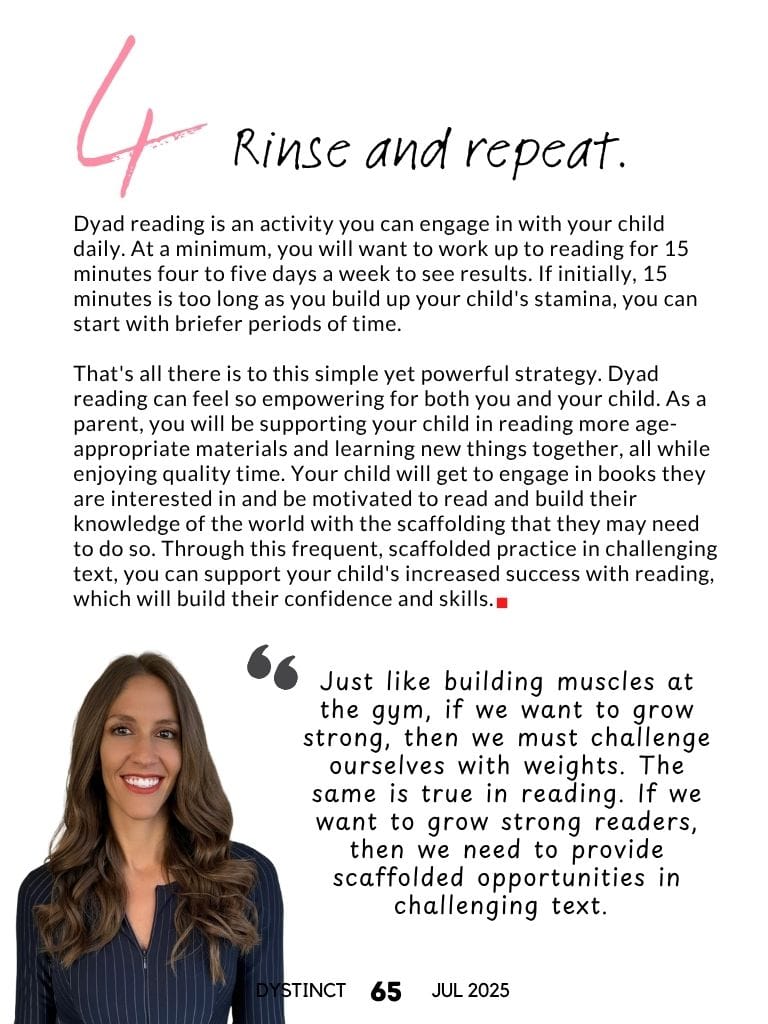
Dyad reading is an activity you can engage in with your child daily. At a minimum, you will want to work up to reading for 15 minutes four to five days a week to see results. If initially, 15 minutes is too long as you build up your child's stamina, you can start with briefer periods of time.
That's all there is to this simple yet powerful strategy. Dyad reading can feel so empowering for both you and your child. As a parent, you will be supporting your child in reading more age-appropriate materials and learning new things together, all while enjoying quality time. Your child will get to engage in books they are interested in and be motivated to read and build their knowledge of the world with the scaffolding that they may need to do so. Through this frequent, scaffolded practice in challenging text, you can support your child's increased success with reading, which will build their confidence and skills.
References
References
- Burns, M. K. (2007). Reading at the instructional level with children identified as learning disabled: Potential implications for response-to-intervention. School Psychology Quarterly, 22(3), 297–313.
- Eldredge, J. L., & Quinn, D. W. (1988). Increasing reading performance of low-achieving second graders with dyad reading groups. The Journal of Educational Research, 82(1), 40–46.
- Heckelman, R. G. (1969). A neurological-impress method of remedial-reading instruction. Academic Therapy, 4(4), 277–282.
- Morgan, A., Wilcox, B. R., & Eldredge, J. L. (2000). Effect of difficulty levels on second-grade delayed readers using dyad reading. The Journal of Educational Research, 94(2), 113–119.
- Sindelar, P. T., Monda, L. E., & O’Shea, L. J. (1990). Effects of repeated readings on instructional- and mastery-level readers. The Journal of Educational Research, 83(4), 220–226.
- Trottier Brown, L., Mohr, K. A. J., Wilcox, B. R., & Barrett, T. S. (2018). The effects of dyad reading and text difficulty on third-graders' reading achievement. The Journal of Educational Research, 111(5), 541–553. [doi.org]
- Turpie, J. J., & Paratore, J. R. (1995). Using repeated reading to promote reading success in a heterogeneously grouped first grade. In K. A.
- Hinchman, D. J. Leu, & C. K. Kinzer (Eds.), Perspectives on literacy research and practice: Forty-fourth yearbook of the National Reading Conference (pp. 255–264). National Reading Conference.
Dr. Jennifer Throndsen
Educational Consultant & Founder | impactfullearningdesigns.com | LinkedIn
Dr. Jennifer Throndsen
Dr. Jennifer Throndsen is the author of Raising Up Readers: 25 Scaffolding Strategies to Help Students Access Challenging Text, which includes additional ideas on how to scaffold learning. She is a former elementary and middle school teacher, instructional coach, district office specialist, and state director, known for her impact on student learning and passion for student-centered learning. Visit her website for additional resources and more information
BUY BOOK
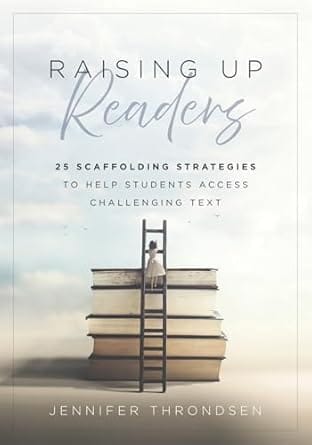
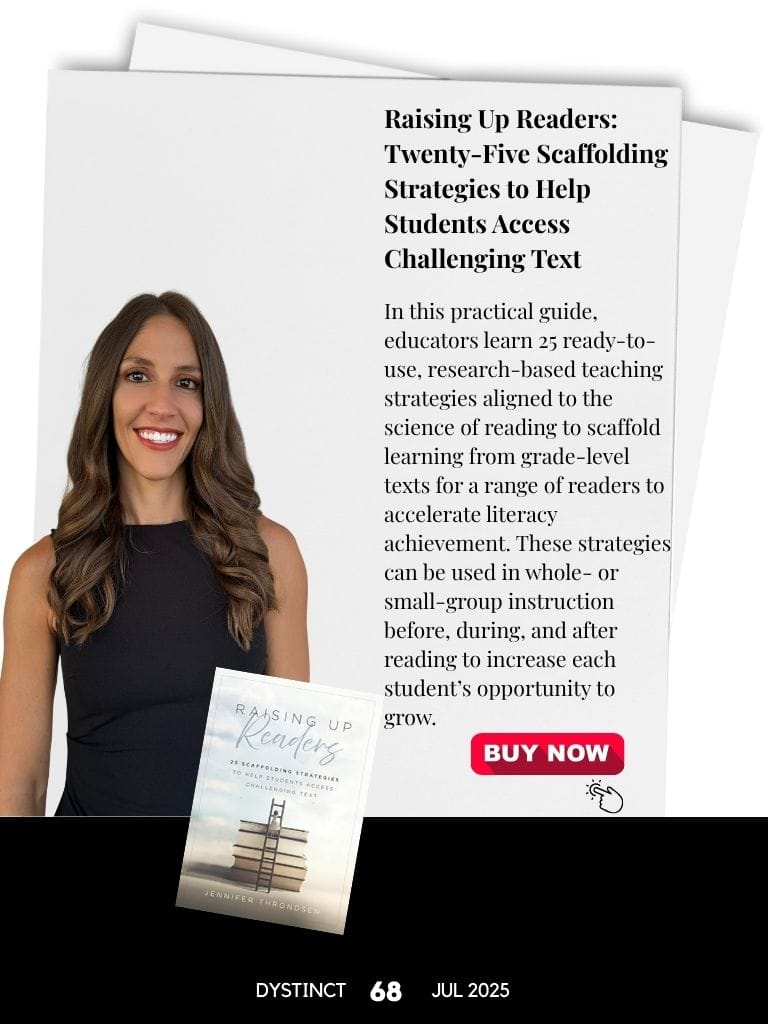
Raising Up Readers: Twenty-Five Scaffolding Strategies to Help Students Access Challenging Text
In this practical guide, educators learn 25 ready-to-use, research-based teaching strategies aligned to the science of reading to scaffold learning from grade-level texts for a range of readers to accelerate literacy achievement. These strategies can be used in whole- or small-group instruction before, during, and after reading to increase each student’s opportunity to grow.
Grades K-5 teachers, instructional coaches, and reading specialists can use this book to:
- Plan effective scaffolds for grade-level texts that challenge students and encourage growth
- Employ a versatile array of strategies to promote active engagement with literacy
- Provide engaging, research-based strategies that increase student learning and comprehension
- Readily adapt strategies to meet both individual and classwide challenges and needs
- Ensure all students achieve the established literacy standards for their grade level
Extracts from Dystinct Magazine
Extracts from Dystinct Magazine