Issue 28: The Interaction of Racism and Anxiety in Children | Dr Samantha Sweeney
Dr Samantha Sweeney explores how racism and racial discrimination interact with childhood anxiety, showing how experiences of exclusion, microaggressions, and systemic bias can intensify anxiety symptoms, while offering families practical strategies to support children.


Table of Contents
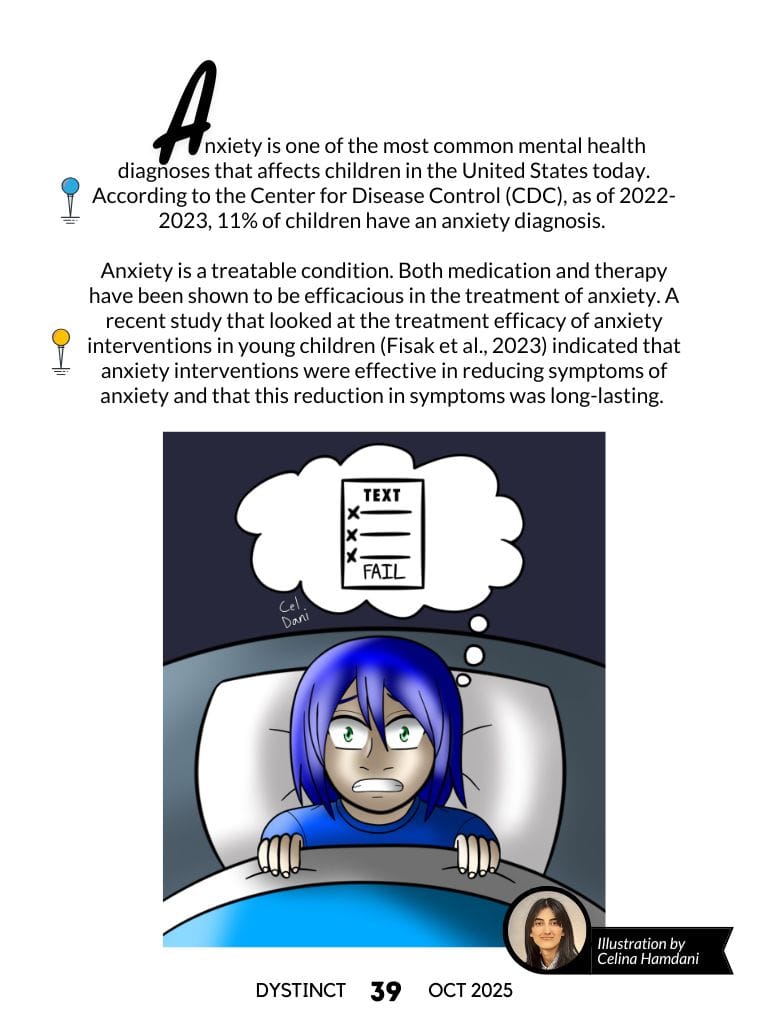
Anxiety is one of the most common mental health diagnoses that affects children in the United States today. According to the Center for Disease Control (CDC), as of 2022-2023, 11% of children have an anxiety diagnosis.
Anxiety is a treatable condition. Both medication and therapy have been shown to be efficacious in the treatment of anxiety. A recent study that looked at the treatment efficacy of anxiety interventions in young children (Fisak et al., 2023) indicated that anxiety interventions were effective in reducing symptoms of anxiety and that this reduction in symptoms was long-lasting.
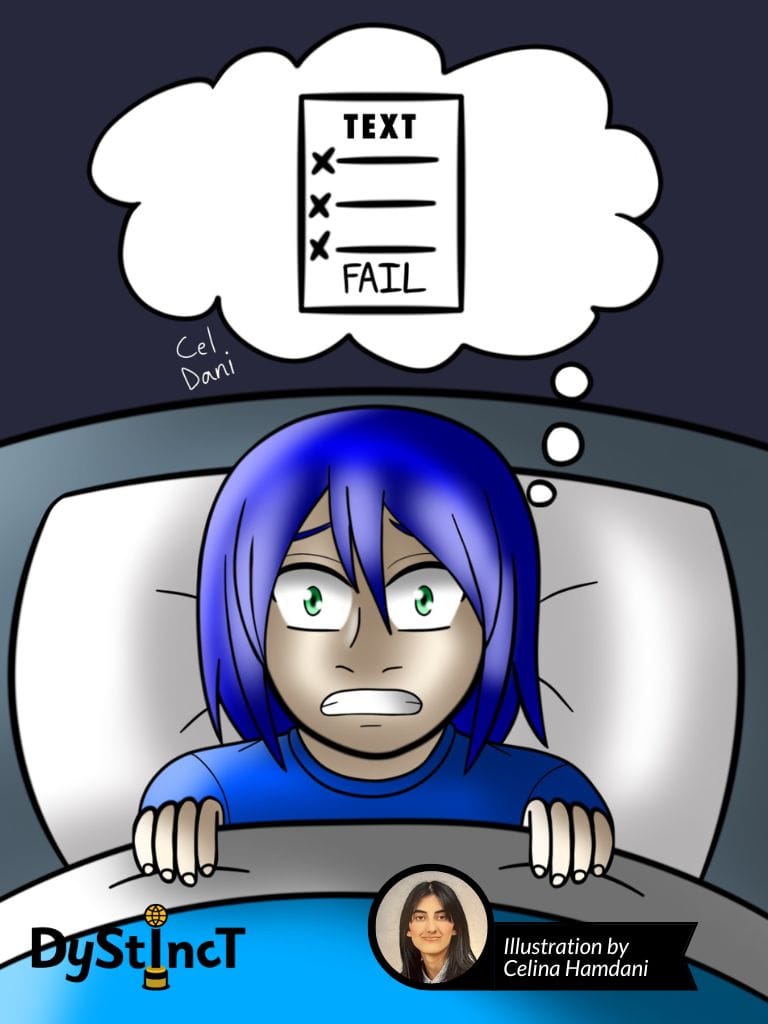
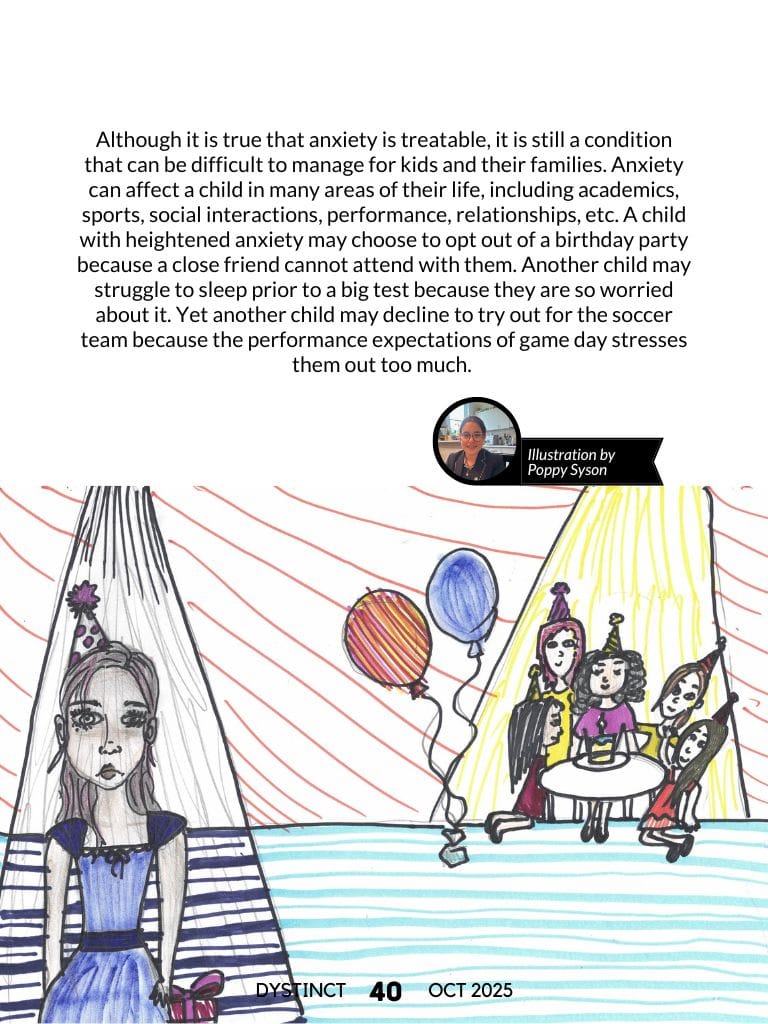
Although it is true that anxiety is treatable, it is still a condition that can be difficult to manage for kids and their families. Anxiety can affect a child in many areas of their life, including academics, sports, social interactions, performance, relationships, etc. A child with heightened anxiety may choose to opt out of a birthday party because a close friend cannot attend with them. Another child may struggle to sleep prior to a big test because they are so worried about it. Yet another child may decline to try out for the soccer team because the performance expectations of game day stresses them out too much.
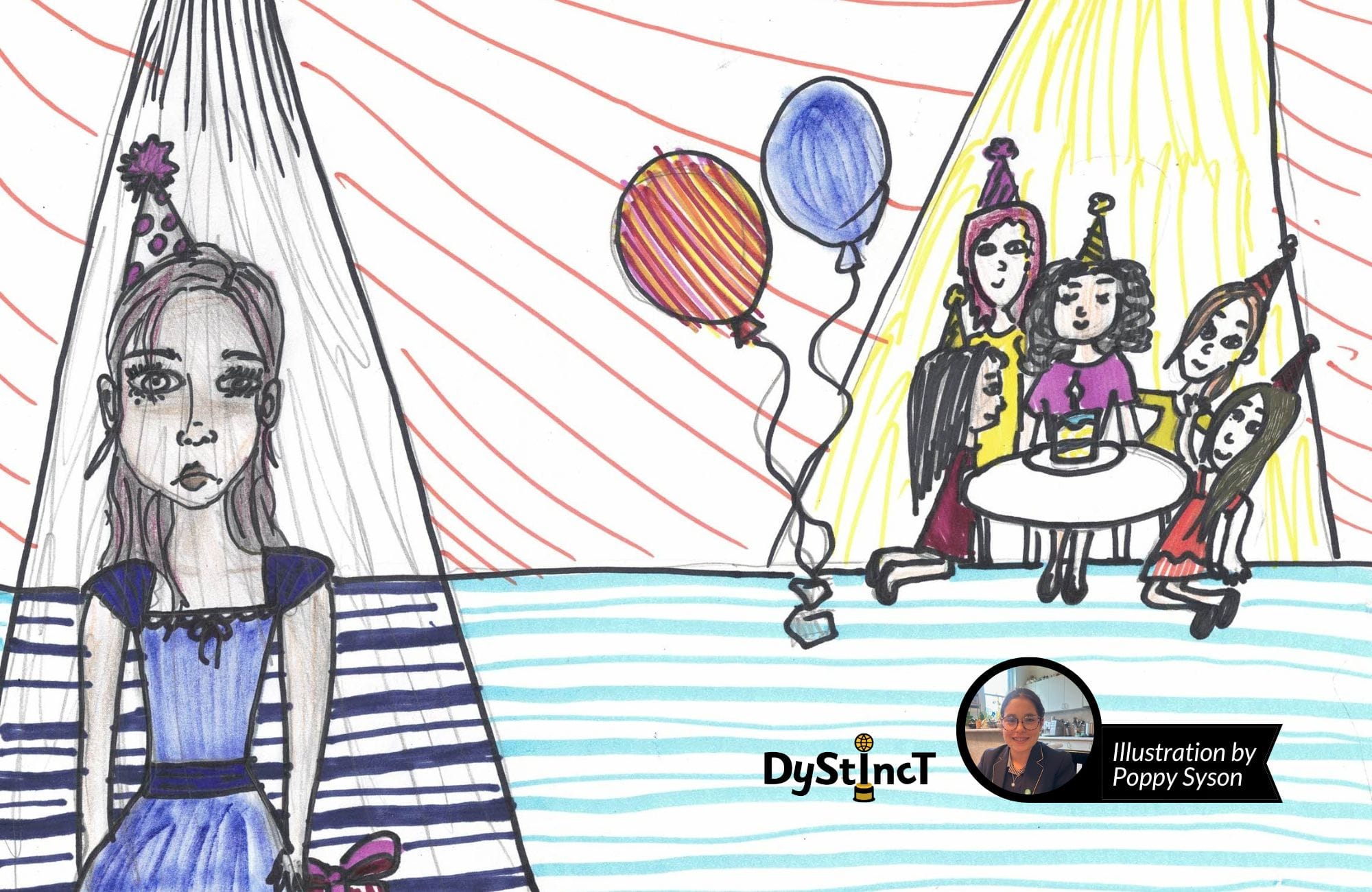
Anxiety has the ability to drive children forward or hold them back.
If well managed, anxiety can have benefits for kids. It can help children remember to study before a quiz, allow them to take one more look in the mirror before going to an event, or practice their serve before a tennis match. Anxiety has the ability to drive children forward or hold them back. For kids with anxiety disorders, that is often a very fine line.
For the children and families who walk that line of anxiety management, it is important to identify different triggers or protective factors that can contribute to or mitigate a child's anxiety symptoms. Some of these factors are well within the control of a child or family. For example, how many demands does a child have on their time? While families cannot always determine how much homework a child has, they do have control in determining the number of extracurricular activities a child will participate in and how much pressure they put on their child with respect to each of these commitments.
Many children enjoy being busy, so participating in three sports, the school play, and two after-school clubs is not too much for them - in fact, it can help them thrive. For other students, this amount of commitment would be totally overwhelming. As parents, we can help our children determine how many extracurriculars are too much and also give our children space when they change their minds or have to pull away from a commitment. This is one way that parents can help their children maintain a manageable level of stress and anxiety.
There are other factors that parents do not have control over. These can be more stressful and overwhelming for children and families because there is a limit to what they can do about it. One factor that is understudied and not fully understood is the interaction between racial discrimination and anxiety. Racism posits that one racial group is superior to another (MacIntyre, 2023). Race itself is a social construct rather than a biological one. This means that there is no biological basis for the idea of race. How one looks and, therefore, what race they should be categorized into is a made-up idea that changes depending on the country or region that you are in. That being said, the effects of racism are very real.
Racial discrimination is the acting out of the belief that one race is superior to another. This can take many forms, including, but not limited to: overt racism, internalized racism, systemic racism, and microaggressions. While we, as adults, like to believe that these are grown-up topics that do not affect children directly, this is sadly untrue. Many children in this country are impacted by racism and racial discrimination in ways that are big and small, direct and subtle.
There is no biological basis for the idea of race.
An understanding of racial preferences begins when a child is very young - nearly from birth. A study of 3-month-old infants showed that these babies preferred the same race faces of the people that they were exposed to thus far in their young lives (Bar-Haim et al., 2006). Kids as young as four years old are beginning to generalize the behavior of one to a larger group (Waxman, 2010), and kids as young as six show a strong dislike against kids who are not a part of their in-group (Buttelman & Böhm, 2014). What constitutes an in-group versus an out-group does not always include race, but it can, and this can be felt powerfully by the children who are in the out-group because of something they cannot control - namely, their race. For children with anxiety, this can be a factor that exacerbates their anxiety symptoms.
According to a report put out by the CDC (McKinnon II, et al. 2024), one in three high schoolers reported experiencing racism at school. Students of color were disproportionally represented, meaning that non-White students experienced racism at school at significantly higher rates than White kids. While this study did not indicate how frequently these students reported racism, other studies have shown that daily racial discrimination contributes significantly to a number of anxiety-related disorders for adults (Kwon & Han, 2019).
Children with anxiety may see the world as hostile towards them, not as a safe space.
It is not a stretch to assume that discrimination experienced by children is also significantly detrimental. Children and adolescents still have developing brains that are highly influenced by stimuli around them. When this stimulus includes discrimination, it can change the way that kids see the world and themselves. Children with anxiety may see the world as hostile towards them, not as a safe space. We know that when kids do not feel safe, it can be hard to pay attention, concentrate, and learn.
So, what can be done about this? While this is a factor that children and families do not have complete control over, it is also true that there are things that can be done to cope with racial discrimination. If you have an anxious child who is also facing racism, be aware of what is happening. Talk to your child about what they are experiencing. Empathize with their situation and provide examples of how to move through it. If necessary and appropriate, involve the school or parents of another student or students. Gather support from other families and kids who have experienced something similar. You and your child do not have to suffer in silence. As we saw from the CDC data, one in three kids are experiencing racial discrimination. It is hard to believe that your child is the only one. So, find others who are willing to be in this with you and support each other.
What if your child is not the recipient of racial discrimination but sees it, and that makes them anxious? Vicarious racism can impact bystanders and can feel just as threatening, even if a child does not experience it directly. The same suggestions from the previous paragraph apply. In addition, empower your child to support the child who is the victim of racial discrimination. This can be scary for some kids because they feel that this opens them up to discrimination themselves. Problem-solve ways to offer support without making themselves a target. Helping others can feel empowering for kids, so encourage them if this is possible.
What if your child is the one discriminating? No one wants to think that it is possible for their child to engage in behavior that hurts other children. But these children are experiencing racism from others in school. While some of these individuals may be teachers and other adults, it is likely that some of the perpetrators are children. It is just as important, if not more so, to talk to your kids about racial discrimination if they are not the victims. Share your values of treating others with respect and the importance of taking care of others. Encourage your child to look out for kids who might be getting bullied or to speak up when they hear microaggressions. Helping your child become an ally to others is hugely beneficial, not just to those who are the victims of discrimination, but also to your child, who is helping to look after others and is reducing symptoms of anxiety in the process.
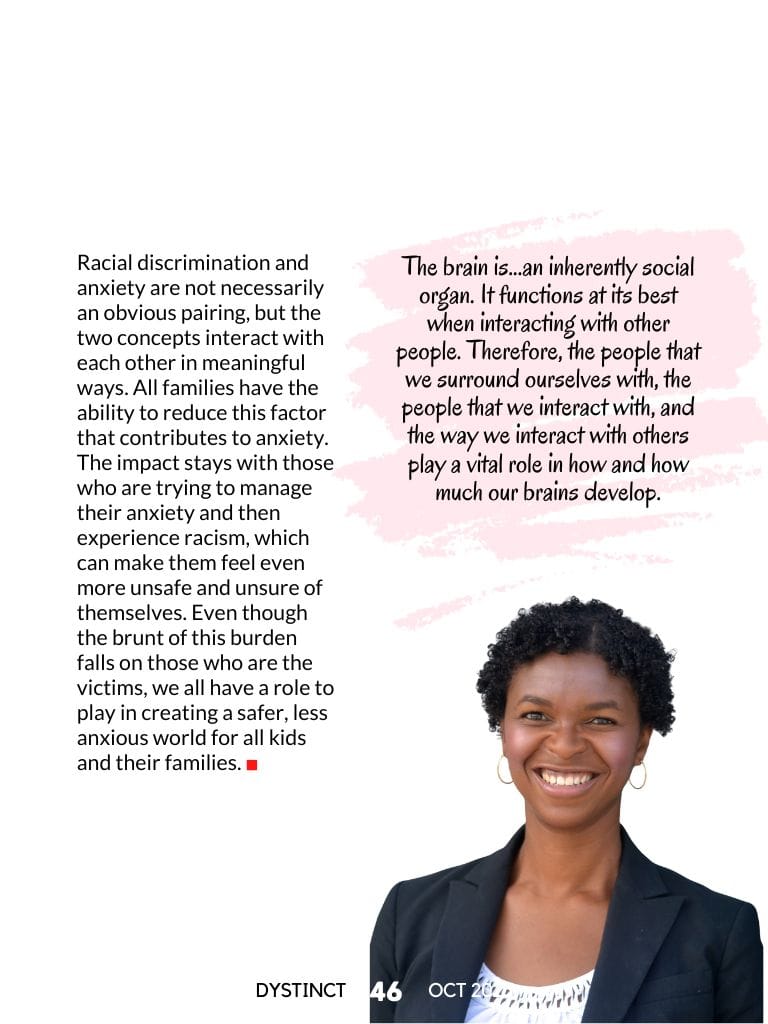
Racial discrimination and anxiety are not necessarily an obvious pairing, but the two concepts interact with each other in meaningful ways. All families have the ability to reduce this factor that contributes to anxiety. The impact stays with those who are trying to manage their anxiety and then experience racism, which can make them feel even more unsafe and unsure of themselves. Even though the brunt of this burden falls on those who are the victims, we all have a role to play in creating a safer, less anxious world for all kids and their families.
References
References
- Bar-Haim, Y., Ziv, T., Lamy, D., & Hodes, R. M. (2006). Nature and Nurture in Own-Race Face Processing. Psychological Science, 17(2), 159-163. [doi.org]
- Buttelmann, D. & Böhm, R. (2014). The Ontogeny of the Motivation That Underlies In-Group Bias. Psychological Science, 25(4), 921–-927.
- Child and Adolescent Health Measurement Initiative. (2022-2023). National Survey of Children's Health. Data Resource Center for Child and Adolescent Health supported by the U.S. Department of Health and Human Services, Health Resources and Services Administration (HRSA), Maternal and Child Health Bureau (MCHB). Retrieved August 8, 2024 [nschdata.org]
- Fisak, B., Penna, A., Mian, N. D., Lamoli, L., Margaris, A., & Cruz, S. A. M. F. D. (2023). The Effectiveness of Anxiety Interventions for Young Children: A Meta-Analytic Review. Journal of child and family studies, 1–12. Advance online publication. [doi.org]
- Kwon, S., Han, D. Discrimination, Mental Disorders, and Suicidal Ideation in Latino Adults: Decomposing the Effects of Discrimination. J Immigrant Minority Health 21, 143–150 (2019). [doi.org]
- MacIntyre, M. M., Zare, M., & Williams, M. T. (2023). Anxiety-Related Disorders in the Context of Racism. Current psychiatry reports, 25(2), 31–43. [doi.org]
- McKinnon II, Krause KH, Suarez NA, et al. Experiences of Racism in School and Associations with Mental Health, Suicide Risk, and Substance Use Among High School Students — Youth Risk Behavior Survey, United States, 2023. MMWR Suppl 2024;73(Suppl-4):31–38. DOI: [dx.doi.org]
- Waxman, S. R. (2010). Names will never hurt me? Naming and the development of racial and gender categories in preschool-aged children. European Journal of Social Psychology, 40(4), 593–610.
Dr Samantha Sweeney
Psychologist & Founder | fpsch.com | culturallycompetentkids.com | X | LinkedIn | Pinterest | Instagram
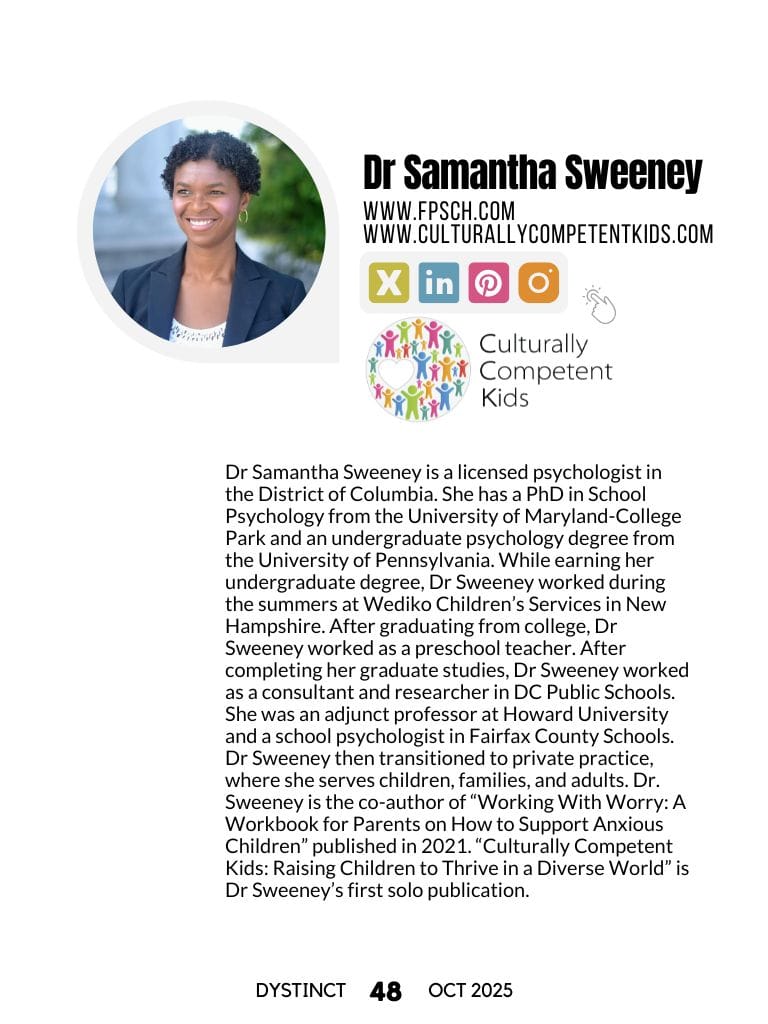
Dr Samantha Sweeney
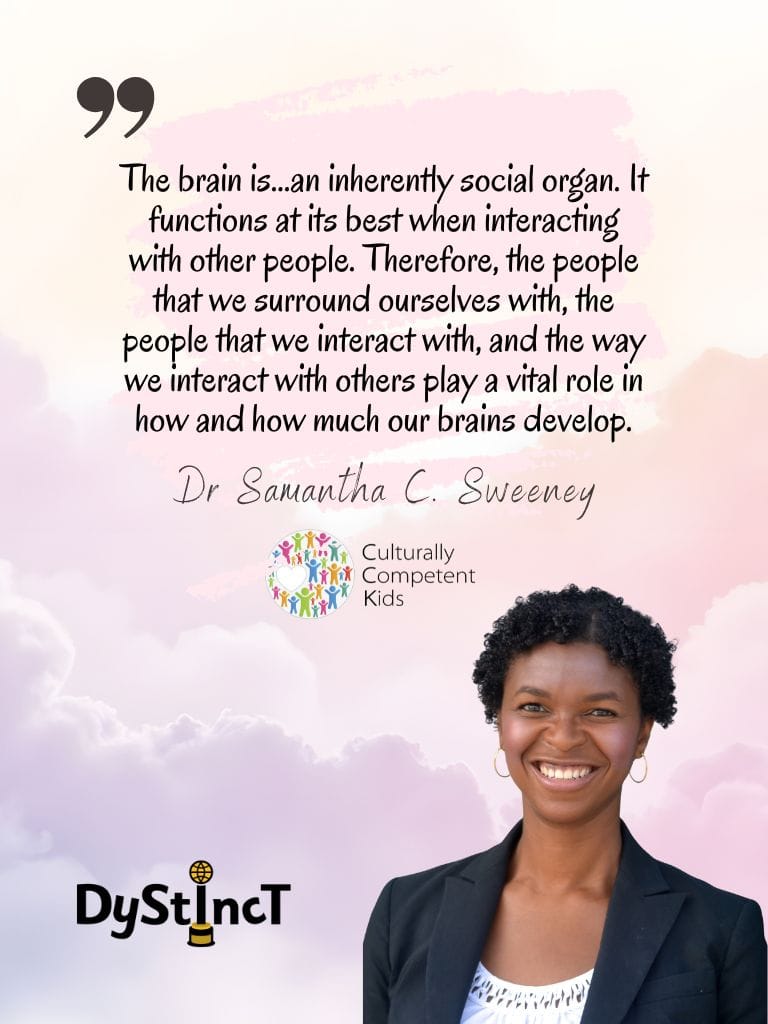
Dr Samantha Sweeney is a licensed psychologist in the District of Columbia. She has a PhD in School Psychology from the University of Maryland-College Park and an undergraduate psychology degree from the University of Pennsylvania. While earning her undergraduate degree, Dr Sweeney worked during the summers at Wediko Children’s Services in New Hampshire. After graduating from college, Dr Sweeney worked as a preschool teacher. After completing her graduate studies, Dr Sweeney worked as a consultant and researcher in DC Public Schools. She was an adjunct professor at Howard University and a school psychologist in Fairfax County Schools. Dr Sweeney then transitioned to private practice, where she serves children, families, and adults. Dr. Sweeney is the co-author of “Working With Worry: A Workbook for Parents on How to Support Anxious Children” published in 2021. “Culturally Competent Kids: Raising Children to Thrive in a Diverse World” is Dr Sweeney’s first solo publication.
BUY BOOK
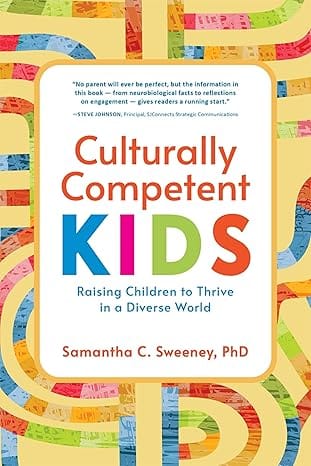
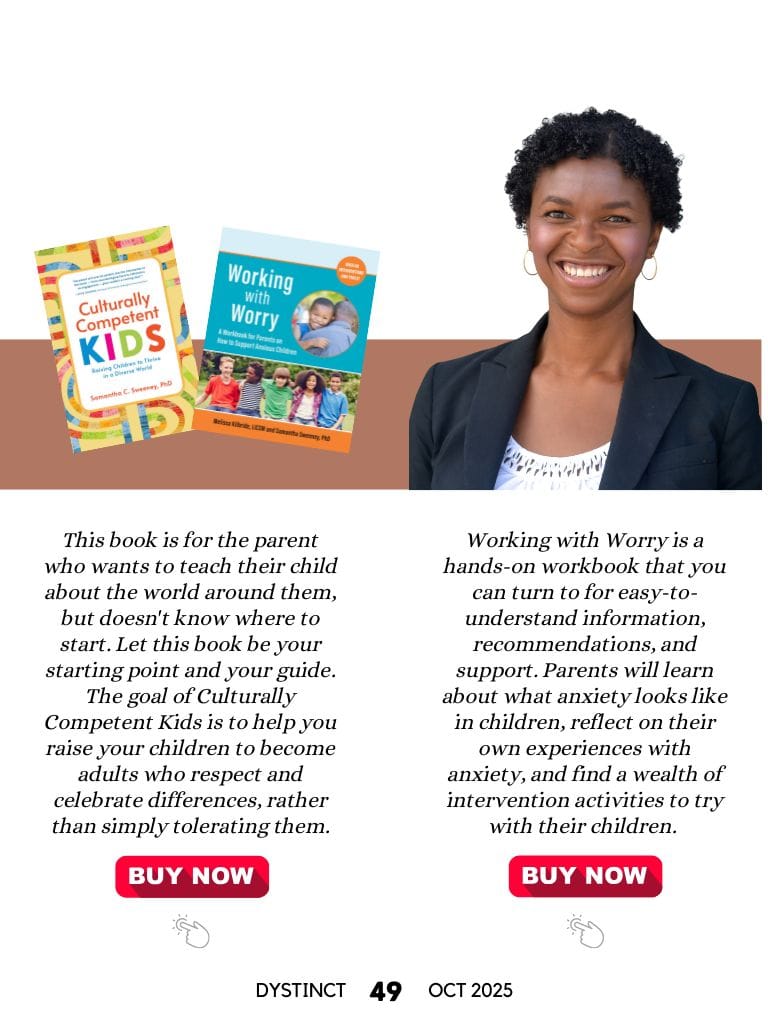
Culturally Competent Kids: Raising Children to Thrive in a Diverse World
A book for parents that provides a science-based framework for helping to raise CULTURALLY COMPETENT KIDS
This book is for the parent who knows that culture is important. It is for the parent who wants to teach their child about the world around them, but doesn't know where to start. Let this book be your starting point and your guide.The goal of Culturally Competent Kids is to help you raise your children to become adults who respect and celebrate differences, rather than simply tolerating them.
Research shows that while biases begin to develop at age 6, their origins begin much earlier. Unfortunately, diversity and culture are treated as though they are 'grownup' concepts, as if children don't recognize that diversity is all around them. Human beings naturally categorize and your kids will develop preferences, prejudices, and opinions about people who are different from them. Therefore, it is important for parents to take an active role in helping their children see, understand, and develop their understanding of people and cultures that are different.
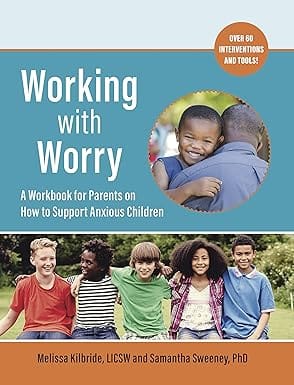
Working with Worry: A Workbook for Parents on How to Support Anxious Children
Working with Worry is designed to give parents practical tools they can use to support their children as they try to manage their anxiety in today's increasingly stressful world. It is a hands-on workbook that you can turn to for easy-to-understand information, recommendations, and support.Parents will learn about what anxiety looks like in children, reflect on their own experiences with anxiety, and find a wealth of intervention activities to try with their children. The activities use proven techniques including mindfulness, creativity, and self-regulation, and are organized by type of intervention, age, and areas of interest. This book is unlike any other workbook available on this subject because it offers both education and guidance around supporting children, while helping parents understand the need to be self-reflective about their own relationships with anxiety. Key features of this book:
- Over 60 interventions and activities organized by type, age, and areas of interest
- An entire chapter dedicated to helping parents understand their own anxiety, their ability to influence their children's experience of anxiety, and also how to "keep their stuff together"
- A chapter focused on how to combine the gains of parents and their children in a successful maintenance plan for the whole family
- Easy to understand language from authors who are not only experts offering professional guidance, but are also parents themselves who can relate to the challenges of raising children today
Extracts from Dystinct Magazine
Extracts from Dystinct Magazine