Issue 31: The Dystinct Journey of Kingston Clarke
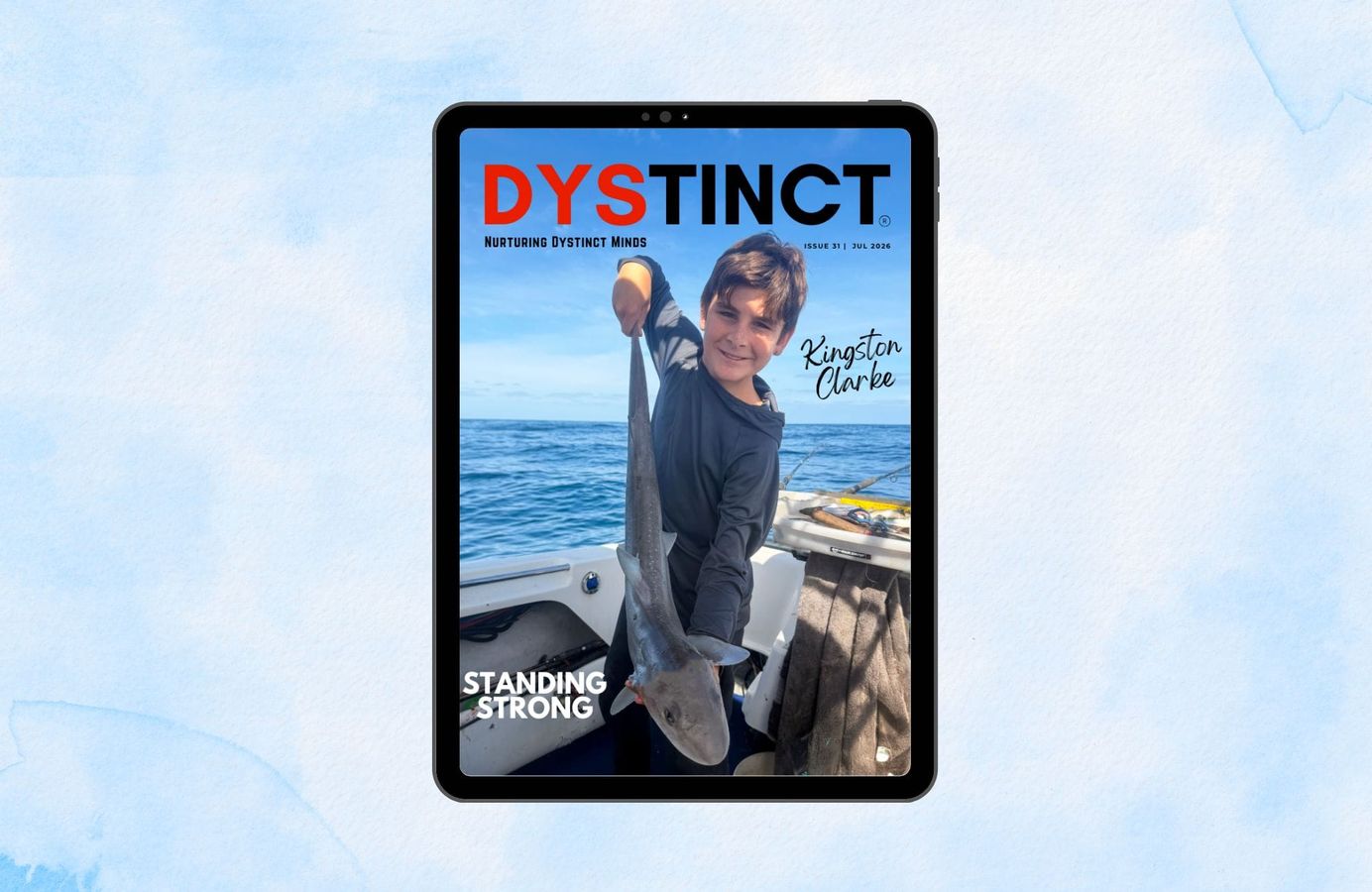
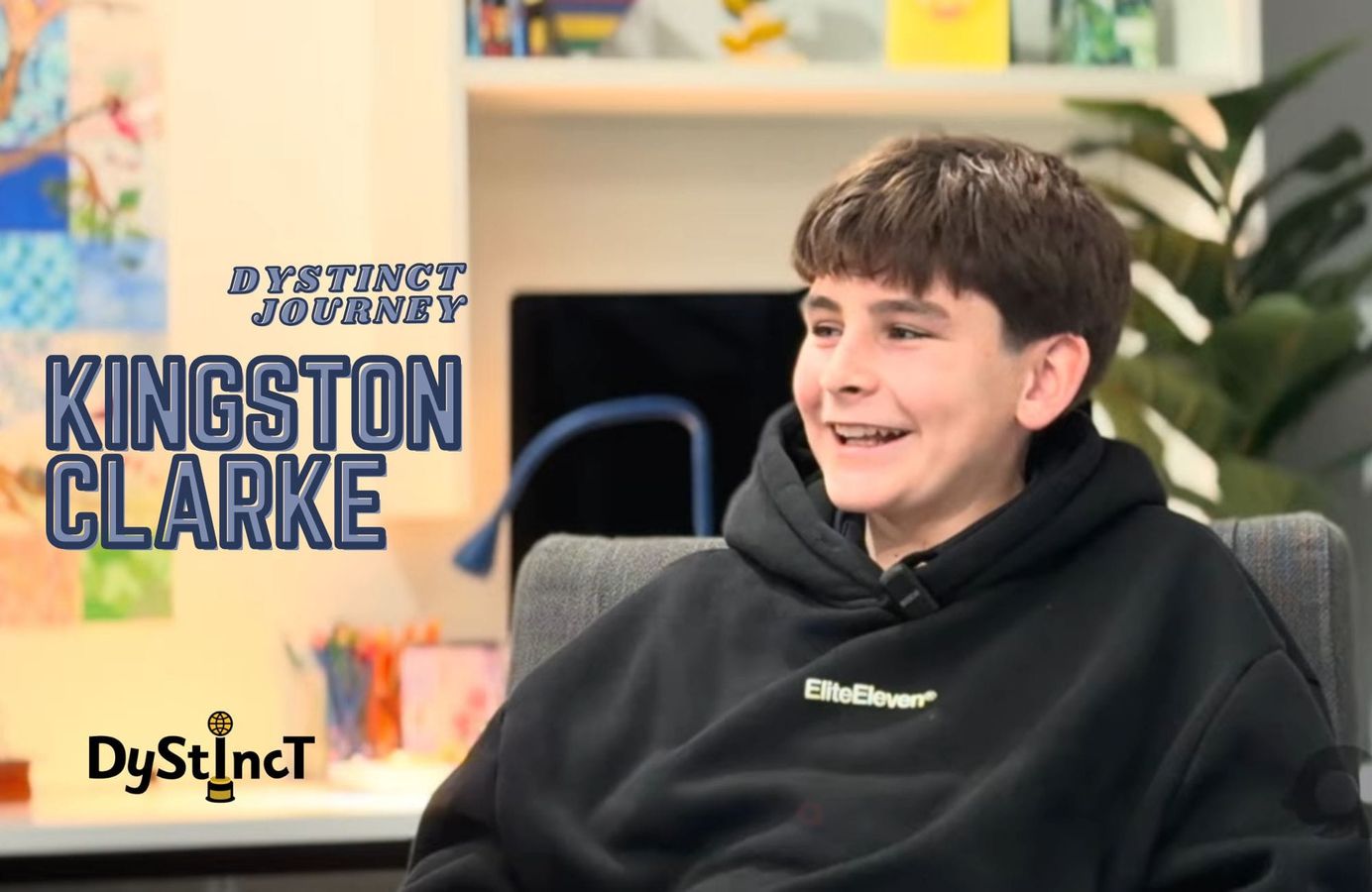
Kingston Clarke once believed he wasn't smart. He and his mum, Renee, share how the right support helped him rediscover his confidence and believe in himself.

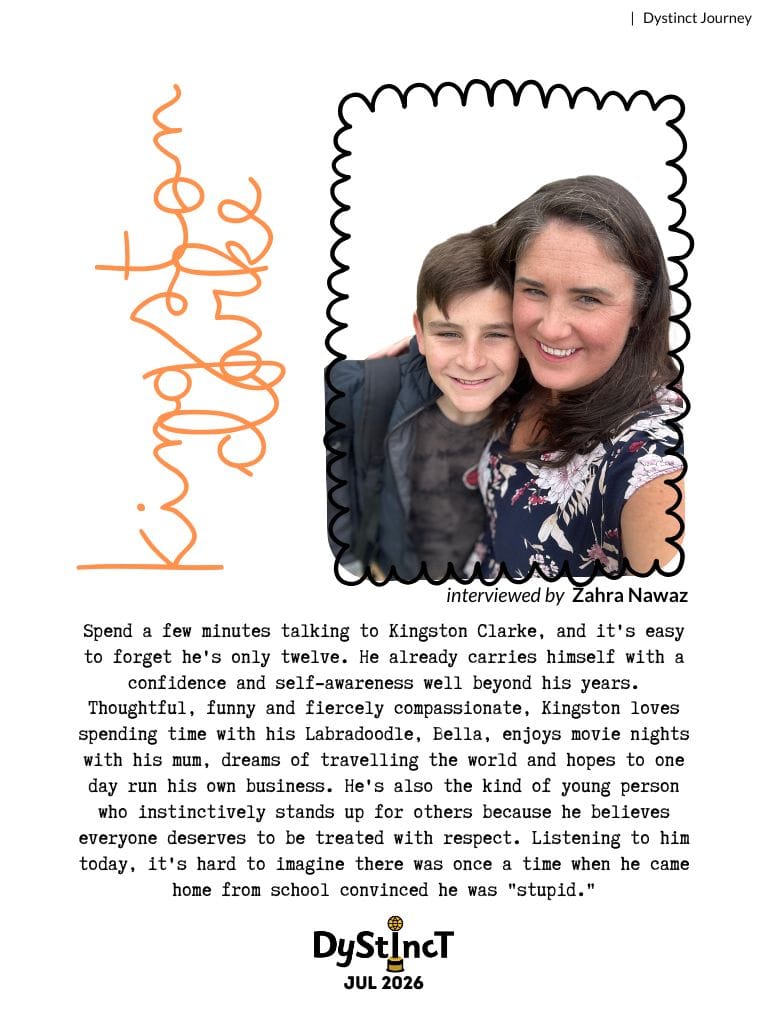
For Renee Clarke, Kingston's mum, those early years at school are impossible to forget. Night after night, she sat beside him reading his school readers and practising sight words, yet no matter how hard they both tried, the words refused to stick. "On one page it would be, 'the cat jumped,' and then the next page would have 'the dog sat,'" Renee recalls. "Poor Kingston could not even get the word 'the', and it was repeated on each page. Even though the page got turned over and the word 'the' was still there, he still couldn't recognise it. He just wasn't getting it in the way the school was telling me to teach him."
Kingston, meanwhile, knew he was falling behind. "The teachers think they disguise it by putting the readers in different coloured boxes," he told his mum, "But I know I'm at the bottom level, lower than anybody else." Eventually, the frustration became too much. "I'm so dumb," he decided. "Everyone else gets it. I can't read. I can't write. I can't spell."
But Renee could already see what the reading levels couldn't measure. "By no stretch of the imagination was he stupid at all," she says. "He was one of the brightest, intellectual young men that I possibly had come across. He understands concepts... he understands what the book is about by not even having to read all the words." The problem wasn't Kingston's ability to learn. "He wasn't learning the way that other children were."
He wasn't learning the way that other children were.
I knew I was worthy! If I had let those words ring true, where would I be? I would be nowhere.
Watching Kingston struggle brought back memories Renee had spent years trying to leave behind. She had dyslexia too. Growing up in the 1980s, there was little understanding of learning differences, and her parents had no way of knowing why school was such a battle. "I felt very stupid. I felt very dumb. I knew I was miles behind everybody. I couldn't spell, I couldn't read, I couldn't write." Although she was given extra help, it never addressed the way she actually learned. Instead, she remembers feeling "really dumb and really alone" and being teased by classmates who told her she was stupid and would "be nothing."
Young Renee believed her future had already been decided for her by people around her. "All I wanted to do was wear high heels and answer telephones because I thought that's all I would ever be capable of," she says. She applied for office jobs through employment agencies, where applicants were required to complete spelling and typing tests. After failing the spelling component, an agency consultant delivered words Renee has never forgotten. "You have no hope in hell of ever getting a job in an office. You cannot spell. You are stupid." Rather than accepting that verdict, Renee was determined to prove her wrong. She completed work experience placements at three different businesses, and each one offered her a job. From there, she quickly worked her way from a junior office role to becoming an executive assistant supporting a managing director. "I knew I was worthy," she says. "If I had let those words ring true, where would I be? I would be nowhere."
I learnt very early on that I did not want my children to feel the way that I felt.
The hurt Renee carried from her own school days shaped the kind of mother she would become. "I learnt very early on that I did not want my children to feel the way that I felt," she says. "I didn't want them to feel dumb. I didn't want them to be teased. I didn't want them to be left out." Instead, she always tried to remind Kingston and his siblings that school was only one part of who they were. "I really always tried to instil in them that they had other skills and other personality traits that were transferable, and school wasn't everything. I'm a successful human being despite school being really hard for me."
But as Kingston moved through school, Renee could see history repeating itself. Too often, she says, children with dyslexia are judged before they're understood. They're seen as lazy, disruptive, rude, or unwilling to work when, in reality, they're often doing everything they can to stop anyone from noticing they're struggling. "If we're being funny, people aren't seeing that we actually are struggling to read, write and spell." Humour, distraction, and becoming the class clown can become a shield. For Renee, recognising those behaviours wasn't difficult. She had lived them herself.
Knowing exactly what Kingston was going through, Renee refused to let him be defined by the labels she knew all too well. She questioned why a bright, thoughtful boy was being judged by what he couldn't yet do rather than what he could. "Schools don't have the ability to be flexible and teach children in other ways that make sense to different children." She believes that without changing the approach, children are left carrying the blame. "If you continually try to teach them in the same way, you're unintentionally making them feel more stupid because you're just saying the same words in the same way, and you're not actually trying to change the way that they're learning." But advocating for Kingston wasn't easy. Renee laughs now as she describes herself as "the squeaky wheel", but at the time she refused to stop asking questions until someone listened.
Eventually, Renee realised the answers weren't going to come from the school alone. If Kingston were going to receive the support he needed, she would have to find it herself. So, she immersed herself in research, searching for the best paediatrician, the best speech pathologist and the best literacy intervention she could find. "I wanted the best possible supports and resources for my children," she says. That search eventually led her to DyslexAbility.
Schools don't have the ability to be flexible and teach children in other ways that make sense to different children.
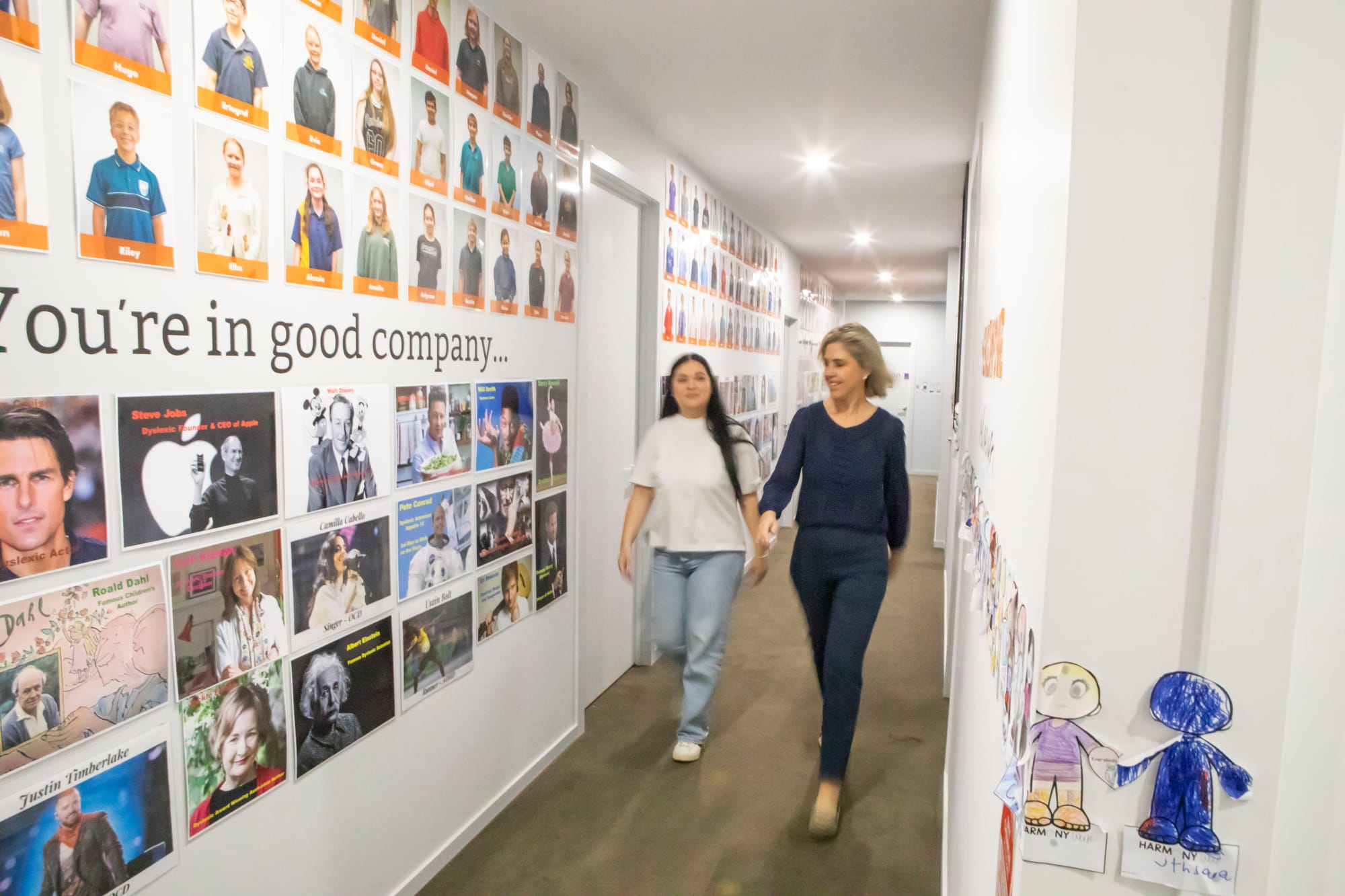
The search hadn't been straightforward. Renee had already tried other literacy centres, hoping each one would be the right fit for her family, but "they weren't nailing it for us," she says. Then she found DyslexAbility. One of the first things she noticed when they walked into the centre was a wall covered with photographs of well-known people with dyslexia who had gone on to succeed in various fields. After years of hearing words like 'stupid,' 'lazy,' 'dumb,' she was suddenly looking at people who had experienced many of the same struggles and gone on to achieve extraordinary things. For the first time, the point of view wasn't about limitations but possibility.
While Renee cautiously waited to see whether DyslexAbility would offer solutions after years of struggling with the traditional school system, Kingston had a much simpler opinion about his early days at the centre. "When I first started, I hated it. I hated that it was helping and I couldn't be mad at it," he laughs. The sessions were hard work, but as he began to see progress, his attitude changed. "Then I grew to love it as soon as I started understanding, learning, and realising that it helps."
I grew to love it as soon as I started understanding, learning, and realising that it helps.
DyslexAbility is just a safe space for you to be yourself.
Even now, Kingston can't put a finger on exactly why the approach worked for him. "I can't even, from a literacy perspective, describe it," he says. "But it just clicks, and school stuff doesn't." Kingston believes the environment was just as important as the teaching. Asked to describe DyslexAbility in three words, Kingston doesn't hesitate: "Extraordinary. Loving. Growth." He says it felt nothing like school. "It's much more inviting, much more welcoming, much more positive, bright and colourful," he says. "You get your own boxed-off quadrant. You get one-on-one help with your practitioner, and it's just a safe space for you to be yourself."
We broke the entire English language down into actual phonemes and blocks, and rules around the sounds.
For Kingston, the biggest change wasn't just learning to read. It was realising he could keep up with his peers. "After I got to maybe Year 5 or Year 6, I was watching the other kids excel, and I didn't understand it," he says. "I was behind. But then as I started to understand it, I could directly compare myself to it and see that I was at the same level, if not above them, which made me feel really amazing and empowered." He says understanding the rules behind English unlocked something that had once seemed impossible. "We broke the entire English language down," he says. "We break it apart into actual phonemes and blocks, and rules around the sounds."
Renee says the transformation reached far beyond literacy. "I cannot speak more highly of what DyslexAbility has done for Kingston's confidence," she says. "They reinstalled in him that he is capable, that he is competent, and that he is a remarkable human being." She says seeing others recognise those qualities changed the way Kingston saw himself. "His confidence blossomed. I could see him stand proud. I could see him say, 'Yeah, I am enough. I don't need to be anybody else. I can be me.'"
With secondary school approaching, DyslexAbility prepared a comprehensive transition report outlining the strategies that helped Kingston learn and the support he would need in the classroom. Renee hoped it would give his new teachers a clearer understanding of how he learned best and help make the move to high school a positive one.
We find ways around literally anything. It's extremely difficult, and we're not trying to be lazy.
Instead, Kingston soon found himself fighting to get the support he needed. When he told a staff member he was feeling overwhelmed by the workload, he says he was told how he should feel in front of the class and even had his diagnosis questioned. At the same time, his English and maths teachers had clearly taken the time to read and understand Kingston's transition report, and they became the teachers he connected with the most. "My maths and English teachers had read it top to bottom," he says. "That's who I click with the most and get the most work done."
Asked what he would like teachers to understand about students with dyslexia, Kingston's answer is simple. "It might not always show. Just take a look at the other steps we take. We find ways around literally anything. It's extremely difficult, and we're not trying to be lazy." Renee hopes more teachers recognise that learning differences are neurological and not a reflection of effort. She believes students should be assessed on their understanding of concepts rather than solely on their written output.
Learning differences are neurological and not a reflection of effort.
Kingston's message to other young people facing similar struggles is simple. He wants them to know that school does not define their intelligence or their future. "School isn't everything at all," he says. "Don't worry too much about the classwork. As long as you're trying, you're not dumb. That's just not how you learn whether they understand that or not."
He also encourages students who are just beginning literacy intervention to give themselves time. "You've got to trust the process," he says. "It definitely sucks at the start, but just know that it won't be like that if you continue down the help pathway." Today, the boy who once believed he wasn't smart dreams of travelling the world, becoming an entrepreneur and one day sharing his story on a podcast so others can learn from his experiences.
Asked what he is most proud of about himself, Kingston doesn't mention his reading or schoolwork. Instead, he talks about kindness. "I'll never, ever let someone else be upset or let people be rude to them," he says. "Everyone deserves help and a chance." Renee isn't surprised. She says Kingston has always been the kind of person who looks out for others, making sure no one is left out or treated unfairly.
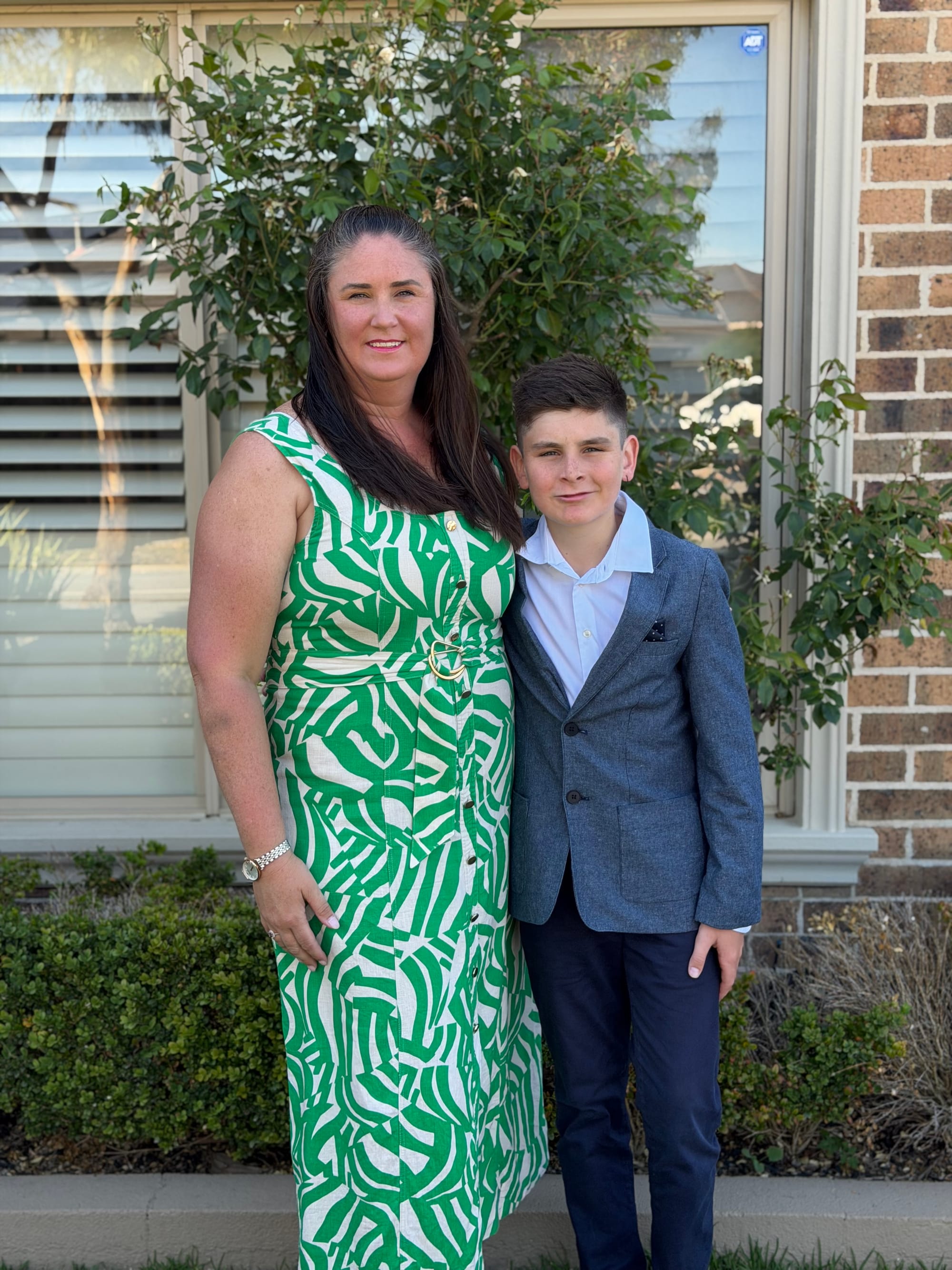
Looking back, Renee wishes she had been better prepared for the challenges school would bring, not just for Kingston but for herself. Along with watching him struggle, she found it difficult to cope with the judgment she felt from some teachers and other parents who didn't understand what her son was going through. These days, though, she doesn't spend much time worrying about Kingston's future. "I have full confidence that Kingston is going to change the world," she says. "Whatever he chooses to do, he'll be remarkable at it."
This post is for subscribers only
SubscribeAlready have an account? Log in