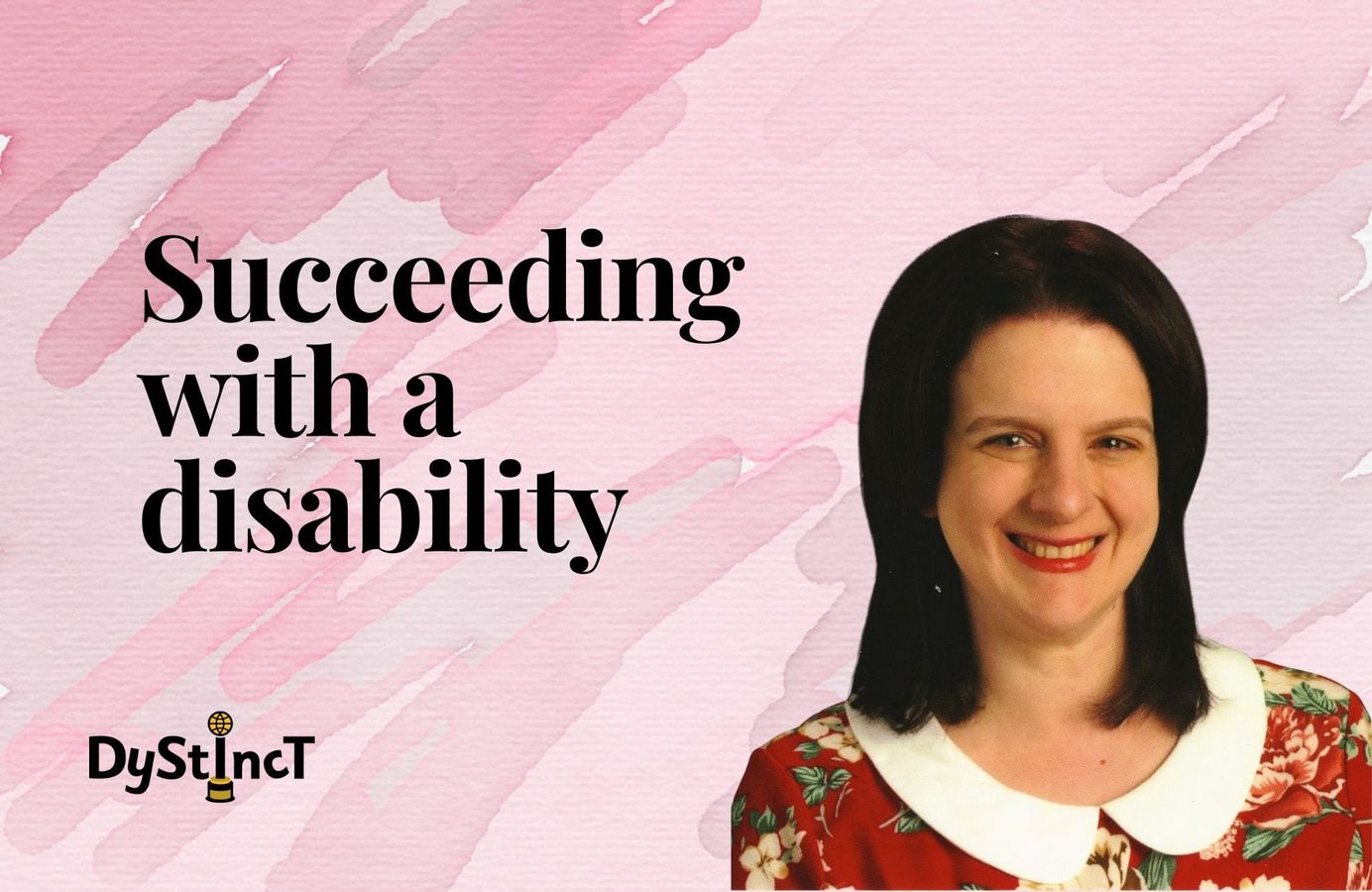
Issue 27: Succeeding with a disability | Michelle Steiner
Michelle recounts her lifelong journey with a learning disability, overcoming stigma, setbacks, and low expectations to achieve academic success, meaningful work, creative fulfilment, and personal growth, using her lived experience to empower others with disabilities to advocate for themselves.
Table of Contents
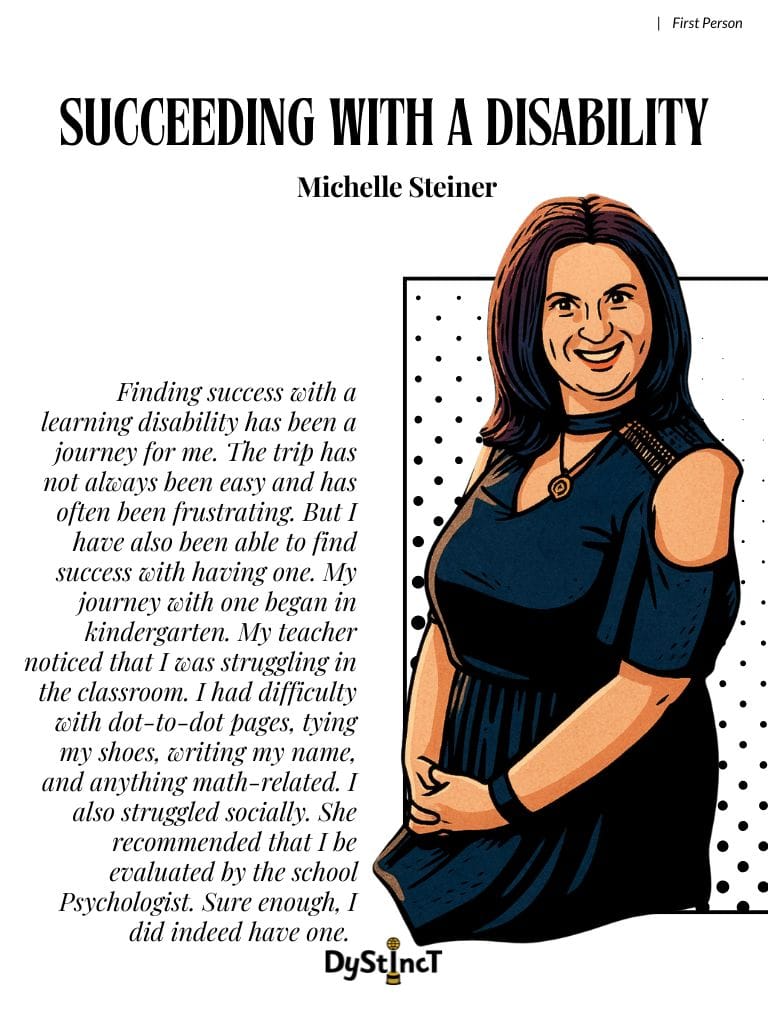
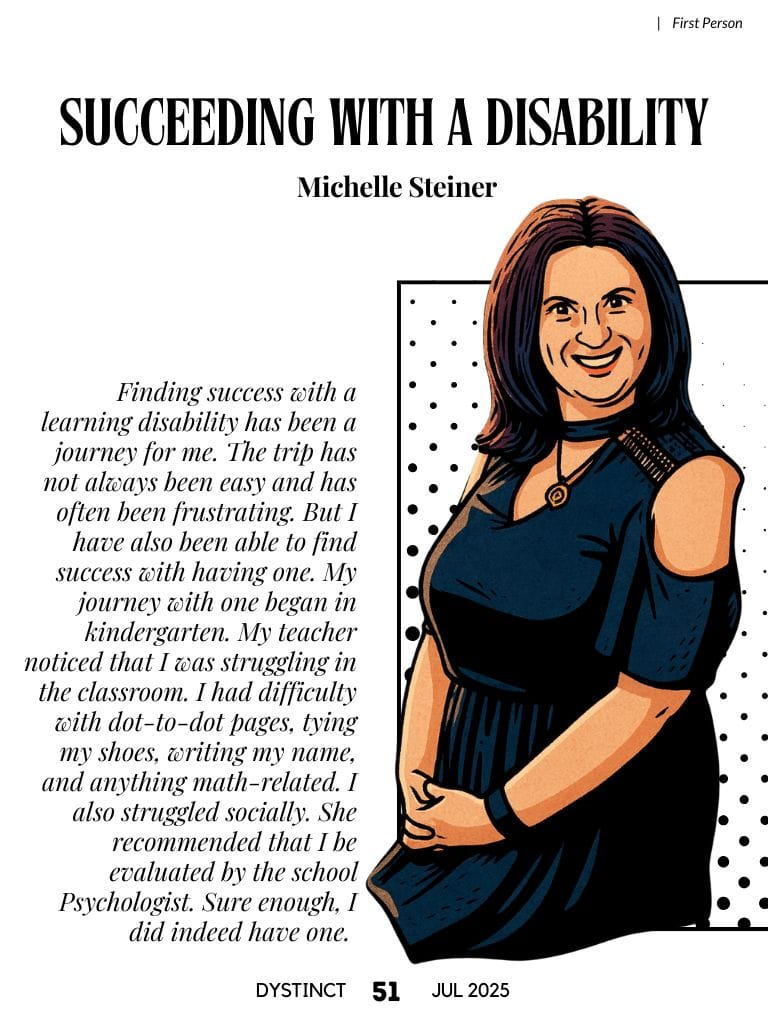
Finding success with a learning disability has been a journey for me. The trip has not always been easy and has often been frustrating. But I have also been able to find success with having one. My journey with one began in kindergarten. My teacher noticed that I was struggling in the classroom. I had difficulty with dot-to-dot pages, tying my shoes, writing my name, and anything math-related. I also struggled socially. She recommended that I be evaluated by the school Psychologist. Sure enough, I did indeed have one.
Words by Michelle Steiner
Words by Michelle Steiner
When I was diagnosed, it was more of a general diagnosis. Other than Dyslexia, specific learning disabilities such as Dyscalculia, Dysgraphia were not mentioned. My dad remembers the school telling him that I would never understand math beyond a basic level. By age 5, it was determined that I would not be a mathematician. My Elementary school years were the hardest for me.
I had to repeat the grade in another school in our district and began to receive specialty instruction. I spent my mornings in specialty instruction in all subject areas, including math, reading, and writing. The instruction was in a small group, focusing on what I needed to learn. My afternoon was spent in a Kindergarten class. I can remember feeling frustrated and in despair during those early years. I wanted to learn, but no matter how hard I tried, it did not seem to happen. I thought that life would always be hard and that having a disability would stand in my way of success.
Frustration and despair.
I was able to participate in regular education Science and Social Studies classes with support. I had extended test time, and the test was read aloud to me. Having extra time gave my brain more time to process information. The accommodation of hearing the test read aloud helped my mind to comprehend the information. I was in all regular education classes except for math and a resource room.
People also found out what I was good at and encouraged me. My teachers remarked that I read with expression. My dad found a story that I wrote about a dinosaur and told me that it was good. Hearing those words encouraged me, and I wrote more stories. Reading and writing became my world.
Socially, school was a struggle for me, too. I went to a very small conservative community. It was known for being close-knit. I did not fit in, and the bullying began very young. The small nature of the school made it impossible to blend in with the crowd. Everyone knew that I went to learning support for certain classes or to take a test. When I was in the classroom, it was clear that I struggled. I quickly got labeled as an outcast.
What helped me to find friends was to look for interest groups outside of school. In high school, I found an arts group for teenagers outside of my school district. I found other people my age who shared my interests. I also met others who did not go to my school and did not have my outcast reputation follow me.
Labeled as an outcast.
I also found a writing group of adults during these years. They got to see me grow as a writer and a person. Over 20 years later, we still meet once a month to discuss our writing and are in each other's lives.
Academically, school got easier for me. I was doing well in all of my classes, and the supports were working. I made the honor roll for 4 years and was honored at an academic banquet my senior year. I always had the fear of failing another grade or not being able to graduate.
I also worried about my future and whether I could be successful. I knew that I wanted to go to college, but I knew it would be a challenge, especially with math. I was not alone in my concerns. I had a learning support teacher who did not think I could go to college. She recommended a trade school while in high school. But nothing at school interested me. I also had a physiatrist who told me that I would most likely not go beyond community college. Despite all of the discouragement, I decided to go on to college. I found a community college that had an Early Childhood Education Program and disability support.
Made the honor roll for 4 years.
At college, I faced even more stigma from both faculty and students. Disability supports, such as extended test time, were regarded as cheating. When I asked for a calculator, a professor said that we use our minds in this class, not calculators. I also had an advisor who told me that I would have limited job choices when I graduated. I did not use the accommodations, and my grades dropped even further. I had a professor who suggested using them, and I was able to pass her class. I was able to graduate with an associate’s degree in early childhood education.
After graduation, I moved out on my own and worked temporary jobs in schools and childcare centers. I enjoyed my independence and my first apartment. I enjoyed living in a central location because I was not able to drive due to my visual perception. I always wanted more for myself, though.
Due to financial reasons, I had to move back in with my parents. During that time, my job was downsized, and I decided to go to a local university. I found a program that I loved, which had the least amount of math and science. I also found disability services, including extended test time, a note-taker, and tutoring. I made sure that I used these services and advocated for myself. I would introduce myself to a new professor and the support that I would need. Most were understanding and did all that they could to help me. Others did not quite understand, but I was able to handle it. Using the supports helped me to be successful. My grades improved, and I made the Dean's List for a semester. I was able to graduate with a bachelor's degree.
Graduated with a bachelor's degree.
After school, it took me a while to find a job that was the right fit for me. Many jobs claimed they were disability friendly, but they were not. I could not perform some of the job duties and was let go. I have been working for a school district as a Para Educator for 14 years. I find it rewarding to work with other students with disabilities and encourage them. I understand what many of them are going through. I hear them say that they hate their disability and do not feel smart. I get the opportunity to tell them that having one is not a bad thing and that they are intelligent. I also show them how to advocate for themselves.
My students will one day leave me, but for many of them, their disabilities will remain. It's important that they know how to advocate.
I was also able to get married to a wonderful guy. I knew that I wanted to get married, but I wondered if anyone would love me with one. My husband is supportive and accepts me for having one. We will celebrate ten years of marriage this June.
I also found a new interest in photography. I take pictures of flowers and other things in nature on my many walks. People tell me I bring out the details of the flower that others miss. Rather than being sad about having to walk, I get the chance to stop and smell the roses. If I were driving, I would miss so many details.
Celebrating ten years of marriage this June.
Another dream of mine was also fulfilled. I was able to become a published writer. I had my first article published in The Mighty about my struggle to open my door with limited hand dexterity. I got positive feedback, and it encouraged me to write more articles for them and other places. I also started a blog, Michelle's Mission, where I write about my life with a learning disability and feature my photography.
I also love to share my story as a way to encourage others. I speak at in-person events and on many podcasts. I hope that by telling my story, I can help another person.
Having a disability has not stopped me from having success. I was still able to go to school, graduate, have a job, get published, and find love. None of this would have been possible without the help of family, friends, and support services. What I once thought held me back has sprung me ahead. I can now help others, whether it is helping a struggling learner in the classroom or a person reading my blog. I know how difficult it can be to have one. If I did not experience it, I do not think I could feel empathy for them. I encourage others with disabilities to pursue their dreams and not to let their disability stand in their way.
By telling my story, I can help another person.
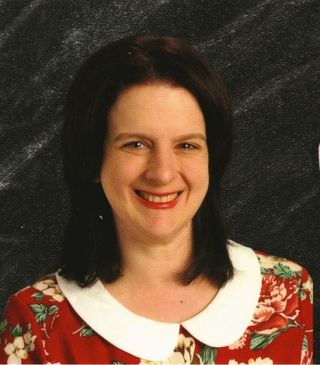
Michelle Steiner
Disability Writer & Paraeducator | michellesmission.com
Michelle Steiner
Extracts from Dystinct Magazine
Extracts from Dystinct Magazine