Issue 31: School and Beyond: Tales from a Churchill Fellowship | Dr Helen Ross
Drawing on insights from her Churchill Fellowship, Dr Helen Ross reflects on what schools, universities, workplaces and families can teach us about creating lasting change for neurodivergent young women.

Churchill Fellowship is a once-in-a-lifetime thing, so I think it should be something that really changes our perspective on things. I think it should rock you to your core and challenge what you think you hold dear, and how you want to ‘do’ life moving forward from it. Otherwise, what’s the point? You’re given time, space, and money to address those very things that make life harder for people, to find ways to understand and then knock down those barriers holding people back.
Having that opportunity is not a small thing. It brings with it a responsibility both to funders and stakeholders in whatever your project entails.
But it is also a responsibility to yourself and your own integrity: an opportunity to listen, understand and make waves does not come often in this life, so we need to embrace that and fill the boots that Churchill Fellows seem to inhabit in the years following their fellowship.
Is it easy?
No.
Is it scary?
Yes. It’s bloody terrifying.
Will I do it anyway?
Absolutely!
Me and My Churchill Philosophy
Me and My Churchill Philosophy
I’ve set the scene here for my way of doing things, whether it be life, work or anything else where I dip my toes in. I think it is important to address my underlying philosophy and modus operandi in this life: see something, learn about it and try to do something to make it better. I look at the journeys of other Churchill Fellows and am in awe of what they achieve, so I take inspiration from that while also noting things I could do too.
Some Initial Ruminations
Some Initial Ruminations
These ruminations are my initial findings and thoughts from the learning I have gained through this Churchill Fellowship. I am not including references or all the quotations and other data linked to my thoughts here, as I don’t have the word count. However, I will cover those in my forthcoming Churchill Foundation Report.
The Churchill fellowship foundation report
School & Beyond: Supporting Dyslexic & Neurodivergent Girls’ Next Moves [churchillfellowship.org]
Starting From the Bottom: A Lesson from Texas
Starting From the Bottom: A Lesson from Texas
I am a secondary-trained teacher, so although I have some understanding and experience of primary school and early years, it is not my area of expertise. In Texas, I was honoured to visit Acton Academy North and explore their Kindergarten provision, as well as their Elementary and Middle School Studios. The practice there is grounded in the work of Reggio Emilia, where young people are given choice and encouraged to explore their own interests through holistic provision. There were parallels with Montessori philosophy, and the provision was a joy to see in operation. The kindergarten children spoke confidently and demonstrated shared ownership of the tasks they were undertaking at any given time, explaining why they were doing something and how. The robust metacognition and joined-up thinking fostered in kindergarten meant that in the elementary years, young people could analyse their own learning, reflecting on their previous week to set targets based on where they were stronger and where they needed to revisit ideas. The Middle School programme helped learners consider their end goals for education and work backwards to discern what they needed to study in order to get there.
The ownership and capacity to advocate for themselves fostered within each Studio shone through and clearly built upon the previous one.
Self-advocacy does not happen in a day; it takes time and active planning.
Making Your Way to the Middle: Vocational Courses in Victoria
Making Your Way to the Middle: Vocational Courses in Victoria
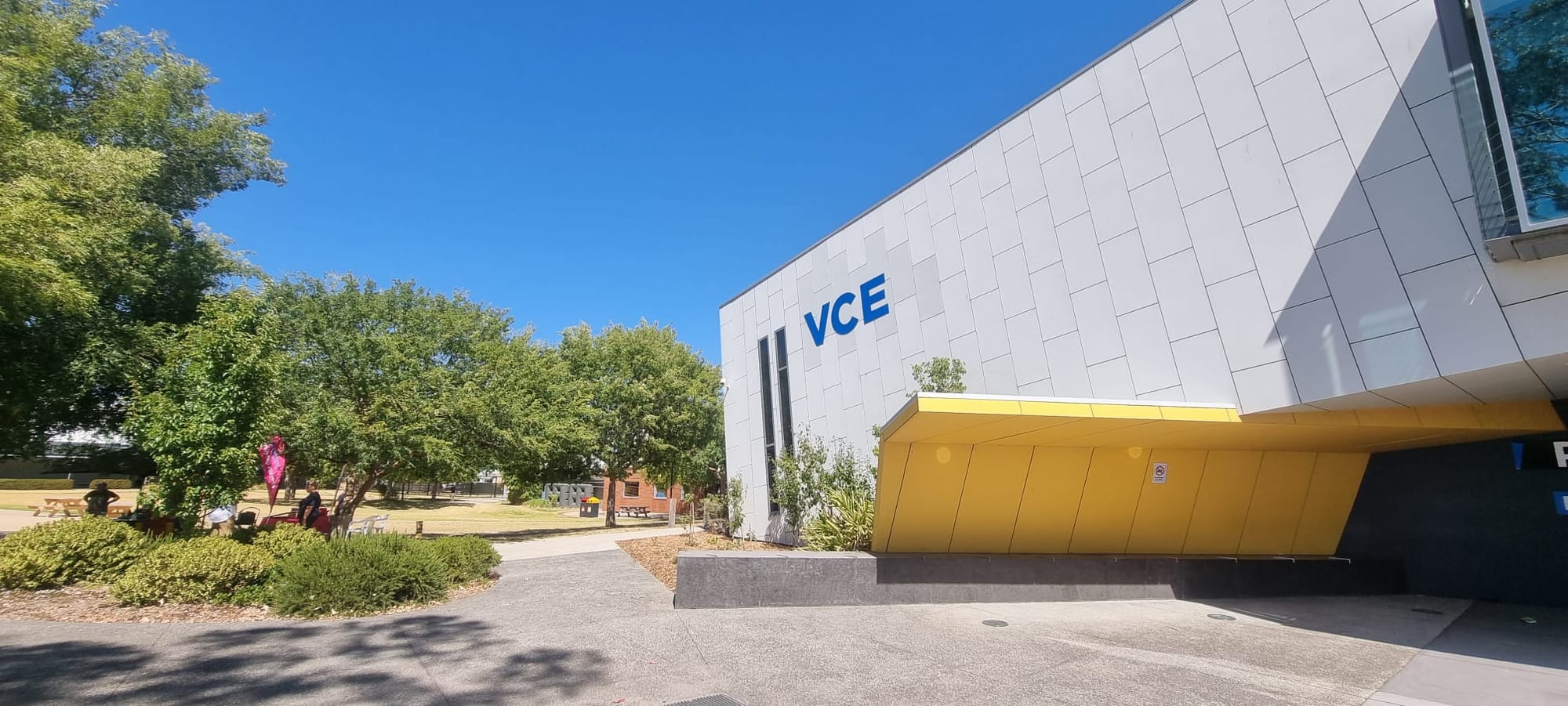
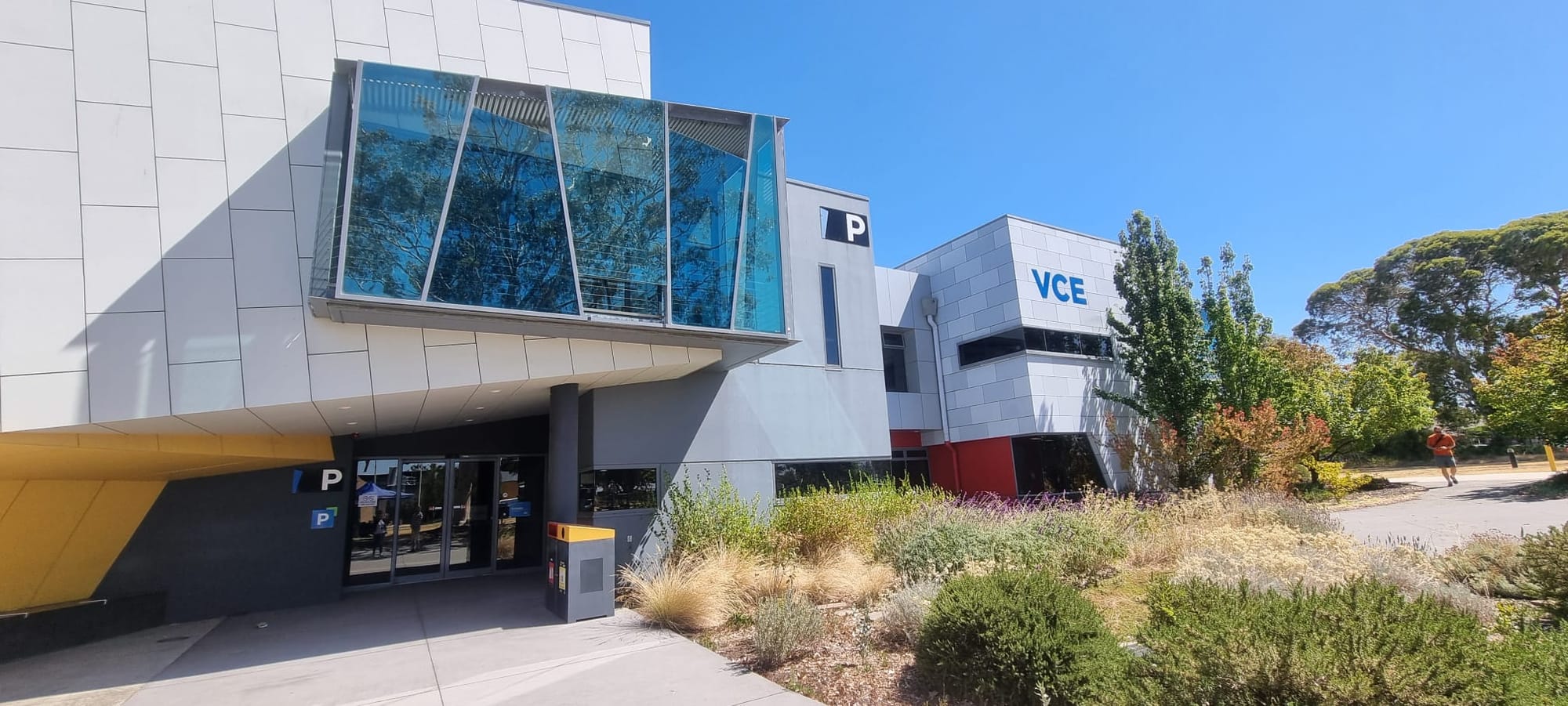
When I was in Victoria, the Technical and Further Education (TAFE) courses were an interesting contrast with the vocational courses that run in England. While maths and English were compulsory elements of the courses, there were no separate exams for them. Students had to tick off competencies in maths and English against their professional portfolio and skillset, rather than pass exams. The skills they learnt in maths and English were directly linked to their chosen pathway, whether that be carpentry, childcare or construction, and were subsequently practical and tangible for the students. Whereas in an English context, the disjoint between the subject matter in their courses and the practical skills young people learn, abstractifies maths and English. For neurodivergent young women, that abstractification removes motivation for study, making engagement with courses difficult.
The model in Australia seemed to value TAFE pathways in a way that vocational pathways are not valued in the English context. So, the young people on those pathways feel valued and are proud of their current choices and future careers.

The Power of a Woman: Mums in Tassie
The Power of a Woman: Mums in Tassie
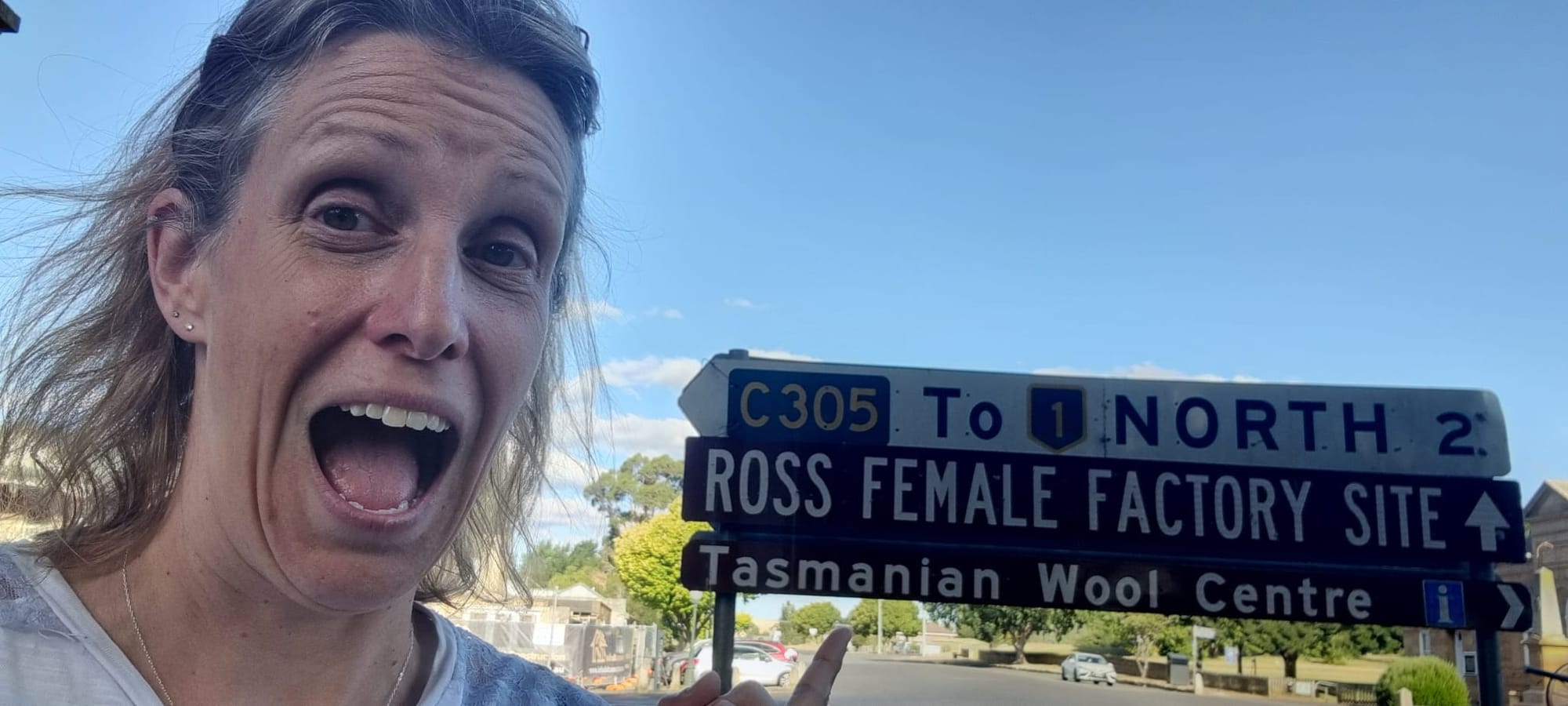
The power of the mums in Hobart was second to none. Having put out notes on local community groups on social media, asking for people willing to talk to me about their experiences and those of their children, it was invariably mums who contacted me.
They fought for their children and shared the challenges that girls experienced in school because masking their challenges meant that they were overlooked in assessment processes. Mums spent time with the schools, universities and even employers to support their daughters. Mums supported their daughters to develop the skills they need beyond school, so that they could advocate for themselves and be independent. Schools did not seem to do this level of work with children, and because girls were ‘missed,’ there was a particularly complex impact of their neurodiversity on them. While the work the mums did was laudable, it was felt almost universally that they should not have to. Changes were underway thanks to the work of organisations like Square Peg and Code Read, but they were slow because policy processes are slow.
But the work and power of the mums in Tassie must be acknowledged and celebrated!
University and Work: Views from the Other Side
University and Work: Views from the Other Side
In Tasmania, the University provides training for young people with dyslexia and spaces where they can share their experiences. The Vice-Chancellor is an advocate for dyslexia-friendly practice; indeed, the university trains Educational Psychologists! The needs of dyslexic students were considered, and lecturers are expected to make reasonable adjustments to support students. This is a good thing, and the fact that Professor Black publicly supports it can only be a positive thing.
However, while universities adjusting curriculum delivery for students with learning difficulties can and should be commonplace, having the equivalent of a ‘personalised learning plan’ was something I had not anticipated. Meeting with Ollie Shugg, who has pioneered neurodiversity networks, community spaces, awareness-raising training, practical support strategy-sharing, inter alia in their workplace, was inspirational. Alongside those general strategies for colleagues, Ollie had developed a comprehensive document which shared their profile as a worker: their strengths; their challenges; strategies they use; needs such as time, verbal input, email preferences; work patterns; wellbeing monitoring protocols; ‘whom to call if…’ list amongst other things. This was the first time I had seen something that should have been obvious! I do wonder if having something like this for all workers might be helpful so that people know how to best deal with other people.
For neurodivergent women, having a document like that to fall back on provides an external voice that can help them advocate for themselves, should that be useful to them. It helps ground expectations and reinforces the importance of expecting and embracing others’ different ‘ways of doing’. I believe something like this could lay the foundations for real change, wider inclusion and greater empowerment for those who might not otherwise challenge an unhelpful status quo.
So What Next?
So What Next?
I think there are so many things that could be suggested as outcomes from the work I have done as part of this Fellowship, but the work didn’t start with my Fellowship, and it won’t end with it. It’s part of something longer, bigger and hopefully more impactful. Indeed, I think that most of the Fellows I’ve engaged with have been working on things related to their Fellowship before applying; that’s how they knew there was a problem. Most people who have completed their Fellowships do seem to continue working in related areas and projects. I don’t think that I will be any different in that respect.
Following on from research projects and learning with practical recommendations is sometimes difficult because the systems and structures in place may seem monolithic. However, that is where I believe that thinking of things in a multi-layered, positional way is really helpful. I wrote a paper a long time ago, where I looked at how to model the social world dynamically, with all the degrees of freedom we have in a physical world, plus ‘time’, where interactions between bodies were considered. The ‘Circles of Interaction’ are useful when I think about how to operationalise what I’ve learnt and subsequently what I think needs to be done. Changes need to start at the individual level on the ground (in the ‘self circle’ via the ‘dialogue circle’), where people as independent agents in their respective settings can change how they undertake their role. From the ‘top’ within the ‘boundary circle’, institutional changes can be made to reflect the needs of people and groups, as part of challenging and removing structural barriers. The Boundary- and Self-Circles interact both independently of the Dialogue Circle and within it.
Change does not happen without individual engagement and buy-in, but equally for real, profound change, engagement with and challenging of wider social structures needs to happen.
Change does not happen without individual engagement and buy-in, but equally, for real, profound change, we must challenge wider social structures.
From my work in this Churchill Fellowship, there are so many changes I could propose, and I’m sure that as I work through writing my formal report and developing my professional work to incorporate my learnings within that, what I prioritise will change, or how I envisage changes in practice/policy will evolve. Indeed, that dynamic understanding of the social world is why I wrote that paper, developing the Circles of Interaction, and why I apply it to my work: systemic and practice changes do not happen in isolation. They are multi-layered, multi-faceted and grounded in robust evidence; bullet-pointed for now and to be expanded on in my forthcoming report and subsequent publications.
Changes I Can Make
Changes I Can Make
- Ask young people what works for them! So often we assume we know, but the Special Educational Needs Code of Practice expects us to seek young people’s views when developing support strategies for them. Sadly, this is often missed. Meaningfully listening to and acting on discussions with neurodivergent girls/women validates their experiences and builds their confidence to share those views, in a setting where so often, girls’ voices are not amplified.
- Build a language of empowerment: Edify girls in your talk and lead by example. Show them how to advocate and speak to authority professionally and constructively, whilst concurrently challenging that established authority and asserting their own needs. It may be something as relatively straightforward as asking someone to provide learning resources, or it may be when sharing your own challenges with them in class discussions.
This post is for subscribers only
SubscribeAlready have an account? Log in