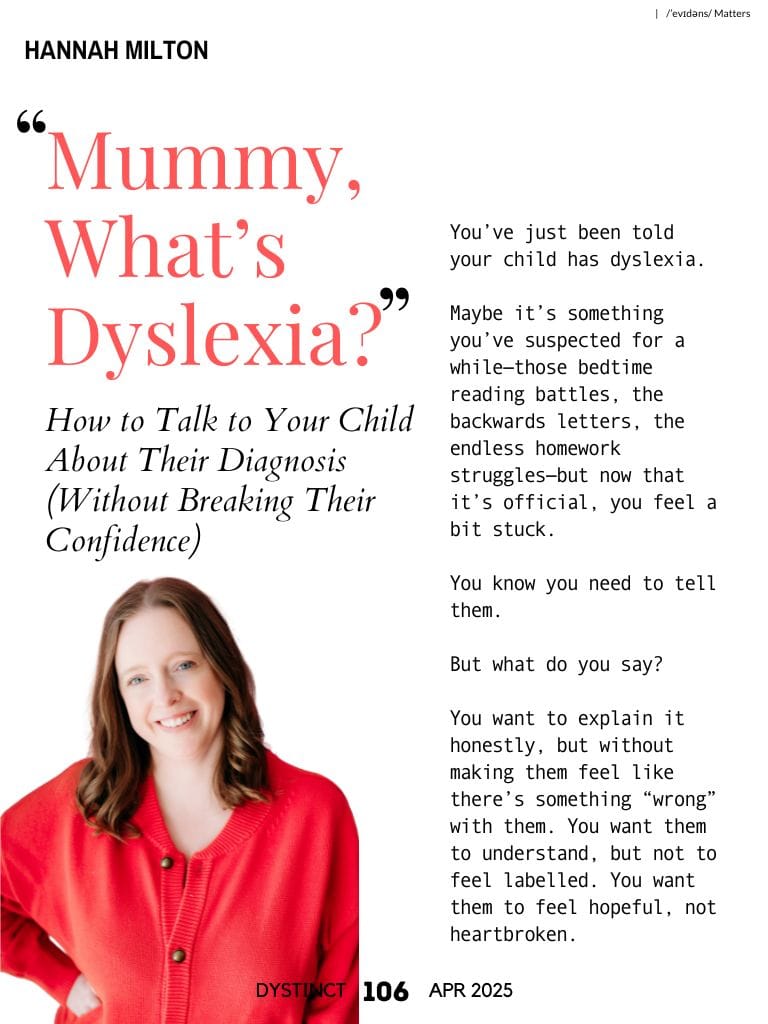
Issue 26: Mummy, What’s Dyslexia? How to Talk to Your Child About Their Diagnosis Without Breaking Their Confidence | Hannah Milton | Dyslexia LaunchPad
Hannah Milton, experienced teacher and dyslexia advocate, gently guides parents through talking to their child about a new dyslexia diagnosis, showing how honest, supportive conversations can build understanding and self-confidence from the very start.

Table of Contents
You’ve just been told your child has dyslexia.
Maybe it’s something you’ve suspected for a while—those bedtime reading battles, the backwards letters, the endless homework struggles—but now that it’s official, you feel a bit stuck.
You know you need to tell them.
But what do you say?
You want to explain it honestly, but without making them feel like there’s something “wrong” with them. You want them to understand, but not to feel labelled. You want them to feel hopeful, not heartbroken.
As a teacher, a dyslexia specialist, and someone who’s dyslexic myself, I know how heavy this moment can feel for parents. You want to get it right. You want to protect their confidence. You want them to see their diagnosis not as a door closing, but as one just beginning to open.
Let’s slow things down and imagine how that first conversation with your child might unfold.
The Moment Before the Conversation
The Moment Before the Conversation
You might be sitting in the kitchen, watching your child draw, and wondering how to even start. Your head is full of questions.
What if they don’t understand? What if they take it badly? What if they stop trying? What if I make it worse?
But here’s what I want you to know: this conversation doesn’t have to be perfect. It just has to be kind.
Children pick up on tone more than anything. If you’re calm, accepting, and hopeful, that’s the message they’ll take away. Dyslexia won’t frighten them—because you haven’t made it frightening.
What Your Child Might be Thinking
What Your Child Might be Thinking
Even without the label, many children already sense they’re different.
They might have noticed that reading takes them longer, that they get tired quicker, that their friends can spell tricky words they can’t. Some children quietly carry the belief that they’re “stupid,” “slow,” or “just not good at school.”
When you explain their diagnosis well, you offer them something powerful: an answer.
You hand them the language to describe what they’ve been experiencing—and permission to stop blaming themselves.
How the Conversation Could Sound
How the Conversation Could Sound
It doesn’t need to be a sit-down, heavy talk. It can happen naturally—on a walk, during a car ride, or cuddled up on the sofa.
And it can sound something like this:
“Have you ever noticed how sometimes reading or spelling feels harder for you than for other kids? That’s because your brain works in its own special way. It’s called dyslexia. It just means you learn a bit differently—like taking a different road to get to the same place. That road might have more twists and turns, but it’s a really clever road. And now we understand it, we can make that road smoother.”
You pause. Watch their face.
Maybe they’re quiet. Maybe they nod. Maybe they say, “Oh. That makes sense.”
And just like that, you’ve started something important.
What You've Actually Done in That Moment
What You've Actually Done in That Moment
- You’ve named their difference gently and honestly
- You’ve taken away the mystery and fear
- You’ve framed their brain as different, not less
- You’ve made them feel seen
That’s more than a diagnosis. That’s empowerment.
What Comes Next
What Comes Next
Once that first conversation is over, there’ll be more questions like:
- Will I always have dyslexia?
- Can I still go to university?
- Will I get in trouble if I don’t finish my work on time?
- Do I have to tell people?
You don’t need to have perfect answers. You just need to keep the door open.
You might say:
“Yep, you’ll always have dyslexia—but you’ll also always have support. There are loads of tools and tricks that help, and together, we’ll figure out what works best for you.“
Or
“You don’t have to tell anyone if you don’t want to. But if you ever do, you can say: ‘I have dyslexia, which means I learn in a different way. It might take me a bit longer, but I’m just as smart.’”
And most importantly:
“I’ll be here with you every step of the way.”
You're Not Just Explaining Dyslexia, You're Shaping Identity
You're Not Just Explaining Dyslexia, You're Shaping Identity
This is more than a conversation about learning. It’s a conversation about who your child believes they are.
When you choose to frame dyslexia as a different way of thinking—one that comes with strengths, challenges, and possibilities—you help your child see themselves as capable, creative, and worthy. You protect their confidence. You build resilience.
And the really beautiful part?
You don’t have to do this perfectly. You just have to do it with love.
If You Take One Thing Away from This...
If You Take One Thing Away from This...
Let it be this: your child doesn’t need you to be an expert. They just need you to be their anchor.
They need to know that this diagnosis doesn’t change how you see them—that you still see all the brilliance, humour, kindness, imagination and potential that makes them who they are.
Because when you believe in them, they’ll start to believe in themselves.
And this is when confidence starts to grow.
Resources
Resources
- Thriving with Dyslexia - a 6-week parent course equipping parents with all the tools they need to help their child thrive. [learn.dyslexialaunchpad.com]
- Advocacy Guide - A Parent's Guide To Confidently Advocating for Dyslexia Support in Schools. [learn.dyslexialaunchpad.com]
- Embracing Diagnosis Guide: A Parent's Guide to Explaining Dyslexia. [learn.dyslexialaunchpad.com]
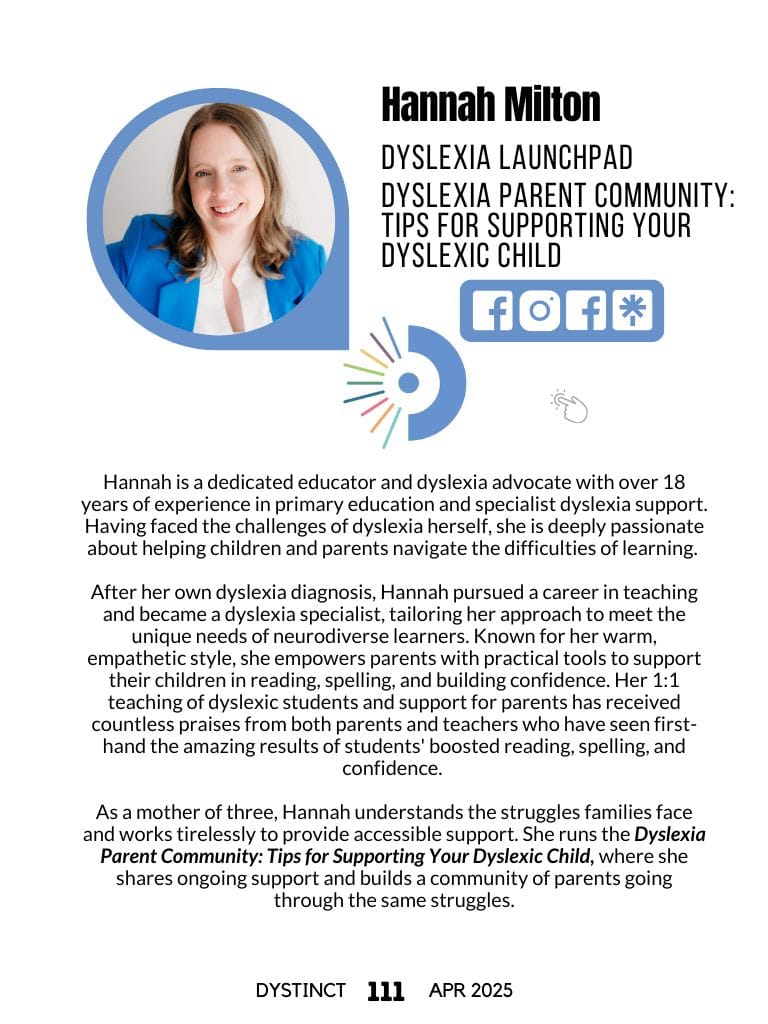
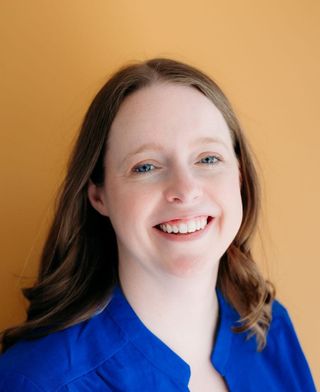
Hannah Milton
Dyslexia Specialist & Founder of Dyslexia LaunchPad | learn.dyslexialaunchpad.com | Facebook | Instagram | Linktr
Hannah Milton
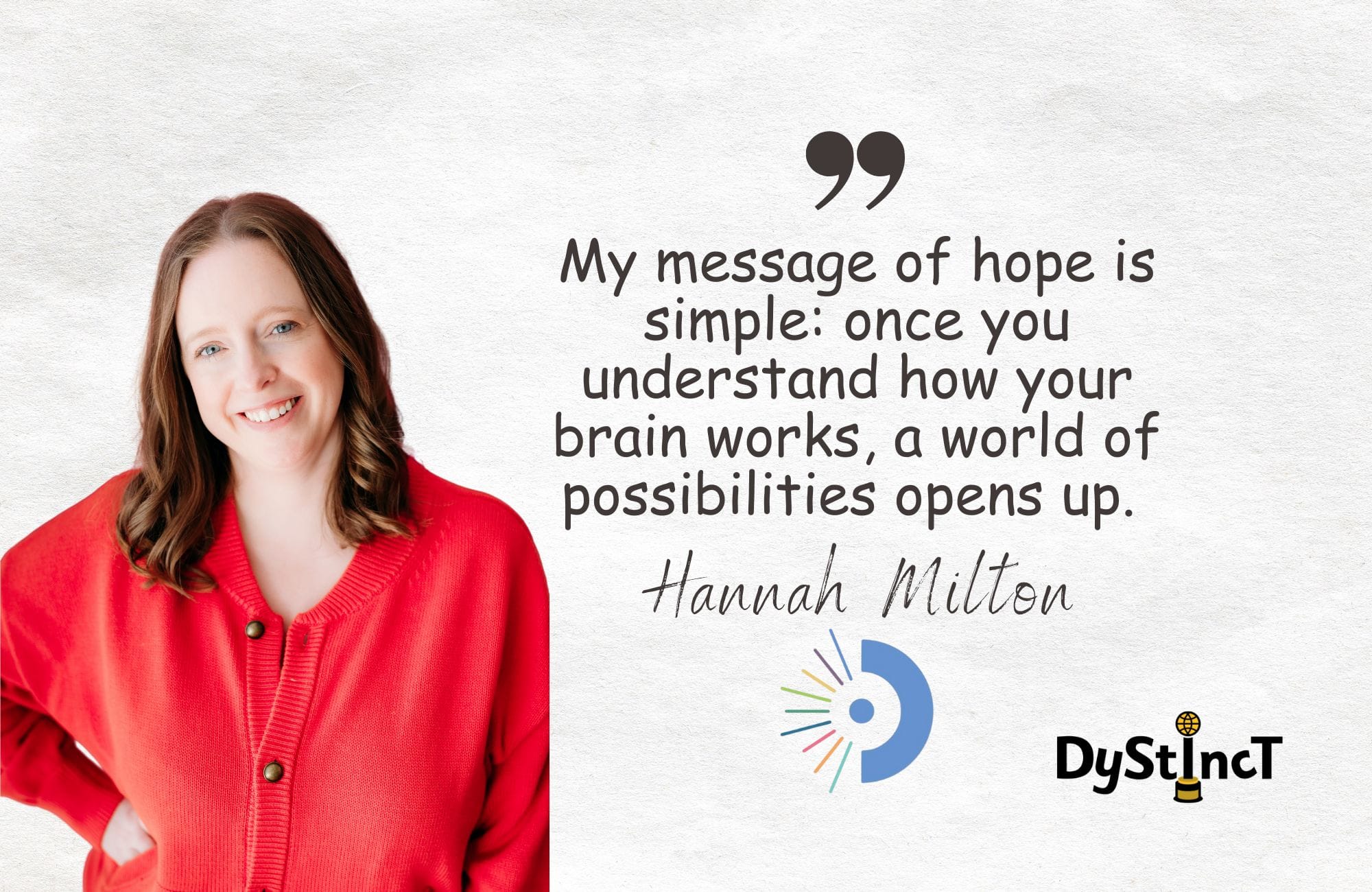
Hannah is a dedicated educator and dyslexia advocate with over 18 years of experience in primary education and specialist dyslexia support. Having faced the challenges of dyslexia herself, she is deeply passionate about helping children and parents navigate the difficulties of learning.
After her own dyslexia diagnosis, Hannah pursued a career in teaching and became a dyslexia specialist, tailoring her approach to meet the unique needs of neurodiverse learners. Known for her warm, empathetic style, she empowers parents with practical tools to support their children in reading, spelling, and building confidence. Her 1:1 teaching of dyslexic students and support for parents has received countless praises from both parents and teachers who have seen first-hand the amazing results of students' boosted reading, spelling, and confidence.
As a mother of three, Hannah understands the struggles families face and works tirelessly to provide accessible support. She runs the Dyslexia Parent Community: Tips for Supporting Your Dyslexic Child, where she shares ongoing support and builds a community of parents going through the same struggles.
Extracts from Dystinct Magazine
Extracts from Dystinct Magazine