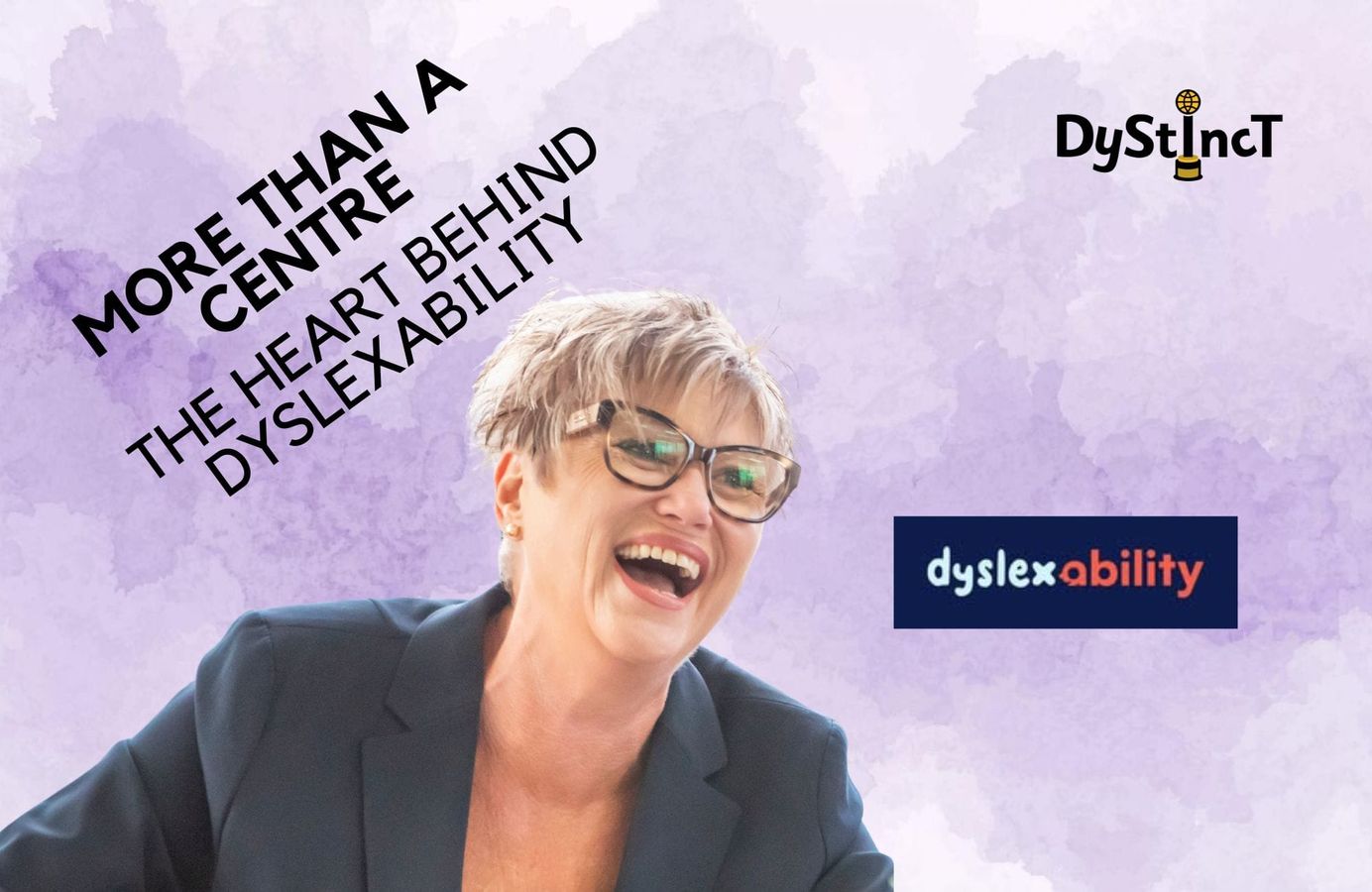
Issue 31: More Than a Centre: The Heart Behind DyslexAbility | Sue Miller
Discover the inspiring journey behind DyslexAbility as founder Sue Miller shares how personal experience, professional expertise, and a passion for helping children shaped one of Australia's leading literacy centres.

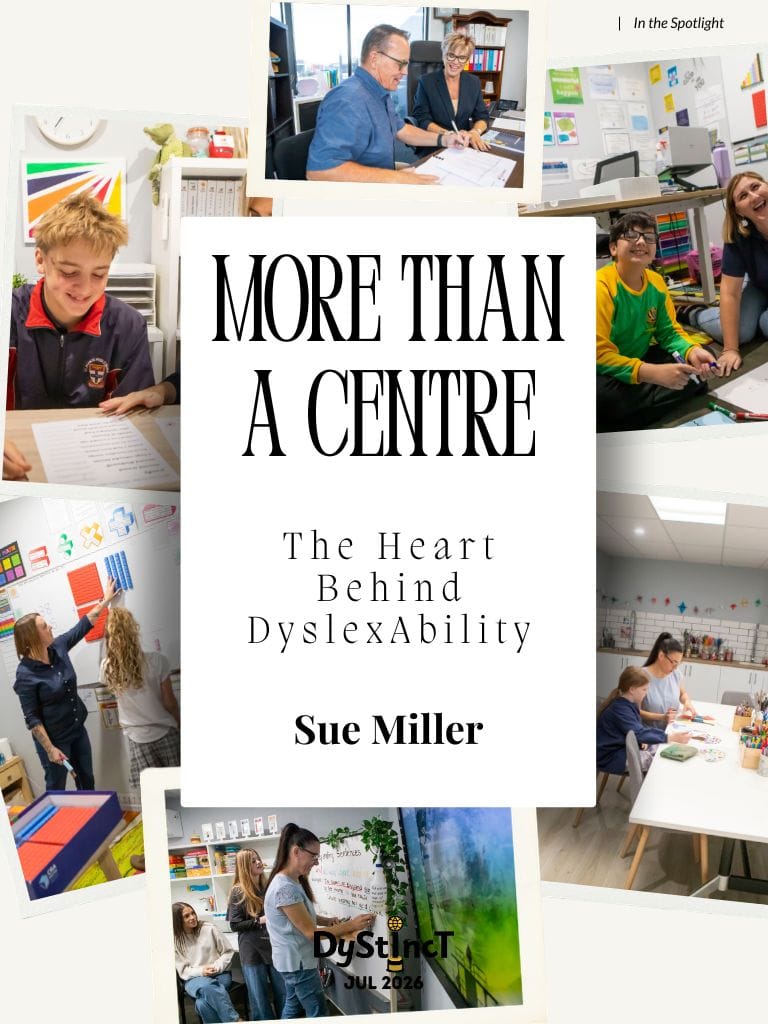
Join Kingston Clarke as he chats with Sue Miller about the story behind DyslexAbility, what inspires her, and why helping children discover their strengths means so much to her.
There are moments in life that quietly change your direction, and then there are moments that redefine it entirely. For me, that moment came when my son was diagnosed with dyslexia. At the time, I had spent decades in education. I had taught across Australia, England, and the United States, and had led schools as a principal. I understood curriculum, pedagogy, and student learning. And yet, when it came to supporting my own child, I felt something I had never experienced before in my professional life, completely unprepared. That moment didn’t just shape me as a parent; it reshaped me as an educator.
A Purpose Born from Experience
A Purpose Born from Experience
Behind those words was a child who was trying in ways that often went unseen, and far harder than most people realised.
Before there was DyslexAbility, there was a little boy sitting in classrooms being told to “try harder,” to “focus,” and to “stop fidgeting.” Like so many children, his struggle wasn’t immediately understood. What I came to recognise both as his mother and as an educator was that behind those words was a child who was trying in ways that often went unseen, and far harder than most people realised. Later, he would describe those years not as a time of learning, but as a time marked by confusion, frustration, and a growing belief that no matter how much effort he gave, it never seemed to be enough.
He began to internalise the idea that something was wrong with him, rather than understanding that he learned differently. That is the part that stayed with me, because no child should carry that belief.
From Frustration to Clarity
From Frustration to Clarity
Receiving a diagnosis brought answers, but it didn’t immediately bring relief. For many children, including my son, a label can feel heavy before it feels helpful. There is often a quiet tension between finally being understood and feeling set apart from others. I witnessed firsthand the impact that misunderstanding can have not just on academic progress but on confidence, identity, and emotional well-being. The effort, the exhaustion, and the quiet moments of frustration that often happened behind closed doors were just as significant as what was visible in the classroom.
I knew that if this was our experience, it would be the experience of many other families too. That realisation led me to begin searching for something better.
A label can feel heavy before it feels helpful.
A Different Way Forward
A Different Way Forward
Part of that shift, for our family, came from a very different educational experience. At the time, unlike Australia, the United States offered dedicated schools specifically designed for dyslexic learners; environments that understood the importance of explicit, structured, and hands-on approaches to learning. These schools recognised that many dyslexic learners are not struggling because they lack ability, but because they require teaching that aligns with how their brains process information.
Tom, my husband, and I made a very deliberate decision that Mitchell would complete his education in the United States, where he had already begun to thrive within an evidence-based school environment. He attended Assets School in Hawaii, an environment that not only supported him in his areas of difficulty but also actively nurtured his strengths. It was there that we saw a meaningful shift. Learning began to make sense, confidence started to rebuild, and his sense of self gradually changed.
My decision to return to Melbourne after 25 years abroad was not driven by career opportunity; it was driven by family. However, I returned with something far more valuable than experience. I returned with clarity about what works, what is possible, and what was missing.
A Vision Taking Shape
A Vision Taking Shape
What truly shaped my vision for DyslexAbility was the success I witnessed within specialised neurodivergent school environments. Seeing what was possible when children were taught in ways that genuinely aligned with how they learn changed everything for me. These were not children who were failing or falling behind; they were children who had finally been understood and, as a result, were thriving.
Seeing what was possible when children were taught in ways that genuinely aligned with how they learn changed everything for me.
Even before stepping foot back on Melbourne soil, I knew there was nothing like this here, and I was determined to build it. Alongside this vision came a deep commitment to ensure that what I would eventually build was grounded in the strongest possible evidence base. During my time living in Hawaii, I travelled extensively across the United States and Canada, often at personal cost to train and become certified in leading approaches to dyslexia intervention, assessment, and screening. This included travel to Boston, San Francisco, Chicago, and Vancouver, where I worked alongside specialists and immersed myself in structured, evidence-backed methodologies.
These experiences were not simply professional development; they were part of a deliberate and determined effort to ensure that I could bring back the highest standard of support to children and families who needed it.
After returning to Australia, I made a conscious decision to deepen my knowledge further, undertaking a master’s degree in special education while carefully considering what the next step might look like. At the same time, I stepped back into the classroom because I felt it was important to see the current landscape firsthand.
I wanted to understand how literacy was being taught and how educators were being equipped to support struggling students. What I observed only reinforced what I already knew. There was a significant gap. With the training I had undertaken, the experience I had gained, and the lived understanding I carried as both an educator and a parent, I realised this was not something I could walk away from. I felt a strong sense of responsibility to act.
From Garage to Growth
From Garage to Growth
I started in the simplest way possible: at a table in my garage, working one-on-one with a single child using the materials and approaches I knew could make a difference. It was quiet, intentional work, grounded in everything I had learned and believed in. What followed was something I will never forget.
That child began to make real, measurable progress. It was not surface-level or short-lived; it was meaningful change. Confidence started to build, engagement increased, and learning began to make sense in a way it hadn’t before. Naturally, the word began to spread.
When I reflect back on that one student, I feel an immense sense of gratitude for where that moment has led. Over the past ten years, our team has had the privilege of supporting thousands of children and families across Melbourne, each with their own story, their own challenges, and their own version of progress.
While I am incredibly proud of what has been built within our centre, I have also become increasingly aware of the limitations that geography can place on access to this kind of support. That awareness has shaped the next chapter of DyslexAbility.
Sue’s Vision
Sue’s Vision
My vision is that no child should miss out on the right support simply because of where they live. We are making significant investments into our online model, ensuring that the same structured, evidence-based, and highly personalised approach can be delivered beyond the walls of our centre. The goal is simple: To ensure that any child, from any location, has the opportunity to learn in a way that works best for them.

Built with Nurturing Hands and a Clear Vision
Built with Nurturing Hands and a Clear Vision
What began in a garage has grown into something far greater, but growth was never the goal. The goal was always to create a space where children feel safe, understood, and capable. A space where they are supported with approaches that work, and where their effort is recognised and valued.
Over the course of this journey, I often reflect on the role I have played not just as an educator, but as someone steering something deeply personal. In many ways, I have felt like the captain of a ship, navigating unknown waters, guided by both experience and instinct. But I have never done this alone.
Alongside me has been my co-captain, Tom. Together, we have navigated both calm and stormy seas, making decisions that were not always easy, but always grounded in a shared vision. There have been challenges and moments of uncertainty, but we have remained steady in what we believed DyslexAbility needed to be.
We have been intentional in shaping an environment built on trust, grounded in care, and committed to fidelity in evidence-based practice. Every element of what we do is designed to be responsive and tailored, because no two learners are the same. At the centre of it all is the student.
A Vision That Still Drives Us Forward
A Vision That Still Drives Us Forward
My vision has always been simple, but unwavering: that no child feels defined by their learning challenges, that every learner is given the opportunity to succeed with the right support, and that families feel informed and empowered in their journey.
Dyslexia is not a reflection of intelligence. It is a difference in how the brain processes language, and with the right instruction, that difference can be supported.
A critical part of this journey is advocacy. For many parents, navigating the education system can feel overwhelming, particularly when their child is struggling, and answers are not always clear. I often encourage families to trust what they are seeing and feeling and to advocate confidently for their child’s needs by asking questions, seeking clarity, and understanding how literacy is being taught, how progress is being measured, and what supports are in place. It is important to ask what the goals are for your child, whether they are specific, measurable, achievable, and set within a clear timeframe, and how progress will be tracked over time.
Because I have walked in your shoes, I understand how overwhelming this can feel. I was trained, experienced, and deeply embedded in education, and even then, I had to learn what to look for, what to ask, and what effective support truly involved. It does not come naturally, and it is not something parents are expected to instinctively know. So how is a parent meant to navigate this without guidance? This is why asking questions matters, why seeking clarity matters, and why continuing to advocate for your child is so important. Advocacy is not about being difficult; it is about ensuring your child receives the support they need and deserve.
What DyslexAbility Means to Me
What DyslexAbility Means to Me
DyslexAbility is deeply personal. It represents the moment a child walks through our doors, often carrying far more than just learning challenges. Many arrive after years of frustration, and in some cases, experiences that have left them anxious, withdrawn, or unsure of themselves in a learning environment. Their families, too, often come to us after investing significant time, energy, and financial resources into approaches that promised quick results but did not deliver meaningful, lasting change.
By the time they reach us, there is often a sense of exhaustion for both the child and their parents. What we aim to do is gently change that experience. We create a space where children feel safe to try again, where learning is structured and supported, and where progress is built steadily and authentically. Over time, we begin to see a shift from hesitation to engagement, from frustration to understanding, and from self-doubt to growing confidence. It also reflects a deeper understanding that behind many behaviours is not defiance, but frustration, fatigue, or fear of failure. I have seen children arrive carrying the same weight my son once carried, and I have seen that belief change.
A Legacy of Possibility
A Legacy of Possibility
If there is one thing I hope DyslexAbility represents, it is that change is possible. Not overnight, and not without effort, but with the right approach, the right support, and the right belief, progress happens.
This post is for subscribers only
SubscribeAlready have an account? Log in