Issue 28: The many faces of ADHD | Simon da Roza
Simon da Roza reframes ADHD as a biopsychosocial difference existing at the intersection of neurology, cognition, and environment, challenging stereotypes and urging systemic change in schools, families, and workplaces so that strengths like curiosity, creativity, and rapid learning can thrive.

Table of Contents
Celebrating Neurodiversity
Celebrating Neurodiversity
Let's take another look at the faces of ADHD; perhaps there is something we haven't noticed before. In this exploration, we may discover the untapped potential and unique perspectives that neurodiversity, including ADHD, brings to our world.
ADHD deserves a fresh reconsideration, re-evaluation, and re-envisioning, and potentially, we will appreciate it in a new light from a new perspective.
I was that kid who talked too much and moved too much. I forgot things, was lost, daydreamed, and often found myself in trouble for reasons I couldn't quite explain. I could never borrow library books as I never remembered to return them. I learned early that I was too much for some people and not enough for others. I walked out of class one day without my school bag, so excited that I had been selected by my teacher to leave first; it had never happened to me before. I didn't turn around till I had left the school gates. This was my daily struggle, a battle against a world that didn't see me or understand me.
I was also the kid who turned pen lids into sleek starships and rubbers into orbiting satellites. My ruler became a colossal space station, drifting relentlessly through an imagined galaxy of endless possibilities, every ink well (yes, showing my vintage). While teachers blabbed about fractions and spelling rules, I was charting interstellar routes and building empires beyond Saturn's rings. In my mind, bored beyond description, I created narratives and legends that sprang into action. I was a commander, a hero on the edge of discovery, surrounded by infinite worlds waiting to be explored. That daydreaming wasn't a sign of laziness or defiance; it was how young Simon managed to cope with the situation without support and understanding. It was curiosity untethered by gravity, an imagination set free from the pull of ordinary expectations.
Stop fidgeting, stop interrupting, stop forgetting and pay attention. Be less. Be more. Try harder to be like everyone else.
Looking back, it's clear what was happening. I was wired to scan, to question, to move and to imagine beyond what was in front of me. Those traits, now linked to ADHD, were already shaping who I would become. Yet the message I received as a child was simple: stop fidgeting, stop interrupting, stop forgetting and pay attention. Be less. Be more. Try harder to be like everyone else.
Years later, I learned something life-changing. I was not broken. Yet it still needed daily convincing that my brain was not defective. It was responding to a world that did not know how to support me.
ADHD is described as a neurological condition in the current DSM-5. There is strong evidence of differences in dopamine pathways and executive functioning. That is true, but I don't think we really see the environmental and contextual nature of ADHD. It is only a partial recognition of the real image of ADHD. ADHD is biopsychosocial. It exists at the intersection of neurology, cognition and the environment.
Schools built for compliance rather than curiosity are a daily mismatch for fast, energetic, sensitive brains.
A sensitive nervous system exposed to chronic stress, unpredictable caregiving and relentless academic pressure will amplify ADHD traits. Screens that spike dopamine and leave it crashing make regulation harder. Family fragmentation and economic stress drain parents' ability to co‑regulate and create predictable routines. Schools built for compliance rather than curiosity are a daily mismatch for fast, energetic, sensitive brains.
We have spent too long asking what is wrong with a person rather than addressing what is happening around them. ADHD is not only about differences within the brain but also about the environment in which those brains live.
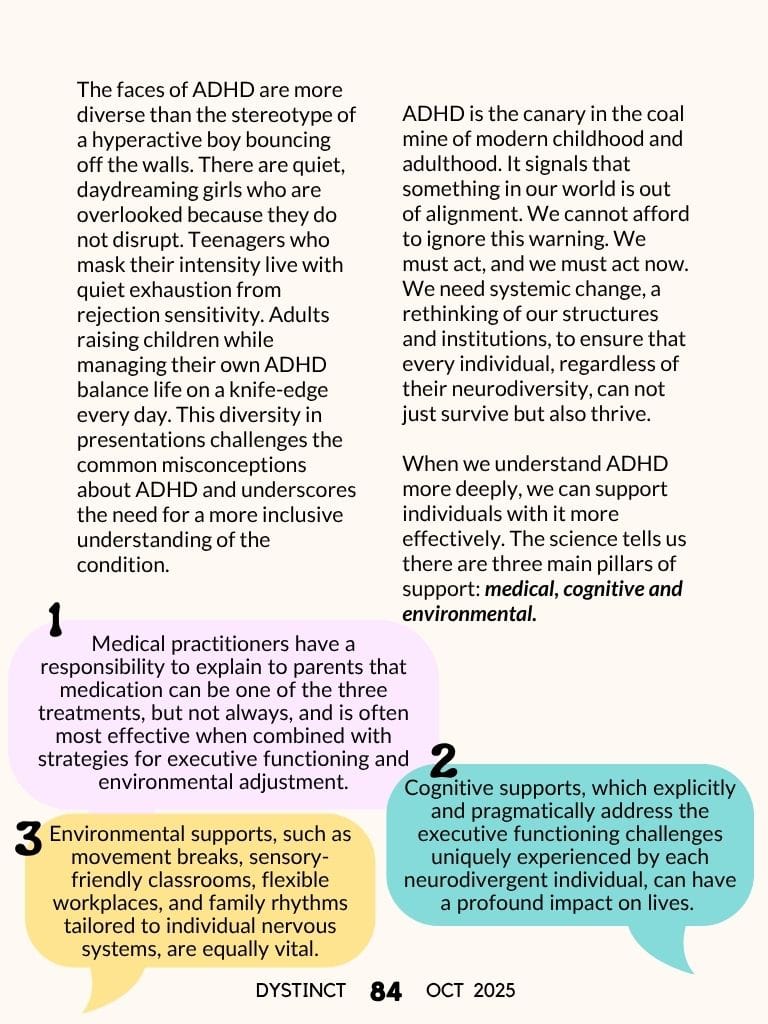
The faces of ADHD are more diverse than the stereotype of a hyperactive boy bouncing off the walls. There are quiet, daydreaming girls who are overlooked because they do not disrupt. Teenagers who mask their intensity live with quiet exhaustion from rejection sensitivity. Adults raising children while managing their own ADHD balance life on a knife-edge every day. This diversity in presentations challenges the common misconceptions about ADHD and underscores the need for a more inclusive understanding of the condition.
ADHD is the canary in the coal mine of modern childhood and adulthood. It signals that something in our world is out of alignment. We cannot afford to ignore this warning. We must act, and we must act now. We need systemic change, a rethinking of our structures and institutions, to ensure that every individual, regardless of their neurodiversity, can not just survive but also thrive.
When we understand ADHD more deeply, we can support individuals with it more effectively. The science tells us there are three main pillars of support: medical, cognitive and environmental.
- Medical practitioners have a responsibility to explain to parents that medication can be one of the three treatments, but not always, and is often most effective when combined with strategies for executive functioning and environmental adjustment.
- Cognitive supports, which explicitly and pragmatically address the executive functioning challenges uniquely experienced by each neurodivergent individual, can have a profound impact on lives.
- Environmental supports, such as movement breaks, sensory-friendly classrooms, flexible workplaces, and family rhythms tailored to individual nervous systems, are equally vital.
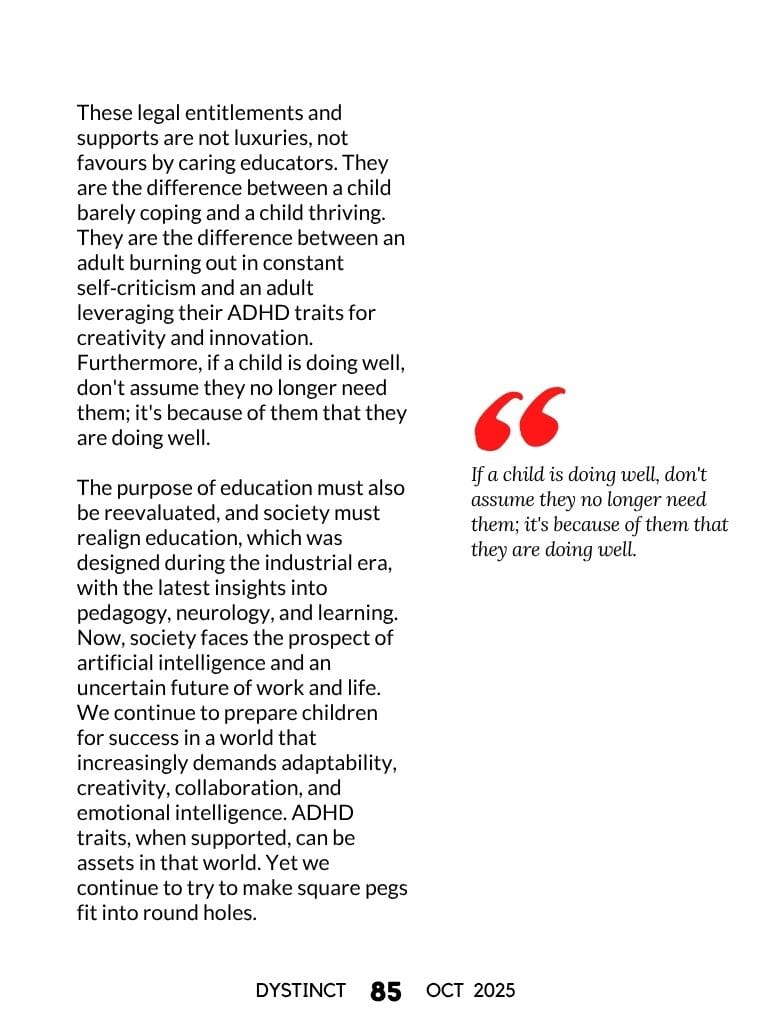
These legal entitlements and supports are not luxuries, not favours by caring educators. They are the difference between a child barely coping and a child thriving. They are the difference between an adult burning out in constant self‑criticism and an adult leveraging their ADHD traits for creativity and innovation. Furthermore, if a child is doing well, don't assume they no longer need them; it's because of them that they are doing well.
The purpose of education must also be reevaluated, and society must realign education, which was designed during the industrial era, with the latest insights into pedagogy, neurology, and learning. Now, society faces the prospect of artificial intelligence and an uncertain future of work and life. We continue to prepare children for success in a world that increasingly demands adaptability, creativity, collaboration, and emotional intelligence. ADHD traits, when supported, can be assets in that world. Yet we continue to try to make square pegs fit into round holes.
If a child is doing well, don't assume they no longer need them; it's because of them that they are doing well.
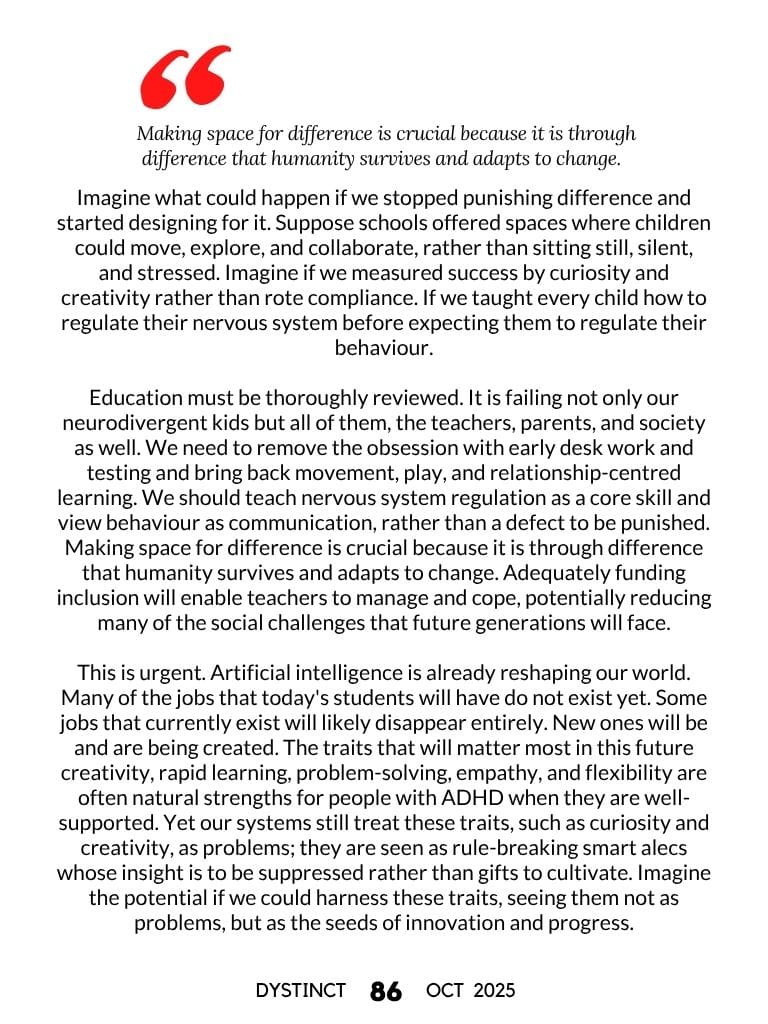
Making space for difference is crucial because it is through difference that humanity survives and adapts to change.
Imagine what could happen if we stopped punishing difference and started designing for it. Suppose schools offered spaces where children could move, explore, and collaborate, rather than sitting still, silent, and stressed. Imagine if we measured success by curiosity and creativity rather than rote compliance. If we taught every child how to regulate their nervous system before expecting them to regulate their behaviour.
Education must be thoroughly reviewed. It is failing not only our neurodivergent kids but all of them, the teachers, parents, and society as well. We need to remove the obsession with early desk work and testing and bring back movement, play, and relationship-centred learning. We should teach nervous system regulation as a core skill and view behaviour as communication, rather than a defect to be punished. Making space for difference is crucial because it is through difference that humanity survives and adapts to change. Adequately funding inclusion will enable teachers to manage and cope, potentially reducing many of the social challenges that future generations will face.
This is urgent. Artificial intelligence is already reshaping our world. Many of the jobs that today's students will have do not exist yet. Some jobs that currently exist will likely disappear entirely. New ones will be and are being created. The traits that will matter most in this future creativity, rapid learning, problem-solving, empathy, and flexibility are often natural strengths for people with ADHD when they are well-supported. Yet our systems still treat these traits, such as curiosity and creativity, as problems; they are seen as rule-breaking smart alecs whose insight is to be suppressed rather than gifts to cultivate. Imagine the potential if we could harness these traits, seeing them not as problems, but as the seeds of innovation and progress.
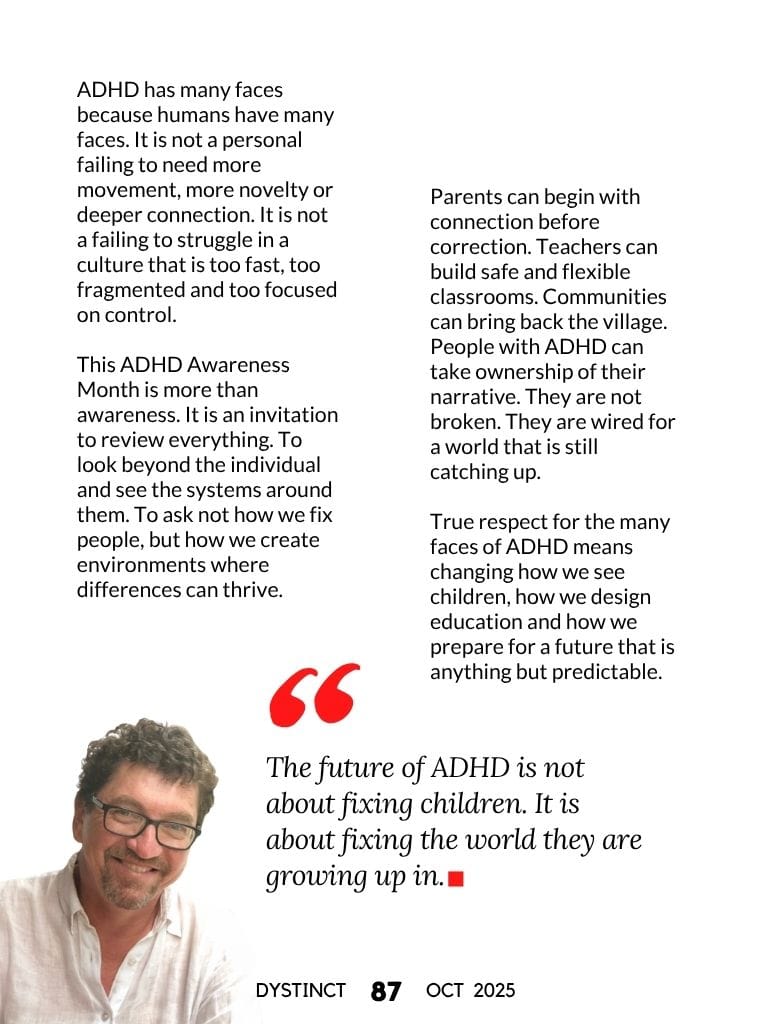
ADHD has many faces because humans have many faces. It is not a personal failing to need more movement, more novelty or deeper connection. It is not a failing to struggle in a culture that is too fast, too fragmented and too focused on control.
This ADHD Awareness Month is more than awareness. It is an invitation to review everything. To look beyond the individual and see the systems around them. To ask not how we fix people, but how we create environments where differences can thrive.
Parents can begin with connection before correction. Teachers can build safe and flexible classrooms. Communities can bring back the village. People with ADHD can take ownership of their narrative. They are not broken. They are wired for a world that is still catching up.
True respect for the many faces of ADHD means changing how we see children, how we design education and how we prepare for a future that is anything but predictable.
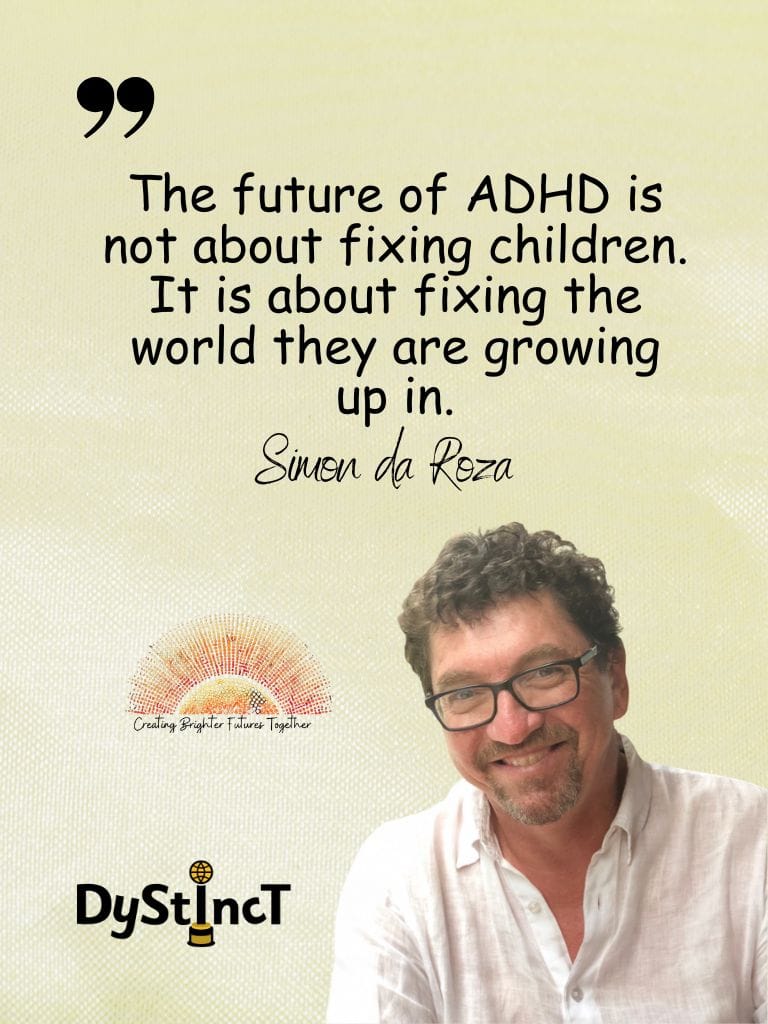
The future of ADHD is not about fixing children. It is about fixing the world they are growing up in.
Simon Da Roza
Neurodivergent Coach, Counsellor & Founder | Xceptionallearners.com | Facebook | Instagram | YouTube | LinkedIn | Pinterest
Simon Da Roza
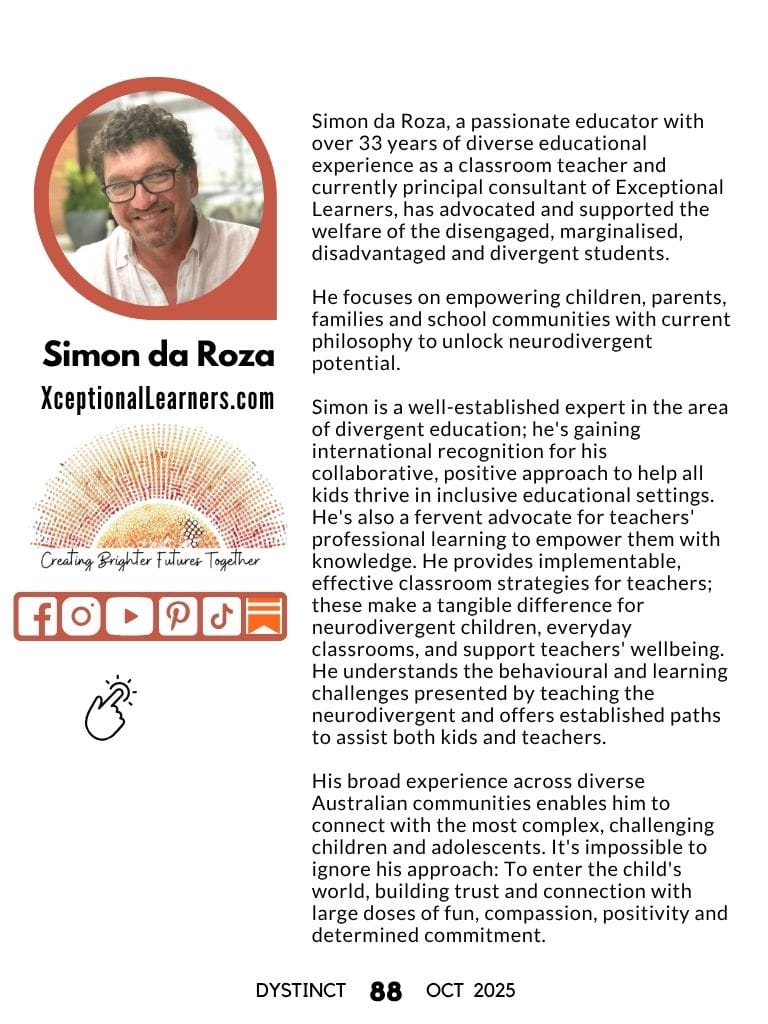
Simon da Roza, a passionate educator with over 33 years of diverse educational experience as a classroom teacher and currently principal consultant of Exceptional Learners, has advocated and supported the welfare of the disengaged, marginalised, disadvantaged and divergent students.
He focuses on empowering children, parents, families and school communities with current philosophy to unlock neurodivergent potential.
Simon is a well-established expert in the area of divergent education; he's gaining international recognition for his collaborative, positive approach to help all kids thrive in inclusive educational settings. He's also a fervent advocate for teachers' professional learning to empower them with knowledge. He provides implementable, effective classroom strategies for teachers; these make a tangible difference for neurodivergent children, everyday classrooms, and support teachers' wellbeing. He understands the behavioural and learning challenges presented by teaching the neurodivergent and offers established paths to assist both kids and teachers.
His broad experience across diverse Australian communities enables him to connect with the most complex, challenging children and adolescents. It's impossible to ignore his approach: To enter the child's world, building trust and connection with large doses of fun, compassion, positivity and determined commitment.
BUY eBook
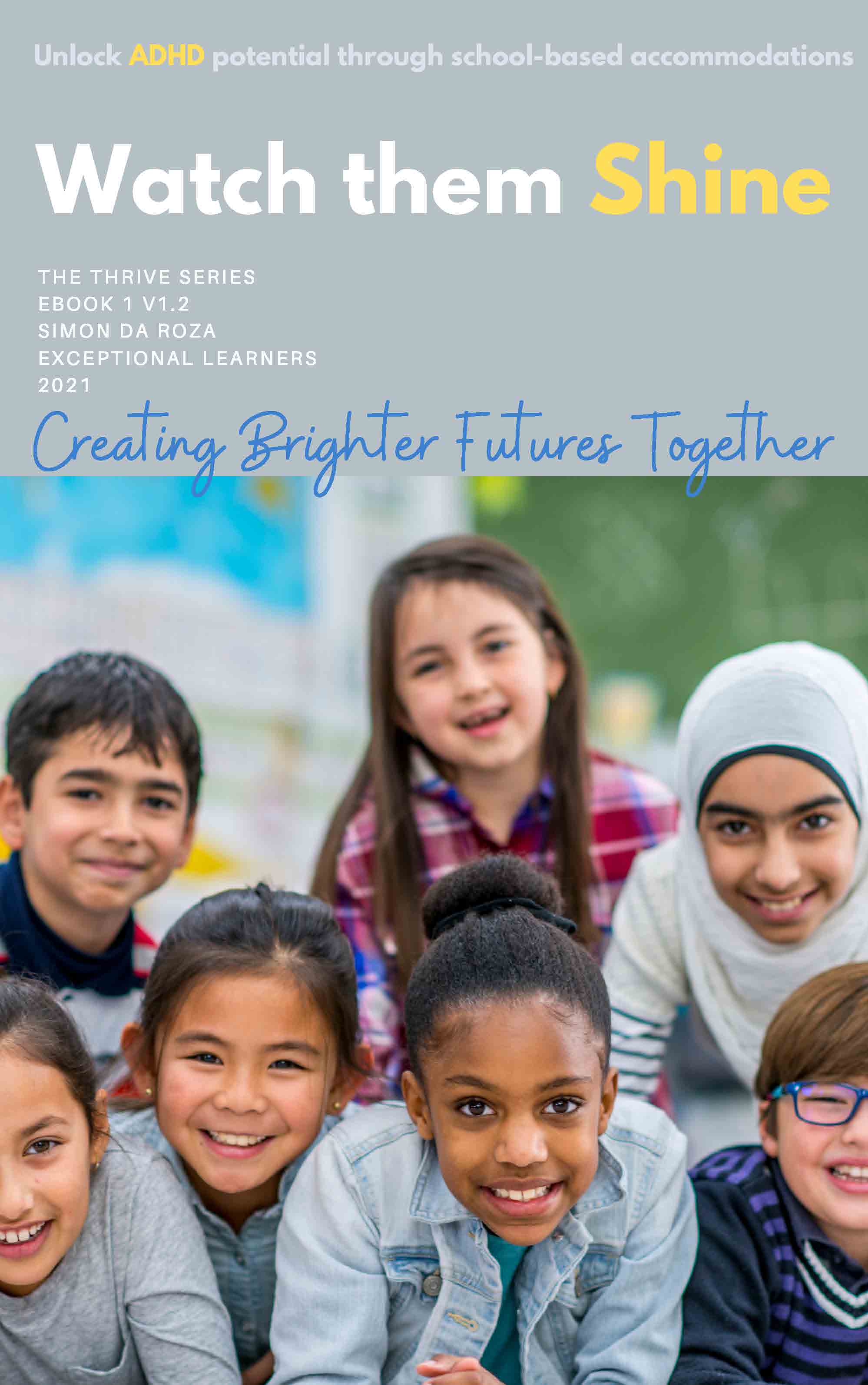
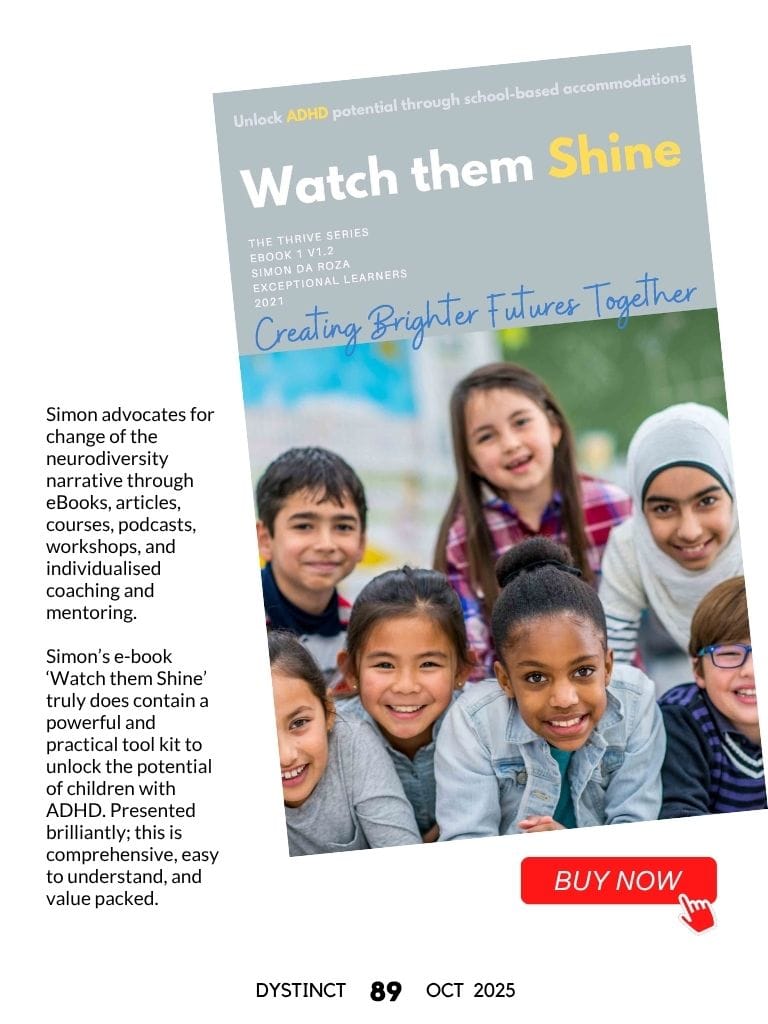
Watch Them Shine Ebook
'Watch them Shine!' An introduction for educators and parents to improve the educational outcomes and guidance of children with Attention Deficit Hyperactivity Disorder (ADHD) by applying knowledge of executive functioning delays in creating effective, reasonable adjustments in the classroom.
Let Them Shine is a resource to support your teachers in supporting divergent learners. The adjustments are free and can be implemented today. These adjustments will have an immediate positive effect on students and your teachers' wellbeing. Start from a strengths-based perspective, add empathy, guidance and watch them thrive.
When you have a deep understanding of the neurology of ADHD, you will understand the effects upon the classroom and learning. Academic research of neurology and ADHD has turned our appreciation of this disability on its head. What we once thought ADHD to be is wrong. Combine this new knowledge with the realisation that each presentation is unique and therefore each solution must also be unique. However, you are the expert in your classroom and of the children in your care, add the creative solutions you and your students collaboratively implement in light of this knowledge and you will create effective reasonable adjustments.
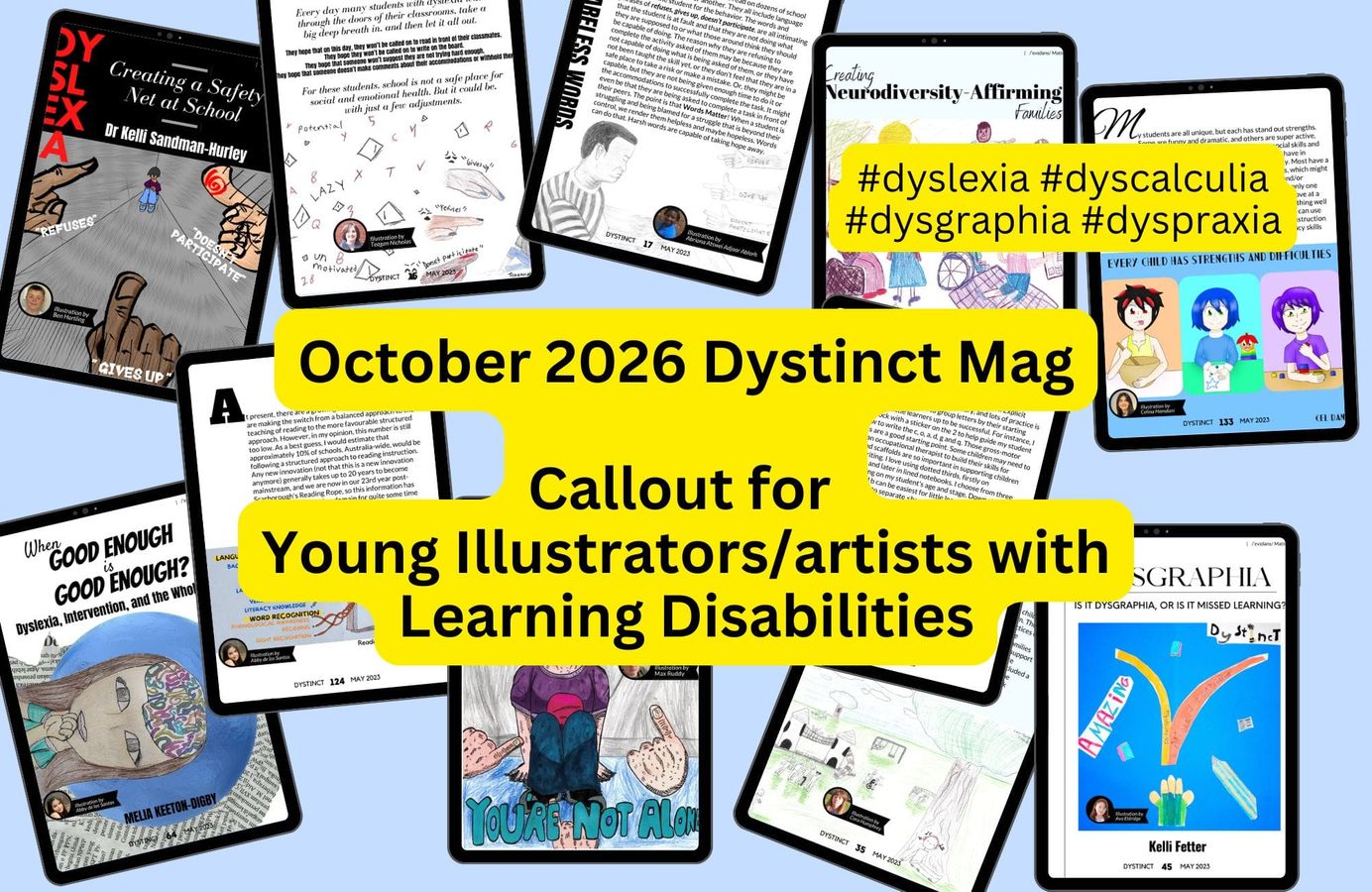
Extracts from Dystinct Magazine
Extracts from Dystinct Magazine