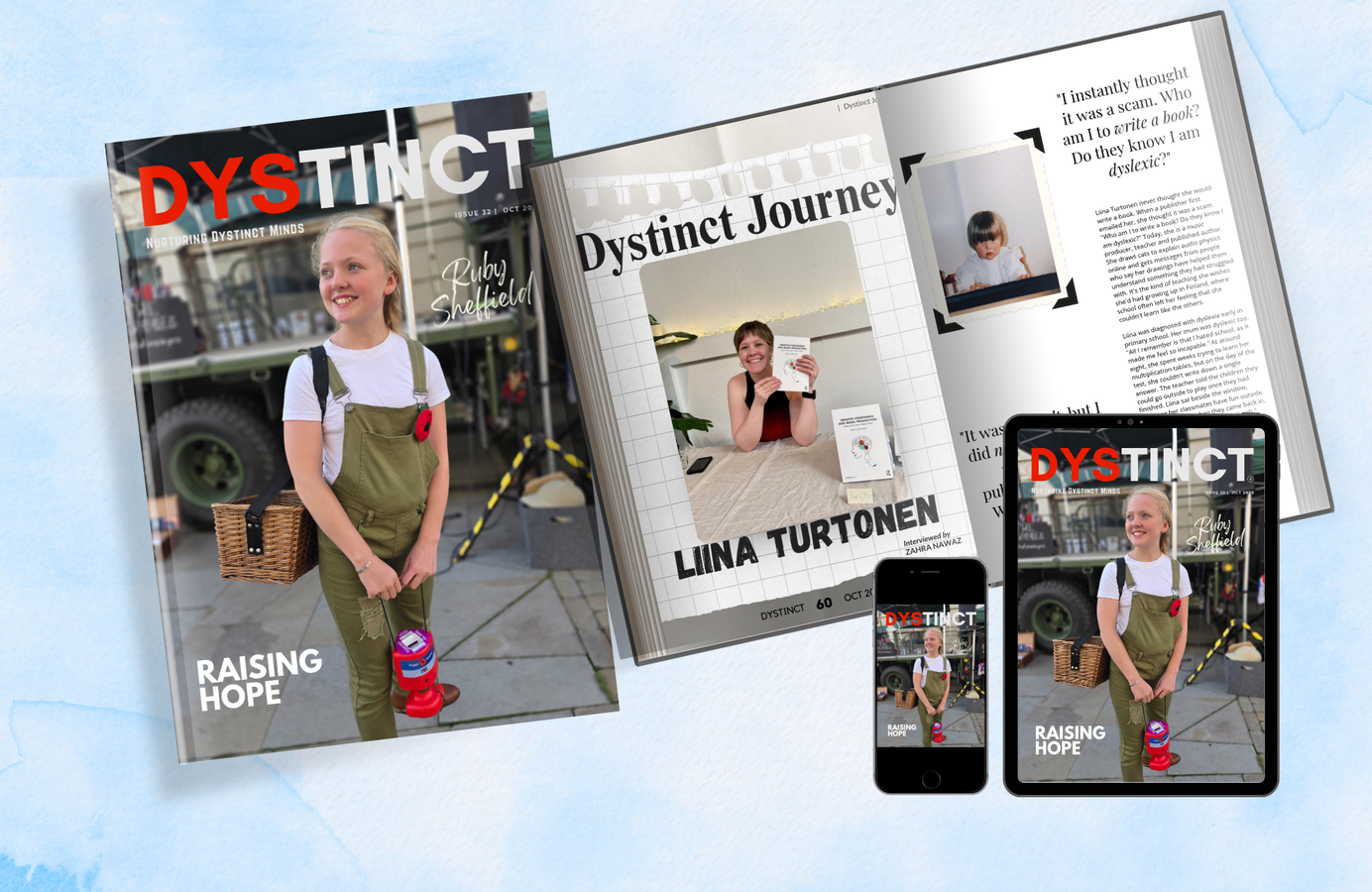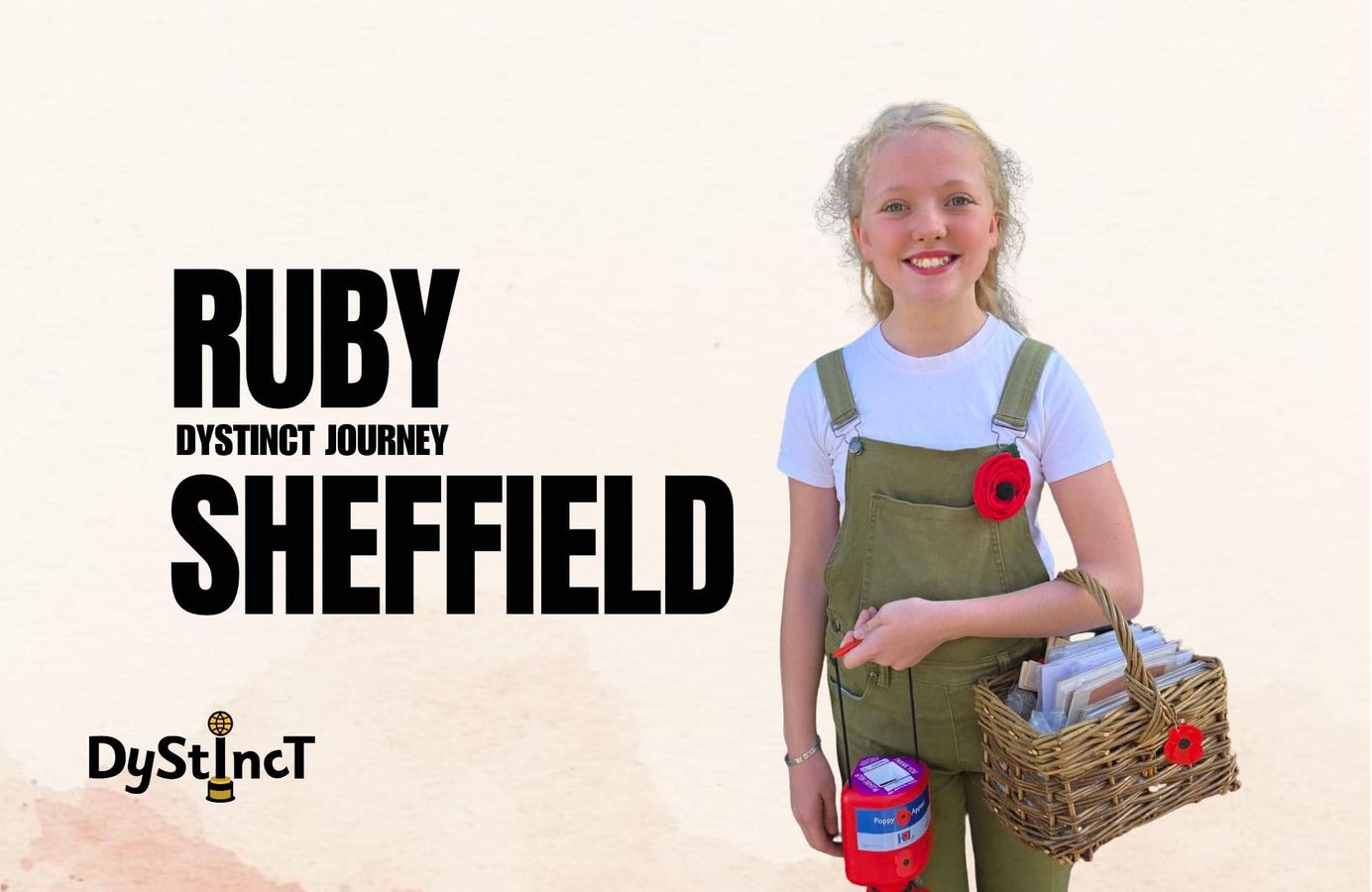
Issue 32: The Dystinct Journey of Ruby Sheffield
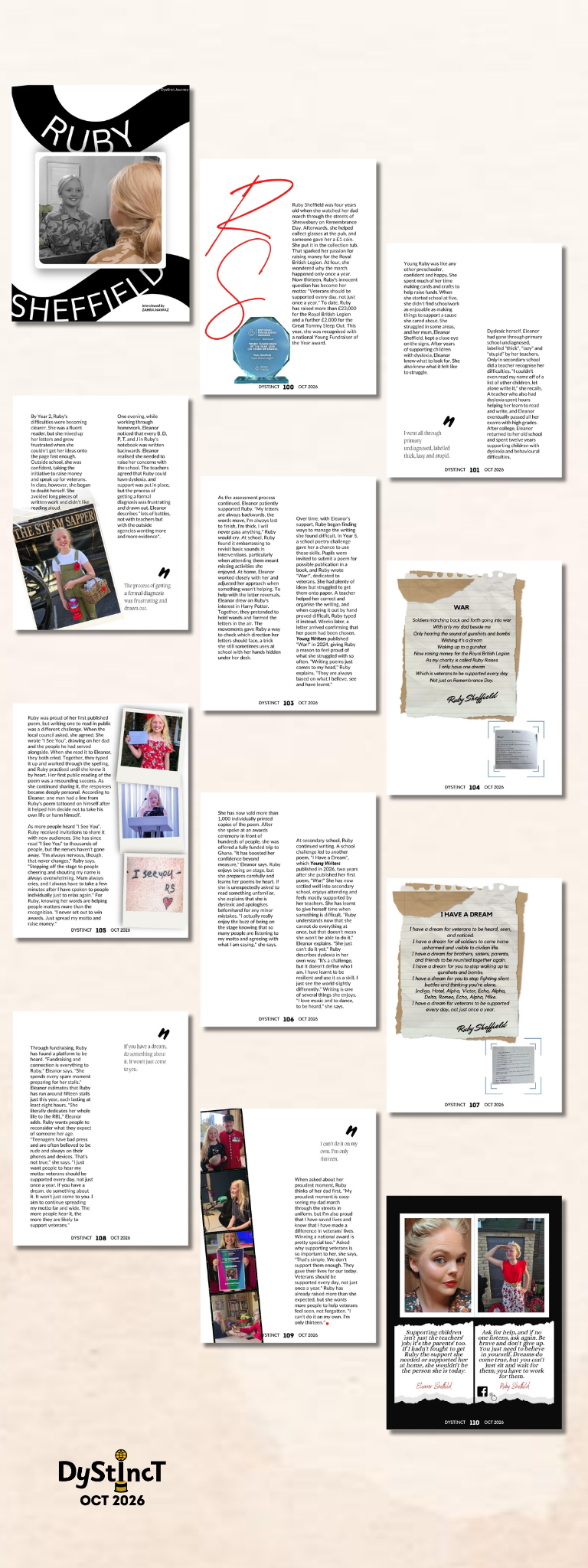
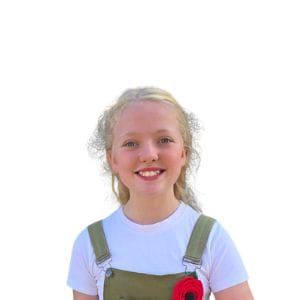
Thirteen-year-old Ruby Sheffield shares her journey with dyslexia, the support that helped her find confidence in writing, and how her poetry and fundraising have given veterans a voice and a reminder that they are not forgotten.


Table of Contents
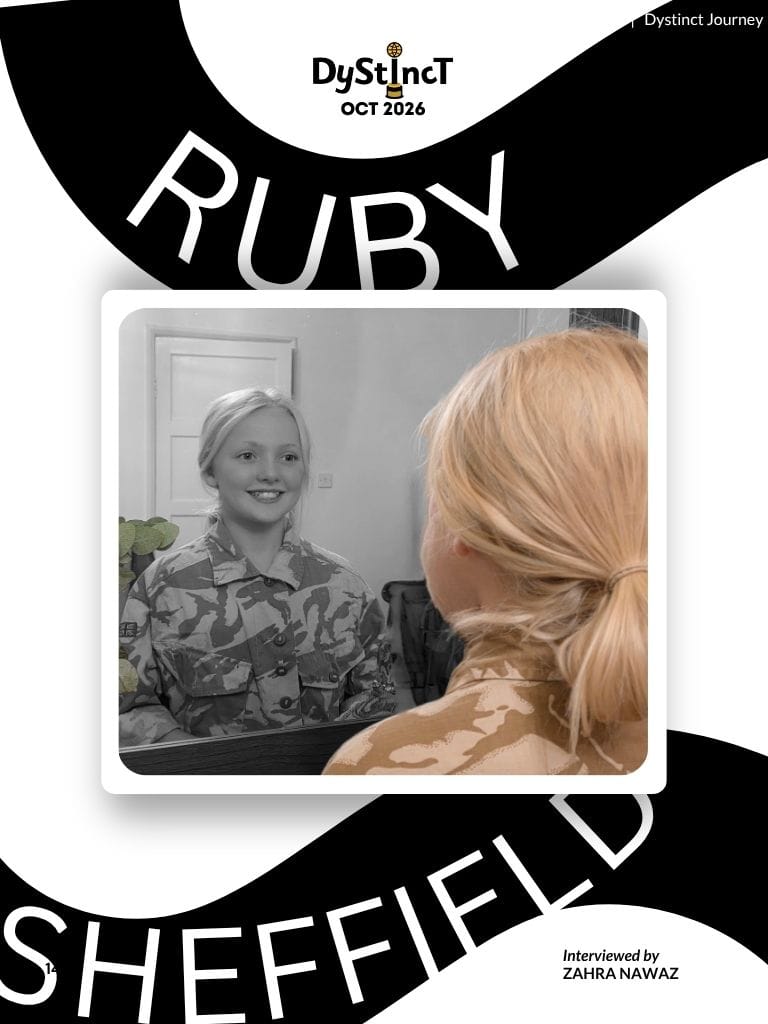
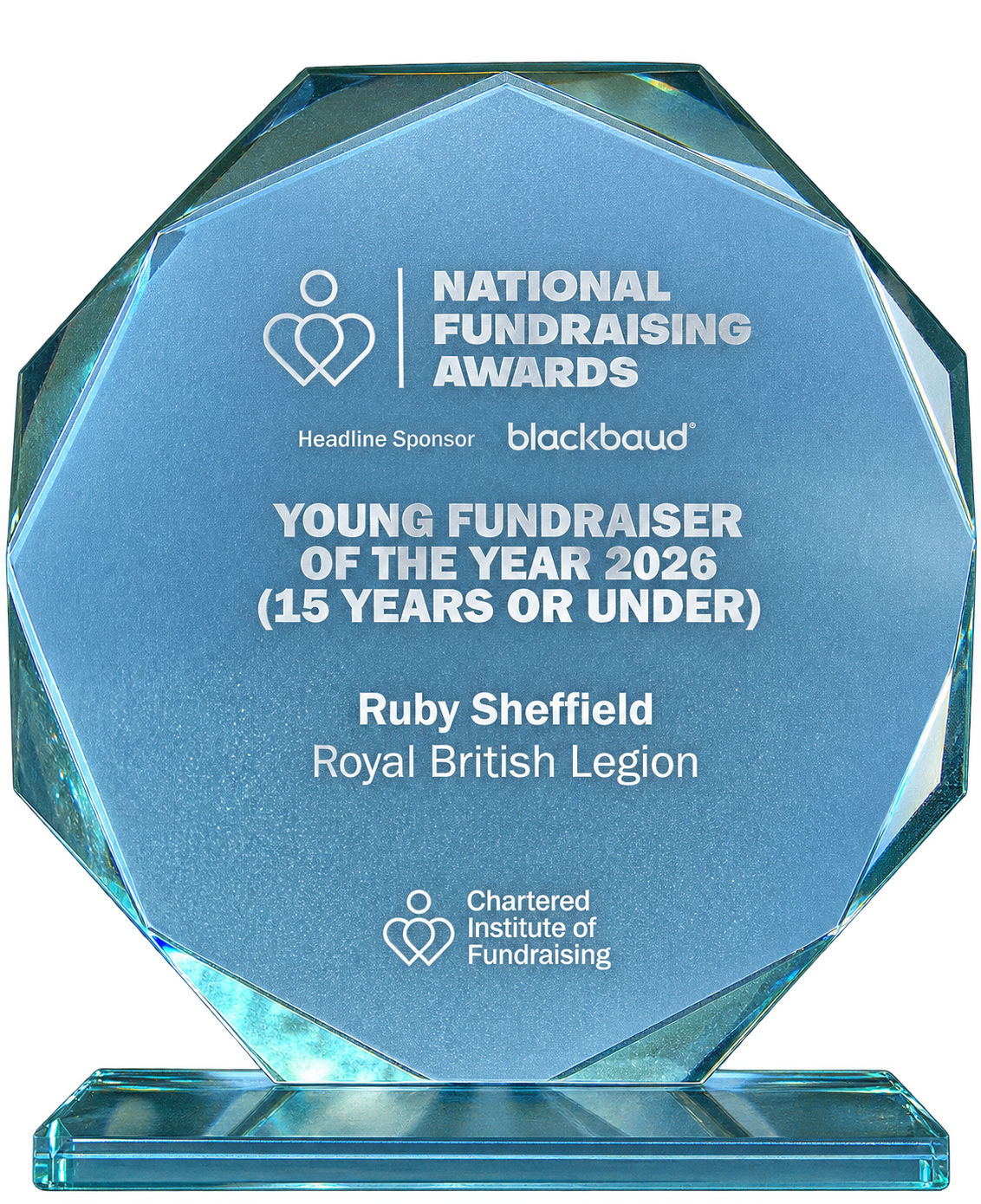
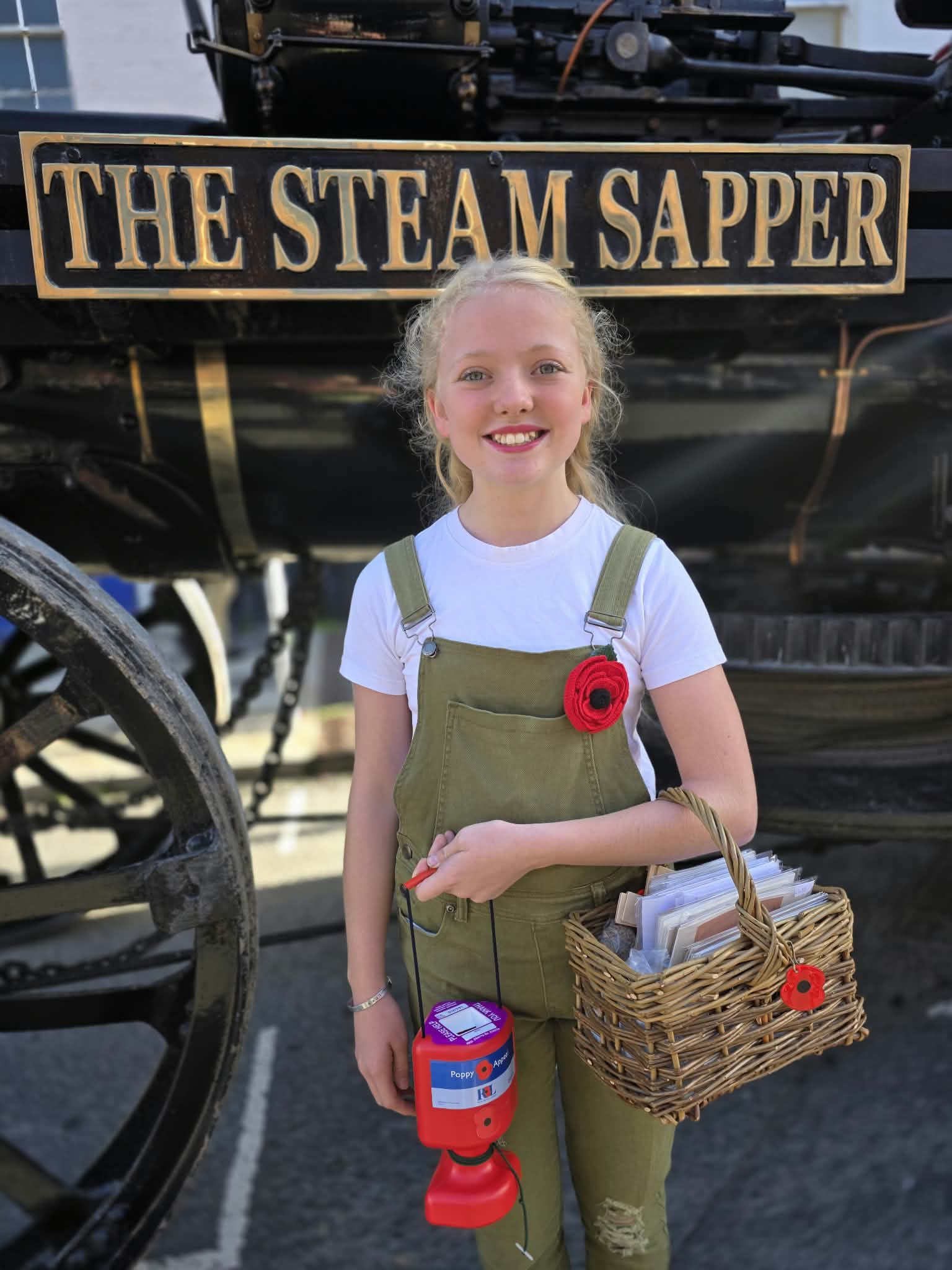
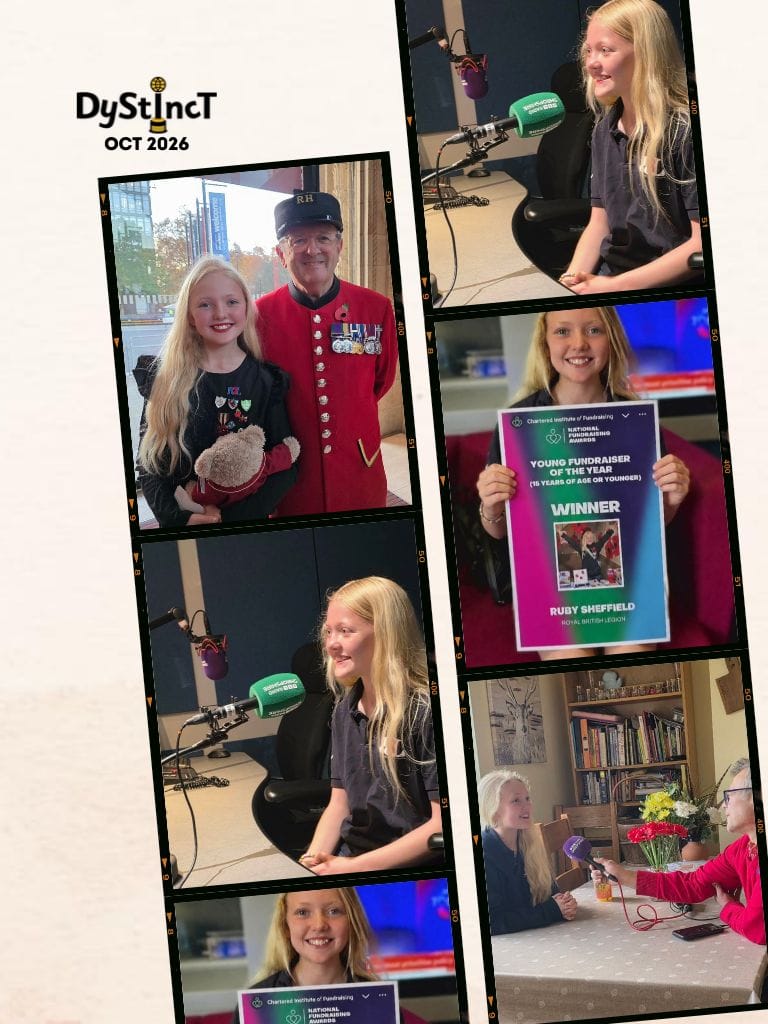
Ruby Sheffield was four years old when she watched her dad march through the streets of Shrewsbury on Remembrance Day. Afterwards, she helped collect glasses at the pub, and someone gave her a £1 coin. She put it in the collection tub. That sparked her passion for raising money for the Royal British Legion. At four, she wondered why the march happened only once a year. Now thirteen, Ruby's innocent question has become her motto: "Veterans should be supported every day, not just once a year." To date, Ruby has raised more than £23,000 for the Royal British Legion and a further £2,000 for the Great Tommy Sleep Out. This year, she was recognised with a national Young Fundraiser of the Year award.
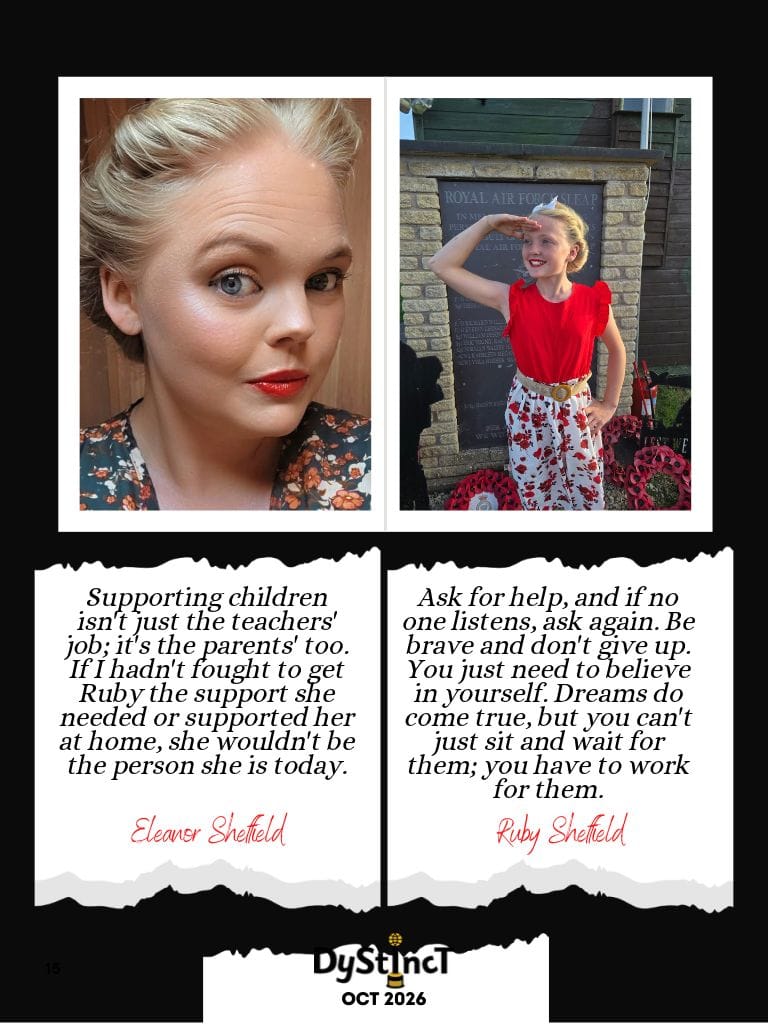
Young Ruby was like any other preschooler, confident and happy. She spent much of her time making cards and crafts to help raise funds. When she started school at five, she didn't find schoolwork as enjoyable as making things to support a cause she cared about. She struggled in some areas, and her mum, Eleanor Sheffield, kept a close eye on the signs. After years of supporting children with dyslexia, Eleanor knew what to look for. She also knew what it felt like to struggle.
I went all through primary undiagnosed, labelled thick, lazy and stupid.
Dyslexic herself, Eleanor had gone through primary school undiagnosed, labelled "thick", "lazy" and "stupid" by her teachers. Only in secondary school did a teacher recognise her difficulties. "I couldn't even read my name off of a list of other children, let alone write it," she recalls. A teacher who also had dyslexia spent hours helping her learn to read and write, and Eleanor eventually passed all her exams with high grades. After college, Eleanor returned to her old school and spent twelve years supporting children with dyslexia and behavioural difficulties.
By Year 2, Ruby's difficulties were becoming clearer. She was a fluent reader, but she mixed up her letters and grew frustrated when she couldn't get her ideas onto the page fast enough. Outside school, she was confident, taking the initiative to raise money and speak up for veterans. In class, however, she began to doubt herself. She avoided long pieces of written work and didn't like reading aloud.
One evening, while working through homework, Eleanor noticed that every B, D, P, T, and J in Ruby's notebook was written backwards. Eleanor realised she needed to raise her concerns with the school. The teachers agreed that Ruby could have dyslexia, and support was put in place, but the process of getting a formal diagnosis was frustrating and drawn out. Eleanor describes "lots of battles, not with teachers but with the outside agencies wanting more and more evidence".
The process of getting a formal diagnosis was frustrating and drawn out.
As the assessment process continued, Eleanor patiently supported Ruby. "My letters are always backwards, the words move, I'm always last to finish, I'm thick, I will never pass anything," Ruby would cry. At school, Ruby found it embarrassing to revisit basic sounds in interventions, particularly when attending them meant missing activities she enjoyed. At home, Eleanor worked closely with her and adjusted her approach when something wasn't helping. To help with the letter reversals, Eleanor drew on Ruby's interest in Harry Potter. Together, they pretended to hold wands and formed the letters in the air. The movements gave Ruby a way to check which direction her letters should face, a trick she still sometimes uses at school with her hands hidden under her desk.
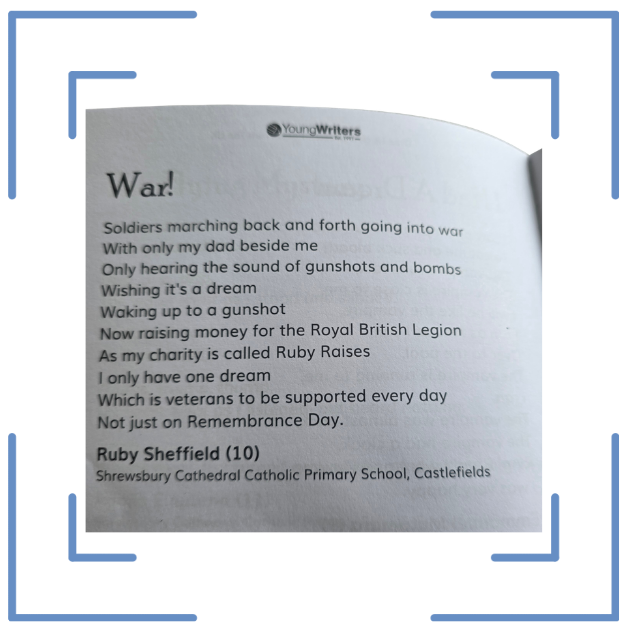
Over time, with Eleanor's support, Ruby began finding ways to manage the writing she found difficult. In Year 5, a school poetry challenge gave her a chance to use those skills. Pupils were invited to submit a poem for possible publication in a book, and Ruby wrote "War!", dedicated to veterans. She had plenty of ideas but struggled to get them onto paper. A teacher helped her correct and organise the writing, and when copying it out by hand proved difficult, Ruby typed it instead. Weeks later, a letter arrived confirming that her poem had been chosen. Young Writers published "War!" in 2024, giving Ruby a reason to feel proud of what she struggled with so often. "Writing poems just comes to my head," Ruby explains. "They are always based on what I believe, see and have learnt."
WAR
Soldiers marching back and forth going into war
With only my dad beside me
Only hearing the sound of gunshots and bombs
Wishing it's a dream
Waking up to a gunshot
Now raising money for the Royal British Legion
As my charity is called Ruby Raises
I only have one dream
Which is veterans to be supported every day
Not just on Remembrance Day.
~
Ruby Sheffield
Ruby was proud of her first published poem, but writing one to read in public was a different challenge. When the local council asked, she agreed. She wrote "I See You", drawing on her dad and the people he had served alongside. When she read it to Eleanor, they both cried. Together, they typed it up and worked through the spelling, and Ruby practised until she knew it by heart. Her first public reading of the poem was a resounding success. As she continued sharing it, the responses became deeply personal. According to Eleanor, one man had a line from Ruby's poem tattooed on himself after it helped him decide not to take his own life or harm himself.
As more people heard "I See You", Ruby received invitations to share it with new audiences. She has since read "I See You" to thousands of people, but the nerves haven't gone away. "I'm always nervous, though; that never changes," Ruby says. "Stepping off the stage to people cheering and shouting my name is always overwhelming. Mum always cries, and I always have to take a few minutes after I have spoken to people individually just to relax again." For Ruby, knowing her words are helping people matters more than the recognition. "I never set out to win awards. Just spread my motto and raise money."
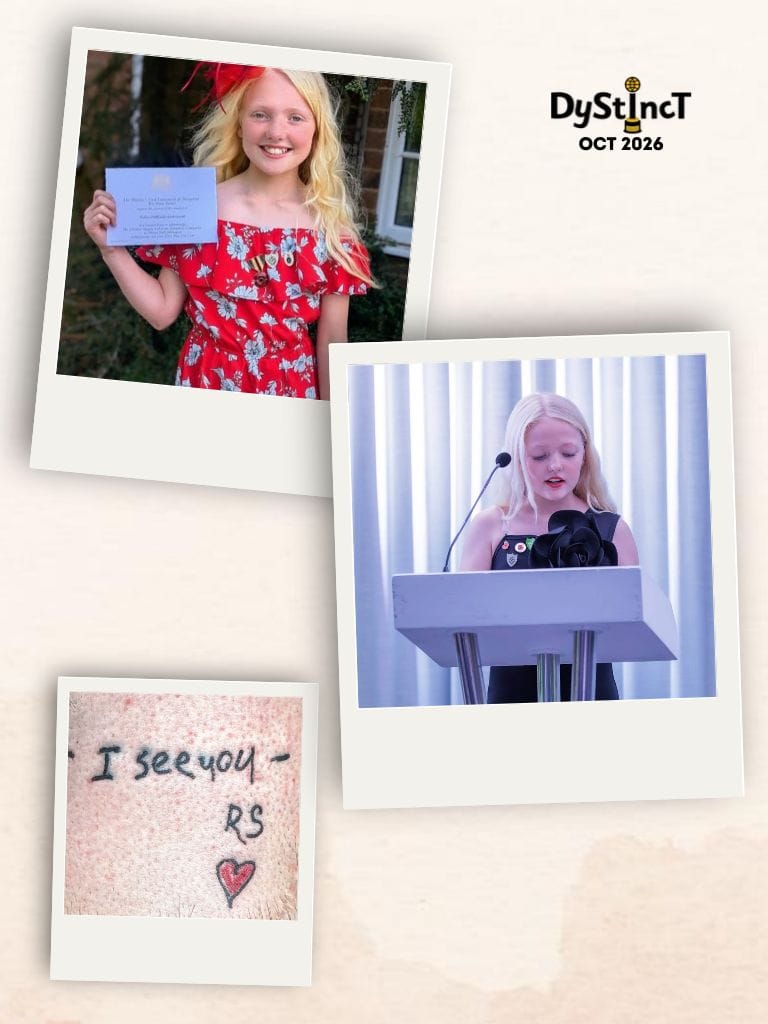
She has now sold more than 1,000 individually printed copies of the poem. After she spoke at an awards ceremony in front of hundreds of people, she was offered a fully funded trip to Ghana. "It has boosted her confidence beyond measure," Eleanor says. Ruby enjoys being on stage, but she prepares carefully and learns her poems by heart. If she is unexpectedly asked to read something unfamiliar, she explains that she is dyslexic and apologises beforehand for any minor mistakes. "I actually really enjoy the buzz of being on the stage knowing that so many people are listening to my motto and agreeing with what I am saying," she says.
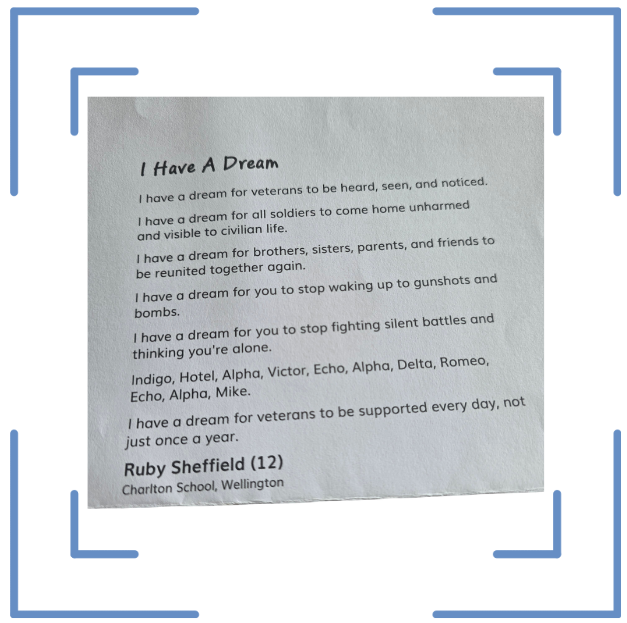
At secondary school, Ruby continued writing. A school challenge led to another poem, "I Have a Dream", which Young Writers published in 2026, two years after she published her first poem, "War!" She has now settled well into secondary school, enjoys attending and feels mostly supported by her teachers. She has learnt to give herself time when something is difficult. "Ruby understands now that she cannot do everything at once, but that doesn't mean she won't be able to do it," Eleanor explains. "She just can't do it yet." Ruby describes dyslexia in her own way. "It's a challenge, but it doesn't define who I am. I have learnt to be resilient and use it as a skill. I just see the world slightly differently." Writing is one of several things she enjoys. "I love music and to dance, to be heard," she says.
I HAVE A DREAM
I have a dream for veterans to be heard, seen, and noticed.
I have a dream for all soldiers to come home unharmed and visible to civilian life.
I have a dream for brothers, sisters, parents, and friends to be reunited together again.
I have a dream for you to stop waking up to gunshots and bombs.
I have a dream for you to stop fighting silent battles and thinking you're alone.
Indigo, Hotel, Alpha, Victor, Echo, Alpha, Delta, Romeo, Echo, Alpha, Mike.
I have a dream for veterans to be supported every day, not just once a year.
~
Ruby Sheffield
Through fundraising, Ruby has found a platform to be heard. "Fundraising and connection is everything to Ruby," Eleanor says. "She spends every spare moment preparing for her stalls." Eleanor estimates that Ruby has run around fifteen stalls just this year, each lasting at least eight hours. "She literally dedicates her whole life to the RBL," Eleanor adds. Ruby wants people to reconsider what they expect of someone her age. "Teenagers have bad press and are often believed to be rude and always on their phones and devices. That's not true," she says. "I just want people to hear my motto: veterans should be supported every day, not just once a year. If you have a dream, do something about it. It won't just come to you. I aim to continue spreading my motto far and wide. The more people hear it, the more they are likely to support veterans."
If you have a dream, do something about it. It won't just come to you.
I can't do it on my own. I'm only thirteen.
When asked about her proudest moment, Ruby thinks of her dad first. "My proudest moment is easy: seeing my dad march through the streets in uniform, but I'm also proud that I have saved lives and know that I have made a difference in veterans' lives. Winning a national award is pretty special too." Asked why supporting veterans is so important to her, she says, "That's simple. We don't support them enough. They gave their lives for our today. Veterans should be supported every day, not just once a year." Ruby has already raised more than she expected, but she wants more people to help veterans feel seen, not forgotten. "I can't do it on my own. I'm only thirteen."
Ruby Sheffield
Ruby Sheffield
Buy Printed Copies of Dystinct Magazine
Buy Printed Copies on Amazon
Select the Amazon Store based on your region
Extracts from Dystinct Magazine
Extracts from Dystinct Magazine